When Michael posted about rats who were sniffing out
land mines in Africa, I went right to the Apopo website and adopted one. It costs $8 per month, hardly a blip on my
monthly credit card bill, and about the price of an upscale cappucino and a croissant
in New York. And what important work the
little guy will do!
 |
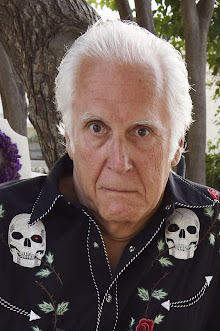
| David and me in South Africa in 2003 |
I had been primed to do my little bit to help. During my first trip to Africa in 2003, on a flight from Cape Town to Johannesburg, I met a young American woman who was on her way to a meeting. She worked in Angola for a nonprofit devoted to ridding the country of land mines. She told me that her organization had been endowed by Princess Diana Spencer and described great devastation to people and to animals from the mines.

The princess had gotten
interested in the cause when, in 1997 (the year she died), the International Red
Cross invited her to witness the tragic consequences and asked her to help
publicize the problem. Politicians in the
UK publicly disapproved of Diana’s taking a position, which only made her and
the rest of the sane world all the more determined to rid the planet of those
indiscriminant killers.

My young American acquaintance told me that she had just taken
some time off to visit game parks in South Africa, since—thanks to the millions
of land mines left behind by a twenty-year civil war—there was almost no
wildlife left in Angola. Enchanted and
enthralled as I was with the African wilderness at that moment, I found the
idea too sad for words. To say nothing
of the unspeakable damage done to people—children and grownups—who had lost
their lives to land mines. The luckier
ones lost only their limbs. Horrifying.


I am proud that little Victor will do his bit to
help. From time to time I will post here about his
progress. For now, this is what I know
about him, from an email I received last Monday:
Baby Victor is born!
 |
| The photo of the newborn that came with this message |
Welcome to the
world, Victor! It is celebration time in APOPO's rat kennels today for the
birth of baby Victor and its two siblings. Victor belongs
to the species Cricetomys gambianus, commonly known as the African giant
pouched rat, which are often born in litters of 2 or 3. APOPO's breeding
program ensures that prospective parents of our future heroes are carefully
handpicked to deliver healthy, happy and high-quality rat babies. A
successful breeding program increases the likelihood of delivering excellent
HeroRATs to detect landmines and tuberculosis.

APOPO's early experiences
demonstrated that rats that grow up in the organization's kennels are easier to
train and are more effective scent detectors. Since many rats are needed for
mine action and TB detection operations, APOPO's research and development
department is constantly working on ways to optimize the breeding program.
Before placing rat couples in the breeding cages, the APOPO staff closely
monitors the acceptance behavior of the animals in the introduction cage.
Female rats either reject or accept a prospective mate in this cage and in
cases of clear acceptance, the rat couples are placed together in the breeding
cages.

Crucial information such
as the best timing for the female rats and the fertility period of the male
rats go a long way in improving the productivity of the breeding colony.
APOPO's breeding program also ensures optimal care, feeding and medical
attention to aid the overall welfare of the animals and subsequently improve
the quality of rats available for training.

I look forward to following Victor’s career. I’ll keep you posted.
When the HeroRats are finished with their work in Africa,
there are, sad to say, mines in Bosnia and Cambodia, and many other places
around the globe for Victor and his brethren to tackle.
Annamaria - Monday