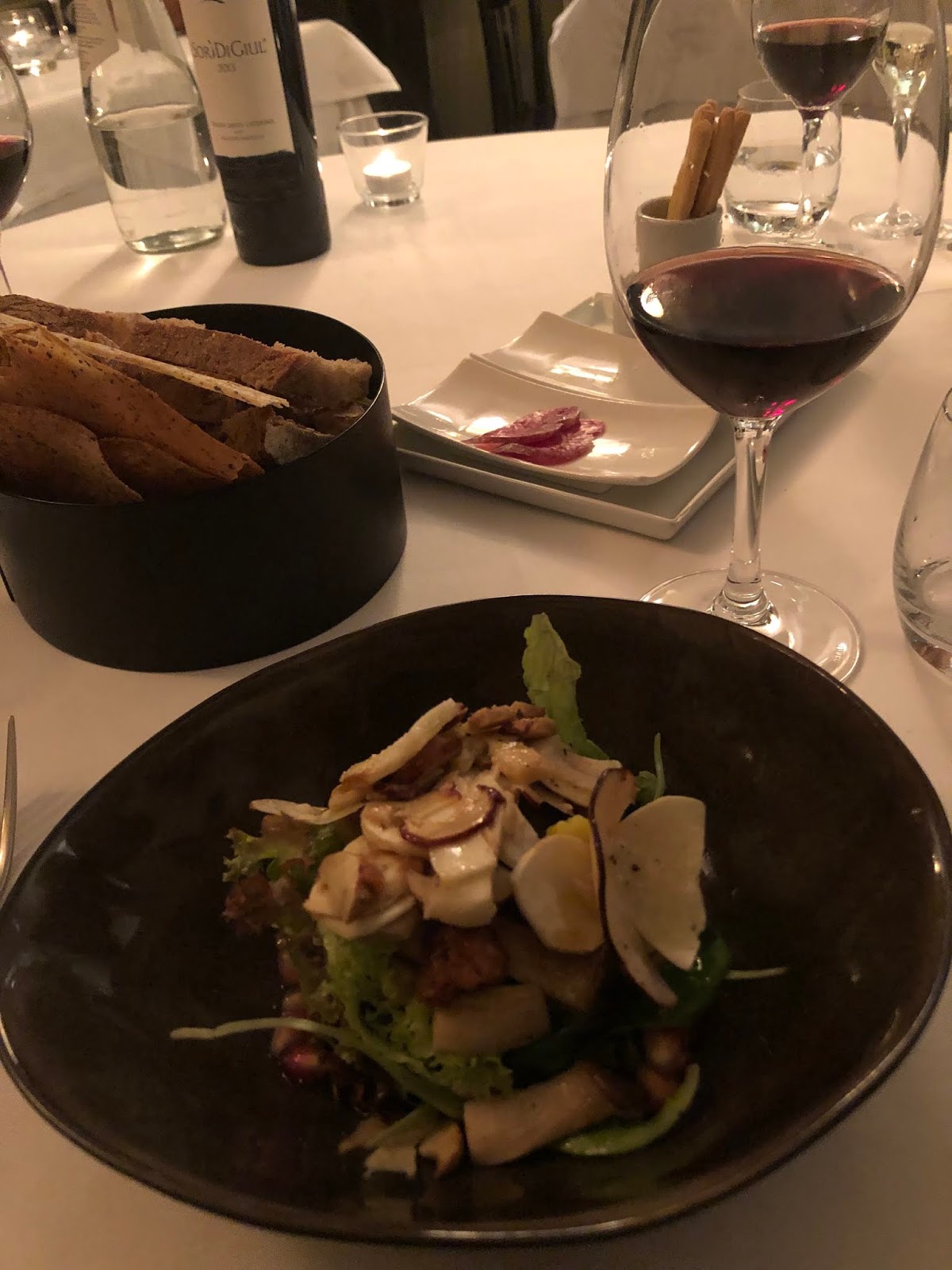
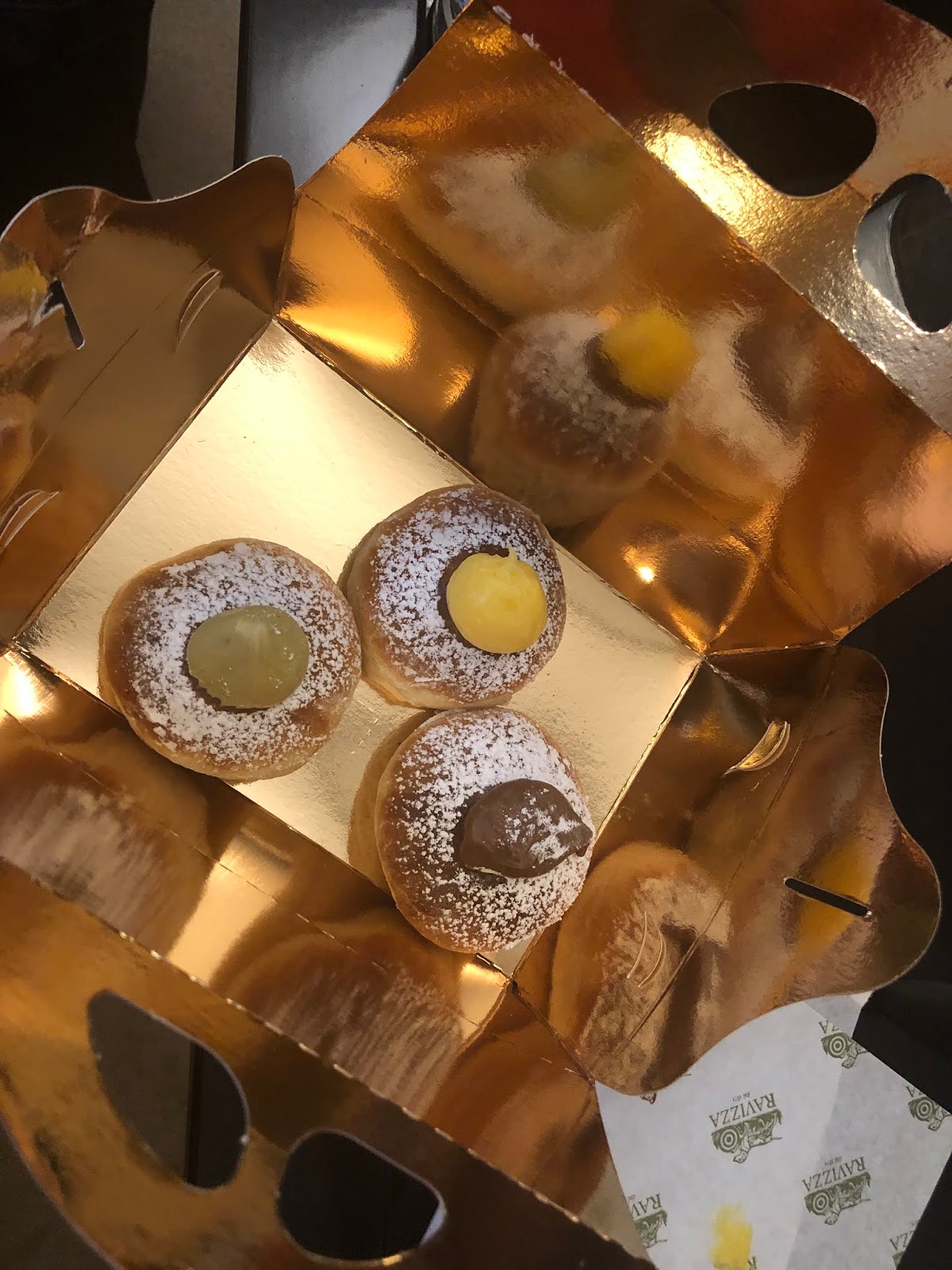
This coming Tuesday is my Birthday. I have been in tech hell since I returned back to to my beloved NYC after being away for two and half months, hiding out from the storied but this year ICY sidewalks of New York. I will not grumble about the computer difficulties. I am blessed to be where I am and how I am as I reach 85 years on this splendid planet. I am deeply grateful for all the blessings of my life. Here below is a post from some years ago about one of those blessings - I grew up learning how to cook and always enjoying "every body's favorite food."


 Despite the difficulties of finding the ingredients they wanted for their own dishes, Italians refused to accept what America wanted to feed them. One Federal social researcher lamented about a family in her study: “Not assimilated, yet. Still eating Italian food.” What recalcitrance! A 1907 report on Wage Earners’ Budgets in New York complained about Italian immigrants’ stubbornness in this regard: “The Italian believes that the commercial method of canning removes all the goodness from food and that a minimum of processes should intervene between harvest and consumption.” Insisting food should be fresh? What a concept!

Italians persisted in replicating their Old Country diet, often with a vengeance. For instance, because there were no figs for sale nearby, my grandfather Gennaro had a fig tree. One cannot grow figs in the climate of New Jersey without a lot of trouble. Each fall, before the first frost, my father and my Uncle Joe, supervised by Gennaro, dug up the tree by the roots, lay it down in a trench, covered it with soil, then with straw, and a khaki tarpaulin. When spring came, they dug it up, stood it upright, and replanted it. Then, the whole family waited for the first green shoots to prove it had survived its winter slumber.
Family members all pitching in to create a meal they can enjoy together, trading jokes and tales of their day’s triumphs and tribulations--that’s the Italian way with food. That’s amore.


The playwright Neil Simon famously observed that there are only two laws in the universe: the Law of Gravity and Everyone Loves Italian Food. American supermarket shelves have more Italian food items than any other kind—far more than those of any other ethnic group. The average American eats Italian food of some sort at least once a week.
It has not always been this way.

Each of the 2.7 million Italians who poured into the US between 1890 and 1910 brought with him an average of $12.67. They had left starving areas of what they came call the Old Country. When they arrived in the US (90% through Ellis Island), they found a land of plenty, but what they wanted to eat was their traditional food, a Mediterranean cuisine of vegetables, grains, and fruits. They longed for olive oil, fresh figs, pasta, good bread—none of these easy to find at first.

The United States officially expected them to become American and to demonstrate that they were doing so by adopting the American culture lock, stock, and barrel. The Federal government employed squads of social workers to make sure this happened. An important measure of their success at Americanization was converting Italians to an American diet. I am delighted to report that this effort was a dismal failure.


Italians persisted in replicating their Old Country diet, often with a vengeance. For instance, because there were no figs for sale nearby, my grandfather Gennaro had a fig tree. One cannot grow figs in the climate of New Jersey without a lot of trouble. Each fall, before the first frost, my father and my Uncle Joe, supervised by Gennaro, dug up the tree by the roots, lay it down in a trench, covered it with soil, then with straw, and a khaki tarpaulin. When spring came, they dug it up, stood it upright, and replanted it. Then, the whole family waited for the first green shoots to prove it had survived its winter slumber.
Like all immigrant groups, Italians opened restaurants. It was in those establishments that Italian cooking took an American turn. True Italian meals were a hundred years ago and still are served in courses, the first of which is often a pasta dish. So an Italian might make meatballs (polpette) in tomato sauce, put a little of the sauce and some grated cheese on pasta, serve that and then, as second course, serve the polpette, likely with a vegetable side dish. But American customers in those early Italian eateries weren't used to courses. So to accommodate the cultural difference, restauranteurs invented a New World riff on their cuisine. They combined the the first and the second and Tah-DAH--meatballs and spaghetti!

The current state of Italian restaurants in the US seems to depend on whether or not there is an actual Italian in the kitchen. Many places with Italian names and self-described as Italian serve things far removed from true Italian cuisine. My personal beefs (!) about this are mainly two. First of all, the amount of sauce on the pasta. Authentic Italian pasta might be served with a variety of different sauces, but it is not drowned in Bolognese or carbonara. Much of the time, in US restaurants, there is three or five times the amount of sauce on the pasta as I would serve at home or one would find in a restaurant in Italy. It spoils the dish for me.
Worst of all is the insane about of garlic and hot peppers. Starting with Artusi in 1891, real Italian food experts advise using garlic con parsimonio, parsimoniously. Here is how I learned as a child to saute vegetables: Heat olive oil in a saute pan. Peel and halve (NOT mince) a clove a fresh garlic. NOTE: I said ONE clove. Gently saute the garlic until it softens. (NEVER brown it. If you accidentally brown it, you have to throw the effort away, wash the pan and start over.) With a fork, remove the garlic from the oil and throw it away. Then, add and toss the vegetable in the oil. Delicious! The flavor of the vegetable subtly enhanced by the hint (HINT!!) of garlic.
There are a few regional recipes that call for more garlic - like the Piedmontese favorite Bagna Cauda. But they are the exception, not the rule.
Pepperoncini (hot peppers) go into certain Italian dishes, mostly they are Calabrian recipes. There is NO place for hot peppers in Bolognese sauce. Or Marinara. Or--God Forbid--ossobucco or fiori di zucca.
If you like, you can overwhelm the flavor of everything you eat with tons of garlic and drown it in hot pepper sauce. I won't stop you. BUT PLEASE, don't call it Italian. In fact, I respectfully request that you NOT give such a dish a name the sounds Italian.

My nonno Gennaro, my guardian angel in the picture above, told me when I was about that age that heavy spices were things chefs put on food if the ingredients are under par or on the verge of spoiling. Don't eat such dishes, he warned me. If you are going to put a food inside your body, it must be the best thing you can find.
I learned very young and have practiced all my life the art of Italian cooking. I think the tradition is about more than gastronomic pleasure. In addition to their recipes and a taste for peaches picked ripe from the tree, Italians carried a family-centric culture with them when they crossed the ocean. Good food was and is the enduring value learned by their descendants. Cooking well to give pleasure in addition to nourishment is a deep expression of the Italian maternal instinct. Those newly arrived women fed their children really good food not only to help them grow up healthy and strong but to spoil them with affection. Family meals were rituals, not only on holidays, but even on an ordinary Tuesday. People didn’t eat out; they gathered around the family table.

At the table is where children learned manners, family lore and values, their sense of belonging to something bigger and stronger than they. When they visited family and friends, meals were always the central activity. I never ate in a restaurant other than a pizzeria before I went away to college. When I became a wife and mother, I never gave it second thought: I cooked. My daughter’s classmates at Swarthmore were astonished to find out that she ate a proper sit-down dinner with her parents every evening.
Italians prepare wonderful food not as an end in itself, but as a means. The end is to get everyone to sit down together and unite in mutual tolerance and support. When an Italian calls out "Tutti a tavola" (Everyone to the table), it is the pleasure of the food that draws the family. Togetherness is the real goal.

Worst of all is the insane about of garlic and hot peppers. Starting with Artusi in 1891, real Italian food experts advise using garlic con parsimonio, parsimoniously. Here is how I learned as a child to saute vegetables: Heat olive oil in a saute pan. Peel and halve (NOT mince) a clove a fresh garlic. NOTE: I said ONE clove. Gently saute the garlic until it softens. (NEVER brown it. If you accidentally brown it, you have to throw the effort away, wash the pan and start over.) With a fork, remove the garlic from the oil and throw it away. Then, add and toss the vegetable in the oil. Delicious! The flavor of the vegetable subtly enhanced by the hint (HINT!!) of garlic.
There are a few regional recipes that call for more garlic - like the Piedmontese favorite Bagna Cauda. But they are the exception, not the rule.
Pepperoncini (hot peppers) go into certain Italian dishes, mostly they are Calabrian recipes. There is NO place for hot peppers in Bolognese sauce. Or Marinara. Or--God Forbid--ossobucco or fiori di zucca.
 |
| Why in the name that all that is holy, would anyone want to cook these delicate blossoms and then pour garlicky pesto over them |

My nonno Gennaro, my guardian angel in the picture above, told me when I was about that age that heavy spices were things chefs put on food if the ingredients are under par or on the verge of spoiling. Don't eat such dishes, he warned me. If you are going to put a food inside your body, it must be the best thing you can find.
I learned very young and have practiced all my life the art of Italian cooking. I think the tradition is about more than gastronomic pleasure. In addition to their recipes and a taste for peaches picked ripe from the tree, Italians carried a family-centric culture with them when they crossed the ocean. Good food was and is the enduring value learned by their descendants. Cooking well to give pleasure in addition to nourishment is a deep expression of the Italian maternal instinct. Those newly arrived women fed their children really good food not only to help them grow up healthy and strong but to spoil them with affection. Family meals were rituals, not only on holidays, but even on an ordinary Tuesday. People didn’t eat out; they gathered around the family table.
At the table is where children learned manners, family lore and values, their sense of belonging to something bigger and stronger than they. When they visited family and friends, meals were always the central activity. I never ate in a restaurant other than a pizzeria before I went away to college. When I became a wife and mother, I never gave it second thought: I cooked. My daughter’s classmates at Swarthmore were astonished to find out that she ate a proper sit-down dinner with her parents every evening.
Italians prepare wonderful food not as an end in itself, but as a means. The end is to get everyone to sit down together and unite in mutual tolerance and support. When an Italian calls out "Tutti a tavola" (Everyone to the table), it is the pleasure of the food that draws the family. Togetherness is the real goal.
Family members all pitching in to create a meal they can enjoy together, trading jokes and tales of their day’s triumphs and tribulations--that’s the Italian way with food. That’s amore.