Showing posts with label Girls in Africa. Show all posts

Monday, October 10, 2022

A Girl Child is in Danger

Annamaria on Monday


While researching the first two books of my Africa series, I never learned about female genital mutilation (FGM).  Those first stories dealt with colonialism’s general effects on the tribal populations. The plot of Book 3–The Blasphemers, however, deals specifically with the treatment of pastoralist peoples.  In studying them, I learned that in 1906 British missionaries had begun to fight against FGM.  They sought, over a hundred years ago, to make the practice illegal in British East Africa (now Kenya).  Such laws eventually passed. But – as with all crimes – having a law does not stop people from committing criminal acts. FGM continues to be practiced until this day.  For the girls between ages eleven and fourteen, it is almost immediately followed by forced marriage.


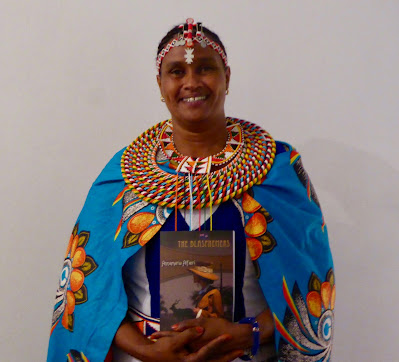
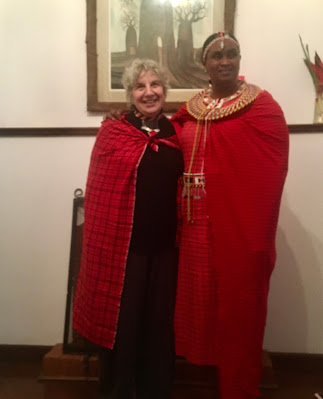
These cultural customs became background to the story of The Blasphemers.  Then, just as the book launched, I met Sarah Lesiamito, a proud Maasai woman from Samburu, Kenya, who at the time, had begun to rescue girls from these still-entrenched, retrogressive customs that robbed female children of freedom of any choice of how to live their lives.  I began doing what I could to support Sarah’s work.


When pastoralist girls refuse circumcision and want to continue with their education, they are almost always banished from their families.  Therefore, they need all the necessities of life–food, clothing, shelter, and moral support.


Sarah began by taking the girls into her own home, and for many years gave them all they needed to finish school and sometimes to go on to secondary school and higher education. One of those girls is now a nurse, who volunteers her services to the girls who have come after her.  When I met Sarah, she had ten girls in her care.


As her success grew, Sarah founded the Sidai Resource Center and attained non-profit community organization status in Kenya.  Sidai now has a dormitory building and cares for  forty-seven girls who have refused FGM and forced marriage and are now finishing school.  They are becoming full-fledged members of society.  Thanks to Sarah and Sidai.


Over the past couple of years, a group of friends have joined me in supporting this important work.  Our first goal was to gain tax-exempt status in the United States, so that we might invite others, who believe in education and freedom for girls everywhere, to join us.  We have persevered in this complicated process and are thrilled to announce, that under the auspices of CAFAmerica, we can now do so.


Today, I am inviting you!


Many of you, I am sure, believe in causes like ours.  Now, your donation can save a girl from pain and suffering that could last her lifetime.  Or from an infection that will rob her of her life.  Your generosity can free a twelve-year-old from being forced to marry a man many times her own age.  


A girl you support may become a teacher.  An accountant.  A seamstress.  A doctor.


A world of opportunity awaits those girls.


You can participate in their liberation.


Right here!  Right now!


DONATE   


SIDAI WEBSITE


Monday, March 15, 2021

Historic Moment for African Girls

Annamaria on Monday

In order to write the first two books in my Africa series, I had to spend countless hours over several years researching the cultures and history of Kenya.  But it was not until I started work on the third, The Blasphemers that I learned about the treatment of young girls.  It horrified me.  All the more so because, though British missionaries had been combatting it since 1906, among some groups, it was still common practice.

Then three years ago - just as The Blasphemers was launching, I met a grassroots warrior against FGM and forced marriage, a Samburu woman who is a teacher and gifted leader and organizer.  The Samburu are a branch of the Maasai tribe, which has clung to its old ways with remarkable tenacity.  In some ways this is a good thing, but its treatment of girls is criminal, and progress against these hideous practices has, until now, been spare.

But good news came in the past two weeks. Here is the text of an email that I received from Sarah on 22 February:


Declaration to End FGM in Samburu


Hi Patricia.

How are you and how are things the going?


We are doing well. The pandemic is slowing down and not many cases are reported.

Am still planning for a phone call or a skype with your friends soon when I get the appropriate signal area.


In June 2019 our president made a commitment to end FGM by 2022.

The coming Tuesday 2nd March the Samburu community—elders, women, girls, boys, leaders and Kenya’s President Kenyatta will make a historic Declaration to end FGM and Child marriage among the Samburu community.


Girls and women can help take the message of ending FGM to their fellow students and youth. I am looking into a future free FGM.


This event takes place at Kisima centre in Samburu 90km from where we live.

It will be officiated by President Kenyatta.


 I have mobilized 10 girls and 10 women to take them to the event. Am therefore requesting for some funds to enable me, the girls and the women to attend this historic event.


A message over the weekend corrected the date.  President Kenyatta had postponed the event to coincide with Kenya’s celebration of international Women’s Day over the following weekend.  The meeting would be on Friday, March 5. With strict instructions from me to send us LOTS of photos, Sarah went into high gear.  Here is her report on what happened at the event: 


Hello Patricia,

I am glad to report back that we made a successful trip to Lake Kisima to attend a historic declaration to end FGM and early child marriage among the Samburu community which was officiated by the President of Kenya.


Please find some of the attached pictures in the document. Thank you and may God bless you and your friends.


Lots of love,


Sarah Lesiamito


After breakfast, going to venue, awaiting president


The shuttles we hired for transportation


Elders who signed the Anti-FGM Agreement on behalf of the community


Local Administrators who attended the occasion with us


One of the surgeons that we took with us to the historic declaration to end FGM

(AA Comment: I believe this is an enkamuratani, a woman who performs FGM.  I think

 it was brilliant of Sarah to bring her along.)


With the school-going girls


Me and one of the local leaders talking to the girls


Women awaiting the President’s arrival


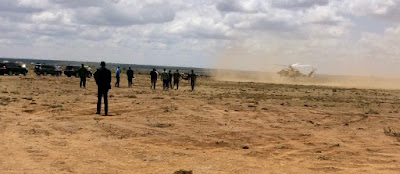
Arrival of the President


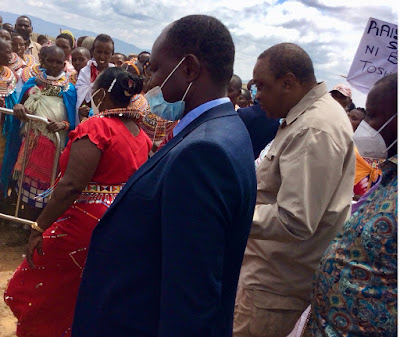
The President, local leaders, and the community (Kenyatta is in khaki)


Screen shot of Sarah’s final submission regarding the event


I am so proud of Sarah, of how she took advantage of the opportunity, of her leadership and organizational instincts.  The declaration of this month is a huge step forward, but its implementation will be a test and a challenge.  I will be conferring with Sarah on her progress and her needs, and will find ways to support her efforts. I have formed a group of highly capable women who will be joining in this work.


It is a privilege and a joy for me to have a small role in this effort.  The smiles on the faces of girls free to stay in school, to have their own dreams, and at least a chance at making them come true! They make me do the happy dance.  I was the first woman among my own female forebears who had an opportunity to follow such a path. I credit my mother with that change.  She was not allowed to dream for herself.  She dreamed for me.  


I don't know how much of the 21st Century I will see, but in this way and in many others, it seems to be bringing women out of the shadows, away from the second-class position we have so long occupied.  I believe I am looking at the Century of the Woman. All the world will be better off if I am right.  Of that I am certain.

Monday, April 29, 2019

Talking about the Unspeakable

Annamaria on Monday


We are all thrilled and have been bragging about and congratulating our blogmate Sujata Massey for winning the Mary Higgins Clark Award.  It's a great achievement for any novelist.      But it is even greater in this case.  Sujata did it AND she did so with a novel that discusses a topic no one talks about: menstruation.

Yes, my friends, I am saying that word - the one no one says in public - right here on MIE, in front of all of you.  Sujata's book brings up the topic in connection with the inhumane way menstruating girls and women were treated in early Twentieth Century India.  By caging them.  Not in the Middle Ages.  Less than a hundred years ago.

In many places - to this day - menstruating girls are isolated, considered filthy.  Orthodox members of major religions consider them literally untouchable.

Yet this taboo - as a subject AND as a process - is an essential part of human reproduction. If your mother had never menstruated, YOU WOULD NOT BE HERE!

Yes, now I am shouting and talking about your mother.

Women through the ages have greeted the arrival their monthly bleeding with glee if they did not want a baby, or tears if they were longing for a child.  This part of the cycle of human reproduction often comes with quite a lot of pain.  Certainly with inconvenience and discomfort.


Now for some good news.  This nice story about menstruation began when I met my friend Sarah Lesiamito, a Samburu-Maasai teacher, working in a remote part of Northern Kenya.  She has mounted a singled-handed effort to save the girls in her tribe, especially her students, from circumcision and forced early marriage.  To do this, she needs to keep the girls in school.

Moved by her devotion to her goal, I wanted to do what I could to help her.  I asked her what she needed for her girls.  I thought she would say books, or school supplies.  I had thoughts of shipping her pens and notebooks.  Her immediate answer was, "Sanitary napkins."


While I was recuperating from my surprise at her answer, she explained that the girls in her school have no way of dealing with their monthly flow.  During those days, they find it impossible to go to school.  So they stay home.  This means that they miss a week of school out of every four.  Eventually, without 25% of the instruction that the male students are getting, many of them fall behind, become discouraged, and drop out.  At which point, they have no other life choice but to submit to circumcision and being sold, in exchange for goats and cows, into marriage to a man who is likely at least three times their age.

I promised Sarah I would find a way to supply what the girls need to have life of their own.

Again, being the cockeyed optimist that I am, I found the solution to be more difficult than I imagined.  My first approach - begging the supplies from an American manufacturer and sending them to Sarah - turned out to be undoable.  There would be import taxes and customs complications.

We needed a local supply, and best of all, a reusable solution.


The path to the answer went this way:

Tony Sargent, friend in NYC, a real estate agent, had introduced me to a FaceBook friend whom he had never met who lived in Nairobi: Lydia Halliday.   There, Lydia had introduced me to her friend Jessica Ramey, who works as a consultant in the fashion industry.  Months later, when Jessica heard about the plight of the Samburu school girls, she said one of her clients might know of an answer.  She introduced me to a woman in New York, who works for one of her client companies.  That woman put me in touch with Charlotte Horler who works for SOKO, a cooperative of women seamstresses, who sew clothing in Nairobi.  They make reusable sanitary napkins from the scraps left after producing all-cotton women's clothing.


Voila'!  And Whew.  The trail took a year and three months.  We achieved our goal as of this week.  These little items are ready, just in time for the beginning of the school year.


Sarah's husband is arranging for 480 of them - enough to supply 60 girls - to be transported seven hours from Nairobi to Samburu.

Study hard, girls!

And thank you to all the kind hearts and informed minds that got us to success.

The journey took a village, but we arrived.