Showing posts with label Freddie Gray. Show all posts

Wednesday, June 29, 2016

An Unsolved Death in Baltimore


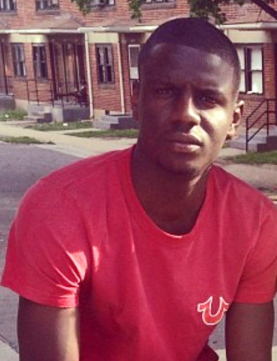
The Vidocq Society is a small but legendary group of experts who gather to solve mysteries of the ages. I wish they could find the answer to an unexplained death that took place a few miles from me, last spring. This is the death of 25-year-old named Freddie Carlos Gray, Jr.


On April 12, 2015, Freddie made eye contact with a police officer in his Baltimore neighborhood. He ran, and a group of cops that included some bicycle officers caught him. He was searched, found to have a small switchblade (legal for the state of Maryland but not for Baltimore City) and was taken into custody. Some spectators observed police sitting on his neck and bending his legs backward. A civilian-shot video shows him being dragged and loaded into the back of a police van. In the van, the police put him in wrist and ankle restraints—but the seatbelt that was also in this section of the van wasn’t used.


The van made five stops before reaching the Western District police station. Freddie asked for medical help several times. When the van reached the police station more than 45 minutes after loading up Freddie, he was unresponsive. Freddie was taken to hospital, where doctors discovered he was in a coma and had severe spinal cord injuries. He died April 19, 2015.

This death, coming on the heels of so many other police-on-civilian killings nationwide, was not going to fade into oblivion. For a few weeks, the city’s reaction was many protest marches, rallies and discussions. But the night following the funeral, a protest became aggressive, with bottles being thrown at police. Thirty-four arrests were made and fifteen police officers suffered injuries.


The next day, the Metro Transit Administration made the fateful decision to stop bus and light rail service in an area where several high schools converged. Some frustrated students grew into a bloc that began vandalizing cars. Earlier that day, some students had spread word through social media that there would be a “purge” with violent behavior. 
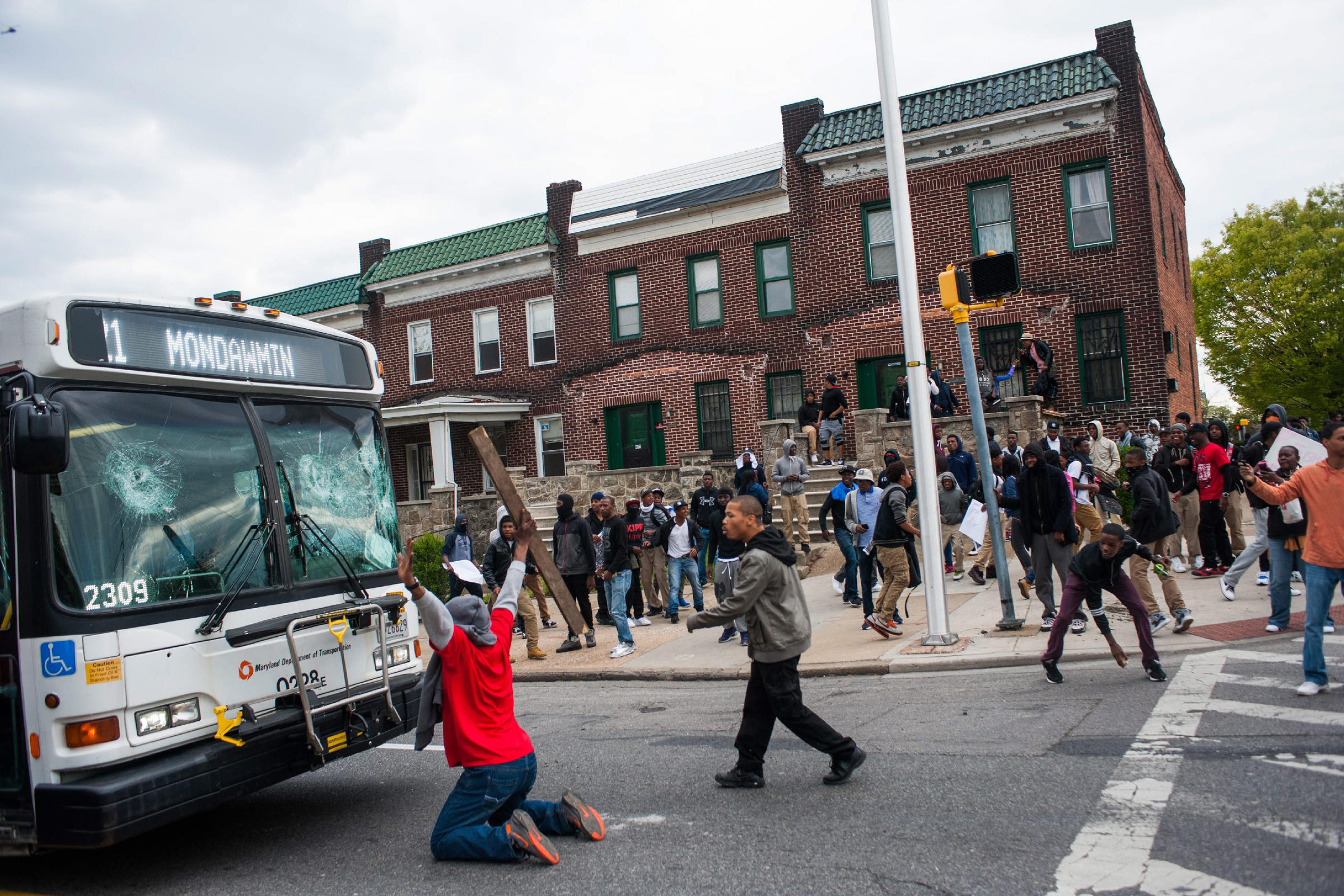

The students’ riot was quickly augmented by other, older people, who joined in burning buildings and cars, looting stores, and attacking some drivers of cars. Throughout this, the police stood back, and the violence spread like wildfire throughout city neighborhoods. What was happening was about much more than the death of Freddie Gray. It had become an uprising of disenfranchised people frustrated by city government and a lack of opportunity.


The National Guard arrived and the city went under a 10 pm curfew for almost two weeks. The Baltimore State’s Attorney, Marilyn Mosby, announced that her department had launched an independent investigation and would be prosecuting the six police involved on numerous charges. The most serious charge, depraved heart murder, was leveled at the driver. What was unusual about the prosecution was that Mosby announced the charges without waiting for results of the police department’s investigation or sharing the results of the autopsy, wherein an assistant medical examiner declared the death a homicide, due to injuries sustained through omission of safety procedures. The autopsy also revealed the presence of cannabis and opiods in Freddie’s system, which could be argued might have led to Freddie being restless and physically panicking in the back of the van. The autopsy was the only factor presented to convince a grand jury to bring the officers to trial.


The State’s Attorney’s thesis was the officers had conspired to give Gray a “rough ride” to prison, and that was equivalent to homicide. Yet as three officers of the six officers have come to trial over the last eight months—none of them testifying against each other—no evidence of violence has appeared. The result is one officer had a mistrial; and two were acquitted. The three officers remaining to be tried are asking for charges against them to be dropped.


With a supposed absence of violence, how did Freddie Gray die? Was it just a crazy accident in the van the man caused to himself by moving around?


Another possibility might be that his neck was broken by one or two of the officers before being loaded into the van, and the long delay in medical help proved the final death blow. Apparently, the prosecution had a piece of extra evidence they wanted to present in the recent trials. This information was ruled inadmissible, because prosecution apparently hadn’t gone through the standard process of sharing the information with the defense. 


The mystery boils down to how a man who was fit enough to run away from the police without any trouble would lie unconscious with a broken spinal column, less than an hour later.
SaveSave
SaveSave
SaveSave

Wednesday, April 6, 2016

Trumping is Everywhere Now

Sujata Massey


Perhaps you have heard about the unexpected drama in the US presidential primary races. Are you surprised, shocked, or startled? I’ve been getting a sick feeling each morning when I pick up the Washington Post and read news about violence at rallies, hateful statements, and the rest. But I’m just as worried about a local election that could reframe life for my 620,000 neighbors. This is the 2016 race for Baltimore’s next mayor. 


When I moved to Baltimore, Maryland in 1982, the mayor was the late William Donald Schaefer, a slightly comical, profane, Democrat who could be called a curmudgeon one day and a cheerleader the next. Baltimore was much larger then: 776,000 people, although that number came after a slow, measured exodus of city residents from the late 1960s onward. City residents were dealing with the disappearance of shipping, steel and other old-industry jobs, but they hadn’t yet faced the plagues of cocaine and heroin addiction. Mayor “Willie Don” lured big companies and builders to create Baltimore’s Harborplace development. Urban homesteaders paid $1 for row-houses they pledged to renovate that would serve as their homes. A federal and a city program helped homebuyers built great residential neighborhoods like Federal Hill and Canton.
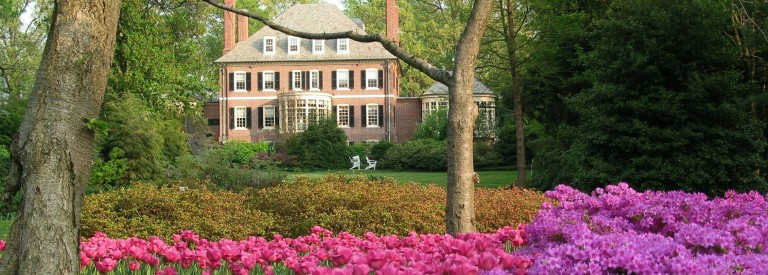
Baltimore's Sherwood Gardens in Guilford


If you live in the central zone bordered by the harbor to the south and the suburbs the north, life is still pretty pleasant. Our historic treasure of a house is larger here than our last one in the midwest, and was half the buying price. Our work lives are going well, and we love the weather and friendly people around us. But the factors I've already mentioned  have built a second shadow city that is larger than mine.
Arrest of Freddie Gray captured on cell phone video and shared by Baltimore Sun

In April 2015, a young man named Freddie Gray got spooked when he saw a group of police and started running. The cops caught him, put him in shackles in the back of their van, and took him on a rough ride to the jail that resulted in fatal injuries. Peaceful protests and discussions about Gray’s death escalated into a horrible day of mob destruction that was televised worldwide.

Following the events now called the Baltimore Uprising, our current mayor, Stephanie Rawlings-Blake, announced she wouldn’t run for re-election but would focus on rebuilding the city. The old police chief was fired, and a new police chief, Kevin Davis, is making a tremendous impact in solving crimes. However, the city can’t make the overall changes desperately needed without a strong mayor.

Currently there are many choices vying to be the Democratic candidate; and Democrats typically win the city. The candidates have been appearing at casual gatherings in people’s homes, community centers, churches and pubs. I’ve been to a few of these informal events and enjoyed the chance to ask serious questions directly. Televised and webcast debates and roundtable discussions with these candidates have been remarkably civil and friendly. They seem to be in harmony on the importance of giving people coming out of prison a real chance at work; drug treatment; fixing the schools; providing real education in the schools; and improving police-community relations.

The six most viable candidates include two city councilmen, Carl Stokes and Nick Mosby, who speak of their experience representing hard-hit neighbors. Sheila Dixon, a former Baltimore mayor who resigned in 2010 to avoid standing trial on charges of corruption, wants back in because she says she is the only one who knows how to do the job. Catherine Pugh, a Maryland state senator, is proud of pushing the state to send Baltimore needed funds. Elizabeth Embry, the deputy state’s attorney and former chief city prosecutor, says she wants to use data to make the city work and highlights her crime-fighting expertise. David Warnock, a businessman/philanthropist who moved here from Michigan, has big ideas about jobs, transportation infrastructure, and schools. You can watch a roundtable discussion with the gang on ABC's Square Off!


Right now, Sheila Dixon and Catherine Pugh are running neck and neck, but I’m attracted to a few of the underdog candidates. And here’s where the lessons of the national presidential race come in. A whole lot of small, respectable presidential candidates each gathered small pockets of votes and mini-spikes in polls. These scattered votes put Donald Trump front and center. Therefore, I fear a vote for one of the little guys in Baltimore is a vote for Ralph Nader. And there's yet another reading of the situation. There are others who will look to another side of the current political game and say that  the sparkling starlets I'm considering are only building steam on what might be called The Trump Effect.

Should follow my heart or my head? Still deciding. Could the two be linked?