Showing posts with label Facebook. Show all posts

Wednesday, October 13, 2021

The Facebook/Instagram Dilemma

 Kwei--Wed


For two years, data scientist Francis Haugen, 37, was a project manager for Facebook until she left in May 2019. On October 3, 2021, she appeared on CBS's 60 Minutes as a whistleblower revealing the dark, murky dealings of Facebook and the social networking service it owns, Instagram. At issue are the algorithms that these entities use to engage its users for as long as possible, leading to distress and suicidal or near-suicidal acts. 

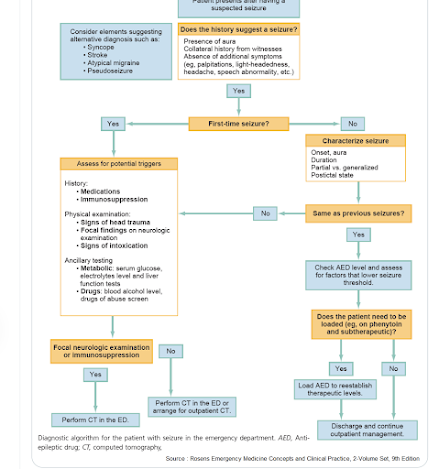
An algorithm is a process or set of rules to be followed in calculations or other problem-solving operations  and ending with a solution or goal. Algorithms are used in industry and medicine as a tool to know what needs to be done next. In medical training, we often studied eye-glazing, sleep-inducing diagnostic algorithms like the one shown below. Paradoxically, the more skilled a physician you were, the less you needed to rely on algorithms on paper because you knew it in your soul.


So then, what are algorithms on Facebook and Instagram? I question whether algorithm is not a euphemistically neutral word that conceals what is actually happening. When I read about FB/IG algorithms, I see quotes like

The new [2021] Instagram algorithm dictates the order of the posts that users see when they’re scrolling through their feed.

Based on specific signals, it prioritizes the best posts, pushing the most relevant ones toward the top and giving them the most visibility, while other content ends up being placed further down. 

To me, this isn't quite an algorithm, which gives options for different outcomes. This is a decree on what the outcome must always be: give the [best posts] the most visibility. An algorithm starts at the beginning and moves forward through various options to arrive at several possible outcomes. An Instagram algorithm starts at the end with a fixed outcome, keep as many eyes on the screen for the longest time.

According to Frances Haugen, FB/IG harms teenagers, the company knows it, but they've done nothing about it because all this is good for the bottom line. In addition, Facebook was aware that misinformation, hate speech, and divisive political speech on their apps were affecting societies around the world. This could include in 2018 when the Myanmar military used Facebook to launch a coup. Facebook knows that fear and anger are the most effective means of promoting engagement.  

Instagram, the more visual of the two platforms, has devastated teens all over the world. Instagram's own research finds thirteen percent of teen girls say Instagram makes thoughts of suicide worse, and seventeen percent stated that Instagram made eating disorders worse. FB/IG has been compared to the tactics of tobacco companies decades ago: They knew tobacco was bad, but they hid the evidence because it would reduce the bottom line.

Adults, too, using FB/IG may be aware of the way they are being manipulated. If you show interest, even casually, in a particular item, you will soon be targeted with ads of that product or variations of it.

There's something smug, smarmy, and arrogant about Facebook, not least because Mark Zuckerberg, the CEO, appears smug, smarmy and arrogant. This ick factor is much of the reason I'm considering boycotting Facebook and Instagram. I feel like I'm in bed with a slimy monster. I don't boycott companies only on the basis of self-interest; I boycott on principle whether it directly affects me or not.

If I withdraw, what might I lose? I do use these platforms to let people know what's new and what books are coming out, but newsletters do that too, and my closest Instagram followers (those who engage the most) are probably also on my email list.  

And lastly, what is the true value of Instagram followers for an author? For me, certainly not financial. There is no discernible correlation between number of followers and book sales. Is it something about being seen and remaining relevant and connected? Or ego?--there's a lot of tooting one's own horn on IG.


Thursday, January 14, 2021

What's up with WhatsApp?

 Michael - Thursday

First a disclaimer. Although I’m still an honorary professor of computer science at the University of the Witwatersrand in Johannesburg, I’m not an expert on computer social networking technology. My area is image processing, and a rather specialised area of it at that. But I am interested in data security and the mathematics behind it, probably because I was a pure mathematician in another life and it’s fun to see the esoteric stuff I learnt at university actually being important. And, like very many people all around the world, I use WhatsApp a lot. I was a big Skype fan in the old days, but WhatsApp is just so much simpler and easy to deal with on a smart phone. (If you don’t know what WhatsApp is, you may want to skip the rest of this post.)


Brian Acton and Jan Koum set up WhatsApp as a start-up in 2009, asking for a small payment ($1 a year) to use the service. Their mantra was no advertising and absolutely secure data – your messages (and later your pictures and your voice calls) were completely private. It had a rocky start, and was at first exclusive to iphones, but when it spread to other platforms, it was soon growing nicely. I liked the service and paid them my dollar.

In 2014 when Facebook bought WhatsApp, they forked out nearly $20 billion - for a company that had never made any serious money. Facebook promised that WhatsApp’s philosophy wouldn't be changed and Acton and Koum stayed on. But they paid $20 billion and dropped the subscription…

Facebook supported their new subsidiary handsomely, and several important innovations followed. Voice, video, picture sharing. The declared ambition was to have WhatsApp on every smartphone. But some concerning things began to emerge. Telegram (another messaging service) was also growing strongly, and WhatsApp was accused of blocking their users on Android phones from connecting to it.

On May 18, 2017, the European Commission fined Facebook €110 million for "misleading" it during the 2014 takeover of WhatsApp. The Commission claimed that when Facebook acquired the messaging app, it "falsely claimed it was technically impossible to automatically combine user information from Facebook and WhatsApp." However, in the summer of 2016, WhatsApp had begun sharing user information with its parent company, allowing information such as phone numbers to be used for targeted Facebook ads. Facebook acknowledged the breach, but said the errors in their 2014 filings were "not intentional”. Huh? They paid $20 billion for a company that wasn’t going to bring them anything?

As of February 8, Facebook wants you to agree to a new privacy policy, and it’s got nothing to do with the EU rules. The new requirement that many users are up in arms about is that WhatsApp will share all the data it obtains from your phone with its parent company.

FB Data center

Okay, so Fact Number 1. WhatsApp has been sharing its users’ data with Facebook all along. And Facebook has been using it to target ads on its main platform. This fell foul of the EU policy, and it cost Facebook a substantial amount of money. (Maybe not a lot for Facebook.) So they are now requiring users to give them the right to do this (except in the EU).  This data includes all the contacts on your phone, and that’s other people’s data, provided to you in good faith. Will Facebook use that data for, say, telemarketing? It’s hard to believe, but they do something along those lines already in India.


One consequence of Fact Number 1, is that you are not much worse off using WhatsApp next month (if you agree to the new policy) than you were last month as far as privacy is concerned. But that’s pretty small comfort unless you trust Facebook not to misuse the data. (Hint: Acton and Koum left the company in 2017. Rumour has it that they disagreed with the direction the company was taking.)

Fact Number 2. They can’t read your messages. All the messaging services you may be using now use end to end encryption. This means that the messages can’t be decoded by being intercepted, not even by the messaging company itself. But they can see who you’re talking to, how often, have both parties Facebook pages (if the parties are on Facebook), and so on. Facebook knows that Stan and I talk a lot and have deduced that it’s probably about our books. They haven’t figured out yet what they could sell to two authors though…

However, with a suitably elevated court order – say the FBI suspects you of terrorist activity – the services can decode your messages, or at least the FBI can. (To their credit, Apple refused to unlock a cell phone on one occasion, but the FBI did it anyway.)

Fact Number 3. People dislike having their noses rubbed in things. It’s one thing to quietly acquire their contacts list and use it for general data gathering, it’s quite another to demand that they agree to it. Now it is a knowing breach of confidentiality. I must say I’m very uncomfortable with that, and I think Facebook miscalculated the reaction people would have. As a result lot of users have been test driving the competition.

“USE SIGNAL” That Tweet might be regarded as straight marketing, except for the fact that it came from one of the world’s leading innovators and now the world’s richest man – Elon Musk. (An amusing aside is that a group of stock market punters thought he was referring to a listed company with that name in a different area, and its shares doubled!)

Signal is a messaging service that couldn’t be more different from WhatsApp, except that it looks the same, and does the same thing. It’s free, uses open source software, uses the same encryption as WhatsApp, and got moving thanks to a $50 million donation from Brian Acton. (One of the founders of WhatsApp. About that issue of them falling out with Facebook...) Signal has no shareholders, runs entirely on donations, and is a non-profit. I’ve tried it, and it’s smooth, high quality, free, and committed to open, totally-private messaging. What’s not to like? I’m sure I’ll find something, but I haven’t as yet.

The table below gives a comparison between the messaging services, but there really isn’t much comparison, is there?

Why would one not switch? Well, what about if some of your contacts don’t switch and you can't reach them? Right now it doesn’t seem to be a problem. Next month? Who knows?


Thursday, January 30, 2020

The spy without


Michael - Thursday


Tuesday was Data Privacy Day, and the Washington Post celebrated it by publishing an article titled “Facebook will now show you exactly how it stalks you — even when you’re not using Facebook.” It’s a well-written, useful article, and I advise anyone concerned about data privacy to take a look at it. What it is not, is surprising. In fact, if the article had claimed that Facebook and the other tech giants listened in to your conversations, I still wouldn’t have been surprised. My philosophy is that if you don’t want something to be public, don’t put it on the internet. Once you do that, there is always a way—legal or illegal—for someone to discover it.

For that reason, I haven’t resorted to any of the password vault software that generate passwords for all your internet accounts for you. However, I’m beginning to weaken. As the password requirements become more and more challenging—must have special characters, may not have special characters, must reach a certain level of complexity that none of my usual passwords do, etc. etc.—I have to resort to writing them on a piece of paper. (You remember? The flat, thin, white stuff?) However, I write them in code. Then I have to remember the codes. And where I put the piece of paper. I think that a password vault that takes care of all the passwords I don’t care too much about and simply remembering the few others may be the answer.


The WP article is about a new tool that Facebook offers called “Off-Facebook Activity.” The new tool allows you to discover what information Facebook is gathering from your actions, not only from its associates, Messenger and Instagram, but also in lots of other ways from lots of other internet sources. And while it won’t allow you to actually stop the collection of such information, it will allow you to prevent it being used so that advertisers can target their advertisements to you. However, the data is still there. Presumably, it’s to be used to obtain statistical information of value to…the advertisers. Neither will it reduce the number of adverts you receive. (You have to pay websites for that privilege.) So let’s understand the gain here. If we turn off this advert targeting, what we get is more random adverts. Is there not actually some benefit in at least getting adverts that you might possibly find interesting?

As you probably know, the European Union has made some efforts to prevent people being flooded with spam-like emails, and I support that strongly. You now have to explicitly sign up to receive newsletters and the like, and the default option is that you do not receive the marketing material. The penalties for violations can be severe. Like most authors, we've changed our newsletter so that it only goes out to people who explicitly asked for it. That cost us quite a few subscribers, but presumably the ones we have left actually have some interest in our books, and the others don’t have more emails to delete without opening. Good for both groups.

Sometimes data collection behaviours of websites can be uncanny. One lunchtime in Cape Town, Stan and I headed off to a restaurant he likes. We asked Google for the address, which it promptly gave to us. When we arrived, we discovered that the restaurant was closed. As soon as I returned to Google, it immediately offered restaurants near to the closed one, even though we'd never turned on the GPS option. How did it know where we were? Well, of course it can tell that from where the signal is being picked up by the cell phone towers. (Yes, I believe Google would have access to that information.) Or did it know the restaurant was closed and so we would be searching for another? Modern AI does that easily. Or maybe it was simply the most probable thing we would want after searching for the address of a restaurant that was in that part of town.

So Big Brother is watching us. And it’s not the people in Washington or London or name your favourite capital city, but Big Tech. (Of course, those other people are also watching us by using the same and other technologies. And they don’t play by rules.)

I think it’s not good, but I have to admit that it’s worth it. How many of us could live without Google let alone the internet as a whole? But how concerned should we actually be about the information we freely give away?

I don’t know the answer. What do you think? Probably Google and Facebook already know the answer to that, but I’m not smart enough to get them to tell me.

Monday, June 6, 2016

What's up with this, Facebook?

Annamaria on Monday

There may be the beginnings of a thriller plot in something that has been happening to me.  The movie or the book might be called The Facebook Conspiracy.


Almost all writers I know use Facebook to promote their work.  Our publishers urge us to do this so we can interact with our readers and use the connections to promote each new book as it comes along.  With each of my books, my publisher sent me a questionnaire that asked, among other things, how many friends Annamaria Alfieri had on Facebook.


The number went up every year.  These days, I get new friend requests just about every day.  I am happy to connect with these new people, so for a long while I automatically accepted any friend request I received.

That is until about eighteen months ago, when something weird started happening.  I started to get friend requests from men, who--the instant I accepted them--private messaged me to tell me how beautiful I am and how desperate they were to get to know me better.


I found this creepy in the extreme.  There are hundreds of millions of women more attractive than I on Facebook.  On top of which my Facebook page clearly states that I am married.  These would-be friends would have had no way of knowing that, in reality, I no longer have a husband.  What did they hope to achieve by flattering me in such a way?  I could not imagine it was anything nice.  After a couple of these experiences, I began examining the profiles of people before I accepted their offer of friendship.  I began to suspect that some of the people approaching me were using fake identities. Let me show you the evidence:

Profile of the impersonator:  Male, divorced/widowed, often military, lives in another state/country/continent, well-educated, has very few or no other friends on Facebook, displays few pictures of himself--almost all in a professional capacity, and quite a few of them have the same woman (Victory Crane) as a friend.  I am not accusing her of anything.  She may be just another target.

Here are screen shots of such offers of friendship that I received between May 24 and May 26 this year:


Yes, it is typical for me to receive five of these in a three-day period, which is one of the reasons I am talking about it.  It really creeps me out.  So much so that I reported the activity to Facebook.  The answer came back that the people in question were legitimate subscribers.  No help from that quarter.

I must say, though, creepy as I find all this, I did get one offer that made me laugh out loud.  Here it is:


Really?  I am supposed to believe that this guy is the architect of that building?   HAHAHA! 


If I wrote contemporary thrillers, I would write one with the following plot:  Woman in her sixties finds herself living alone for the first time in her life.  Her husband's tragic illness has destroyed the happy life she had.  For a living, she writes code for a voice-over-internet provider and works from home.  She is lonely and could be vulnerable to people who are trying to impose on her.  Out of the blue, she begins to receive offers like the ones above.  At first, she accepts offers of Facebook friendship from attractive men who live far away, thinking that a little minor-league internet flirting couldn't hurt.  She does that with a few of these men.  But then she begins to suspect that they are out to hurt her in some way.  When she tries to find out if her suspicions are correct, she gets no help from Facebook.  So she uses her computer skills to try to dig into what is behind all this.  At first what she finds leads her to believe that there are more than three people behind the false faces on her computer screen.  She suspects a financial scam of some sort, because money does come up in the posts from them on her Facebook page.  Eventually, she uncovers a shadow world, playing the background of Facebook, where a ring of underworld international arms dealers use unsuspecting women's Facebook pages to pass coded messages to one another.  One of the men who has friended her and watches her Facebook page turns out to be a French BRGE spy (Brigade de renseignement et de guerre électronique).  He eventually he sees that she has misunderstood the danger.  When she decides to trap the miscreants, he must interfere to save her.