Annamaria on Monday
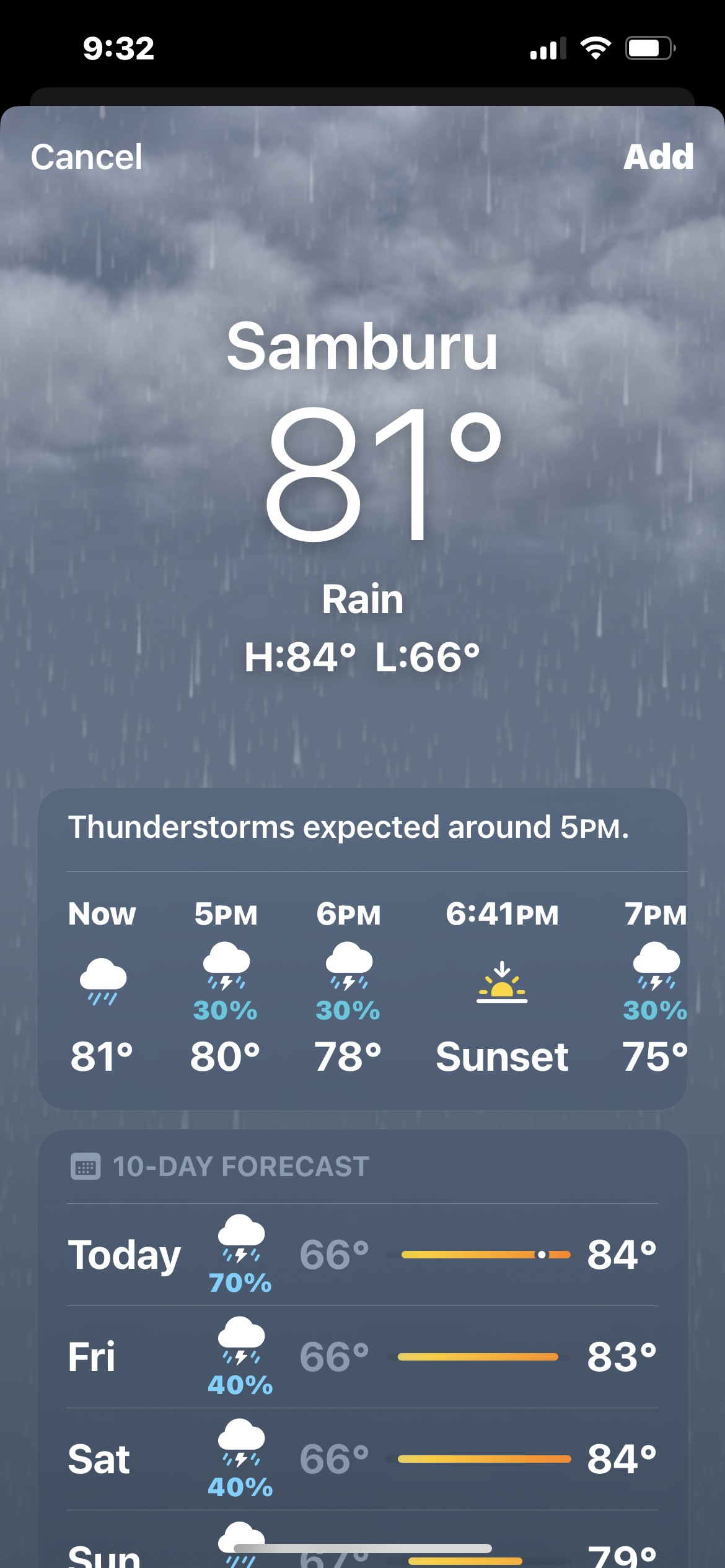
As October begins, I find myself saying silent prayers for rain. I am not alone in this. In Kenya, the current drought has lasted for three years. The situation is dire, to say the least.
The local climate in East Africa has, normally, two alternating seasons—dry and wet. The rains are supposed to come between March and early May (long rains) and in October (short rains).
After 36 months with nothing but a few very isolated and brief downpours, here is how the Kenyan government assesses the situation in Samburu County, the home of my friend Sarah and the girls she is saving from FGM and forced early marriage:
- County remained predominantly dry with high temperatures.
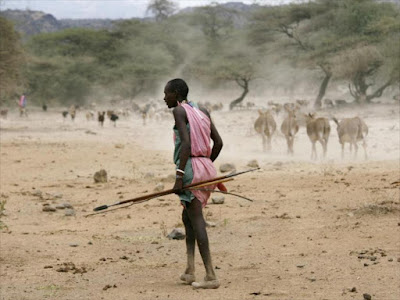
- Pasture remained depleted with browse conditions being poor across the zone. Most of the open surface water sources remain dry and boreholes yield is low due to high abstraction rates.
- Livestock body condition remained very poor to poor across all the livestock species.
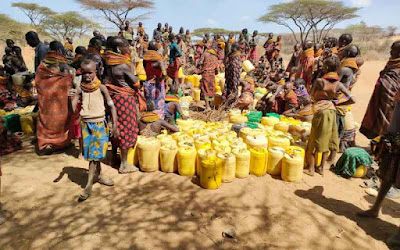
- Trekking distances for households and livestock increased further due to shortage of water.
- Livestock are still in dry grazing areas with over 80% of cattle still grazing outside the county. Consequently, resource-based conflicts escalate among herders.
- Livestock selling prices are below the average. Staple food commodities such as cereals increase due to shortage.
- The prevalence of malnutrition rates of children below five years based on family MUAC continued to worsen across the county.
The life-threatening nature of these difficulties is such that it intensifies the already difficult challenges of many people's lives. Their animals are their main, sometimes their only source of food. The drought is killing their cows and goats. The animals still left are targets for raiding parties by starving men nearby.
Food scarcity affects children more intensely than adults. Hungry children can't study and learn well. When their families move to new territory to try to find food they're often taken out of school. Sometimes, the men take the animals and leave the women and children behind to become the targets of bandits.
The prevailing culture already treats women as second-class citizens. Under the prevailing culture, men become angered by the lack of food and their rivalry with others competing nearly nonexistent resources. They take our their frustration on women. This is so prevalent that there is a phrase to refer to it: "drought-instigated violence."
Women, who do all the water carrying, have to walk long distances to find what little there is. They are likely to be attacked and molested.
Girls ten to thirteen are always in danger of being sold into marriage. Under these drought conditions, they are even more likely to be traded for animals or food.
I have come to first-hand knowledge of these conditions through my connection with the Sidai Resource Centre in Samburu in Kenya, which is a hostel for girls who have refused FGM and forced marriage. I am happy to say that even with the higher food prices and the other challenges of this miserable drought period, the girls are safe, fed, and attending school. And six new girls have been left at Sidai while their families have gone to higher ground where they hope to find better grazing. These newcomers are finishing the school semester and will be able to take their end of year exams that will qualify them to go on with their education.
Now October is here. I ask you to join me in my hope that the October rains will come and alleviate the suffering.