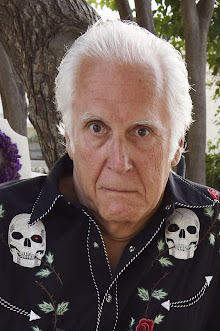
Libby Fischer Hellmann, while
DC born has deep roots and keeps her heart in Chicago. Most of the time.
Libby's an award nominated writer, former President of the Sisters in Crime,
killer tour traveling companion who I call my friend. She's also a killer
writer - not only does she write two series but standalones and her new book,
Havana Lost, is the third in what she calls her 'Revolution Trilogy'. In Havana
Lost, she gets the smells, the textures, the politics and those tiny cups of
Cuban espresso just perfect. Please welcome Libby, who's the Thelma to my
Louise, and give her a warm MurderisEverywhere welcome!
As I’ve been out and about promoting Havana
Lost, I’m struck by how little Americans really know about Cuba.
Pretty much all the information over the past 30 years has been filtered
through the lens of the Cuban-American exile community, who, although they’re
dying out, are still bitter and don’t have a kind word to say about Cuba or
Fidel Castro. But since their allies continue to be a powerful lobby in
Congress, I suppose we shouldn’t be surprised by the vitriol.
Btw, just to set the record straight, I’m not here to defend
Fidel or what he’s done. He decimated the middle class that had been thriving
in the 1950’s. And he turned out to be just as cruel and dictatorial and
territorial as Fulgencio Batista, his predecessor.

In fact, there are persistent rumors that Castro was responsible
for the death of both his revolutionary comrades Camilo Cienfuegos and Che
Guevara. It wouldn’t surprise me if the rumors were true.
What does surprise me, though, is how little Americans know
about Cuba’s “Special Period” in the 1990’s. It was so dire that I wonder why
the exile community didn’t jump on it for propaganda purposes. Or the pretext
for another invasion attempt. But apparently, they didn’t, so the Special
Period remains the depression nobody knows about.
A little history here: you probably remember the collapse of
Berlin wall in 1989. That was followed by the dissolution of the USSR in
1991. What you might not know,
however, was the impact on Cuba. In a word, it was catastrophic. Cuba sank into
a depression so severe it makes our “Great Recession” look like a walk in the
park.
The reason? Cuba had been one of the Soviet Union’s largest
trading partners, and when it collapsed, so did Cuba’s economy. They lost 90%
of their petroleum imports, including oil, gasoline, diesel, fertilizers, and
insecticides. With no fuel to power cars, buses, and tractors, the Cuban
transportation system collapsed. So did their agriculture and farming. There
were severe food shortages, and the average Cuban lost twenty pounds. Industry
slowed to a crawl, and Cubans had to do without many consumer goods, including
medicines. Eventually, even Fidel had to acknowledge the truth, and, in a move
worthy of Joseph Goebbels, labeled it the “Special Period.” (I describe
much more about the Special Period and its impact in Part Two of Havana Lost.)

Cuba has clawed its way out of the harshest parts of the Special
Period by adopting organic farming methods, using bicycles and horses as the
primary mode of transportation, and bartering goods and services. But there is
still desperate poverty.


Outside Havana you see fields being plowed by oxen, people
driving horse-drawn wagons, and thatched huts huddled together on muddy roads.
Even in Havana, you see people on the streets charging a few Cucs (Cuban
currency) to have their photos taken with tourists. And in Havana neighborhoods
like Regla and Lawton, you see abandoned factories, dilapidated buildings, and
a total absence of commerce.


The government is trying to boost the economy; over the past two
decades they’ve amped up tourism, and it has become the number one industry in
Cuba—for everyone except Americans. And recently Raoul, Fidel’s brother, has
loosened restrictions on buying and selling cars, property, and small
businesses. Unfortunately, those businesses are still heavily taxed, and most
of the investment cash for those activities is reportedly coming from Cuban-
American relatives.
I suppose we could analyze why most Americans don’t know about
Cuba’s woes, but I suspect a third of the US population would think it’s the
result of a conspiracy; another third wouldn’t care; and still others might
feel the Cubans got what was coming to them. But how can the suffering of
innocent people ever be justified?

It’s hard to admit this, but Cuba’s economy was more stable back
in the 1950’s when the Mafia ran Cuba. I’m certainly not advocating for a
return to that era, and I’m wary of what’s going to happen when the US finally
does lift the embargo (which they will undoubtedly do after Fidel dies). The
last thing Cuba needs is another super-power trying to exploit whatever
resources it still has.

At the same time, though, almost sixty years has passed, and
Americans need to know more about one of their closest neighbors. The right
kind of investment in a country 90 miles from us might yield more tangible
benefits than a military strike in the Middle East, don’t you think?
Libby for Cara—Tuesday