
I could quite easily have titled this blog About time since it would have applied to both stories in the news that have caught my attention.
I am not surprised that English cricket is reeling from a series of allegations of racism by well-known cricketer, Azeem Rafiq. It has been a long time coming.
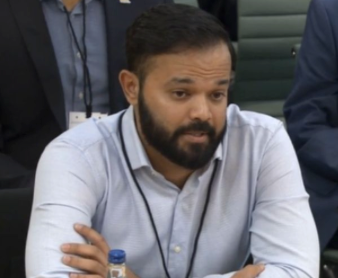 |
| Azeem Rafiq |
 |
| Azeem Rafiq bowling |
Basically Rafiq played for one of the most influential cricket clubs in the U.K., namely Yorkshire. For a number of years, he bore the brunt of racist jokes and attitudes.
In a hearing currently being held on Tuesday by parliament's Digital, Culture, Media and Sport (DCMS) Select Committee, he was asked why he didn't do something about it. I found his answer telling: "For people of colour, to start accepting you're being treated differently, it's very difficult. After that, you're always asking why. Right up to 2017, I didn't believe it. I reported it as bullying. For me to believe I was being treated this way because of my colour, my race, it was difficult for me to digest."
He eventually realised that he needed to do something about it and tried to raise the issues with the club. Nothing was done. Even when a lot of pressure was brought on the club to censure some of its management, nothing was done.
It was then that Rafiq decided he had to pursue the matter further.
Rafiq's evidence to the DCMS Select Committee on Tuesday recounted shocking instances of racist treatment he suffered during two stints at the club from 2008-14 and 2016-18, and even before when, as a 15-year-old Muslim playing local club cricket, he was pinned down and had red wine poured down his throat. Rafiq, who was a hugely promising player, also told the hearing that he believed he had "lost my career to racism".
Cindy Butts, chair of the England and Wales Cricket Board (ECB)-appointed Independent Commission for Equity in Cricket (ICEC), which was established as a result of Rafiq's case, told The Telegraph that more than 1,000 whistleblowers had come forward in the past week to raise potential cases of abuse after the commission issued a "call for evidence" on November 9.
"It is crucial people across the game, many likely inspired by Azeem's bravery, have the chance to be heard," Butts said.
Rafiq's response echoed my own feelings: "The experiences yesterday, it wasn't the first time they heard it," Rafiq said of the ECB. "They've had good notice of it for over a year now. We've heard a lot of stuff from the ECB in terms of PR initiatives and a lot of waffle in my opinion."
I am not optimistic that the entrenched racism is likely to change after the storm has passed, but I can only admire Rafiq's courage in bringing it into the open.
***
On the other hand, I was surprised at an announcement out of Germany.
As readers of this blog may remember, I have written often about African (and other) art treasures that have been looted by colonial powers. I have advocated their return to where they were stolen from. However, most museums around the world have continued with their paternalistic, colonial attitudes, arguing that the art may be lost if returned, and so should remain in the West.
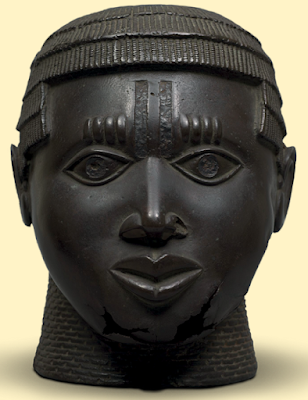 |
| Looted |
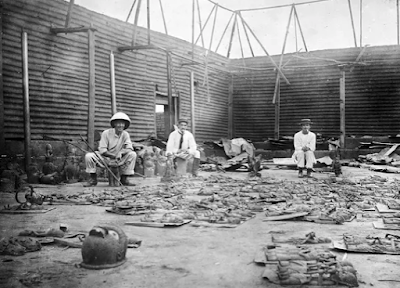 |
| Looters |
If it weren't so sad, this attitude would be laughable: that countries motivated by nothing but avarice can accuse countries that had looked after the treasures for hundreds, sometimes thousands, of years, are incapable of doing so again. A bit racist maybe?
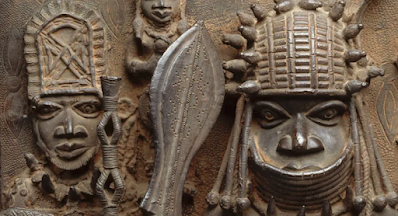
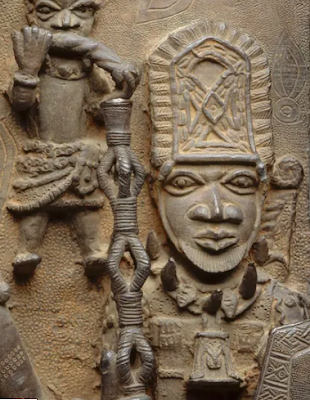
However, I felt a glimmer of hope at an article in The Conversation, which claims that Germany has committed to returning hundreds of looted artefacts to Nigeria. There are probably thousands of such items in the country, but returning hundreds is a start. This follows a commitment by the French Parliament to return a couple of dozen of its tens of thousands of items.
And where will they be housed? you may ask.
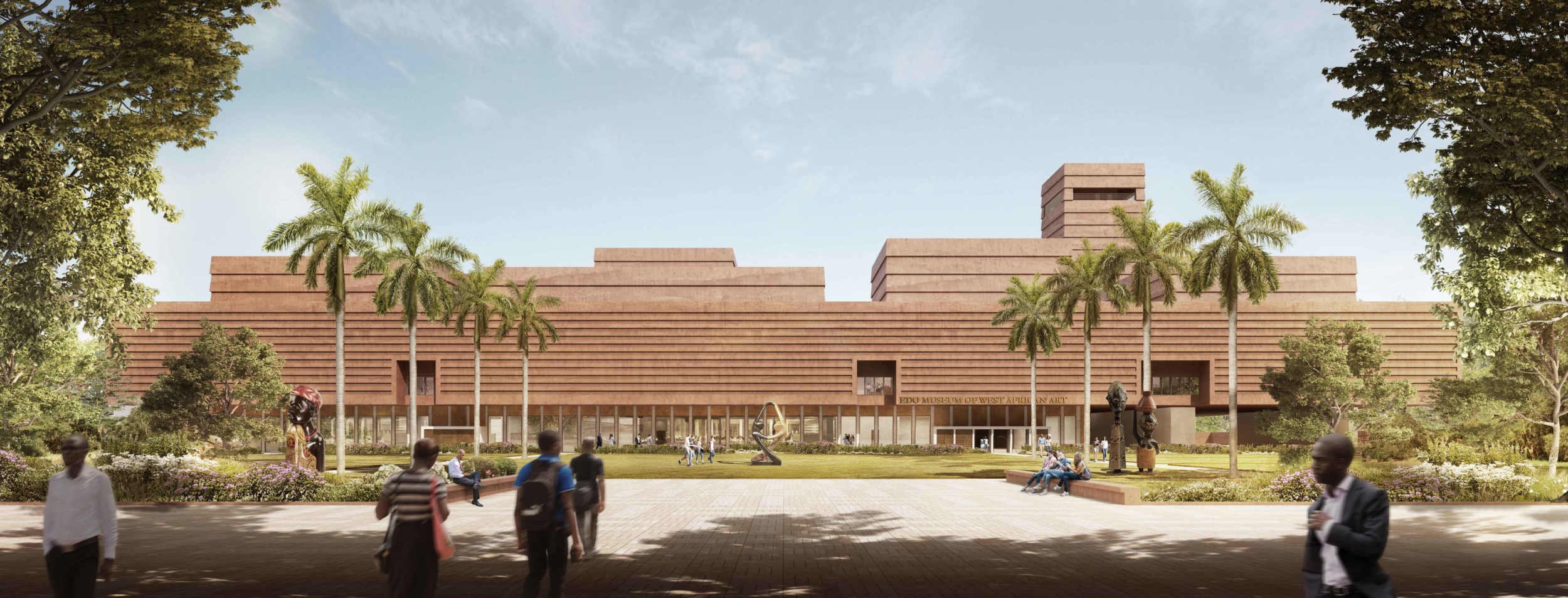
How about here! The Edo Museum of West African Art (EMOWAA), to be built in Benin City. It is being designed by Sir David Adjaye, designer of many spectacular buildings around the world, including the Smithsonian National Museum of African American History and Culture.
The proposed Edo Museum of West African Art
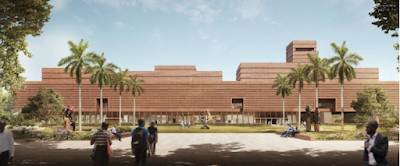
"From an initial glance at the preliminary design concept, one might believe this is a traditional museum but, really, what we are proposing is an undoing of the objectification that has happened in the West through full reconstruction." - David Adjaye
The Adjaye website, adjaye.com, explains the thinking behind the design:
The new EMOWAA draws inspiration from its historical architectural typologies and establishes its own courtyard in the form of a public garden, exhibiting a variety of indigenous flora and a canopy that offers shade – a welcoming green environmen for gatherings, ceremonies and events. The galleries float above the gardens and are articulated by a series of elevated volumes – an inversion of the courtyard typology – within each of which sit pavilions which take their form from fragments of reconstructed historic compounds. These fragments allow the objects themselves to be arranged in their pre-colonial context and offer visitors the opportunity to better understand the true significance of these artefacts within the traditions, political economy and rituals enshrined within the culture of Benin City.
A new dedicated space, EMOWAA will contain the rich, regal and sacred objects of Benin’s past, in a way that allows visitors not just the possibility of “looking in” but “looking out” into the visual landscape of imagining the once historic borders of a restored ancient kingdom.
I can't wait to visit it.
______________________





