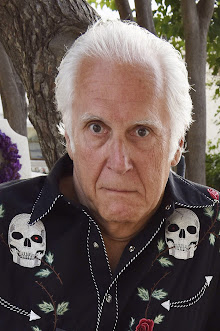
Annamaria on Monday
Ask people what is the most precious commodity, and most, I imagine, once they thought about it would conclude that time is the most precious thing. None of us can possibly know exactly how much we will get until we are very close to our end. Not even people who own billion dollar yachts can buy more. So, we should see time as precious. And we do. Right?
Yet, I hear people, often they are women looking in the mirror at their wrinkles, say, "I hate getting old." I ask them if they have considered the only alternative. I am 83. I call myself an old lady. Frequently, when I do that, people try to disabuse me of that description. "You're not old." they say. "Oh but I am," I answer. And I am happy to be so. I understand that growing old gives an aging person the gift of more time. This to me is wonderful. Don't you think? Far too many of my fellow human beings think that "old" means "decrepit." But it does not. For me "old" means "NOT DEAD."
I am not dead! Hooray!
Some people loose their mental capabilities as they age, certainly. Having lost loved ones far too early, I have seen such tragedies up close, most vividly when my now dear, departed David began suffering from early-onset Alzheimer's disease when he was barely sixty-seven. How can I not be totally grateful that, now - more than a year older then he was when he died, I am still here. Still doing stuff. HAPPY to be a little old lady.
What I wish I could get rid of is the wide-spread prejudice against aging. That growing old is a curse. That all old people are too impaired to function at all and that old people themselves and the world in general would be better off if once people got into their seventies they did the right thing and died.
Do you think I am being too harsh in my description of ageism? Well here is what I wrote In January of 2017. It starts with the anger of a dear friend, regarding the election of the man who had just taken office as the President of the United States. I was every bit as angry and heart broken as she in the face of that turn of events. I hated everything that man stood for (and still do). I could then and can now make a long, long list of what I would have preferred. But that friend summed the problem as stemming from the fact that the members of the Supreme Court of the US were "old."
Here is what I wrote seven and a half years ago. Everything I wrote then is still true.

This rant is inspired by comments made on
this blog in a past couple of weeks, but also by a discussion with a dear
friend during the marvelous Icelandic Noir conference shortly after the last US
election. There, a young woman, a friend
I love, was outraged at the results, as was I. She demanded a way for the
American people to overturn the election, in the course of which she attacked
the US Supreme Court as a group of people too old to make decent
judgments. “What are they? People in their 70s? They can’t even think anymore.”
I did not reveal, at that moment, the
irrelevant fact that I am seventy-five years old. And, mirabile dictu, I can still think. I do not blame that wonderful woman for her
ageist attitudes. A great deal of the
world at large agrees with her conviction: When people get old, they get
stupid.

A corollary to this “truism” is that one
should try, if at all possible, to pass oneself off as younger than one
is. When I tell people my age, they urge
me not to reveal it. “You don’t look
that old.” “You seem much younger.” “Why tell people that? You could pass for ten years less.” They don’t understand. When I disclose my age, I am bragging. You see, I am now 25% older than my poor
mother was when she died. Having reached
my current age is something for me to rejoice over. Not only am I still alive, I am vital,
brimming with energy, with goals and plans that will keep me busy for every coming
day that I get to spend on this marvelous planet. I take no credit for the current state of my
health. I chalk it up to good genes and
good luck. I know many people in my age cohort who are doing great work. And you can bet your pettootie
I am not going to waste a second of whatever time I have left. I refuse to accept the notion that being old
means being wasted and useless.

What angers me most about the ageist
attitudes so prevalent in the world today is not the beliefs of the young, but
the self-deprecating behaviors of the aging.
Oh, I understand that people begin to fear
the loss of their own potency and some become terrified that they will succumb
to that cruelest of diseases—dementia.
But sitting at a dinner table and not being able to remember immediately
the name of that actor whose first name is Jeff is NOT a symptom of incipient Alzheimer’s
disease. Believe me, I have first hand
knowledge of what the onset of that disease looks like, and that is not it.
Every once in a while, I too find my memory
a little recalcitrant. I think we all
need to chalk that up to the passage of time, but not to the slippery slide
into incompetence. I see another issue. The more information in the filing system,
the longer it takes to retrieve any particular item. True! People
over sixty have a lot stored in their heads—experiences, incidents, people,
facts, philosophies. Our brains are
alive with all those data points. All of
which make us valuable for our insights and our wisdom. So what if it takes a minute to come with
Bridges or Goldblum or Daniels or Chandler.
But we get embarrassed and chalk the delay up to old age.
PLEASE don’t do that. Just say “You know the one who played
Chamberlain in Gettysburg” or “You know The Great Lebowski.”
You see every time people with gray hair (or
the moral equivalent thereof) blame some little memory blip on aging, we reinforce
the notion that we are all over the hill.
We need instead to start sticking up for who we are.

I offer here a couple of sentences the aging
should NEVER say:
“I am having a senior moment.”
No you are not. The last time you had a senior moment was
just before you graduated from high school.
If you use this phrase you only perpetuate the notion that anyone older
than sixty must be impaired and cannot be trusted to function well.
“I have paid my dues”
I cannot tell you how I hate this miserable
excuse for resigning from life. People
who say this are really saying that they no longer want to do what ought to be
expected of them as members of society.
Do not let yourself off the hook.
The alternative is to sit on the sofa and wait to die. If that is your idea of being alive, I
suggest you go into therapy. If you are
infirm, you have every right to claim infirmity. If you are not infirm, use the gift life has
given you. Wasting it would be a
sin. When my father was 89 he had a
regular gig driving what he called “the old people” in his community to their
doctor appointments. When I grow up, I
want to be like him.
Take a look at these people and think about
what it meant to them to have a “senior moment.” When you grow up, don’t you want to be like
them?
 |
| Judi Dench was 60 when she got her first starring role in a film |
 |
| Norman Maclean was 76 when he published his first fiction, The best seller, "A River Runs Through It" |
 |
| Fauja Singh ran the marathon when he was 100 |
 |
| Grandma Moses had her first art exhibition when she was 78 |
 |
| Olympia Dukakis, won an Oscar when she was 56, and became an "overnight" success |
 |
| At 79, Mel Brooks wrote the words and music for his first Broadway hit show-- "The Producers" |