
Annamaria on Monday
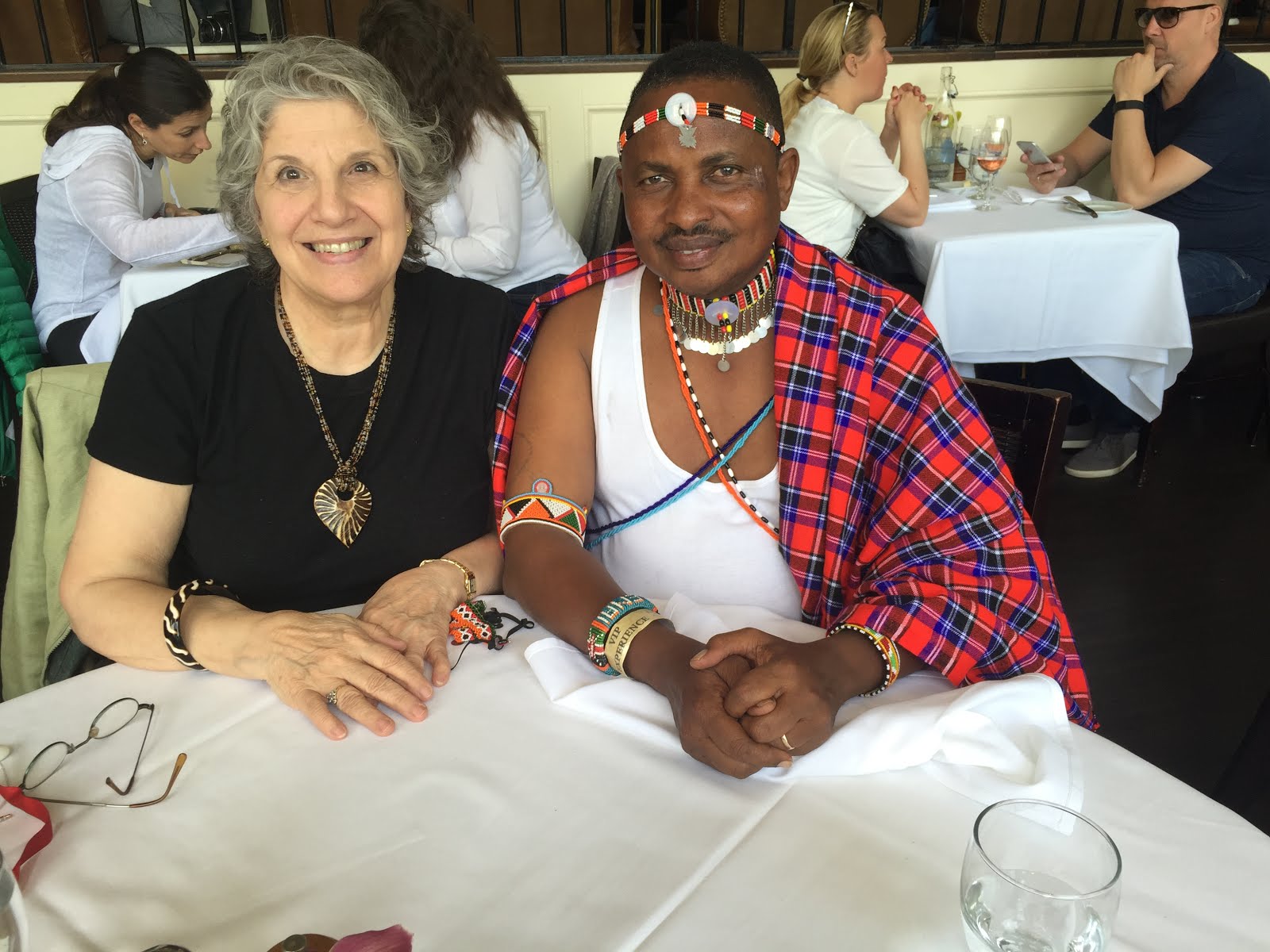
This past week, thanks to a lifelong friend, I got a peep
into a new and very encouraging effort that is beginning to blossom.
Let me tell you how I happened to enjoy the privilege of
meeting Michael Lenaimado, the Conservancy Manager at Kalama Wildlife
Conservatory. It started in the 1970’s
when my college classmate Frances Maraziti Drew and her husband Jack were on a
birding trip in Kenya. There they met a
ten-year-old boy of the Samburu tribe—the young Michael, who asked if he could
write to them. That began a
correspondence and a friendship that has lasted until this day. Last week, when Michael was in New York, for
the very first time, Fran and Jack invited me to have lunch with him.
A little background: The Samburu People are a tribe of what
is now north-central Kenya. They are
related to the Maasai and like them are pastoralists, but the Samburu are a distinct
people with their own language and customs.
If you have run into information about or portrayals of the Samburu in popular
culture, you probably have been exposed to some serious misinformation. My favorite story in that regard is what
appeared in a Nike commercial in the 1980’s.
In those days when Kenyan runners’ fame was on the rise, Nike portrayed
a Samburu runner and translated what he was saying as their then slogan, “Just
do it!” What the man was actually saying
in Samburu was, “I don’t want these.
Give me big shoes.”
While all that was going on, Michael was growing up to be a
game ranger. At first he worked for the
government in the national parks. He
became interested in stopping poaching—a problem about which Stan Trollip and
Michael Sears have written eloquently here, stating how the poverty of the
local people makes them vulnerable to cooperating with poachers.

Michael Lenaimado is working on a different idea. Here are some of the things he told me at
lunch last week.
Seventy-five percent of the wildlife in Kenya these days is
in local community areas. Only
twenty-five percent is in the national parks.
The effort he is now working on is aimed at training those local
community people as rangers and conservationists. And helping them add hosting and guiding
tourists as way of bringing needed income to their communities and at the same
time giving them an economic incentive to protect the wildlife from poachers.
He said that when he got involved with this effort, there
was only one community group signed up for this approach. Now there are twenty-six!
There are difficulties with this effort. Like all changes in a lifestyle that has
endured for millennia, not everyone is in favor of it. There are conflicts that need to be worked
out. For those interested in further details,
there is more information HERE.
But there is great hope.
Michael was in New York last week on his way to attend a conference on
conservation in Colorado. Last year,
he was invited to Australia because of similar interest in his work.
He also, though, revealed the downside risk in his
work. After the conflict in Somalia,
many fighters crossed the border into Kenya with weapons that they sold to
poachers. This makes community and
government anti-poacher activity a dangerous business. Four rangers in his effort have lost their
lives in the last year, one in just the last few months.
He told me these things at the Boathouse Café in the middle
of Central Park on a gorgeous spring day.
I told him something I have said here in a previous post—that New
Yorkers, even if we don’t visit Central Park on any given day, benefit from the
mere knowledge that it is there. We feel
it. And we are grateful for its
presence.
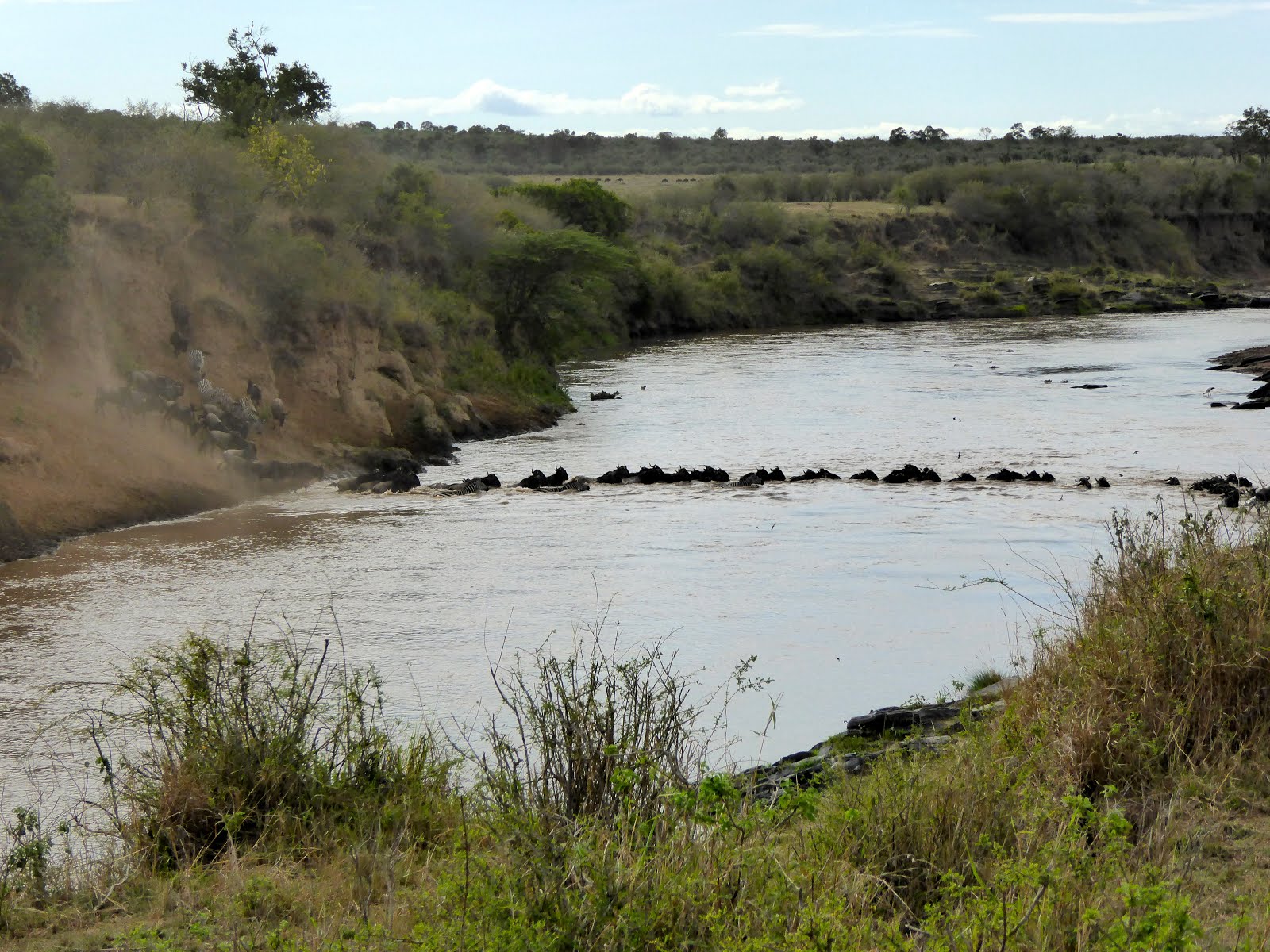
Earlier during our lunch, a woman from a nearby table had come
to tell Michael that she recognized his clothing style and that she had visited
Kenya the previous year. I reminded him
how her face had glowed with the memory of having been in the splendor of the
African wilderness. I told him what many
of you have heard me say—perhaps too often: that because the human species
evolved in Africa, on a cellular level, we all recognize it as our home. That was why that woman’s face glowed as it
had, just remembering her time there.

Michael and his confreres may see their work as preserving
their own homeland. But for the rest of
us, they are preserving something that comforts us, even if we don’t go there
on a regular basis. I told him that those
of us who are aware are eternally grateful to him and to all who risk of their
lives in that critical work. They are
doing nothing less than preserving the homeland of the human race.
 |
| Michael for the first time in a selfie! |





