Saturday, April 19, 2025

Sunday is Easter...For All.


Saturday––Jeff
 

Over the years I’ve written about the traditions of Greek Easter many times.  This year the Julian calendar (followed by the Greeks and others of the Eastern Orthodox faith) and the Gregorian calendar (followed by Protestants and Catholics) have Easter falling on the same date, April 20th. I decided that makes this Easter an appropriate time to recap Greece's historic Easter Week celebrations. 

For that I turn again to the explanation found on the Facebook page of the oldest Greek Bakery in Queens--located in the NYC heart of America’s best-known Greek neighborhood, Astoria.  Here’s what the Victory Sweet Shop has to say:


For Greeks worldwide, Easter [April 20th] is the biggest religious holiday of the year.

HOLY WEEK is the week just before Easter that extends from Palm Sunday until Holy Saturday and marks the last week of Lent. It is full of symbolic events, festivities, and traditions followed by Greeks all over the world.


On THURSDAY, Greek Easter bread called Tsoureki is baked and the traditional red Easter eggs are dyed. This sweet bread is usually braided with three pieces of dough, which represent the Holy Trinity. The tsoureki symbolizes the Resurrection of Christ and rebirth as the flour is molded into shape and rises and takes on life as it transforms into its final shape. The red-dyed egg which is placed on top of the braid symbolizes the blood of Jesus. Nowadays, most people can easily buy the Easter Tsoureki at a Greek bakery.


On GOOD FRIDAY you’ll hear the church bells ring for the funeral of Christ. After the church service, the symbolic body of Christ, fashioned out of bundled sheets, is taken down from a cross and placed in a makeshift tomb called the Epitaphios, which is draped with an ornate tapestry and adorned with many flowers. The Epitaphios is then carried outside the church and paraded through the neighborhood before returning to the church for a closing ceremony. 


SATURDAY is the last day of lent and it is filled with preparations for the midnight meal, including a traditional lamb offal soup called “Magiritsa” and a red egg cracking tradition called “Tsougrisma”. Just before midnight on Saturday everyone gathers at church with their Easter candles (Lambathes). The liturgy on Holy Saturday night is a truly unique experience. The churches are usually packed, and you will often see people spilling onto the church’s streets with white candles, which will be lit later with the Holy Light brought all the way from Jerusalem.


The Resurrection of Christ is celebrated at midnight sharp; the priest proclaims “Christos Anesti” (Christ has risen) with bells ringing and fireworks lighting up the sky outside. People greet each other with a “Christos Anesti” (Christ is Risen) and its reply “Alithos Anesti” (He has truly risen), lighting their candles along the way. Each person carefully carries their lit candle home in order to bless their home by drawing a cross with the flame on the doorway. Afterwards, they enjoy the Magiritsa soup and play the Tsougrisma tradition.


On EASTER SUNDAY, family and friends gather for a big Easter meal, which typically includes lambs roasting on a spit, loads of mezedakia, Greek salads, music & dancing. The Easter meal is truly special and a feast of joy and happiness.


Kali Anastasi!!! Καλή Ανάσταση!!!

Happy Easter!!! Καλό Πάσχα!!!

Thank you, Victory Sweet Shop

––Jeff
 

Jeff’s Events (still in formation)

2025

All Live Events


Wednesday, April 2, 6:00 p.m. ET
Mysterious Bookshop
Author Speaking and Signing
New York, NY


Sunday, April 6, 2:00 p.m. PT
Book Carnival
Author Speaking and Signing
Orange, CA


Sunday, April 13, 2:00 p.m. MT
The Poisoned Pen Bookstore
Author Speaking and Signing
Scottsdale, AZ


Friday, April 25, 7:00 p.m.
Mystery Lovers Bookshop
Author Speaking and Signing
Pittsburgh, PA


Sunday, May 4, 2:00 p.m. ET
Sparta Public Library
Author Speaking and Signing
Sparta, NJ


Thursday, May 15, 2:40 p.m.
CrimeFest

Mercure Bristol Grand Hotel

Panelist, Murder is Everywhere: Evil Crimes in Foreign Climes, with  Heidi Amsinck, Michael Ridpath, Ovidia Yu, and Stanley Trollip (moderator)
Bristol, UK


Saturday, May 17, 1:40 p.m.
CrimeFest

Mercure Bristol Grand Hotel

Moderator, Not All 999: Police Procedurals Across Time and Place, with panelists Tara Collins, Mark Ellis, Solveig Palsdottir and Stanley Trollip of Michael Stanley.
Bristol, UK


Wednesday, September 3 – Sunday, September 7
Bouchercon
Author Panels yet to be assigned
New Orleans, LA


Friday, April 18, 2025

The Pitch Doc Revisited

Today I have reblogged an old post from 2019. This is because I have a sick note from my doctor saying that I am excused from blogging due to traumatic injury. A bookcase full of books fell on top of me. That's part of the story. The other, more interesting part is that a certain Douglas Skelton was outlining his new novel,  where a crime writer gets killed at a festival. He was standing by the bookcase.... and then there was darkness.

Douglas's bookshop owning wife asked if any books were damaged in the process.

You'll be glad to know there was no book damage but my right wrist is 'iffy' ( medical term).

 Wendall's blog yesterday reminded me of this blog from 2019!

The Pitch Document


Here is a blog, interspersed with some photos of the Ben on the dog walk this morning.  I only had my basic lens with me so the pics aren’t very good. Neither is the blog. But think yourself lucky that I’m not blogging about the vote on Wednesday night. Or the one on Tuesday night. As one famous MP said as he got in the lift afterwards ‘You’ve got to laugh.’


When I do my talks about novel writing, and plotting in particular, I use a template that I stole, with his permission, from the rather lovely screenplay writer Adrian Meade.   He devised it from various sources ( what ‘s that saying? Steal from one source is plagiarism, steal from many it’s research!) and he recommends that a young screenplay writer hones this document, keeps it in his/her head in case he/she gets stuck in a lift with Mr Spielberg.

I use it to clarify the thoughts of young or inexperienced writers and ask them to stick it somewhere within their vision when they are writing. Just to keep them on track and stop them falling foul of that nasty little devil, the wandering storyline minstrel.

Have I ever used it myself? No. But after my enthusiastic talk about it on Tuesday night, I so impressed myself that I will use it from now on.

But for a bit of fun, here’s a version with the first two categories empty.  You can guess the film? (It was a book, I’m waiting for the bloody musical though)
 

PITCH DOCUMENT

The log line; I’m not saying because if I told you, you know the film straight away

Title; Ditto ( no Jeff, the film wasn’t called Ditto…..)

Genre; thriller

Protagonist; An Ex NYPD police person

Goal; At the start- a nice slide into a peaceful, beachside retirement, on an island
          At the end- staying alive

Obstacles; he’s an outsider, he’s scared of water, he can’t swim, the council who want to protect the income from the holiday makers, his wife who fancies the other bloke, nobody listens to him…. And maybe, the big beastie under the waves,…..oh and he NEEDS A BIGGER BOAT and he doesn’t have one!

Theme…. Do dooo, do dooo, do do do do (yes you are humming it now,) well that is the theme tune, the novel itself is a quest novel.

Setting; Amity Island

In the end; He has redemption in the eyes of the community. He is alive. The big beastie is shark meat, but he is mourned. There is a sense they should have just closed the beach and killed the mayor instead.

Anyway, I guess you got what the film was.


Here’s the lecture as I witter it….


PITCH DOCUMENT

The log line         The natty little phrase you spout in the lift when you meet Spielberg.
Have it on the tip of your tongue so you don’t start ‘well It’s about a bloke who does this then that then something else and zzzzzzz

Title                      And put the letters W/T after it, to show it’s not a deal breaker.

Genre                   What shelf does it go on in the book shop?  And write that. A hard boiled Glasgow murder where the murderer escapes by running down a dark alley and climbing  on a turquoise glittery unicorn that then leaps over the moon and deposits him in a space ship crewed by Raquel Welch clones, might struggle on this one. (Those of you who have taken a writers group will know what I mean)
)
Protagonist         the main bloke/blokess. If they aren’t mentioned for a few chapters, and another character is butting in, maybe you have the wrong protagonist. I’ve noticed a few newbie writers think they are writing about what the book is about rather than who is running around doing the action and moving the plot forward.

Goal                      What the main character wants to achieve.
                              What he needs to achieve is sometimes a more interesting story.
 
Obstacles            What is getting in his way, personally and professionally, and the Bruce Robinson thing of stick the hero up the tree and don’t let him come down. Every time he gets close to the ground send a Rottweiler after him…. Or a hippo in Stan’s case.

Theme                  There are only seven themes out there. There is nothing new. The writer has to give that theme a new life and a new meaning.

Setting                  Good if  we are in need of an unreliable mobile phone signal, some extreme weather, heat/ cold/ rain/. And where is a human more lonely? At the top of the Ben looking down at the loch, or in a bedsit in any inner city?

In the end…         and what did happen in the end… it might not be the right thing but it has to be the satisfactory thing. And in crime fiction, the baddie can get away but he’s not going to gain what he set out to gain…. Like the Italian Job.

                                   
I did get a laugh in the lecture when I was talking about pantsers and I showed a picture of Brexit. ‘This is what happens when you decide on an idea with no concept of what might be involved.’


 Caro Ramsay  18 01 2019

Thursday, April 17, 2025

Screenwriting Questions and Answers. . .


Wendall -- every other Thursday


I am winding up a last minute lecture series for VicScreen in Australia AND it's our 21st wedding anniversary this weekend, so I am revisiting a Q&A I did for my "day job" as Adjunct Professor in the Graduate Film School at UCLA back in 2023.


So, so lucky to teach at UCLA, where I have students like this!


My boss recently informed me that I am now the senior lecturer in the Professional Program in Screenwriting. As John Huston’s Noah Cross says in Chinatown, “Course I'm respectable. I'm old. Politicians, ugly buildings, and whores all get respectable if they last long enough.”


One of my favorite teaching venues, the old Power Station in Brisbane, now an arts center.
 

And, as senior lecturer, he asked if I’d do a Q&A for new screenwriting students. Doing it was bittersweet, in the middle of a writers’ strike, but here it is. See you in two weeks, when, I hope, we will have internet.


What are your words of advice for any writers who are just getting ready to begin one of our programs?


First, take a deep breath. You’ve been brave enough to commit your money, time, and energy to becoming a professional film or television writer. Just by this act, you’ve jumped ahead of thousands of aspiring writers. The lessons you’ll learn, the feedback you’ll receive, and the relationships you’ll make here will serve you for your whole career. This is a big step. Enjoy it.


Second, keep an open mind. The UCLA faculty has a breadth and depth of experience and each of us has our own “take” on writing. There is not just one way to do this job, and different approaches work for different writers. So, use what you learn from your workshop instructors and lecturers as a way to start to develop your own, unique understanding of how screen stories work and what you can bring to them.


Third, I would start keeping a “writing journal.” Nothing fancy, but this is the best possible time to start to understand who you are as a writer, to start a “vault” of ideas that you can keep in one place, and to figure out what situations and habits bring out the best in your work. Do you work best from outlines or writing by the seat of your pants? Are you best in the morning or late at night? What blocks you? What unblocks you? Most importantly, what inspires you?


The industry is constantly evolving, what are three things new writers should currently do if they want to break in? 


Especially now, flexibility is crucial. You need to be able to pivot with the market—to consider your feature as a limited series or vice versa, to consider changing up elements or characters in your stories, to consider collaborating with another writer, etc. The more you can see change or rewriting as an exciting challenge and an opportunity, the happier you will be as a working writer.


Second, do your homework. If there’s anything I’ve learned over the years, it’s that everything is cyclical. Indies are in, then they’re out, rom coms are in, rom coms are out, conspiracy-theory films repeat about every twenty years, etc. So, watch everything. Familiarize yourself with both what’s current and what’s come before in your genre or format. Be as diverse in your viewing as possible. Watching well-written pieces is the best way to have the rhythms of structure and character arc seep into your DNA and help you create well-crafted stories naturally.


The first year that I was asked to be a TA in a film program, I watched 400 films. It was the best thing I’ve ever done for my writing career. Although many films and shows are now dated in ways that can make them difficult to watch, I still think it’s important to have a perspective on what’s come before to start to develop a knowledge of the “language” of film and television.


Encouraging students to watch a range of films in my LIVING ROOM LECTURE series.
 

Third, do the work and take deadlines seriously. This is the basis of all professional writing. The real writer is the one who stays in the chair and finishes their script. Producers, executives, and show runners all have deadlines they have to meet and cast and crew they are responsible to, and no one wants to work with someone they can’t count on to deliver. Reliability is essential when it comes to all aspects of production and also to creating long term relationships in the business.


What are the five most important elements of an original screenplay?


A killer first page. I can’t emphasize how important this is. Rightly or wrongly, many readers make up their minds about a script based on the first page or two. If they aren’t engaged then, you may never get them back, or worse, they may not finish the read. Spend real time making the opening as unique and riveting as you can. The first image, the first line, really count.


A distinctive writing voice. Your voice as a writer can really help separate you from the pack. I don’t mean writing asides to the reader, I’m talking about creating distinct, unique voices in the dialogue and paying attention to the word choice and rhythm in the descriptive passages. Try to use language that reinforces and illuminates, or even challenges, your genre.


Structural logic from scene to scene and sequence to sequence. Many early writers jump from scene to scene abruptly, without preparing the reader for the switch. This can make for a choppy and confusing read. Work on having either believable cause and effect between scenes, or using strong, deliberate transitions to create a logic and a bridge from scene to scene.


Giving your characters flaws and obstacles. Ironically, it’s usually the flaws in people we love the most, that makes them the most distinctive. I find in a lot of early scripts, writers love their characters so much, they’re afraid if they give them flaws, we won’t love them, too. But putting characters in situations where they have to use their strengths, but also overcome their flaws, is what gives  drama, tension, and comedy to a story. They need to be human so that we can connect to them, but making them perfect can be a mistake.


Professionalism. Readers can only recommend a tiny percentage of the projects they are given, and so are always looking for a reason to say no. Don’t give them one by neglecting to proofread, or not checking the correct formatting, etc. Pay attention to detail so your story can  shine without the distraction errors can create.


Among other things, begging students to proofread.
 

If you have a bunch of ideas for movies, how do you know which idea to write first? 


This is perhaps the toughest question of all, at least for me. Right now, almost 30 years into my career, I am struggling with that very issue this week, as I’ve just turned something in and need to start my next project.


Often I will take a bit of time to “beat” out all the ideas, see what the plot points might be, and then see if one of the potential scripts either falls together naturally, or starts giving me tons of ideas. That’s usually the one I go with.


What rookie mistakes can make a screenplay fail?


Having a first page with long paragraphs of description and no dialogue.

Including too much backstory or set-up.

Not having a clear Inciting Incident that starts the story, or having one that is not related directly to the Climax.

Talking about how your characters feel or what they’re thinking, rather than externalizing their feelings in dialogue or behavior—i.e. telling not showing.

Overwriting, treating a script like a piece of fiction.

As above, not proofreading or not using recognizable formatting.


Teaching at the Santa Fe Screenwriting Conference in 2011.
 

What are your words of advice for our alumni? 

Never give up on a good idea. You may need to reconceive or re-package it, but ideas are our currency and good ones are invaluable. Just because a script didn’t get attention at some point, doesn’t mean it won’t in the future. So much of this business is luck and timing. So hang onto the good stuff, keep it updated, pitch it again.

 ----Wendall 

Wednesday, April 16, 2025

A New Mystery Series Takes Shape in Spain

Wed--Kwei

The Ember Glows Again

Embers come to life (Photo by Xiangkun ZHU on Unsplash)

For a time, it felt like the fire had gone out. Leaving the U.S. under political pressure and realizing I could no longer safely return to Ghana—the setting of my Darko Dawson and Emma Djan series—felt like a creative dead end. But stories don’t go quietly. A new spark flared from the dying embers, and a new mystery series began to form.

At its center is a horse trainer with a painful past, a sharp mind, and an unflinching sense of truth. The tone? Think Dick Francis meets Tana French. And the aphorism that anchors it all: Horses never lie. People do.


A Landscape Made for Mystery

Oviedo (Image: Nacho from Oviedo, Wikimedia)

The setting for this new story is northern Spain’s Asturias region—a land of misty peaks, old stone villages, and winding trails. Horses are not accessories here; they’re a way of life. Asturias has long maintained a strong rural equestrian culture, and that living bond between people and horses provides fertile ground—literally and literarily—for mystery and suspense.


Spain’s Equestrian Legacy

Andalusian stallion in a grassy field in Spain
(Image: Missi Köpf, Pexels)

While Asturias offers a quiet, earthy charm, the broader history of Spain’s horses runs deep. The Andalusian—Spain’s most iconic horse—has roots going back millennia. Known for elegance, strength, and intelligence, it was favored by kings, warriors, and nobles. It’s no exaggeration to say that Spain helped shape global horsemanship through its cavalry and classical riding schools.


Oviedo vs. Barcelona: Two Spains

My family once spent time in Barcelona and found it open, diverse, and welcoming. Oviedo, by contrast, is quieter, more traditional, and more homogeneous. In Barcelona, diversity is part of the fabric; in Oviedo, it stands out. As a Black American, I expect to be noticed. But I don’t expect hostility—just curiosity, perhaps some unconscious bias, and the usual dance of cultural adjustment.

Africans in Spain: A Forgotten History

       The Moorish Chief, by Edouart Charlemont
             Philadelphia Museum of Art


Spain is often portrayed as monolithically white and Catholic, but that ignores a rich, complicated history. During the centuries of Muslim rule, Black Moors—some of whom were kings and generals—held power in Al-Andalus. Black Africans weren’t always enslaved; many were scholars, architects, and advisors.

Yet, this history has been largely erased or whitewashed in mainstream Spanish narratives. Today’s Afro-Spaniards are still fighting for visibility, recognition, and a place in the national story.

The Racial Spectrum in Spain

Before committing to this move, I spent time on YouTube watching videos by Black expats, Afro-Spaniards, and travelers of color. What I found was mixed. Some speak of subtle racism: staring, stereotyping, or being assumed to be a street vendor or nanny. Others describe a social "hierarchy of Blackness"—a cringeworthy but real phenomenon—where African Americans are often romanticized while West Africans, particularly darker-skinned immigrants, face systemic marginalization.

This isn’t unique to Spain, but it’s worth noting. A Ghanaian immigrant may experience Spain very differently from a Black American tourist or writer. Class, skin tone, accent, and passport all matter. They shouldn’t—but they do.

Facing Forward—Aware, Not Afraid

Two Mexican Americans I spoke to recently told me bluntly, “The Spanish are racist.” I didn’t argue, but I took a beat. That statement says as much about the complicated relationship between Latin America and Spain as it does about Spain itself. Many Latin Americans feel looked down upon by Europeans from the peninsula. Colonial trauma lingers, even in casual remarks.

My response? I’m going to Spain aware, not naïve. I’m not going to seek approval. I’m going to live—and to write.

Stories are rising again, and this time, they're set in the green heart of Spain.


Sunday, April 13, 2025

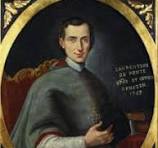
Lorenzo da Ponte

 Annamaria on Monday


My blog today is inspired by a splendid performance, this past Friday, of one of my two most favorite operas - Mozart's The Marriage of Figaro.  Mozart gets the credit and very rightly so, but he could not have done it without a libretto, and the person named in my title is the guy Wolfgang Amadeus chose.  He could not have picked a better guy.  Or such a seemingly unusual one.

By the time he met Mozart, Lorenzo da Ponte was 35 years old and carried a wild collection of identities.  Born and named Emanuele in the Republic of Venice in 1749, he was raised as Jewish until his father converted himself and his sons to Catholicism so that he could marry a Catholic woman.  The priest who baptized Emanuele gave him the name Lorenzo and put him on a path to become a Catholic priest.

When Lorenzo was ordained in 1773, he was also a Professor of Literature and had begun writing poetry in Latin and Italian, including a pean to wine.  Pretty soon, he had taken a mistress, fathered two children, and by 1777 became best friends with Casanova.  Yes, that Casanova - Giovanni, a seducer so successful that his name became synonymous with that activity.


It only took about two years for Lorenzo to become equally notorious. The Venetians threw him out and told him not to come back for fifteen years.  He went over the boarder to Austria, where he eked out a living as a writer in the employ of various noblemen, eventually making his way to Vienna and the circle of Antonio Salieri.  (Fans of the play Amadeus will recognize Salieri as the mediocre composer who envied and resented Mozart.). Da Ponte soon became court poet and librettist.


Mozart and Da Ponte were well matched as collaborators - brilliant in skills and creativity, but also irreverent and impish.  Their first collaboration - Le Nozze di Figaro, brings out those tendencies to great effect.


Like Chaucer and Shakespeare, Da Ponte took inspiration for his plots from other works, but he made them something completely new.  The Marriage of Figaro and their second collaboration Don Giovani are widely considered the greatest operas ever written. Figaro is one of the the most frequently performed world wide.  And why not?  It is hilarious and gorgeous at the same time. But it also ends with the philandering Count of Almaviva getting his comeuppance.


Da Ponte's libretto for their second collaboration, Don Giovanni seems to have come right out of Da Ponte's friendship with Casanova.  Unlike the comic Figaro, the rake Don Juan is condemned to hell in the last scene of the opera.  I get the chills just thinking about it.


After Mozart, Lorenzo da Ponte went to Trieste and eventually to London where he met Nancy Grahl, the daughter of a Jewish chemist.  They never married but they stayed together through thick and thin and raised their five children.


On the verge of bankruptcy in 1805, they fled to the U.S.  In New York, Da Ponte became a teacher of Italian at Columbia College and founded the first opera company in the United States.  In 1825, he produced a performance of Don Giovani, the first in the new world.

In 1833, at age eighty-four, he founded the first purpose built opera theater in the United States.  Unfortunately, one of the things he had in common with Mozart was a total lack of business sense.  Before long he had to sell his opera house, but its company went on to become the New York Academy of Music and the foundation of the Metropolitan Opera, where I had the pleasure of seeing a new production of Mozart's and Da Ponte's masterpiece, The Marriage of Figaro. Click to take peep.


Da Ponte died in NYC in 1838, and he was originally buried in a Catholic cemetery on 11th Street.  When that part of the street was paved over, his remains were moved to Calvary Cemetery in Queens in 1909.  A monument to him is still there and visited by New Yorkers in his honor every year on his birthday - January 27.  As long as there is opera, he will never be forgotten.

Saturday, April 12, 2025

Happy Passover, Y'all


y

Jeff––Saturday
 
Tonight (Saturday) is the first Passover Seder.  Next Sunday is Easter in Western Christianity and––this year––it's also Orthodox (Greek) Easter. For me, it means I'm only halfway through my book tour with many miles yet to go.  But whether I see you or not, on this holiest of occasions for so many I wish all celebrating Easter Week or the Eight days of Passover, "God bless."


Passover or Pesach always takes place around the same time as Easter or Paska because the holiday of Passover, commemorating God’s liberation of the Jewish People from slavery in Egypt, was the occasion for the Last Supper.  In fact, before the year 325 Easter was calculated upon the lunar-based Hebrew calendar and all one had to do to determine the date for Easter was to “ask a Jew in your community” when Passover was celebrated.


All that changed in 325 when the First Ecumenical Synod calculated the exact date of Easter from the more modern cycles of the sun-based Julian calendar.  That became Christianity’s generally accepted method for calculating the date of Easter and continued to be so for more than five hundred years after the Great Schism of 1052 separated the Church of the West to Rome and the Church of the East to Constantinople (Istanbul).

Then, in 1582, Pope Gregory XIII introduced what is known as the Gregorian calendar for the express purpose of correctly calculating Easter, something the Julian calendar was not believed to have achieved.  Today, the Gregorian calendar is the world’s officially accepted civil calendar (except in Greece’s 1500 year-old monastic community of Mount Athos—see Prey on Patmos), but there still is not agreement among the Christian world over whether it correctly fixes the date of Easter. 

Indeed, as recently as 1997 the World Council of Churches proposed a method of using modern scientific knowledge for precisely calculating Easter and replacing divergent practices.  It was not adopted.

As for how Passover fits into all this, Julian calendar Easter always falls on a Sunday after the first day of the eight-day Passover holiday and generally within those eight days, though at times more than a month later.  Western Easter, relying on the Gregorian calendar, also generally falls within Passover’s eight days, though three times in every nineteen-year period it falls a month before Passover.


Yes, that’s why Easter is considered a moveable feast, as opposed to Christmas that always occurs on the same date.


I guess you could say that, of all these celebratory springtime occasions, the only certainty is that my blog post sneaks up on me faster than an Easter Bunny chasing after the Afikomen-- Google search awaits you. :)

.


And a Happy Easter, Kalo Paska, and Zissen Pesach to all. 


––Jeff 

 
My Upcoming Book Events:


Sunday, April 13, 2:00 p.m. MT

The Poisoned Pen Bookstore
Author Speaking and Signing
Scottsdale, AZ

Friday, April 25, 7:00 p.m.
Mystery Lovers Bookshop
Author Speaking and Signing
Pittsburgh, PA

Sunday, May 4, 2:00 p.m. ET
Sparta Public Library
Author Speaking and Signing
Sparta, NJ

Thursday, May 15 – Sunday, May 18
CrimeFest
Author Panels yet to be assigned
Bristol, UK

Wednesday, September 3 – Sunday, September 7
Bouchercon
Author Panels yet to be assigned
New Orleans, LA