Sunday, December 8, 2024

The Tanganyikan Laughter Epidemic and Other Hysterics

Annamaria on Monday


I've been saying to my mournful friends who are having trouble coping with the news: Laughter is the best medicine.  I truly believe that.  But then, this morning, I remembered something that I came across by accident in my research.   A situation in which laughter became a disease.  Here again is the scoop on that.  

In 1962, in a boarding school for girls in a small town in Tanganyika (now Tanzania), a group of young students broke out in peels of laughter.  It’s not unusual for young girls can get the giggles.  We all know that.  But this was different.  An epic case of the giggles.

What actually happened has been mythicized, and looking back on it, many researchers think exaggerated.  Here is the most common description of what happened.


A bit of background.  In 1961, Tanganyika gained its freedom from its British colonial government.  Within a few months, suddenly everything was changing—what was expected of children in school, the practice of traditional religions, the laws that governed the country.   The general state of flux flummoxed most people, especially the least educated and most downtrodden of the citizens.


The schoolgirls in question were to take a math test one day in early 1962.  Suddenly, as the exam was about to begin, one of the students broke out in uncontrollable laughter.  Laughing, as we all have experienced, can be quite contagious.  Soon a score of girls were in hysterics.  Literally, it turns out.  What happened next is not precisely documented but has been widely reported as follows.

The laugher spread to other classrooms.  It became impossible to stop it.  Eventually, the hilarity caused chaos, and the school had to be closed.  Parents came to take their children home, spreading the epidemic to several villages.  Thousands of people were affected.


At first, doctors thought it might have been some sort of weird virus or strange form of malaria.  No dice.  Nothing microbial was detected.  Depending on whom you consult, the outbreak lasted somewhere between six and eighteen months.   People did not laugh continuously.  That would have been physically impossible.  But evidently, after pauses, the sufferers relapsed, and the rolling laughter continued.

So what.  Laughter is good thing.  No?

Well, no!


This kind of laughter has nothing to do with glee.  It comes to people, not from merriment, but from anxiety and brings along with it pain, fainting, inability to breathe, tears, and rashes.  The underlying cause is mass hysteria.  The official diagnosis is Mass Psychogenic Illness (MPI).  Stress sets it off—usually in a workplace or a school.

And it is not localized to Africa.  Something similar happened in Lafayette, Indiana in the twenty-first century. They didn’t want to admit that it was psychological, so they blamed it on bug bites and sprayed insecticide.


A well-known outbreak of MPI  took place in the West Bank in 1983.  The symptoms there were fainting and dizziness.  943 people were hospitalized, most of them Palestinian schoolgirls, but also a number of female Israeli soldiers. The government blamed it on propaganda


MPI almost always affects people who are poor and powerless.  Looking back at history, researchers have identified a few strange outbreaks of “disease” as MPI, most notably, the Dancing Plague of 1518 in Strasbourg.  During the month that it lasted, around 400 people danced for days on end.  Some died of heart attacks, stroke, or just plain exhaustion.  Other outbreaks of choreomania (also called St. Vitus Dance) occurred in Germany, the Netherlands, England, France, Italy, and Switzerland between 1374 and into the 17th century.  But the largest by far was the one in 1518 in Strasbourg.


Mass hysteria.  When life becomes intolerable.

Given the stressful times we are now going through, I wonder how MPI will next manifest itself.

On Thanksgiving Day, after dinner, my brothers and I decided to revive an old family  tradition - to watch Mel Brooks masterpiece Blazing Saddles. We were looking for some healing laughter.  The movie was still brilliant, but it was not so easy to laugh at it, because we soon realized that you could never make such a movie today.  In 1974, the racists, the bigots, the money hungry were easy butts of jokes.  They were the stupid, the ridiculous. "American Indians" speaking Yiddish?  That was hilarious.  Nowadays, it might be considered antisemitic.

The humor of the 1970s -today- turned about to be a way to stop laughter.  Sad!

Saturday, December 7, 2024

The Psychology of Separating You From Your Money

Jeff–Saturday

Thirteen years ago, as I was driving back to New York, I heard an educator on NPR radio explaining how banks and businesses use psychology to separate consumers from their cash.  I wish I could remember his name or the title of his book because the subject was fascinating. At least I remembered I'd blogged about it back then, for I see it as timely a warning now as ever before--caught up as we are in the throes of the annual holiday shopping season madness.  

His seminal premise was that to succeed in separating money from the consumer a seller should keep the potential buyer as physically far away from actual cash as possible.  Yes, taking real money out of one’s pocket or purse gets you to thinking about whether the purchase is actually worth it.  And parting with a fistful of bills in hand is about as real as it gets, so whatever sellers can come up with to distance consumers from feeling the money leaving their control—be it by accepting plastic, the simple click of a mouse, or the waive of a phone—dramatically increases the likelihood of THE SALE.

There are variations of course.  A prime example is Amazon’s program of the same name.  Join Amazon Prime for the low annual fee of $14.99 per month ($139 per year) and receive unlimited free two-day shipping on all your purchases.  That’s pure marketing genius.  Not only has the consumer parted with $139 up front for free shipping only a few days quicker than the shipping often offered free to all Amazon customers, but the consumer has unconsciously tethered itself to Amazon as its primary shopping source.  Having paid a monthly fee the consumer will undoubtedly want to get its money’s worth, meaning that every time a purchase is considered the potential buyer is likely to think, “I’ve already paid for free shipping from Amazon…” 

What an edge that gives Amazon over its cyber and brick and mortar competitors.  Like I said, genius, though I must admit Amazon also offers just about the best prices anywhere.

W. C.Fields
And then, of course, there’s the casino model based upon requiring up front exchanges of real money for chips.  That overcomes two very serious psychological hurdles to unreasoned spending.  First, by replacing money with chips the consumer doesn’t have to pull out five twenties to make a hundred unit bet.  Just plop down one black chip.   But perhaps most importantly, since cash must be exchanged for chips before the customer gets to play, casino gambling becomes psychologically akin to paying admission for an event—and once the show starts one doesn’t expect to get back the cost of the ticket.  Hence, the often heard words that warm a casino’s bottom line: “We’ll just play until these chips are gone.”

As I listened to the radio, I thought of another highly effective model for separating consumers from their cash through psychology.  Perhaps the most insidious and inadvertent ever, for I doubt it was planned to operate as it has when it was created—or at least I hope it wasn’t.  I am talking about the euro.

Let’s start from the premise that coins, aka change, are generally not perceived to be as valuable as paper currency.  When is the last time you heard a beggar asking for spare bills?  Do you tip with paper or coins?  And on those occasions when you do hand over coins as a tip, do you sometimes say, “Sorry, but I only have change.”

The bottom line is that we pay more attention to the paper in our pockets than the coins. In the US, our smallest paper denomination is $1 and, except for the rarely used $2 bill, our next largest is $5.  And though what we get for a dollar seems less and less every day, when it comes time to pull out those singles we still think about the purchase, or if it’s for a simple gratuity, whether to give one dollar or two.

Now, let’s take a look at the lowest denominations of euro currency.  There is no €1 note or even €2 note, the smallest paper denomination is €5 or approximately $7.  The €1 coin ($1.06) and slightly larger €2 coin ($2.12) are each roughly the size of a US quarter. 

The euro began formal circulation in Greece on January 1, 2002 at an exchange rate of one euro for 340.75 drachmas. 

100 drachma note
Before turning to the euro, Greece’s smallest paper currency and largest coin in general circulation was 100 drachmas, equivalent to approximately €0.30 or $0.32 today.  It was the basic unit for most simple transactions and gratuities.  A hundred drachmas here, a hundred drachmas there, what’s the big deal. (A 500-drachma coin was minted in 2000, but by then Greece knew it would be switching to the euro and it was done more to commemorate the Olympic games than anything else).

After the switch, the smallest euro note was worth almost 17 times the former value of 100 drachmas (now worth 30 cents) and the closest coin in the euro form of currency to 100 drachmas was the twenty-cent coin.

Logic would have the twenty-cent coin, or perhaps even the fifty-cent coin, replacing 100 drachmas in Greece’s new spending culture.  But that is not what happened.  Instead, prices often jumped in terms of whole euros.  Bread that once cost 100 drachmas now cost a euro, a cup of coffee two euros, flowers at the bouzouki three euros, and so on.  Casual tips were soon being expected in denominations of a euro or two.  After all, they were “just coins.” 

Rounding up to the next euro took place in practically all areas of commerce except one: the conversion of wages from drachmas to euros was done precisely to the cent.  Soon workers earning €900 per month (considered a good monthly wage…cops started at €800 per month) found themselves paying multiples of what they had under the drachma for the very same products or services. 

Economists would call that inflation.  I can think of some other terms.  But one thing is for sure (at least in my mind), had there been paper currency in one and two euro denominations there would not have been as rampant and far reaching an inflationary jolt to Greece’s economy.  People are conditioned not to take coins as seriously as paper currency, and even today the euro is treated as close to “church change,” the small coins Greeks drop in a collection box in exchange for candles.  Just how much that attitude costs the average Greek I do not know, but if it’s just a single extra euro a day that’s 3% of a €900/month worker’s earnings.

ECB, Frankfurt
I am not alone in that view.  For years there were serious efforts by some EU member states (including Greece and Italy) to convince the European Central Bank (who prints the money) of the need for one and two euro notes.  But the ECB ignored their requests—including a motion by more than half the members of the European Parliament for such relief.  The ECB’s excuse was that paper currency costs more to create than coins and is less durable. 

But perhaps the truth lay closer to what the man on the radio had to say: banks are attuned to the psychology of currency, and the ECB understood that consumer-driven economies benefited (at least in the short term) from consumers who did not realize why they were spending more than they should.

Still, I doubt Europe will be seeing one or two euro notes any time soon.  Apparently the ECB (and those with influence upon it) like the euro exactly as it is: for all intents and purposes as unthreatening and playful as a gambling chip.

—Jeff

Friday, December 6, 2024

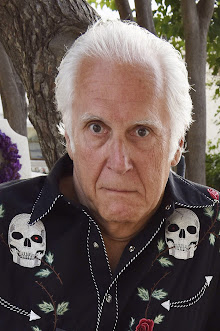
Mr Brian Bilston


Very few people are familiar with the name Paul Millicheap. Many more are familiar with his pen name Brian Bilston, the British poet and author.

Here’s a few of his poems, just to make you smile.  I love the one about punctuation pedants.

The poem, Refugee, is  one often studied in English in schools.


The next poem is just wonderful...


This one is the favourite of Sarah Frame who runs our local bookshop. There should be an author's version of this...'I read a book of yours, I really liked it.  It had a blue cover. Somebody died.'

And one about .... cheese....


There are a few collections of his poems....


Some people I know are getting this for their Christmas present....


hope you had a  titter,

I think we all need  it these  days,

Thursday, December 5, 2024

All that glitters

 Michael - Alternate Thursdays


Back in the day South Africa was renowned for its goldmining – at one point it was the world’s largest producer of gold. That’s changed over the years. China now leads, and South Africa is only ninth. Mines have a finite lifespan, as do gold deposits. Exhausted mines are supposed to be properly closed down and sealed, and the area rehabilitated. However, as the deposits run down, the big miners who made the early running and lots of money sell the mines on to smaller producers who can still do well by lowering overheads, cutting costs, and often closing themselves down before they have to spend the money on closing the mines down. This leaves retrenched workers with no other source of income, and uncontrolled deserted mining properties. But there’s still gold down there. Just not enough for a commercial company to mine at a profit.


Anyone who has ever spent time down an underground mine knows that it’s not pleasant. Without cooling and forced air equipment, it’s hot and stuffy. To its credit the South African government has passed and enforced strict safety regulations, but accidents and mine collapses still occur, particularly in the ultra-deep goldmines of the Witwatersrand. So why would one choose to go down a disused goldmine (or a disused shaft of an operating mine) using ladders and headlamps? Well, how else can a retrenched miner in a shrinking industry make a living? Mining skills are the only ones they have.

A new industry has developed around these “zama zama” as they are called. They need food and water supplied to them below ground. Criminals have set up black market routes to buy the ore the miners produce, extract the gold, and sell it on. Needless to say, most of the profit ends up in the pockets of these middlemen. Just enough to live makes its way back to the miners who spend months underground in dangerous conditions.

This isn’t just a South African problem. It occurs wherever major gold deposits exist and poverty abounds. (Kwei wrote about some of these issues in his novel Gold of Our Fathers set in Ghana.) It’s guesstimated that 20% of new gold reaching the market is a result of this artisanal mining and that 80% of the employment in the gold industry is in this category. Yes, eighty percent.

Of course, it’s illegal almost everywhere. We’re not talking about weekend miners panning for gold nuggets in a river here. We’re talking about a criminal-controlled industry that compels people to risk their lives underground in awful conditions for months at a time. It’s a form of economic slavery.

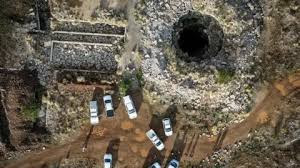
Stilfontein shaft from above

Something needed to be done. Unfortunately, the South African Police Service decided to go for the softest target – the miners – rather than addressing the criminal gangs in control. They chose a well-used mineshaft at Stilfontein.

The police sealed the mine, stopping the food and water supplies, and demanded that the miners come to the surface and surrender. They trapped hundreds, if not thousands, of the zama zama underground. There was a public outcry as conditions deteriorated, but the government was adamant. The Minister in the Presidency said that no help would be given to the illegal miners. “We are not sending help to criminals. We are going to smoke them out,” she said.

Police and rescuers at the shaft with a makeshift pulley system

Eventually, the government relented and allowed food and water down the mine. After that, they mounted a rescue operation to get the miners up. Several were in bad condition. At least four men died.

What has been achieved? Very little. Since the zama zama have no choice, it will not be a deterrent to others. And once the focus shifts and the police leave, no doubt a new group of zama zama will bring their rickety ladders and well-used picks and shovels and go down the Stilfontein mine again.

There have been calls to develop the industry in a regulated way with the miners allowed to sell their production to the state at a fair price. This would supply legitimate employment and help the country's gold production. The difficulty is that to make it reasonably safe, one needs the proper infrastructure and that requires capital. But those sums have already been done by the companies that shut the mines down in the first place. 

So what are the zama zama supposed to do for a livelihood?

I don’t have an answer.

Wednesday, December 4, 2024

Happy Early (Hmong) New Year!

Sujata Massey 


Last week, I drove from Baltimore to St. Paul, Minnesota to be with family for Thanksgiving. 

To my surprise, I got a bonus holiday: Hmong New Year. And what a gift it seems to live in a country where people have arrived from so many different parts of the world to share their traditional food, music, art, and other gifts. Public admission was just $12—how could I miss the party?


The traditional lunar calendar observed by Hmong people marked Saturday Nov 30 as the last day in 2024, and Dec 1 as actually New Year’s Day. Hmong New Year’s beliefs are tied to ancestor remembrance and the renewal of shamanistic energy. Yet the Hmong New Year I experienced with my outsider eyes was a very jolly celebration with upwards of 40,000 people streaming into River Centre, a huge convention hall in Saint Paul, MN. I was dazzled by the colors and complex embroidery of clothing worn by women, men and kids. The jingling of thousands of silver coins and strands of pearls on people’s clothes filled my ears. I marveled at the complexity of different hats and the festive high heeled shoes many wore to set off their finery. It seemed the most popular color was pink--often accented with green and black. Brilliant!


St. Paul happens to be of the largest population bases for Hmong in the United States; Fresno, California, is the other location. The largest New Year’s celebrations are housed in these cities, and the one in St. Paul was billed as United Hmong Family Reunion, a coming together of members of many different tribes. The Hmong people have traveled far over the centuries from their original Hmong kingdom in North China to different parts of Southeast Asia, most famously Laos. Some Hmong people still do live in China—but because of past persecutions including the suppression of language, many fled to start new lives in independent agrarian tribal communities elsewhere. 


A second exodus occurred in the 1970s and 1980s. During the Vietnam war, the American military enlisted thousands of Hmong men to help fight a shadow war to suppress communism in Laos. When the Americans withdrew from that unwindable war, the Hmong remaining in Laos were in mortal danger. The first groups of Hmong military families were airlifted in the 1970s, and many other Hmong families swam, floated or boated across the water to a refugee camp in Thailand, where they lived for years until refugee visas were finally issued by the United States. The first refugees were settled in a scattershot approach in several states. In the 1980s, Lutheran Social Services and Catholic Charities in Minnesota accepted government contracts to oversee resettling Hmong families here. After that, Hmong living in other parts of the US chose to relocate to be near family members and because the city of St. Paul has largely been a friendly place to settle.


In the 1980s and 1990s, I met Hmong people selling beautiful vegetables and gorgeous embroidery at Twin Cities farmers’ markets. Some very special ornaments on my Christmas tree are fabric embroidered in famous Hmong reverse applique patterns. It was exciting to see so much bright clothing for sale at the RiverCentre and to be gifted a free book about Hmong Textile Art when I stopped to chat at the Hmong Cultural Center, a group that supports traditional culture and also helps people secure citizenship. I also met young Hmong-Americans running an early childhood education program that aims to make young children feel good about their heritage, and helps the adults involved in their education learn about Hmong family life. Several tables were staffed by the St. Paul police and similar agencies looking to hire. I learned this was the 44th Hmong New Year celebration in Minnesota—and that the anniversary of Hmong resettlement in the United States is 50 years as of 2025.


The deepest current I sensed was that of playful socialization with old and new friends. People lined up to toss colorful fabric balls back and forth to each other. Turns out this is a popular game at New Year’s that’s also a way for young men and women to signify romantic interest. An American-style beauty pageant for Hmong women took place on one stage, while youth dancers in fantastic costumes and makeup performed traditional dances on another. A food hall sold Hmong favorites like sesame balls, stuffed chicken wings, pork sausage, and a vermicelli-beef noodle soup fragrant with lemongrass and mint. 


I lingered outside traditional thatched bamboo Hmong house where families posed for new year’s photographs. It seemed that under this roof, a traditional way of life was proudly remembered; an experience that many of us share during the holiday season.

Tuesday, December 3, 2024

Rails to Trails: Steps on the Tracks of Time

Ovidia--Every other Tuesday

I’m in a liminal space, writing-wise, right now. My editor, the wonderful Krystyna Green, is retiring at the end of this year.
Krystyna has been my editor ever since she acquired my books for Constable/ Little, Brown/ Hachette and I will always owe her more than she can ever know. She's cheered, encouraged as well as reined me in over the years and made my books better than they could have been otherwise and it's a little unsettling knowing she won't be casting an eye over any future books!


Thank you, Krystyna!

I hope very much we'll stay in touch, but it's not just personal. It also means my tree history mysteries will be orphaned--I've just handed over the last book of the current contract and, unlike previous occasions, haven't yet signed a new one.

I still hope it'll happen, of course. But things move on and times--and things--change. I feel like the path ahead is uncertain yet exciting. It helps that I've been walking a lot along the Rail Corridor, ever since I found a new 'secret' access route to it.


These are the steps up at the end of Hindheade Walk. Not so easy to find... I've lived here for years now and only been able to get on the Rail Corridor at the Rail Mall or opposite Bukit Timah Plaza (both 30 minutes walk in opposite directions) but this is just ten minutes away from my front gate--greenery, away from the sight, sound, smell of urban traffic and buildings!

And yes, I'm well aware that its insulation is both cause and consequence of its few access points!

The Singapore Rail Corridor is a 26km long right-of-way, along the railway lines that linked trains from the Malaysian Peninsula to Singapore for almost a century.

Now it's a recreational walking route and full of greenery--three times the size of our Botanical Gardens and a space conservationists are hoping to preserve!


I really enjoy walking on the gravel of the former railway lines, especially with the cooler weather we're getting now.


It's ironic that this peaceful space only exists because of the trains and tracks constructed to transport tin, granite and labourers.

It's a good reminder that transformations, however uncomfortable, can birth new value and joy.


In that spirit, even as I hope Su Lin's history tree mysteries get a new contract, I'm already working on ideas for two new books and looking forward to all that this new month and the coming new year will bring.

Right now I'm looking forward to meeting Christopher Grenier-Deferre who'll be in Singapore 3 to 6 Dec to explore locations for filming the series. (I'm not involved, just excited!) and also there's the Science Cafe Murder event coming up this Friday evening-- life is almost too exciting!

I'm only wistful because it feels like I'm coming to another crossroads and this is/ has been such a wonderful phase of my life and I almost don't want to move on because I'm so happy and blessed right now...


But stagnation is death, right?

So we'll move on. But always remembering that a firm foothold in the past is the best foundation on which to step into the future.

As summed up by two of my favourite Yip Yew Chong murals at the Rail Mall--


Happy December Everybody--may this last month of 2024 be your best month yet!

Sunday, December 1, 2024

Turn Off the News and DANCE

 Annamaria on Monday

Nearly five years ago, at the beginning of the pandemic, I suggested that we all should dance to raise our spirits.  Nowadays, we are not under immediate threat from a killer  virus, but we now have daily news reports of wars, political upheaval,  and predictions of mayhem to stress us out.  In stead of closely following the news, I have decided to lose myself in fiction, some of my own invention and many wonderful stories of my friends.  It is a hideout I highly recommend.  I check the daily news bulletins - five minutes worth once or twice a day.  But otherwise, I have eschewed all the depressing commentary.

To keep my body as well as my spirits healthy, I have reverted to a practice I adopted when locked down at the outset of Covid: Loud music and dancing.  Here is the blog I wrote in early 2020 hoping to inveigle you into to joining me.  I hope you will.  At the very least, I think just playing the songs below will raise your spirits.  And I am willing to bet, they will get your toes tapping and very likely get you up and moving to the beat.  I promise you will feel better for it.


Worldwide, many many of us are stuck in the house.  In some places, we are not even allowed to go outside to jog or to take a walk.  But sitting around is not good for your body OR your spirit.  I know something that is really good for both: DANCING!  This should get you interested:

You should be Dancin’

Whether you think you are good at it or not, I urge you to join me and spend forty-five minutes each day on your feet, moving to the music.  Don't worry what it looks like as long as it feels good.  (You are not among a hundred wedding guests watching you and making you feel self-conscious.)  

Dancing around the house is something I do all the time. Stan Trollip can vouch for this.  He once walked into my kitchen and caught Mette and me - who were supposed to be cooking dinner - doing the lindy hop.

I am lucky enough to have a sound system that plays all over my apartment.  I have had, since I acquired the thing, a playlist called "Dancing."  It has all kinds of music on it, but every song has a beat that makes me want to move.  Until the current lock down, I played those songs when I needed to keep moving despite lagging energy.  Now I put them on shuffle in mid-morning, set a timer for forty-five minutes, press play, off I go.  Here's a screen shot of the playlist I had on when I thought of writing this blog urging you to join me.


These are songs that make it impossible for me to sit still.  You should choose your own, but here are some suggestions:

Start by stretching a bit and warming up with Ella Fitzgerald's gentle pean to dancing.  Note: the lyrics here are particularly appropriate to these times.  eg: "...my bonds and shares may fall down stairs..."


The rest of the choices here (all from my own Dancing playlist) frequently have a dance theme to the lyrics, as in:


So many styles of music offer a great dancing rhythm.  Let's try some Zaideco. Allons Dancer:


And Calypso:


Some songs on my playlist, send my energy level back to age 17.  Like this one:


A couple of the songs that have been on my Dancing list for years - when they came on randomly in the past couple of days - struck me as black humor.  Like this one: 


 Take the warning in this song seriously, but smile.  If you're home and dancing, you are safe:


This one speaks for itself: 


 Did you hear it?  It did say, "We don't have to do it."  No night or day fevers for us, PLEASE!


At the end of your dance break, you need to keep moving gently and  cool down.  I recommend Randy Newman's lyrical theme to the movie "Ragtime."


For your body and your spirit, dance every day.

One more recommendation for how to stay healthy: Stop spending your couch time incessantly watching the news.  In fact, I don't watch the news on TV at all.  I do keep abreast, but I read it, but not for long periods.  And listen to NPR for a limited amount of time each morning and evening.

Instead of concentrating on things that only make you angry or scared, feed your sprit with movies.  Why not start with the aforementioned "Ragtime."  It's a great flick with wonderful performances and music.  In fact wonderful everything.
Stay well.  And DANCE daily.