Saturday, October 7, 2017

Deja Vu Mykonos and Stuff


Jeff—Saturday

Another record setting tourist season has come to an end on Mykonos, making a lot of people a lot of money, and as you read this I’m flying back to the States—to ready myself for Bouchercon in Toronto.  In searching for an idea to write about, I took a look at what I’d written last year on the same occasion (except Bouchercon was in New Orleans).  At that time I wrote about a conversation I’d just had with an old time Mykonian bemoaning the state of his island.

To be honest, I’d forgotten all about that conversation, but two days ago I bumped into a much younger, but just as dedicated lover of the island.  Many years ago he’d come to the island from a foreign land and built a successful business here.  His lament was very close to that of my friend’s from last year, except he delivered his with a far deeper sense of urgency…of the sort you’d expect from a desperate soul teetering on the edge of the proverbial abyss. 

So, I’m repeating the same story as I told last year; just read it as if told in a far direr tone of voice, and with an Italian as opposed to Greek accent on the English. 


The other day an old-time Mykonian stopped me along the harbor front.  “What’s happening to our Island, Jeffrey?”

When he calls it “our” island I know what’s coming ain’t good. “My” island brings on bragging about something good.

“What are you talking about?” I asked in my most innocent voice.

“You know exactly what I mean.”

Oh, we’re playing that game.  Yeah, I might know what he’s about to tell me, but if I say it, rather than waiting until he can’t resist blurting it out, he’ll be telling everyone what “Jeffrey said,” rather than generating the gossip on his own.  Nope, I’m not biting at that one.  Been down that road before.

“Sorry, my friend. Not sure what you’re getting at.  If it’s the economy you’re about to complain about, get real.  You’re living in a blessed bubble here on Mykonos.  The German Bertelsmann Foundation just this week ranked Greece last among 41 countries in terms of its future viability with regard to economic policies, and that’s just for starters.”

He waved me off. “No, I know all about that.  What has me riled up is… is...” he began waving his hands as if juggling pizza dough, “all the stuff I’m hearing people say we need to keep on the island to keep it popular.”

“Stuff?” I said.

“Yes, stuff.  You know stuff.”  He started in again with the hands.

“Okay, are you talking about there being more cars, motorbikes, quads, and private vans on the roads, than during rush hour on the LA 405 Freeway?”


“No.”

“About no place to park them?”


He gestured no with a quick upward jerk of his head.  “No, not that either.”

“I’ve got it!  Drivers who think of themselves as somehow protected by the gods of Delos, no matter the condition in which they’re driving.”


“Forget about the cars, Jeffrey. I’m talking about stuff.” He practically shouted the word.

“Oh, we’re back to that.  Is this stuff animal, vegetable, or mineral?”

“Stop fooling with me, you know exactly what I’m talking about.  It’s everywhere and everybody knows about it.  Every day I hear Mykonians arguing over how important a draw it is to our island.  Can you believe it?”

“If you say so, who am I to disbelieve?”

He shook his head.  “We’re loosing our moral compass.”


“That seems a bit dramatic.  After all, the needle on the island’s compass has been a bit wobbly for a quite a while.”

“But now it’s threatening to draw us way off course.  This may be a party island, but we’re not party people. We’re different than those who come here.”

Ah, philosophy.  How could I resist jumping in?  “It’s certainly nice to think so, but unless you’re willing to act as if you truly are different, just saying so doesn’t mean a damn.”

“Are you suggesting that because we take their money in exchange for showing them a good time we’re like them?”

This time I shook my head.  “What you just said strikes me as what’s called ‘a distinction without a difference.’  But to be fair, there is a difference.  Those whom you allow to come here and party in an anything goes environment, will at the end of their holiday return to someplace else to live normal civil lives, while you and your families are left to deal with what they’ve left behind.  Of all the messes they leave for you to clean up, one you cannot ever thoroughly erase is the basic lesson you’ve allowed your children and grandchildren to learn first hand: The sort of conduct the island tolerates in its visitors must be acceptable behavior to live by elsewhere on the planet. If you can live with that, who am I to quibble?  But don’t disagree with the result, for that sort of self-deception will only prove disastrous to your families.”


“Yeah, that’s what I’m trying to say. You’ve got to write something about the stuff.  Before it’s too late.”

“Here’s the bottom line.  Whatever this stuff is that has you so worked up, if you want to stop it you better get serious. Otherwise shut up and learn to live with the consequences. Besides, you’re giving me a headache.”

“I have some stuff that might help for that.”

“Bye.”

—Jeff
*****

Jeffrey’s October Events


Bouchercon 2017, Sheraton Center Toronto, Ontario

October 12 (Thursday), 8:30AM-9:30AM, Grand Centre Room
“Bouchercon 101: An Introduction to all that is Bouchercon.”

            October 14 (Saturday), 4:00PM-5:00PM, Sheraton C Room

                        “The Blue Detectives,” moderated by Caro Ramsay.

Friday, October 6, 2017

The DVI

I am going to be deliberately vague in this blog for reasons that will become clear.
As you will no doubt be aware there was a very bad fire in London not so long ago. It has become known as the Grenfell disaster. Over 70 people lost their lives. But nobody really knows how many and you have to ask in this day and age, how can that be?
                                             
                                            As Grenfell was covered on the front pages

And of course, there have been more recent events in Las Vegas with equally tragic results.
 We are blessed to have an agreement for DVI (disaster victim identification) that over 100 countries in the world have signed up to. It means there is an established protocol – a workable, efficient and empathetic protocol - for working through the victims of such huge incidents. This protocol applies to all incidents in that happen in any of those counties. The international agencies learned a lot from the tsunami of   Boxing Day 2004   where 230 000 people across 14 countries went missing. 3000 of them have never been identified or found. 
They are still giving families back the bodies of Srebrenica massacre in 1995.
  
You only have to look at the major air disasters recently and the multinational manifest to see how necessary it is to have an international approach.
The actual figures and logistics are mind boggling.  I am not going to be specific but there was a recent city centre bombing that resulted in 20 fatalities. The system swung into action. The authorities knew that the local mortuary could take 120 bodies in their storage area. It had three post mortem tables, three full time pathologists, full equipped labs etc. You might think that was enough for twenty fatalities. 
It was filled to capacity. The actual space was not big enough to cope with personnel needed to deal with the scale of the disaster. And the nature of that disaster and what is referred to as fragmentation. It’s never X number of bodies, it’s thousands of body parts.  And it could be twenty thousand body parts that have to be identified and correctly placed together.
In the past there have been terrible mistakes of misidentification and the protocols in place have to be rigorous enough to stand up to the demands of social media. It’s not unusual for the first notice the ‘team’ get, is a text message to turn on SKY news.  
So immediately after the incident, the DVI team swing into action. A Casualty bureau is set up with a help line number. That helpline has to be manned by trained staff. A lady might be phoning to say her husband gets that commuter train that crashed that morning ‘is he ok?’  Or their child was at that concert where the roof collapsed leaving many dead and injured...  The person who answers that call has to carefully, and skilfully extract intelligence from the caller to aid ID of a victim – fatally injured or just injured.
The ground staff at the incident bag and tag everything, but presume nothing. Too many times mistakes have been made by human error trying to be helpful in an emotionally fraught situation. ID cards, bank cards, credit cards can be blown from one person to impact another’s chest wall.  Tattoos are common place and picked out a catalogue, they are not as specific as crime writers would like us to believe. Odontology is easy and cheap if you   have other intel as to the ID of the victim to request their dental records. And if you have a head. And teeth.
At a recent terrorist incident in the UK, 18 000 staff from various agencies were involved in reclaiming the dead and identifying them. There were less than 10 fatalities but the situation was complicated by mass separation, the involvement of foreign nationals,   one of the bodies being that of the terrorist and the media constantly wanting more details and precise numbers when it was simply not possible.
 They are still going through Grenfell Tower, still not got a final number.  The heat in that inferno was hotter than most crematorium fires so that gives you an idea of what sort of material they are looking at to aid identification. The primary indicators of identification are odontology then ridgology (in some parts of the world it was common practice to remove the hands of the victim to aid the taking of fingerprints – glad to say that this does not happen now). And of course there is DNA. Sounds simple until there are no teeth,  no hands, burned flesh and DNA is not  without its limitations when considering adoption, IVF and the complicated nature of family life nowadays. Secondary identification is always useful intelligence especially the photograph of a scar or an implant, a ring with an inscription inside. It  all helps but it’s only supporting evidence.
Then there’s the scene itself. An  open scene like a mass murder shooting of a single gun man in a town high street. Nobody really knows who was there, who might have been there, who was supposed to be there. And then there’s the closed scenes such as an aeroplane, helicopter or boat disaster where there is a passenger manifest that should be reliable but again consider how often the service helicopter flying out to the rigs  has a last minute change of workmen passenger or crew.
                                            
A closed incident should never be presumed to be totally closed. Situations like Lockerbie are both open and closed. The manifest of who was on that flight should be accurate, but the issue of who was killed on the ground in the village took a long time to determine. And the fourth situation can apply to all of the above where there is fragmentation, square miles of the country have to be sectioned off for a complete search to take place.

As you may know, there have been two rather famous instances of identification being wrong.
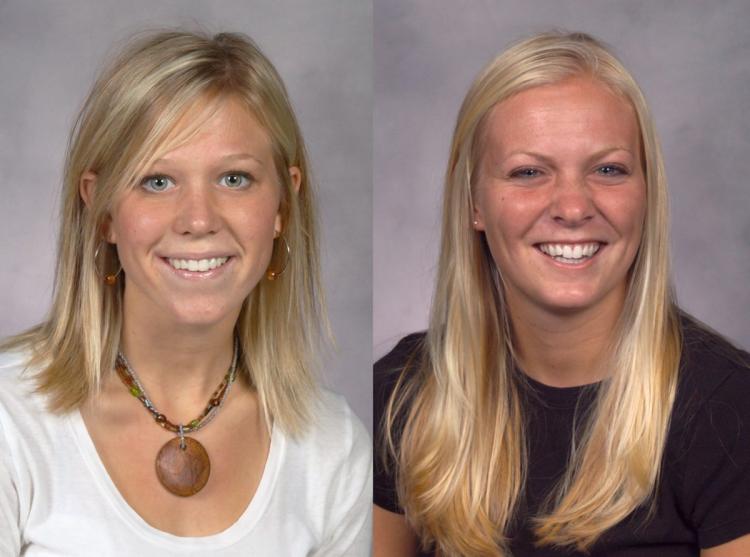
 The mix up in America of Laura and Whitney in 2008 where one set of parents buried someone else’s daughter and a wee sister sitting at the bedside of a very injured ‘big sister’ beginning to suspect that it wasn’t her big sister at all. And she was right.

 The photographs of the two girls show that you couldn’t really tell them apart. The Boston bombing had a similar tragic outcome of parents being told their daughter was dead when in fact she was critically injured. By the time they located her in the hospital, she had unfortunately passed away.

At a recent atrocity in France, the pictures of the dead feature six ladies that are very hard to describe apart- they could have been sisters. All young, pretty, dark eyed, long dark hair and eerily similar features. How many of them would be wearing jeans and trainers?  


I think the most chilling thing about all this is that more countries are signing up as they realise there

is going to be many more incidents of mass fatality.


Caro Ramsay 06 10 2017

Thursday, October 5, 2017

Dogs I have known

Michael - Thursday


On the prowl
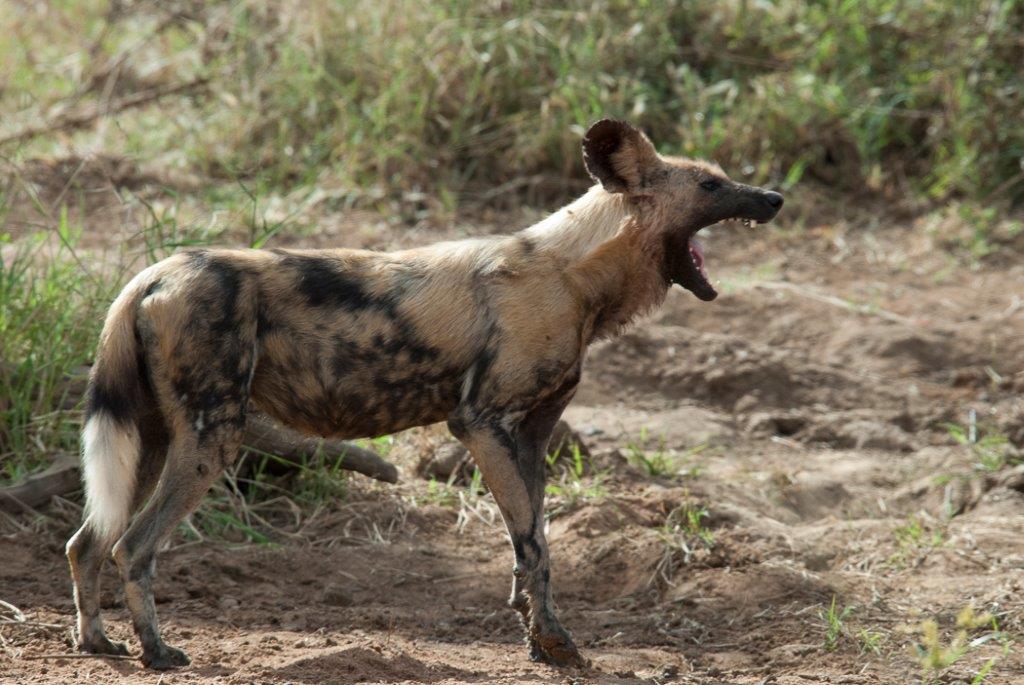
 The African Wild Dog is one of the most interesting of Africa’s large predators. It has a number of quite unusual features – it's one of only two large carnivores that hunts during the day, individuals are asymmetrically and differently marked (leading to the alternative name painted hunting dog) although they all have the white tipped tail for communication, it has an unusual social structure, and the dogs are almost always together in packs.

Greeting ceremony
The pack has a complicated social structure—there is a lead male and a lead female who monopolize most of the breeding activity. Together they lead the pack, and the precedence between them varies. Furthermore, it's the younger females from the pack who go out on their own to start new packs and join new males (generally it’s the males who are turfed out in the animal kingdom). Presumably this minimizes inbreeding.

Time to get moving
I’ve watched them hunt quite often, and it’s quite different from the way lions behave. Far from trying to stalk up to the prey close enough to strike or at least spring an ambush, the dogs arrive in a rush and then attempt to isolate and run down the prey. It’s grueling for hunter and hunted, but usually if the pack can isolate a victim, they win in the end. Their success rate is much higher than for lions for example.

Pulling the meat apart is a communal activity too

This NationalGeographic piece on YouTube is long but shows it all in detail.

Although they look quite dog-like and even show some behaviors we associate with domestic dogs, they are only distant relatives—almost as distant as the jackal. They are gregarious and hunt in packs; their hunting method doesn’t lend itself to individual hunting, although I’ve seen a single dog take an impala by surprise at a waterhole. He ate his fill, and then walked around the kill in widening circles giving the excited hunting call. Pretty soon the rest of the pack materialized and helped themselves to the rest of the meat.

On another occasion we watched a pack relaxing at, and in, a waterhole after a successful hunt. Wild dogs love to swim and cool off that way, and the youngsters were playing and fighting over sticks in the dam. It was the middle of a hot day, and from time to time various thirsty creatures appeared, took one look, and headed back into the bush. Until a large and well-tusked warthog appeared on the scene at the side of the dam opposite the one where the dogs were enjoying themselves. He took in the scene and hesitated a few minutes. Then he decided he was going to have a drink anyway. Making his way firmly down to the water, he seemed to ignore all the dogs. For their part, the dogs watched with disbelief and a couple of the youngsters made a feint or two that he contemptuously saw off. Then the adults started to move around the dam well behind the dam, a pincer movement designed to trap the warthog between them and the water. The thirsty hog continued his drink.

Too late he discovered himself surrounded by the pack. He watched as the dogs tightened their noose.

Have I left this too late?
Then suddenly he took off towards them, choosing the dog in the weakest part of the circle. Faced with a large and impressive tusker moving towards him at speed with every sign of being intent on disemboweling someone, the dog gave way and he was through. He didn’t even deign to look back. The pack returned to its relaxation, and you could imagine them sheepishly commenting that they weren’t really hungry in any case!

Thanks to Aron Frankental for all these photos of the occasion.

Monday, October 2, 2017

Muhammad Yunus and A World of Three Zeros


Muhammad Yunus and his Grameen Bank won the Nobel Peace Prize in 2006.


The thing about Muhammad Yunus is that he seeks to change the world for the better.  Not by tearing anything down, but by building up the poorest people.

 And he is succeeding!

From 1976 until today, his inventive idea—Micro Lending—has helped and continues to help 300 million poor people, almost all of them women, around the world.  By starting businesses with an average loan of around forty dollars, the poorest people on earth are breaking their own “chains of poverty” and educating their children and improving the lives of their neighbors.


We all know about the evils of income inequality—a much-discussed, seemingly intractable problem, as Michael’s blog post ten days ago lamented.   I read and agreed with Michael’s words, and just a few days later I had the privilege of attending an event at the New York Public Library that introduced Muhammad Yunus’s new book—A World of Three Zeros.   Yunus is an economist who understands the problem.  And he offers a solution.  A world of ZERO poverty.


No not this is not a pipedream.  It is just a natural extension and expansions of the work Yunus has already done.

Until he invented micro credit and founded the Grameen Bank, who would have thought that an idea as simple as lending (lending, not giving) women $40 could revolutionize the lives of 300 million families.  But it did.  The loans are made on trust.  And 99% of them are paid back!  Closer to zero than the capitalist economy can claim when it comes to bankruptcies.

Now, the zeros Muhammad Yunus’s book envisions for our world are:

·      ZERO poverty
·      ZERO unemployment
·      ZERO net carbon emissions

Let’s talk today about the first one and begin with the magnitude of the problem and the direction of the trend.

In 2010, when the world population was about 3.38 billion, the 388 richest people on the planet owned more wealth than the bottom fifty percent!  Mind boggling, right?


But only seven years later—in January of this year—when the population had risen to 3.8 billion—just eight (EIGHT!!!) people owned more than the bottom fifty percent of the human race.   And they did not get there by cheating and stealing.  They just played pretty much the only money game left on the planet.  Capitalism.

If you think this is a Third Word problem, think again.  In his new book, Yunus quotes another Nobel prize winner and fellow economist, Angus Deaton: “If you had to choose between living in a poor village in India and living in the Mississippi Delta or in a suburb of Milwaukee in a trailer park, I am not sure who would have the better life.”


We all know what the problem is.  And we all realize that working in a capitalist economy is no picnic.   I wrote two books about how to contend with the being one of the 70-or-so percent of employees who hate their jobs.   The reasons for this dissatisfaction are many and varied, but mostly they come down to this:  for most corporate employees, work puts bread on the table, maybe even allows them keep up with the Joneses in the endless game of economic competitiveness.  But it also requires them to give up too much of their inner selves.  There is often next to nothing in their work to satisfy their souls.  

This is true because of the falsity of capitalism’s central assumption: that human beings are motivated only by personal gain.  We know that this is not true.   Oh, what Yunus calls “Real People” may be self-serving some of time, but they also get lasting satisfaction (or laughter or JOY) from the opposite of greed and selfishness.   They get enormous satisfaction from living in a society where people can count on one another, from knowing they did something that protects the environment, from making others comfortable or safe or even just entertained.


People who toil in the corporate world will tell you that whatever soul-satisfying rewards they do feel on the job come from these intangibles.  And they are the lucky ones, who have “good” jobs.

For most in this world work is drudgery.
   

Here is the reality of dealing with such problems: “The person who is suffering is the one who has to change.”  People who are content with the situation—whatever it happens to be—have no motivation to do anything but support the status quo.

The hardest step toward such change is to give the suffering a reason to hope.  Once they have hope, possible paths out of the woods become clear.  Muhammad Yunnus has had one Nobel-Prize-worthy idea that created that hope and those paths for 300 million people.


Now he says there is a way to redesign the world’s economic system.  But not through fighting what is already there.  And not by helping the poor through charities and government programs.  He says we need to get “selflessness-driven” players into the market.  Allow me to quote him at length:

"All people have to do is express their willingness to participate in creating selflessness-driven businesses … That simple action changes the whole world.  If millions of people of every economic status take the lead in solving human problems, we can slow down and ultimately reverse the whole process of wealth concentration … Extreme wealth concentration is not an unalterable fate that humankind was born with.  Since it is our own creation, we can solve it through our own efforts."

In other words a new form of capitalism where people earn a living but NOT with a goal of accumulating endless wealth.  But by creating businesses that do not ignore social ills.  Businesses aimed at solving them.


One example he gave was a profitable business started in his native Bangladesh, the idea for which has already spread to other countries.  It attacks the problem of malnutrition in children.  (56% of the children in Bangladesh are undernourished.)  A common snack for kids there is yogurt.  There were lots of brands available.  The new social business did research on the nutrients missing from the diets of undernourished children.  They created a product that contained those nutrients.  They sell it at a profit in the more affluent stores and use the money they make to subsidize the price in poor areas, where parents pay what they can afford.  The same idea is being used to better the nutrition of poor children in Brazil—with ice pops.

Yunus’s call to action is aimed at the young around the world—to become social entrepreneurs.  Here in New York, no less an institution than Columbia University is sponsoring a conference that starts in a few days to encourage new entrants into the social economy.

New York already has many such businesses, begun by business leaders who are building companies  that will earn them their livings, solve social problems, and satisfy their souls in the process.

I bet there are some where you live too.


Hopefully more are coming soon.  Everywhere.

When it was my turn for him to sign my book, I had the opportunity
to remind Muhammad Yunus of the time he came to my house,
many years ago, thanks to my friend Dr. William Drucker, to present his
case for Micro Lending to a group of influential New Yorkers.

Sunday, October 1, 2017

Tamago* Versus the Volcano

-- Susan, every other Sunday


Japan sits entirely within the Ring of Fire, a 25,000-mile horseshoe-shaped portion of the Pacific Ocean, the earth's most seismically active region where volcanoes and earthquake eruptions are regular occurrences.

Japan has over 100 active volcanoes - almost 10% of the world's supply of fire-breathing mountains.

Adding to this the Japanese spirit of adventure and love for the outdoors, it should come as no surprise that volcanoes are the star attractions at some of Japan's most popular tourist sites.

Case in point: Ōwakudani, in Hakone.

Hakone lies about 90 minutes southwest of Tokyo by bullet train. The area is part of the "Fuji Five Lakes" region, and well-known for its cuisine, ryokan, and onsen (hot spring baths - the best of which are heated by volcanoes).

Hakone foliage in autumn.

During the medieval era, the Tōkaidō passed through this area, en route from Kyoto to Edo - in fact, the Hakone leg was considered one of the most physically strenuous parts of the journey. (More on that another day.)

Hakone is also known for its famous shrine, beautiful lake . . . and, of course, for the chance to "enjoy traveling on multiple modes of transportation" . . . including a ropeway ride over the steaming mouth of a live volcano.

Wherein, as always, lies a tale.

A TALE OF A LIVE VOLCANO!

The moment I arrived in Hakone last autumn, I dropped my bags at the ryokan, jumped on the Hakone Tozan Railway (Japan's oldest mountain train) and rode 45 minutes up the mountain to Gora.

From there, I hopped a 5-minute, 1 km cable car ride to Sounzan on a funny little cable car packed with other excited travelers eager to catch a glimpse of the volcano (and, hopefully, Mount Fuji, which is visible from the top of Owakudani on clear days).

Here comes the cable car!

Sounzan sits at an elevation of 767 meters (just over 2500 feet) above sea level, and is primarily known as the southernmost terminus of the Hakone Ropeway. In other words, it's where thousands of probably-crazy-but-nonetheless-eager people climb willingly into ten-foot gondola cars for the chance to dangle several hundred feet above the gaping, steaming maw of a live volcano.

Your one-way ticket to the volcano.
But I digress.

Upon arriving in Sounzan, I followed the crowd up a steep set of stairs, showed my Hakone Freepass to the attendant (a $30 ticket that gets you free access to all modes of transportation in Hakone for 2 days, $40 for 3 days - and is worth the price many times over) and accepted a pre-moistened towelette wrapped in plastic "for use if volcanic gases threaten to overwhelm respiration."

I see no way this could possibly go wrong. 

After a five-minute wait in a fast-moving line, I boarded a ropeway car, snagged a seat at the front to ensure good views, and started up the mountain.

Fuji Five Lakes in autumn.
The ride to the summit crest takes about 5 minutes, with gorgeous views the entire way. In autumn, the foliage is breathtaking, and in summer the valleys are filled with gorgeous greenery. (I went back again this summer, and can't wait to see it in spring and winter, too.)

Most of that white is volcanic steam, not clouds.
The steam from the volcano is visible long before you reach the summit. It rises from the crater in thick, white plumes like the breath of a sleeping dragon.

After reaching the summit, the ropeway cars take a leisurely, 2-minute ride across the volcano's crater, giving amazing views of the steaming sulphur vents and scientific research and monitoring stations set up in the mouth of the volcano.


Welcome to the volcano!

Why yes, that is a live volcano directly beneath you.


On the far side of the crater, the cable cars stop at Ōwakudani Station, where visitors disembark to walk around, visit the museum, gift shops, and restaurants, or (weather and volcanic emissions permitting) hike one of the trails that climb up and around the crater.

View from the restaurant overlooking the crater.
I opted for lunch in the restaurant overlooking the crater, and chose the local specialty: Ōwakudani black curry (it's made with pork) and onsen tamago- soft boiled eggs made in the mountain's volcanic springs. 

Pork tonkatsu, black curry, onsen tamago 

"Black eggs" boiled in the sulfuric volcanic springs are a local specialty of Ōwakudani. Eating one supposedly adds 5 years to your life - which means after all my visits there, I'm a couple of decades to the good.

After spending time on top of the mountain, visitors take another ropeway car down the opposite side of the mountain. The views are even better than the first ones - especially if the day is clear, when Mount Fuji's iconic cone rises up behind the nearby foothills.

The lower 2/3 of Mount Fuji . . . Thanks for nothing, cloud.

I take this on faith, by the way, because Mount Fuji and I have unresolved issues - as the photo above demonstrates.

I loved my visit to the volcano so much I returned the following day, and went again this summer with my son, who loved Hakone--from its volcano to its shrine--as much as I do.

My son, with the water gate of Hakone Shrine

When it comes to Japanese volcanoes, the eggs might lose in Hakone, but for the rest of us it's a resounding win.


* Tamago is the Japanese word for "egg." See what I did there.