Showing posts with label snow. Show all posts

Thursday, July 21, 2022

What is good crime fiction?

 Michael - Thursday

A while ago Caro wrote a blog concerning a book she was reading for a blurb that was classified as 'literary fiction'. She commented on how good the writing was and the characterizations, but it wasn’t really clear where the story was heading. I’ve been thinking about that a bit. Of course, it’s an ongoing debate about what literary fiction actually is, and when does it become genre fiction. And does it matter anyway?

Probably, in general, a novel consists of characters, story, and setting in that order of importance. Of course they are all closely entwined. The setting is the stage and the story is the path the characters take on a journey that makes them interesting and allows their development. Without good characters all the rest is of no real interest. I think that crude summary applies to all fiction.

Genre fiction is often accused of putting all the emphasis on plot. That seems to me an odd criticism because it clearly isn't true. John Banville is an Irish writer who is often spoken of as a future Nobel laureate, but he also writes crime fiction books. Most of these feature Quirke, an Irish pathologist, and are written under a pseudonym, but the more recent Snow was written under his own name. Graeme Thomson (Mail Online) asked Banville what he thought of his own crime fiction. Here’s an extract from the interview.

'It’s essentially childish, making up stories and imaginary friends, but there’s great pleasure in it.’

He admits to doing ‘absolutely no’ research.

‘The procedural bores me. With one Quirke book I was ten pages from the end and I still didn’t know who the murderer was. I really don’t care who killed Professor Plum in the library with a pipe. I deplore the thing in Agatha Christie books where there’s just a body in the library and it doesn’t really matter who it is. What fascinates me is, why is there a body in the library, and who is this person? The best crime fiction does that.’

I think most crime writers would agree with the last sentiment. Definitely character leads Banville’s books, but the murder and the plot enables them to be developed. The plot is not very complex, but that doesn’t matter. We are intrigued even if we guess the answers fairly soon and wonder why the detective does not. We come to realize that his background, the setting, and his character make it hard for him. This is very good writing. (If you'd like to learn more about the book, you can read my New York Journal of Books review at https://www.nyjournalofbooks.com/book-review/snow-novel )

Another author who may help answer the question is South African novelist Mike Nicol. I once asked him about his writing style:

'Your writing has passages of short sentences – maybe just a word or two – that heighten the tension and draw the reader quickly on. It seems particularly powerful in this book. Have you been working on this style for some time?'

'The style was consciously developed the moment I started writing crime fiction. Previously I had written literary novels in the magic realism vein. The nature of that prose calls for long sentences where the conjunction is king. In an attempt to break with that style and to find something more appropriate for a story that contained violent content, I felt it important to develop a form that reflected the violence. And a way to do that is to play fast and loose with the language. What I wanted to do was create a sound, a rhythm, that would carry the reader and would also render the meaning as effectively as did the metaphors and the imagery.'

It does. Here are a couple of random examples from his latest novel, Hammerman.

'Holiday month. The week before Christmas. The V&A waterfront. More specifically the One&Only Hotel. The business hotel of choice.'

Another:

'That was where Fish left it. Didn’t tell her where he was. Didn’t tell her what he planned.'

Hammerman is a thriller, The plot idea arises from the assassination of the Swedish Prime Minister in 1986. The premise is that the assassination involved the South African secret service because of the Prime Minister’s vocal opposition to Apartheid. (In fact, there is some evidence to suggest this, and the killer has never been found.) But that's the stage. Once again, the language and the plot allow the characters to take their journeys, hold our interest, and gain our sympathy.

Science Fiction is the same. Good novels rely on characters. Even if the characters are alien, in reality they will be humans in disguise although their characters may have developed in surprising and unusual ways because of their alien environment. Unless, that is, they are merely uninteresting antagonists in a 'space opera' comic.

This is a very big topic and these are just a few random thoughts and examples. My belief is that really there is no difference in what makes good genre fiction and good literary fiction. Both can be good. Both can be bad.

What’s your take?


Sunday, January 31, 2021

Meditations on a Snow Day

 -- Susan, every other Sunday 


It's difficult to believe how much the world has changed in only a year. A year ago this weekend, I saw a weather report suggesting it might snow in Hakone--a mountain onsen town a little more than an hour from my home in Meguro, where I made many climbs during my 100 Summits year. On impulse, I made a reservation at the highest-altitude ryokan I could find, jumped on a train, and headed for Gora (one of the many small towns in the greater Hakone area).

The seasons play a vital role in Japanese life, as they have for centuries. Even now, the diet and culture of Japan has a distinct (and distinctive) link to the changing seasons. Since ancient times, Japanese poets and artists have celebrated the seasons in their work:


Calligraphy mine, author unknown

The poem above was included in a famous 10th century collection of Japanese verse, and translates:

O warbler, sitting on the plum tree branch / you sing to welcome spring / but in the air, the snow still falls.

Since finishing my 100 climbs in the spring of 2019, I have tried to infuse my own life with that this appreciation for the seasons, which includes regular trips to the mountains to experience the seasons, as those ancient poets did.

I arrived at Hakone-Yumoto station and stepped out into a cold, steady rain. There was no snow at all. I felt keen disappointment--not unlike the Heian-period poet who wrote:

I left the city and found my way to this place / longing to meet you / yet my journey was in vain / for now we must say farewell.

I boarded a bus for Gora, hoping that the rain might turn to snow in the night, if it continued raining. As the bus climbed up the mountain, the rain transformed to slush, and then to snow, before my eyes.

Snow! As seen from the bus climbing into Gora


By the time the bus stopped at the base of the Hakone Ropeway, the world was transformed into a black-and-white wonderland. Snow fell around me in fat, lazy flakes that seemed in no rush to reach the ground--and I felt in no rush either. I boarded a gondola for the trip up and over the Owakudani caldera.


Hakone Ropeway in Snow

The caldera of Owakudani, a live volcano in Hakone

The scene put me in mind of another old poem, this one by Minamoto no Moroyori (1068-1139):

Wide the meadows where / upon my charcoal kiln / the snow is falling in sad solitude / The smoke arises.

I had lunch in a little restaurant atop the volcano, watching clouds of steam rise from the caldera to meet the falling snow. The weather was cold enough that the snow prevailed, reached the ground, and piled up in drifts everywhere except the fumaroles where the volcanic steam emerged from the earth.

After lunch, I headed for Gora Park, which sits on the mountainside just below the ropeway. As I hoped, the park (which is also home to a number of historic teahouses, moved there for purposes of preservation as the Hakone area was developed) offered a perfect opportunity to experience winter as Japanese poets did. The snow had stopped falling, but I was almost entirely alone at the park. 

As I walked the silent, forested paths, I felt an ever-deepening awe at the silent beauty of the trees and snow. 


Gora Park, January 2020

In Japanese poetry, snow is often used as a metaphor for age (a reference to the white hair people fortunate enough to live long lives are privileged to acquire). As another tenth century poet wrote:

The spring sun cannot melt this snow [and reverse the effects of age].

Snow also carries many other meanings, and appears as a central feature of Japanese poetry throughout history.


The snow lingers on, and / my deep mountain retreat is so cold, that / not one sign of spring can I see at all. -- Daishin Gito (1656-1730)


Upon the plain of heaven / of spring, there is no sign in sight. / A memento of the year that's gone / Snowfall with the dawn. --Fujiwara no Ariie (1155-1216)


Early in the morning / The storm wind / over my garden gusts, yet / Upon the fallen snow, no trace it leaves. --Fujiwara no Tsuneie (1149-1209)


Time to light the lanterns once again / And the painter, aging / has frost brushed upon his temples. --Basshō (1692)


To folk from the capital / First of all, would I show my mountain home’s mossy garden paths / where
The first snow has fallen. -- Nakazane

The stark black and white landscapes of a winter garden offer excellent opportunities for reflection, and it's easy to see why poets often associated winter with age, silence, and endings--but also with promise, and with the spring that would eventually return.

Snow serves as a powerful metaphor, in Japanese poetry and elsewhere, and it seems particularly powerful now, as the world waits for a post-COVID spring to thaw the ice that holds us in place, in many cases, apart from those we love.

And yet, the spring will come again. The world will thaw, and although the world may seem bleak now:

In a roadside field stands / a leafless willow tree. / Spring will come, and then / the wonders of long ago / will all return. --Sugiwara no Michizane

Until then, stay safe, keep faith, and remember that every day is still a blessing--even (or perhaps especially) when it's wrapped in a blanket of clean, white snow. 


Thursday, December 12, 2019

She got what she asked for

Stanley - Thursday

Mette and I have alternated celebrating Christmas from one year to another between her home north of Copenhagen in Denmark and Cape Town in the south of South Africa. It is an interesting juxtapositioning of traditional European (indeed Danish) Christmas traditions and those of a country that is in the middle of summer when December 25 rolls around - hardly conducive to huge meals and snow..

Danish Christmas tree

African Christmas tree

My favourite African Christmas tree - a wire baobab
Anyway, this year Mette decided she would like to experience a Minnesota holiday season. To accomplish this, she arrived a few days before Thanksgiving so she could partake of turkey, turkey, and turkey, which we did at some friends. No American football watching though.

She also wanted to find out what all the fuss was about with respect to Minnesota winters. Over the past few days, she found out.

This is in Fahrenheit. It is about -21C.
This is a wee bit chilly for Minnesotans, but barely raises an eyebrow. Earlier in the year Minneapolis enjoyed -28 degrees F (-33 degrees C). On the same day, the high temperature soared to -13 degrees F (-25 degrees C).

I was impressed by how Mette took to the cold. She bundled up and headed outside. 

She particularly loved the snow - something that doesn't happen in Denmark nearly as often as it used to. We had 10 to 15 centimetres (4-6 inches). Not a lot, but enough to make the city beautiful.

One of the benefits of living in a city used to severe winters is that it is prepared. The entire Minneapolis downtown is connected by enclosed overhead walkways, called the Skyway system. This means that you can walk around town in shirtsleeves without freezing to death. Very nice. It also means that when snow falls, roads and sidewalks are cleared quickly and efficiently.

Part of the Skyway system
On at least one occasion. Mette and a friend headed out, planning to walk outside down Nicolette Avenue. It didn't take long for them to head to the Skyway. And why not when it is there?

Ploughed snow means piles of snow.

Roads are cleaned quickly, even if they are narrower than before. Notice the sun - a benefit of being really cold.
Mette has also enjoyed being in a city in the winter. In Denmark, she lives in the country. It is beautiful there, but totally different from being seventeen stories up, looking at the Mississippi on one side and downtown Minneapolis on the other.

The view from my building (Photo Miriam Larson)
This weekend we head to New York, where our gracious host will be none other than Annamaria Alfieri. On the agenda is Rockefeller Plaza and all that goes with it; a visit to the Metropolitan Museum of Art; and dinner with Jeff Siger and Barbara Zilly. And walking, walking, walking.

Next week back in Minneapolis is the Guthrie's A Christmas Carol - a perennial favourite. Then Christmas Day at our apartment with some friends - probably a mixture of different cultures featured on the dining room table.

I think Mette would say that the adventure has already been a great success, even though we still have three weeks here with plenty of special things to come. And I would say that you should come and experience a Minnesota winter and festive season. It is bracing, beautiful, and will take your breath away.


Wednesday, January 16, 2019

Digital White-Out


Sujata Massey


When the snow fell last weekend, I welcomed it, not just for its beauty, but the way it stops time.

I grew up in Minnesota, where children are hardwired to appreciate the beauty of snow and also to expect it as a normal rhythm of the winter, rather than a natural disaster. As an adult I am able to admit that snow is not just fun and games. I can't decide what is more treacherous; the flat packed snow that forms a shiny, slick surface; the thick ice lurking under snow; or the thick salt crystals scattered over the sidewalks that sting my dogs’ paws.

Even though snow trips me up, I still love it.

Snow only falls a few times each winter in Maryland—but often it’s a storm, rather than a casual sprinkling. Supposedly it's because of the freezing air coming down from Antarctic meeting up with the warmer Atlantic. And when we have snowstorms in Baltimore, we never have  enough plows. In bad winters, the whole Eastern Seaboard runs out of salt and sand. In my city, the protocol is to concentrate on freeways and major roads while the storm is ongoing, and to address the rest of the city later. Or not. 

Last Sunday, when Baltimore was snowed in, a tremendous quiet descended over my world. I bundled up and went for a walk around nine in the morning with my husband. The streets and lanes had only a few car tracks. On my way back, I slipped on one of the slick snow patches on an unplowed street, but no lasting harm was done.

Unspoiled snow gives the feeling of open time. It is the opposite of an ordinary day dominated by rapid-fire texts and emails demanding answers. The snow seems to wipe all of that out.

This weekend’s snow came just before I started reading a book called Deep Work written by Georgetown professor Cal Newport. Dr. Newport examines what a lot of us already know: that toggling between different kinds of intellectual activities leads to a poorer quality of life and produced work. Using studies and examples of scientists, psychologists, tycoons--as well as his own hard-fought academic writing accomplishments--he talks about the need to limit shallow work that distracts from the deep snowbank of joyful, rewarding work.

I've become very interested and inspired by this theory of deep work, though I cannot of course end my daily life as a person raising children and dogs, helping with my husband's business, and keeping in touch with readers. But I know that I do many more distracting activities now than twenty years ago, when I was starting my fiction career. Now I understand why focusing was easier.

One of Dr. Newport's suggestions for managing smaller job-related responsibilities  is to address them in batches rather than every day. For instance, I could write a couple of Murder is Everywhere posts over one day or two days and then I'd be ready for the month. In that same week of managing small writing assignments, I could write my monthly author newsletter and cue up some Instagram posts. And in the other weeks of the month--at least three!--I could immerse myself in 1921 Bombay, the very un-snowy setting of my current novel. 

So I've got an idea. Regardless of what the weather predictions are, a metaphoric storm is headed to my house tomorrow morning.

It will be a white-out from the digital world. I aim to concentrate on my neglected next novel, which means I can answer email just thrice daily. And podcasts, radio and TV will have to wait two weeks as well. My mind doesn't need any more jumbling.

I intend to listen hard enough in the silence that I can hear snowflakes fall.


One of the last emails Sujata read before starting the Digital White-Out carried the good news she's been nominated for a Lefty award for Best Historical Mystery of 2018. The awards will be voted on at the Left Coast Crime Convention in Vancouver this March.

Sunday, March 11, 2018

Snow Business: Bringing Out the Best and the Worst in People

Zoë Sharp

Last week the UK had a bit of snow. If this was Canada, say, or the French Alps, or Moscow, it would have seemed an insignificant amount hardly worth mentioning.

We English, on the other hand, are never prepared for our weather.

The calm before the (snow) storm

In this case, it wasn’t simply snowfall that caused the trouble, but a combination of snow and wind. The snow landed, and then the wind swept it into drifts that blocked local roads and created utter chaos with supply lines and transport.

First came a reduction in visibility, just to make you feel isolated ...

For two days, the village where I house- and cat-sit over the winter was more or less cut off, so the tiny village shop was raided for supplies vital to withstand this kind of siege—bread and milk, vegetables, soup, and chocolate. (All the major food groups.)

Then came the drifting snow across the roads...
And now the majority of the snow has gone, most people’s patience has run out altogether. It’s gone from a pristine white carpet to dirt-encrusted remnants by the sides of the road. They’ve had enough. It’s nearly Easter, and high time Spring was making its presence felt.

The mogs were fascinated by the white stuff, and found their usual hunting camouflage remarkably unaffected, sadly.
I am always fascinated by what happens when the normal order of things breaks down, even to a small degree. Two days, I concluded, was about the maximum length of time that most people’s patience could stand the disruption. Any longer than that and it went from novelty to serious inconvenience. A day or so off work was fine. More than that and deadlines would be missed, and the scramble to make up lost ground was not worth the enforced downtime.

For a while, everything looked pristine and beautiful.
How people behave when they find themselves in a situation that is one of overall rather than personal adversity tells you an enormous amount about them. It pares down human nature to a more fundamental level. Some people take a step up, and others a step back. Light and shadows.

It doesn't take long for everywhere to look dirty and churned up. The snow in the lane was thigh-deep in places.
It is also why setting any kind of crime fiction during a period of upheaval can be so intriguing to explore for the writer. Setting ABSENCE OF LIGHT during the aftermath of a major earthquake was a deliberate decision and one that gave me a chance to put the best and the worst of human nature under a microscope.


I am currently reading Andrew Taylor’s THE ASHES OF LONDON, set during and immediately after the Great Fire of 1666. Although this book does not use the fire itself as a major part of the storyline, the fact that it caused many Londoners to be ruined and made homeless, not to mention those who died, brings out the worst in people. Quite apart from the fact that a number of tenants found themselves financially responsible for the rebuilding of their home, despite not owning the building, and still liable for the rent as well. Desperation breeds ever more desperation, and that’s where the writer comes in.

The last remnants of snow-bones in the fields.
Needless to say, no fires broke out in the village here during our minor blizzard. All that's left now are a few snow-bones in the fields. As soon as the thaw started, naturally there were burst pipes aplenty, causing the water supply to be shut off, but only for a day. There weren’t even any power cuts, nor did the phone lines or cellular masts fail. 

But if they had …

This week’s Word of the Week is pusillanimous, meaning to show ignoble cowardice or contemptible timidity. It dates back to the 16th century and comes from the Latin pusillis, very weak or little, possibly connected to pullus, a young animal, from pau few or little, and animus, courage or spirit.


Sunday, February 26, 2017

Above the Clouds: Writing in Bulgaria


At long last, the new book has reached its final stages and the action has moved from the deserts of Iraq and Jordan to the icy mountains of Bulgaria. To the ski resort of Borovets, to be precise, which is 1350 metres (4430 feet) above sea level in the Rila Mountains, about 73 kilometres (45 miles) southeast of the capital, Sofia.

I was there about three or four years ago and took a load of pictures precisely so I had a feel and a flavour of the place for when I reached this stage of writing. It’s been very useful to look back over them now.


Take this shot, for instance, up a mountain in Borovets. I’d completely forgotten that, at somewhere around 7700 feet, for quite a lot of the time you were above the clouds, it was like looking down on a misty ocean.


In fact, the highest I went was 2369 metres (7772 feet). The highest peak locally was Mount Musala at 2925 metres (9600 feet).


The only way up is to take the gondola lift. I think the 1315m is the distance up it travels.


You certainly get the most amazing view as you slowly crank your way upwards. Not quite as much snow on the trees this far up, though – there had been too much sunshine that winter.


Down in the resort itself, though, there was the icing sugar coating effect on the trees, which was a beautiful sight.


Despite Borovets reputation as the booziest place to ski in Europe, there were plenty of entertainments for smaller visitors, like this mini dog-sled ride …


… or varying sizes of very small pony. I wasn’t quite sure about the handlebars and the horn, though.

pic from SnowSphere.com

And for the grown-ups, there was also the sleazier side to Borovets. Bars and the occasional strip club line the main street.


Hog roast is a traditional dish, and most of the restaurants had an outside spit going.


Also to keep the grown-ups happy were night snowmobile rides through the forest, which was an amazing experience and gave me all kinds of ideas.


As did some of the very unusual ‘souvenirs’ on offer in one of the local stores. Didn’t think I’d get any of this lot back to the UK on a plane. Not as carryon, anyway.


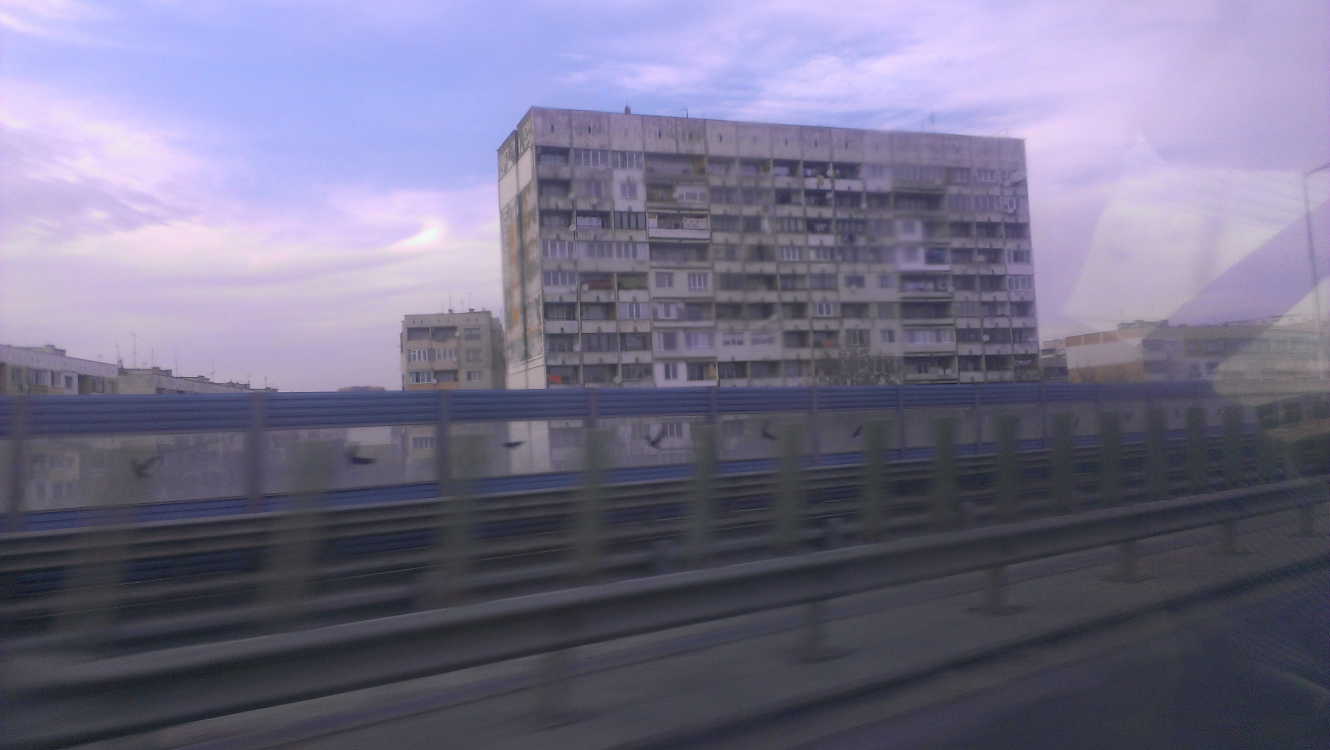
Outside the resort, the architecture had a very Soviet feel to it, like this apartment block on the outskirts of Sofia.


But elsewhere there were old tsarist palaces and places like this royal hunting lodge, the style and layout of which I have borrowed for plot purposes.


And I’ve also mixed in the location of this fortress at Veliko Tarnovo. That’s the nice thing about creating your own world, you can take reality and mess with it just enough to keep things believable. After all, we’re trying for realistic, rather than real.

This week’s Word of the Week is actually a list of words connected with snow, courtesy of the Encyclopedia Arctica from Dartmouth College Library:

Anniu – snow intended for melting into water for drinking or cooking

Apun – snow that’s been lying on the ground long enough that it can be cut into building blocks

Ballycadders – ice formed from salt-water along the shore at different levels depending on the state of the tide

Calf – a piece of ice that’s broken away from the front of a glacier or iceberg

Canopying – interlocking flakes of snow

Congelifraction – the shattering or splitting of rock due to the action of frost

Corn snow – grainy snow formed by cycles of freezing and thawing

Debacle – the break-up of ice in rivers in springtime

Duff – organic matter covering the ground in a forest, such as dead leaves, which helps preserve permafrost

Firnification – the process by which new snow becomes hard-packed glacial ice

Fonn – eternal snow