Showing posts with label psychopath. Show all posts

Thursday, August 28, 2025

The minds of murderers

 Michael –Alternate Tuesdays

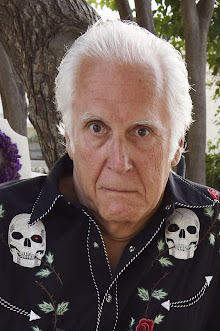
Guess who...

The crime reading and writing community obviously has a deep interest in what goes on in the minds of murderers – what are their motives, is the crime opportunistic or carefully planned, do they have favorite locations, weapons, approaches?

In most real cases, the killing is on the spur of the moment, motivated by anger or possibly by mental and physical abuse where the victim finally snaps. Those cases don’t make interesting police procedurals. The connection between the victim and the killer is usually apparent or quickly discovered. Once the motive is established, and remembering that the attack was unplanned, it’s easy to identify the prime suspect and join the dots. However, premeditated murder (at least in fiction) is usually planned quite carefully. The motive may be more obscure – money, love, hate, revenge, silence. The murderer will take trouble to avoid discovery and, perhaps, try to engineer an alibi. He or she will choose the time and place. They will know what sort of things the police will look for and try to avoid those using information from CSI and all the other true crime series flooding the streaming services. Now the detective has a challenge worth reading about.

The writer’s job is to make the villain believable, and to do that one needs to understand what’s going on in their mind. What is the real motive? How do they react to it? How do they think about it? How do they plan? What will they do when they’re caught? In a sense one needs to profile the character. If that’s not done well enough, the reader will exclaim, “He’d never do that!”, and the fictional dream will be lost.

So how does one approach that? Well, it’s actually reverse profiling. Create and understand the bad guy’s psyche, then deduce the behavior that would follow from it. It’s hard work to do that first step. One has to get into the mind of the murderer. One may even have scenes in the book from his point of view. And sometimes those may be unpleasant for the reader (and the writer) even if they are necessary for the story and character development.

It even looks human...
But what about when the mind of the murderer is really far away from anything the writer can conceive? I’m not talking about aliens in science fiction. (With a few exceptions, the aliens are either horrors or their minds work similarly to human minds. Otherwise, how do we relate to them as characters?) I’m thinking of psychopaths who perform grotesque murders apparently almost at random. How do you get into the mind of a murderer so removed from anything your own mind can understand? How believable would be a scene from such a character’s point of view?


John Douglas at the time of the book
Probably most readers of this blog will know the story of how the FBI started profiling serial killers by interviewing them in prison. John Douglas and Mark Olshaker told the story in their book Mindhunter. Douglas faced the same sort of questions, albeit with much higher stakes. Could one develop a good enough picture –physical and psychological – of the killer to be able to predict his behavior (it is almost always a “he”) and what physical and family attributes such a killer probably had. The book was dramatized in a Netflix series of the same name. The most fascinating parts of the series are the selection of interviews with serial killers based on the transcripts of Douglas’s actual interviews with them in prison. Despite stomach-churning crimes, these men are convincing in a way that few purely fictional characters are. The experiences that Douglas had with them enabled him to develop the art of criminal profiling and spread it through seminars to law enforcement. 

Kemper at the time of his arrest
The scenes with Edmund Kemper are particularly intriguing and he seems to be accurately portrayed in the Mindhunter series. A sociopathic killer who was known as “the coed killer” shot his grandparents as a boy, murdered and dismembered six young girls, and battered his mother to death with a claw hammer. He towers six foot nine inches with a weight to match. Yet if you knew nothing about him and met him in the street, you would describe him as well-spoken, intelligent and friendly.

Their technique consisted of sitting down with the convicted killer and asking questions about his background and his crimes. Kemper, in particular, loved to talk about himself and what had motivated him. As he told the story, his motive became believable if not understandable. If you have a psychopathic character, maybe pretend he's been caught, sit him down in prison and interview him the way Douglas did. If he can't convince you of the sense his actions make to him, it's unlikely the reader will be convinced either.

Although we’ve had quite a few pretty nasty bad guys in our books, we’ve never had a chapter from the point of view of a psychopathic serial killer. The closest we’ve come to a serial killer is the witch doctor in Deadly Harvest who kills, or orders killed, people for the black-magic potions that he sells at high prices to rich clients. But like “ordinary” serial killers, power is his real motivation. There is no section of the book from his point of view. He is hidden, unknown, we see his effects on other people, but not from the man himself. Some further evidence of how his mind twisted is revealed at the end, but not by him. In this case, less is more.

He is much like a serial killer. Apart from some clues to the sorts of people he chooses, there is no connection between him and his victims for the police to follow. Also, his clients are rich and powerful people, possibly even within the police. No case could be more daunting to a detective. Unless that detective has his or her own axe to grind as is the case in Deadly Harvest.

We agonized over that witch doctor. Had we managed to create a believable villain? Would people outside Africa be able to relate to the fear that even well-educated local people might hold for such a person? Apparently, we did a good enough job to impress the reviewers and even bag a place on the shortlist for an ITW thriller award for the year.

In our new book we have a different sort of bad guy. He may not have started life as a sociopath, but he’ll get there by the time we’re finished!

Tuesday, March 15, 2022

ARE DICTATORS MENTALLY ILL?

Kwei--Wed 


Putin’s Ukraine War

Since the invasion of Ukraine by Russian terrorists on February 24, 2022 at the behest of Vladimir Putin, the world has watched with revulsion, horror, and disbelief at the wanton destruction of Ukraine’s cities and the outright  murder of civilians. Most people around the globe have three fundamental questions about Putin that continue to baffle:

  1.  Why is Putin doing this? If there’s anything he loathes more than the West, it’s the collapse of the Soviet Union, which in 2005 he called “a major geopolitical disaster of the century.” Ukraine and the Soviet Union have had a long and complex history, into which I won’t delve too deeply, but Putin is bitter and resentful over the loss of Ukraine and its clear leanings toward the West expressed in 1991. He gives off an aura of utter contempt of the Ukrainians as a people and a nation. 
  2. How can he ignore the excruciating suffering of the Ukrainian people, both refugees and those who, for one reason or another, have stayed behind in Ukraine? That is the question. Most cannot comprehend it. Even captured Russian soldiers, who are supposed to be killing machines, say they don’t understand the nature of their present mission.
  3. Is Putin crazy? We throw around that word “crazy” loosely and liberally to describe anyone from mothers-in-law to a full-blown schizophrenic wandering in the street. In the strict medical or psychiatric sense, Putin is almost certainly not crazy. However, he shows evidence of personality disorder, which is defined as, "long-standing patterns of thinking and acting that differ from what society considers usual or normal.” This is why most of us fail to understand what Putin is doing. 

Dictatorship

Putin is not alone in his extraordinary thirst for spilling blood. He’s in a club of murderous dictators past and present and all over the world, who gain satisfaction from often brutal annihilation of large populations, nationally or internationally. 

In a dictatorship, the government focuses its regime onto a single person or figure. There is no separation of powers, and all power lies in the hands of the dictator and a small, oily group--the oligarchs--who surround the dictator in an incestuous, codependent jacuzzi.

Traits of a dictator

Certain behaviors come up repeatedly in dictators:

  • Glib, charming, charismatic
  • Grandiose sense of self
  • Pathological lying
  • Lacking remorse or guilt
  • Lacking empathy
  • Deflection of blame
  • Emotional flatness or shallowness
Much worse than these characteristics, dictators are often abusive, sexually deviant, paranoid, sadistic, antisocial, and narcissistic. In narcissism, the dictator assigns himself more importance than he deserves, has a deep need for attention and admiration, and has a marked lack of empathy, which is why people are worried about the specter of the previous president returning to power. He checks a lot of boxes.

Sadam Hussein had all four characteristics above, as did Adolf Hitler, but Sadam was more sadistic in the true sense than Hitler was. Which doesn’t change anything. Hitler, too, likely suffered from schizophrenia with delusions of grandeur. Benito Mussolini, Mao Zedong, Joseph Stalin, and Francois Duvalier all had some combination of delusion, egomania, and certainly narcissism. The features of dictators mirror quite exactly those of a psychopath.

1 Gourde 1984 Banknote from Haiti. President of Haiti during 1957-1971.


The brain of the dictator

Practically no studies have been done on dictators’ brains. However, because dictators have psychopathy, it can be instructive to look at psychopathic killers’ brains as models.  James Fallon puts forth a hypothesis in which psychopathy is a three-legged stool. One leg is genetic vulnerability, the second is functional brain loss, and the third is abuse. For instance, psychopaths with ethics and morality problems have poorly developed frontal lobes and amygdala--remember those?--and any number or combination of legs may coexist.

In psychopathic or dictator brains, neural correlates have been located in the brain and found to be abnormal compared to the populace at large; for example, the area of the brain for hate and sadism is different in psychopath/dictator brains from what is considered normal. On one side of the brain also is a location that determines your morality and your perception of the intentions of others. In dictators this area is turned on all the time it shouldn’t be, and this generates the feeling of paranoia.

There is a "warrior gene,” which if inherited, causes abnormalities in the areas of the brain responsible for tempering aggressive behavior. So here we have the interface of genes and brain development, and both of those hook into the hormonal system. The warrior gene is sex-linked, and is probably passed from mother to son, which is why most psychopaths and dictators are men.

Abuse and trauma can directly affect genetics to perpetuate the warrior gene, so in socioeconomically deprived and violent neighborhoods, the percentage of men with the warrior gene could theoretically rise and cause aggressive behavior for generations--not good news for the United States.

A word about Putin’s War

The fortitude of the Ukrainian people fighting against the much bigger, stronger bully brother, has been impressive, but the fury unleashed by Putin is something of a terrible, shameful crime against humanity. 
Volodymyr Zelenski is a heroic symbol of resoluteness, courage, and backbone, about whom only political wonks knew up to a month ago. A lot of politicians all over the world and right here at home need some lessons from Zelenski. 

However I feel something is wrong with the picture--or more than one thing. The concept of protecting NATO countries if the Russians step one inch into any of them, but not affording Ukraine the same protection is like the cops refusing to respond to your 9-1-1 call because you’re not part of the neighborhood watch. Only those guys get help. 

Something else is off. Why does it seem like Ukraine keep saying they don’t have enough equipment, but the White House insists there’s plenty and more coming? Zelenski also says he needs planes, but the White House and Pentagon says most of the problem comes from ground artillery, not from the air. Is one not giving the other credit, or is one inaccurately assessing the situation? 

Finally, the most fundamental and essential question and the one most difficult to answer: How does one man get to wreak world havoc while we stand by? Again. IMHO, this is actually a slow-burning WW III, it’s just not the old type, the archetypal WW II. Nowadays, there are other components--cybercrime, information warfare, disinformation campaigns, tightly interconnected global trade, and so on. In other words, if you take war as a college campus, there are a whole lot more departments than there used to be.

                                                                            ~~~