Showing posts with label health. Show all posts

Wednesday, May 10, 2017

A Sour Treat

Sujata Massey


Pink rhubarb stalks fill the tables at farmers markets in early spring. With the stiff body shape of celery and the tender texture of a fruit, rhubarb is the barb of jokes--a misunderstood and under-appreciated bit of produce.

I speak as a rhubarb convert. The first time I saw the ragged green plant growing near the garages of my first two houses in two different states, I thought it was an inconvenient weed that needed to be dug out. Someone explained it was rhubarb, but I still wasn't drawn to trying it. For starters, the rhubarb was on a dog-walking route. I'd seen canines appreciating it. I also recalled stories about part of the rhubarb plant being poisonous. 
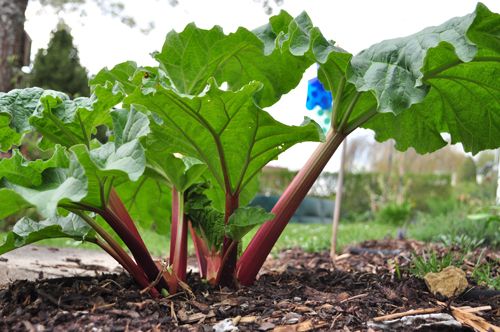
Minnesota-grown rhubarb (Gertens)


But the shunned rhubarb gnawed at me. Cafes and gourmet friends offered me delicious desserts where rhubarb was an ingredient, sometimes mixed in with strawberries or other sweet fruit.  I developed espect for the soft, tangy substance that was proving itself a valuable team player. I felt better knowing just the big green leaves of the plant are full of oxalic acid—the infamous poison. The stems are edible raw or cooked. 

I bought my first bunch of rhubarb from the Wedge, a Minneapolis co-op grocery. Since rhubarb does very well in places with cold, wet winters, Minnesota turned out to be a prime spot to buy rhubarb. I made a cobbler that I thought was tasty, although nobody in the family clamored for it.  Too sour, they said. In my mind, rhubarb's tang is similar to that of  lemon curd--but ever so much more succulent.

And rhubarb's got more going on that the average fruit or vegetable. Both Chinese and Europeans discovered the stems aid with digestion, so it was used as culinary medicine. Rhubarb is rich in  calcium, and Vitamins C and A; however, its superstar ingredient is Vitamin K, which fosters brain health. A single serving of rhubarb provides 45% of suggested daily Vitamin K.

The stems themselves have a lot of power—they cause the blood to run thin. This means rhubarb is something that shouldn't be eaten to excess by hemophiliacs or people on blood thinners. But you could make it a regular part of your diet if you're bulking up on foods to potentially stave off dementia, need calcium to strengthen your bones, or are wishing to be more "regular."


Rhubarb enthusiasts have their own heaven on earth. The Rhubarb Triangle is a nine-square mile area between three villages in West Yorkshire. For generations,  Yorkshire farmers have treated rhubarb like royalty, raising it in barns lit by candles in order to avoid sunlight's photosynthesis, that would color the leaves and stripe the stems green. This results in a deep red color of the stems, and supposedly sweeter flavor. 
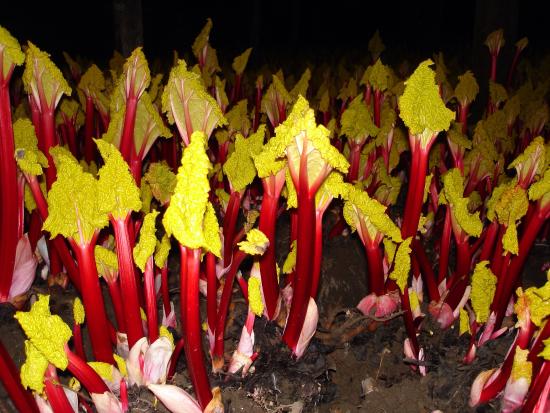


Rhubarb Triangle-grown rhubarb plants have leaves that are chartreuse!


The thing about garden-variety rhubarb is one only has to add sugar to make it what you want. Apparently rural children sometimes eat raw rhubarb canes are dipped in sugar and eaten. I tried this, but it was too hard and sour for my taste. It brought me back to thinking about poison.

The mystery writer began pondering exactly how rhubarb could wreak havoc. She imagined an impatient woman in her fifties serving lunch to her eighty-year-old aunt, a wealthy woman who’s a health fanatic and has been living too long for everyone’s taste. The oxalic acid leaves were shredded and went into a salad with a sweet dressing. The evil lady's idea was that the bitter taste would be misidentified as escarole or another bitter lettuce—greens that the elderly aunt approves of. However, you'd have to eat a LOT of rhubarb leaves to die, rather be sickened. My guess is the old lady would recover and write her niece out of the will.


Ingredients for rhubarb compote


Ingredients for rhubarb-apple chutney


Cooking rhubarb chutney


One farmer’s market bundle of rhubarb can be transformed into one very sweet cobbler or pie. But you can find those recipes everywhere! I took that bundle and divided it to create two non-dessert rhubarb recipes. They're so easy you can cook them at the same time and have a rhubarb compote with yogurt for breakfast, a cheese-and-rhubarb-apple chutney sandwich for lunch, and a scoop of that chutney with an Indian or Western dinner. If you really wanted to push it, you could put warm compote with ice cream or on cake for dessert.

Rhubarb-Apple Chutney (makes 1 ½ cups)
1 1/2  cup diced rhubarb (about 1-inch)
1/2 cup diced apple (any sweet kind)
½ cup dried cherries
¼ cup finely chopped red onion
¼ cup water
¼ cup honey
1 tsp grated fresh ginger
1 1/2 teaspoons red-wine vinegar
¼ teaspoon crushed red pepper (1 dried chili pounded)

1. In a small non-reactive saucepan, add rhubarb, apple, cranberries (or cherries), onion, water, honey, ginger, vinegar and crushed red pepper. Bring to a boil, stirring occasionally. Reduce heat to medium-low, cover and simmer until rhubarb is tender, about 10 minutes. Uncover and simmer about 5 more minutes, until it becomes a thick sauce.

2. Pour into a glass container with lid and refrigerate.

Rhubarb-Apple Chutney is good with rice and other elements of an Indian meal, or on the side with grilled or roasted meats. It’s also nice on a sharp cheddar cheese sandwich. The chutney will keep in the refrigerator for about a week.


Rhubarb Compote (makes 1 cup)
1 ½ cup diced rhubarb (about 11/2-inch)
¼ cup white sugar
¼ cup fresh orange juice
3 pieces of orange peel
3 whole cloves

11.     Combine all ingredients in a small non-reactive saucepan. Cover, bring to a rapid boil and cook over low heat for 15 minutes, until the rhubarb is tender, stirring occasionally.
22.    After the compote has cooled, taste it for sweetness and add extra sugar if you like. Remove the orange peel.
33.    Pour into a glass container with a lid and refrigerate.

Rhubarb compote stays fresh keeps in the fridge for one week. It’s good with Greek yogurt or whipped cream; mixed into porridge; or spooned over pancakes or  sponge cake. One word to the wise is the two recipes look almost identical, once cooked. So label them--unless you like the taste of red onions mixed with ice cream.

The finished chutney


Thursday, August 7, 2014

The deadliest drug?

There’s been a massive shift in thinking in the United States over the past few years with respect to drug use.  Specifically, the use of marijuana, particularly for medical reasons, is becoming widely accepted.  And I’m pretty sure that it won’t be long before recreational use is also no longer prosecuted.
These changes have caused me to think about addiction, about how different substances affect people differently, such as tobacco and alcohol, and what society does about addictive substances.  It has also made me wonder whether legalizing recreational use of grass will lead to more people experimenting with more addictive drugs.

My reading and thoughts led me to a place I never expected – the notion that perhaps the deadliest drug that humans use – and I mean all humans – is probably sugar.  Not only has its agricultural harvesting and refining been the cause of the deaths of millions of slaves, but its ever increasing use (now between 30 and 40 kgs or 70 and 100 lbs per person in the USA per year) is almost certainly the prime cause of early death linked to diabetes, obesity, high blood pressure, and a variety of other conditions.

So why do we like sugar so much?

One theory is that we are genetically programmed to like it.  In fact, because we like it, we survived.  Way back when, perhaps 22 million years ago, apes lived in the trees of Africa, happily surviving off fruits and the fructose in them.  As the climate changed, and the seas receded, some of these apes left Africa and spread out over Asia and Europe.  With the onset of the Ice Ages, fruit-bearing trees started to die off, and the apes struggled to find enough to eat.  Those that survived were the ones that were able to process the fructose more efficiently.  In fact, a mutation occurred in some apes that allowed them to store the fructose as fat, enabling them to survive winters better.  The various descendents of these apes, including humans, carry this ability to create fat from sugar.

"Ah, sugar!"

The second part of the equation is that when we ingest sugar, we stimulate the same part of the brain that is affected by substances such as heroin and cocaine – the pleasure centre.  That is why we like foods with sugar, and why we have become addicted to sugar.

Pecan and Maple Danish pastry - no wonder the Danish are the happiest people on the planet
(Photo: Yohan Euan)
Variety of Danish pastries

Classic Sweet Roll


The interesting, but dark, history of sugar

The first use of (unrefined) sugar by humans was probably in New Guinea about ten thousand years ago.  They started to farm sugar cane, and enjoyed it by chewing on the cane stalks.  I remember doing exactly the same when I was a kid, when on vacation at the Indian Ocean coast near Durban in South Africa.  Over the next thousands of years, sugar cane spread slowly over much of India and South-East Asia.  But it was only in Chinese texts from about 800 BCE that the first reference is found – to sugar cane fields in India.


Sugar cane

Sugar cane

Indians in about 500 BCE began to boil sugar cane and pour the syrup into flat bowls where is hardened.  This new type of sugar was called khanda.  The word has survived in the form of candy.
The craving for sugar didn’t really blossom until about 400 CE, when the Imperial Guptas in India started making sugar in crystalline form, making it easy to transport.  In this form it was used as a medicine to cure impotence, stomach flutters, and headaches.  A couple of hundred years later, the use of sugar had spread to Persia, where the rich showed off their wealth by showering their guests with a variety of sweets or candies.

Sugar

When the Arabs invaded, they took with them the knowledge of sweets and how to make them, and it wasn’t long before sugar turned up wherever Allah was worshiped.  The Arabs made the creation of sweets an art, with marzipan being particularly popular.  In fact, one caliph commissioned a mosque to be made from marzipan.  They also turned it into an industry, which made sweet things more accessible to those with little money.

Not a marzipan mosque, but marzipan fruit

When the Crusaders returned to Western Europe, particularly England and France, they brought sugar with them.  That started a massive craving!  In order to get access to sugar, the Europeans had a few options: defeat the Arabs and so get access to the Far East’s plantations; import a meager amount from a few plantations around the Mediterranean Sea; or find somewhere where they could develop their own plantations and build their own refineries.

One can argue that a major motivator for European expansionism was the desire to have its own sugar sources.  Henry the Navigator sent sugar with settlers to Madeira in 1425, and Christopher Columbus took sugar with him to Hispaniola.  In fact, the first crop to be grown in places like Brazil and the Caribbean was sugar.  Little did they know that they would spark a new industry hundreds of years later for the manufacture of electric carts to move obese people around.

Harvesting sugar cane on the island of Réunion in the 1800s

With the explosion in the number of plantations and processing plants, the price of sugar went down and consumption went up.  Today the profile of sugar consumers has flipped.  Once it was the rich who consumed it; now it is predominantly the poor.

Why is it a DEADLY drug?

Producing refined sugar is a brutal job.  Not only does the sugar cane have to be harvested, usually with machetes, it then has to be transported and refined.  And all of this in climates that are hot and humid.  It is not surprising, therefore, that wherever sugar is produced, the laborers are from the lowest of classes, and usually from somewhere else.  In South Africa, our quite large indian population derives from those brought in during the Nineteenth Century to work the sugar cane fields.

When sugar was introduced in the Americas, vast areas of trees were cleared and sugar cane planted.  Initially, locals were use to harvest the cane, but mortality was very high and soon there weren’t enough people to maintain production.  So, guess what?  Slaves were imported from Africa.  Eventually eleven million slaves were shipped to the New World – to Brazil, to the Caribbean, and to the USA.  A a half of these worked on sugar plantations, and millions died. 

Slave

Slave auction

The process spread quickly, both because of rapidly increasing demand, but also because sugar cane quickly saps the earth of its nutrients.  So, once one location or island had ceased to become productive, the owners moved to the next, stripping the land, depleting the local population, and bringing in the next wave of slaves to toil and die in the fields.

Eventually the death rate was so great that even the Europeans weren’t able to ignore it, and the process towards the abolition of slavery began to gain steam.  Elizabeth Abbott, in Sugar: A Bittersweet History quotes Quaker leader William Fox, who told a crowd that for every pound of sugar, “we may be considered as consuming two ounces of human flesh.” A slave in Voltaire’s Candide, missing both a hand and a leg, explains his mutilation: “When we work in the sugar mills and we catch our finger in the millstone, they cut off our hand; when we try to run away, they cut off a leg; both things have happened to me.  It is at this price that you eat sugar in Europe.” 
Eventually, slavery was abolished, but those working in the fields, no longer technically slaves, still worked like them.
Of course, the second way sugar is so deadly is its effect on our health.  Doctors everywhere acknowledge that many serious and even fatal ailments are caused or exacerbated by sugar.  Part of the problem is that the sheer volume we take in has gown dramatically over the past hundred and fifty years with concomitant rises in the incidence of diabetes, blood pressure, and obesity.  One particular sugar that is called out is fructose, which with dextrose comprises table sugar, and is a major component of corn syrup.  Unlike other sugars, like dextrose, which are metabolized throughout the body, fructose is primarily absorbed by the liver.  When too much fructose is ingested, the liver turns the fructose into triglyceride fats.
Rich Cohen in his National Geographic article Sugar Love of August 2013 continues the story: 
Some of these fats stay in the liver, which over long exposure can turn fatty and dysfunctional. But a lot of the triglycerides are pushed out into the blood too. Over time, blood pressure goes up, and tissues become progressively more resistant to insulin. The pancreas responds by pouring out more insulin, trying to keep things in check. Eventually a condition known as metabolic syndrome kicks in, characterized by obesity, especially around the waist; high blood pressure; and other metabolic changes that, if not checked, can lead to type 2 diabetes, with a heightened danger of heart attack thrown in for good measure. As much as a third of the American adult population could meet the criteria for metabolic syndrome set by the National Institutes of Health.
Gadzooks!  I for one am cutting back on my sugar intake.
Stan - Thursday