Showing posts with label Minnesota. Show all posts

Wednesday, January 14, 2026

Minnesota Is Not Afraid

 Sujata Massey


I’m writing to you from St. Paul, Minnesota, where many roads are ice rinks and frozen snowbanks are as hard as stone. I came for a few days to visit my parents and sisters.January always means bringing warm boots, a down coat, and a thick wool hat and gloves. And now: my US passport. 

The reason I’m carrying my document everywhere isn’t because I’m paranoid.  It’s because the Supreme Court gave the U.S. Immigration and Customs Enforcement (ICE) authority to racial profile: that is, to stop and detain people based on their skin color. For a brown person like me, it's not a joke. If I'm on a street by myself and the wrong car comes up, just telling them I'm a US citizen isn't enough. So many citizens have had lengthy detainments; and others have never come back home. 

In the Twin Cities of Saint Paul and Minneapolis, a massive deportation effort named “Operation Metro Stop” is underway. More than 2000 ICE and Border Patrol agents are driving through business and residential neighborhoods, lingering to look at people both on foot and inside cars. Beating up and pepper spraying victims is common: not only for people they hope to throw into the van, but the neighbors and bystanders who step in to observe whether they have warrants and can legally take people. They are using license plate information to get the names and addresses of people participating in protests, and then following these people and speaking to them by name to intimidate them. This is the terrible new change that's happened in the last few weeks: ICE is violently and psychologically retaliating against peaceful protestors.The Trump government’s goal is to punish Minnesota, and use the wide publicity of the harm they’re doing to frighten sympathizers around the country and suppress political resistance.

Most people have already heard about the shooting death of American citizen and mother Renee Good by ICE agent Jonathan Ross in Minneapolis on Wednesday, Jan 7. Good had only come to a scene where ICE cars were because she’d heard that ICE was hassling people and observers were needed. Kristi Noem, the head of Homeland Security, described the officer as being subject to ‘domestic terrorism’ and falsely stated that Good was an aggressor. But she never got out of the car. The truth was that her last words alive, recorded on Ross’s cellphone, were: “Dude, I’m not mad at you.” And his words, after shooting her three times in the face, were “Fucking bitch.” 

As I’ve said, the Good shooting, just like many other actions against the community observers, are meant as a warning to people not to interfere with ICE abductions. The agents are clearly distressed by the many times they’re missing making arrests because of the tremendous support Minnesotans are showing for each other. 

"We are Not Afraid!" is the defiant cry people chant at the men and women with guns in their hands and bandannas masking their faces. I am honking my heart out as I drive past each group. “Thank you!” I occasionally yell from my window, and the call comes back: “You’re welcome!”


More urgently, Twin Cities residents are making whistles with 3-D printers and distributing them widely to the population. They blow their whistles to signal that ICE is in the area, leading the vulnerable to take cover and the observers to get boots on the ground. And while ICE is going door-to-door asking people to report to them which houses have immigrants living in them, other neighbors are giving their phone numbers to such families for help in crisis. There is no rioting; there is no violent interference with ICE. It’s peaceful support, absolutely covered by existing law. Yet many protestors are being held in ICE jails for a day, during which time they are subject to extreme interrogations and offers of money in exchange for names of other protestors. What does this remind you of?

The valiant resistance is appearing from all sides. Minneapolis’s Native American community is sending its trained volunteer network to patrol streets and assist in protection. They’ve also have turned a community/arts center into 24-hour safe haven for observers and community members needing a place to sleep and eat. 

It may seem surprising that this particular state in the upper Midwest has turned out to be a place where people care so deeply about neighbors who are relative newcomers.


I think the answer is tied into to the history and nature of Minnesota. Ever since Native Americans were forced out of the area in the 19th century, Minnesota became a place for transplants—and this history goes back only a few generations. Some people rode in covered wagons from other states, and foreign immigrants sailed directly from Europe, especially Germany and Scandinavia. African Americans have been here since the pioneer era and the Civil War. The Twin Cities were further integrated in the 20th century, during the Great Migration from Southern states. I recall that back in the 80s, it was common to see mixed race couples going out together in Minneapolis—something that could be dicey in many other parts of the country.  During this same decade, the state gained Hmong, Somali, South Asian and Latino immigrants. Minnesota had plenty of job possibilities, and local government leaders were willing to set up bilingual schools and daycare options. The philosophy was that giving people a chance to get an education and job would lead to economic success for everyone. 

Another unusual regional feature that influences Minnesotans is a strong sense of obligation to help people caught out in the elements who seem to be in trouble. Minnesota has the coldest winters in the continental US. This fact, over the generations, has shaped an awareness of the potentially fatal risks people face out on the street in the snow. To this day, you are cozy at home, but you can see a car stuck in the street in front of your house, you are expected to zip up your parka put and get out to help them. This was explained to me during my first winter as an adult homeowner in Minneapolis—even though it was already the age of cellphones and emergency car services. If it's your street--you keep the people on it safe.. 

Minnesota's Attorney General Keith Ellison has filed a lawsuit against the Trump Administration for Operation Metro Stop, just as several other states have done. Regardless of this, ICE will certainly keep on assaulting Minnesotans. It must be hard for them to understand that the more tyrranical they are, they will only inspire larger numbers to step in to fill the shoes of those they've taken away.


Wednesday, September 7, 2022

Longing for Lakes

 Sujata Massey


View of downtown from Lake of the Isles

I'm filing this dispatch from Minnesota, where I’ve arrived early for a mystery convention. The last two Bouchercon gatherings of 2020 and 2021 were virtual, making this year’s gathering in Minneapolis especially tempting to me, not only to see mystery friends but to revisit the beautiful “City of Lakes” that was my home during 2006-2012; most of my childhood was spent in nearby St. Paul, Minneapolis’s so-called twin city, which also has lakes throughout the suburban parts of the city.  


Driving made sense because I could spend the weekend prior to the mystery gathering in Bayfield, a historic hamlet on Lake Superior in Northern Wisconsin. Because I was driving an 18-hour trip, the journey to Bayfield was preceded by a night in Madison, which had gorgeous Lake Monona right out my hotel window. Without a conscious plan, I’d floated into a miniature holiday of northern waters, or lands of lakes. 


Wisconsin has a town named Land O’Lakes, and in the 1920s, a group of Minnesota dairy farmers banded together to market their products around the country—naming themselves Land O’Lakes. The accent between Minnesota, Wisconsin and Michigan is nearly identical, and they all share Superior. The state college systems in Minnesota and Wisconsin have a reciprocal agreement for instate tuition rates, allowing students a chance to stretch beyond their immediate homes without spending extra. 


Lake Monoma in Madison


Lake Superior is the world’s largest freshwater lake, if judged by surface area. That makes it too large for the casual exerciser, as it would involve passing through Wisconsin, Minnesota, Indiana, and Canada! I’d been near this lake before at one of its Minnesota shore cities—Duluth. This time, I gazed at it from the very scenic viewpoint of Bayfield, a Victorian town that was built in the 1870s by developers who built grandly because they believed it might become Lake Superior’s own Chicago. Bayfield had some fish canning and lumber industries, but it never became a metropolis—a boon for visitors looking for unspoiled views and delightful ferry rides to the nearby Apostle Islands, including Madeline Island, a 20-minute ferry ride away.


Bayfield Wisconsin sunrise


Ferry between Bayfield and Madeline Island


Recently communities are recognizing and acknowledging that lakes were homes to indigenous communities who were driven away by settlers, missionaries, and the U.S. government soldiers. Gichigami, meaning Big Water in Ojibwe, is the first name for Superior. French missionaries in the 1600s called it “Superiore” based on its geographic position, and the name has remained. Monona, one of four lakes near Madison, takes its name from Chippewa language and is said to mean ‘beautiful;’ although the naming was done by an American developer. The original name in Chippewa language was Tcheehobekeelakaytela, meaning “Tepee Lake.” 


Minneapolis is another example of an Anglicization of Native language. Minne is a Sioux word meaning ‘water’, and the area of Southern Minnesota was developed by Whites only after US soldiers violently drove off the Dakota and Chippewa living in the area, resettling them in reservations in distant, inhospitable territory. 


Lake of the Isles


Minneapolis contains a chain of lakes, with some of them original to the land and others man-made. Lake of the Isles, one block from my Airbnb, was created in the 1880s by dredging a small existing lake with four islands inside (Wita Topa means four islands in the Dakota language). The lake was joined to a nearby marsh, and later connected to two other nearby lakes, one named Cedar, and the other named Lake Calhoun. The city’s most extravagant mansions were built around Lake of the Isles, most of them standing.


An aged outdoor Parks map shows the old name


In the early 2000’s, a controversy arose around Lake Calhoun. The lake was named in the 1800s in honor of John C. Calhoun, the former Secretary of War who’d surveyed the land for Fort Snelling, and who was also a well-known slave owner and politician advocating for slavery. A Native-led group requested the Park Board change the name, and in 2017, the board voted unanimously in favor of changing signage for the lake to include the original Dakota name. Legal contests followed from a group who argued that the Park Board the Minnesota Department of Natural Resources didn’t have the right to change the name. The name change was refuted by the Minnesota legislature, but the battle went to the Minnesota Supreme Court, which in 2020 upheld the right of the Department of Natural Resources to call the lake Bde Maka Ska (pronounced Be-DAY Mah-KAH-Ska). I remember when my Twin Cities friends started using the new name when we chatted on the phone. They could say it so easily, and I stumbled. But now, I’m used to it and like it much better. 


As I revisit such beautiful lakes on my journey, I feel surrounded by so much that is weighty. Walking with my husband around Lake of the Isles this morning, my mind turned to my two voluntary moves away from Minnesota to Maryland. The first time I was eighteen and desperate to go to college among a more diverse community. The second time I moved I was forty-eight and struggling with the feeling that I would never feel like I belonged in the Midwest, despite my love of family and the environment.The irony is that I've visited here three times in 2022. And each time I return, I doubt my move; all the while realizing how lucky I am to have a choice about such matters, unlike the first people who loved these lakes. 


Wednesday, February 9, 2022

Snowstorms and Brainstorms

 Sujata Massey


In my long-ago life as a newspaper reporter, there were a few words I wasn't allowed to use. No profanity, of course. And the other expression I remember was THE WHITE STUFF. 


White stuff was on the lips of every television weather reporter when they talked about snow.  On the rare occasions that it snowed in Baltimore, the situation was considered too dire for metaphors to be used in the Baltimore Evening Sun.


I am a free agent now, and I find myself looking for varying words to express the wonder of snow. Tiny soft flakes, angularly falling snow, the snow that's packed an inch thick on the street, the abstract craggy formations of old snow and ice everywhere. 


 I’ve just spent a week in St. Paul, Minnesota. Through the week, I saw snow falling three times. It carpeted the Mississippi River and the lakes, and it was packed down into a slick surface on neighborhood streets.  A type of snowstorm cheerfully called a “capper” is coming down from Canada today. 


I spent ten years as a child in St. Paul. A quarter century later, I returned to live with my husband and children in Minneapolis--a six year stay. I feel at home, and not at home, here. The cities sit side-by-side and are therefore nicknamed the Twin Cities. I'd call them fraternal twins. Minneapolis is slightly more urbane, and St. Paul just a bit homier. Both have theater, colleges, culture and lively immigrant populations; the Minnesotans seen in movies are living in the 'burbs.


And there are hard things about these Twin Cities we must be accountable for. Philandro Castile was shot to death in his own car in the St. Paul suburb where I grew up--no jail time for the officer involved. In Minneapolis, George Floyd was strangled by police officer Derek Chauvin, who was convicted. Minneapolis and Saint Paul sparkle with lakes and solid, charming old houses, but there is pain underneath, like a filthy black under-crust of hardened ice. 


The first day of my trip home, I made a pilgrimage to Lake of the Isles, the body of water that filled my eyes every time I walked down to my children's school. I stopped nearby at Birch Bark Books, the gem of a bookstore owned by the author Louise Erdrich, where an old wooden confessional booth inside the store plays a dramatic role in her brilliant new book, The Sentence. 


 I listened to The Sentence as an audiobook read by Louise on the long drive from Baltimore to Minnesota. I was transfixed and knew I had to buy a number of hardcover copies to share. The novel includes a tale of crime and incarceration, a love story, a ghost story, and Native American history. It was written during the pandemic and unbelievably, was released while we are still in the thick of Covid deaths. The novel digs into the heart of what happened in the Twin Cities during this momentous time, from the empty store shelves and closed businesses, the full hospitals and struggling medical people, and in the middle of all the desperation--George Floyd's murder. This is a book which made me laugh out loud, and also weep quietly.


A few days later, I returned to Lake of the Isles on a different mission. It was a dark Saturday night and relatively warm: 26 degrees! The Luminary Loppet is an annual winter celebration that brings artists to the lake. The artists freeze water into ice sculptures that are illuminated with glowing lights. Fire dancers, musical performers, and plenty of charming dogs trained to lope along with their skiing humans made this such a happy, spectacular gathering. I walked the surface of the lake with friends, marveling at the ice sculptures and spirited entertainment, and at the strollers and skiers, some of them with dogs in tow. 


A Minnesota winter also means a lot of indoor time. 


The Twin Cities is the home to the University of Minnesota’s flagship campus, which houses the extraordinary Ames Library of South Asia founded with donations from Charles Lesley Ames, a St. Paul lawyer who sailed to India in 1906 and began collecting books about India. In this special library, I’ve found memoirs and travel guides, books of folktales, government records, and other tremendous, rare books. It’s a historical novelist’s dream.


A few flakes fell as I drove a short distance to my haven, which is housed in the sub-basement of Wilson Library on the Minneapolis’s West Bank Campus. The library, which is generously open to the public, was uncrowded, as always. A couple of masked students floated through, but that was it. I was mostly alone, hearing only the buzzing of the light fixtures and an occasional opening of elevator doors in the hallway.


This time I found two memoirs by British colonials in the justice system: one a judge, the other a police chief. I paged through a beguiling volume of anthropological study of rain. I sifted through another book on the history of advertising in Indian newspapers, and one more about the introduction of paper currency. The day after my library visit, I meant to work on an outline for the proposal. But the first page of that book came like manna from heaven. 


The brainstorming comes not like a blizzard, but a gentle sprinkling. The very best kind of white stuff.


. 


Wednesday, April 26, 2017

In Minneapolis, Purple Still Reigns


dem atlas covers Prince this past weekend


Last weekend, when I was visiting the "Twin Cities" of Minneapolis and St. Paul, I was hit with an unexpected surge of purple.

Purple was the favorite color of Prince, a Minnesota funk-rock star--and April 21 was the one-year anniversary of his untimely death in 2016 by overdose. I grew up in St. Paul and was just a few years younger than the man born Prince Rogers Nelson. Prince released his first album, "Soft and Wet," at the age of 17, and avidly followed his every move over the next several decades, as did my sisters.  Like Prince, we were young people of color living in a state that was predominantly white. There were no black musicians played on the radio except for on our sole "black" station,  KMOJ-FM.


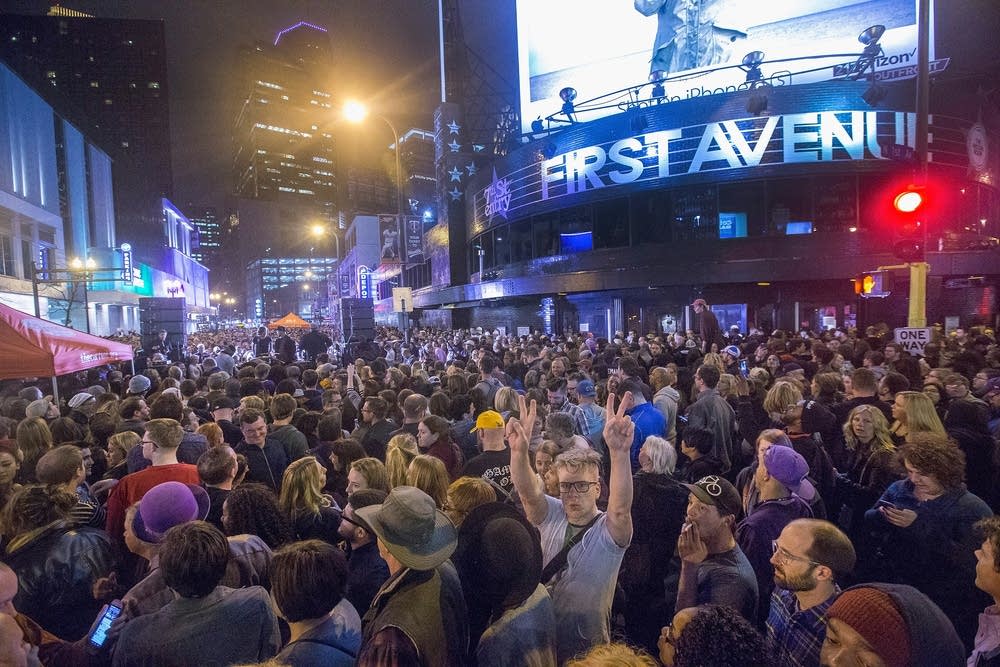
Scene outside First Avenue at Prince Memorial


 It was hard to make friends, or find someone willing to date you, when you were a few shades darker than the majority or had an unpronounceable name. It was exhilarating to see Prince—a small, light-skinned black man who wore lace and satin and high heels—fearlessly be himself.


Artists who perform at First Ave are celebrated in stars. Only Prince's is golden


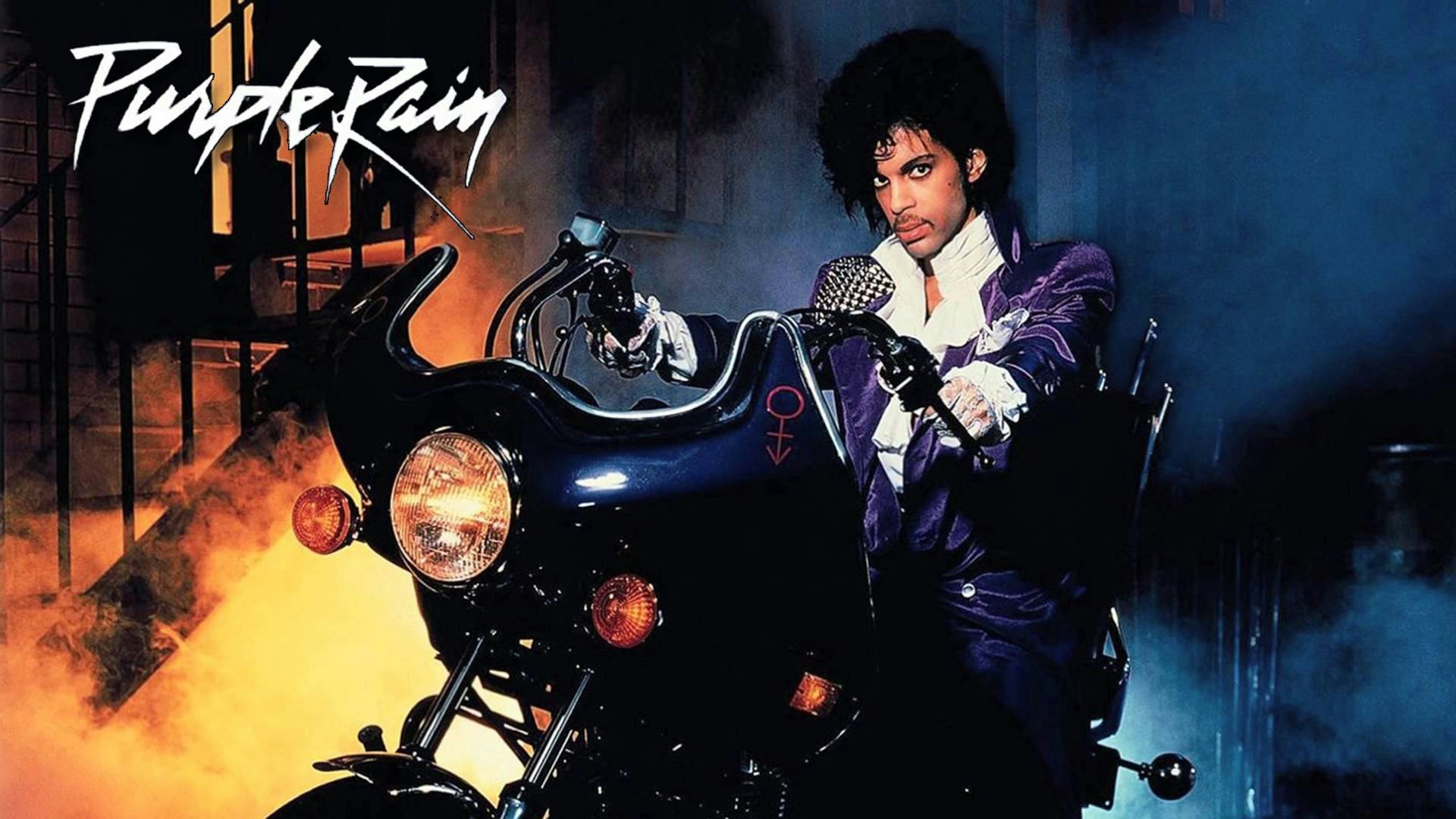
Prince’s biggest local shows were at a large nightclub called First Avenue at the downtown Minneapolis. First Avenue remains one of the top national nightclubs that still showcases local performers. Prince’s first film, Purple Rain, is a fictitious story in which he plays "The Kid," someone very much like himself, trying to make it in show business, get the girl, and deal with some hard family issues. The 1984 movie was a hit, with Prince's artistry stealing the show. Watching it later, I notice how mixed-race his audience appeared. People seemed to forget about traditional boundaries and fell in love with his hypnotic beats and daring lyrics. I mark this as the start of a new Minnesota. 


Purple Rain, best film score ever


Prince shot to stardom shortly after I’d become 18, the legal age to go to First Avenue's night shows. When he came to Baltimore's Civic Center, I was a college student and bought a ticket to his show. I pushed my way to the edge of backstage and gave one of the roadies a note addressed to  my high school friend, Susan Moonsie, who'd become a singer one of his custom-made opening bands: Vanity Six. I was gloriously lucky to find myself escorted backstage, where I hung out with Susan all night and met the other Vanity 6 singers and the men of The Time.  However, I didn't get to exchange words with Prince. Susan didn't want to introduce me because the two of them were in an argument.

Brenda, Vanity and Susan of Vanity 6


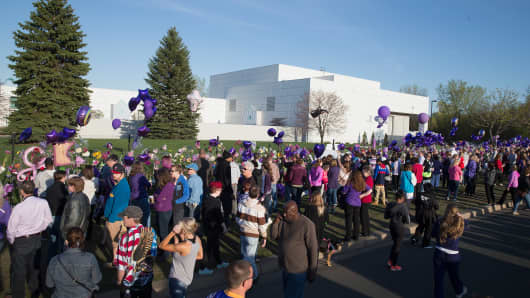
Despite his superstar status, Prince  never abandoned Minnesota. He built a massive home and recording studio in the suburb of Chanhassen named Paisley Park, after one of his songs, and often opened it to friends and fans who came for private parties with performances. Prince sometimes showed up to play at Minneapolis’s Dakota jazz club or First Avenue. 

Paisley Park is now open to tourists


During Prince’s adult years, Minnesota diversified. The state became the chief home of refugees from Somalia. It became a leader in families with international adoptions and was said to be "the gayest city after San Francisco."

Last weekend St. Paul, Minneapolis and Edina lit their buildings and bridges purple honoring Prince


Was Prince a symbol of civic change--or was he an agent of change?

 I wondered about this as I walked through the Twin Cities last weekend listening to the top favorite 89 Prince Songs on The Current, a Minnesota Public Radio station that, like KMOJ, had a special relationship with the artist. Spring comes late in the upper Midwest—while the grass was green, the tulips were just popping and the trees were taking on a light haze of leaves. In many neighborhoods, the gardens sprouted yard signs: “Black Lives Matter,” and “Falcon Heights: The World is Watching,” a reference to the fatal police shooting of Philando Castile in my own neighborhood that came a few months after Prince's death.

The most popular sign was in rainbow hues, with the state of Minnesota on one sign and on the other, the phrase, “All Are Welcome Here." The overt activism reminded me of the growing political and spiritual content of Prince’s work in the years just before his death. He had his eyes on the world, and he wanted to keep building bridges.

In April 2015, I was living in Baltimore during a period that it seemed one black male after another was killed by police. In Baltimore, a young man named Freddie Gray was arrested on suspicion of carrying drugs; he died after a short ride to jail in a police van. During a two-day period after Freddie’s funeral, areas of Baltimore were filled with destructive protestors and hundreds of fires were set. We endured almost a week of curfew and a city takeover by soldiers with the National Guard.


We never dreamed that Prince's career would end a year later


As the city was stilling itself, the city had stilled—but hardly returned to normal—Prince announced he was coming to Baltimore to perform a free "Rally 4 Peace."  He booked the Royal Farms Arena at his own expense. He wrote a song called “Baltimore” that was compassionate yet had a happy,  bopping beat. The song will never be his greatest hit, but it seems a perfectly distilled essence of his style and dogged determination to share joy as the way forward.  

Thursday, June 9, 2011

A love letter


My dearest M:
It is a whole seven months since I saw you last.  My apologies.  For a variety of reasons I could not leave Knysna in South Africa any earlier.  One of those reasons is that I was slowly falling in love there.  Or at least I thought so, because the moment you embraced me as I came through the doors from Customs and Immigration at the Minneapolis/St. Paul airport, my love for you bubbled up with such intensity that I am now totally confused.
Do you remember when we first became acquainted in 1979 – so many years ago – when I visited the Twin Cities to play in the annual Indian Summer squash tournament.  It was a long drive, nearly ten hours, from the University of Illinois, but well worth it, not only for the tournament, but more so because we met.  That was when my love affair with you began.  Do you remember having sushi at Kikugawa?  It was the best sushi I had ever eaten.  When we had dinner there the other night, did you not think how remarkable the food still was?  How often can one eat these days in a restaurant that is over 30 years old?
You were the main reason I moved north.  You and the fact that I couldn’t take any more summers (hot and humid) or any more winters (cold, humid, and overcast) in east central Illinois – at the University of Illinois in Urbana-Champaign, to be precise, where one could literally hear the corn grow in the sultry days of July.  So I headed north for cooler summers (normally true, although yesterday was about 40 degrees Celsius – well over 100 Fahrenheit) and colder, but sunnier, winters.  And I moved for you.  The choice was a good one.
Guthrie cantilevered observation deck
   
Rough water
Dandelions by the million

An old grain mill
The road to the Gulf of Mexico
A quiet spot on the Mississippi near my condo

The morning after I flew in last week, you were with me as I walked down the mighty Mississippi, which flows a few hundred metres from my apartment.  Although not flooding, it was very full and running swiftly.  Robins, grackles, and red-wing blackbirds called from the dense woods, and I could see large catfish sucking in food from the river’s surface.  The air was filled with dandelion seeds, like snow in summer.  I felt drawn to the river as I had been years before.  And you told me Ole Man River was part of your soul also.
A quiet spot on the river
A Mississippi lock, about 2000 kms from New Orleans
River bank art
 It was wonderful walking with you in the beautiful parks along the river, with remnants of flour mills and textile factories scattered about.  Famous names:  Pillsbury and General Mills.  How often have we biked along the river for miles and miles - often not seeing any buildings at all - surrounded by trees, bald eagles and osprey in the trees, as well as warblers in profusion as they migrate north.  And, of course, the pesky, aggressive, and dirty Canadian geese, which I despise, but which you embrace.
Mysterious tunnels under the city
I love it that you love diversity: the modern Federal Reserve building across Hennepin Avenue from the gorgeous old Post Office building, 1933 granite and stone Art Deco; modern condominiums next to the ruins of an old mill – now a museum; old grain grain silos standing next to the stunning Guthrie Theater, which Time Magazine called "a 21st century dream factory", with its 178 foot cantilevered ‘endless bridge’ overlooking the river.  Together we love the Guthrie, one of the best theatres outside New York.  And talking of theater, since I have been away, I have missed the other 60 or so theater companies in town, many of which we’ve frequented together. 

The new
The Mill Museum and modern condos
What makes you even more special, is that it was your forefathers who realized that to attract top people from the East Coast, there needed to be cultural offerings that competed with New York and Boston.  So they created an Arts Foundation into which the companies donated up to 5% of their profits.  The result has been staggering – the Minnesota Orchestra, arguably one of the top two or three orchestras in the country right now; across the river, the exquisite St. Paul Chamber Orchestra; the Minnesota Opera;  the Minnesota Institute of Art; the contemporary Walker Art Musem; the Gehry-designed Weisman Art Museum at the university; the annual Fringe Festival.  The list goes on and on.  And you are the same as your forefathers – another reason I love you.  You are always trying to help people, make the environment work for everyone, look ahead, plan.
Gehry's Weisman Art Museum
And now you have wrenched my heart.  In many ways, I want to enjoy the peace and beauty and affordability of Knysna.  But now you are shouting, a voice from the past: “Not so fast, Stanley Trollip.  What about me?”
What about you, indeed?
What am I going to do about you, my old love, Minneapolis?

Stan - Thursday