Showing posts with label Lenny Kleinfeld. Show all posts

Saturday, May 23, 2020

Guest Blogger, Lenny Kleinfeld: How to Avoid Writing a Crime Novel During Quarantine


Jeff—Saturday

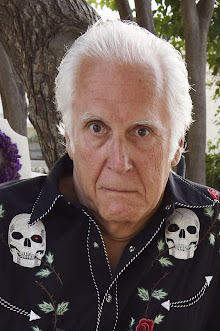
I’ve known Lenny Kleinfeld since beyond the dawn of time (notice that slight-of-hand on the classic cliché), and regard him as a great friend who never fails to make me laugh. Be it with his sidesplitting novels, rib-cracking in person antics, or bone-crushing biker tales.

So, when Lenny asked me if he could have my Saturday slot on Murder is Everywhere to share his secret technique for procrastination, I, being the compassionate understanding soul that I am— and madly in love with his wife, Ina Jaffe—said, “ Go for it, break a leg.”

But before turning the reigns over to Maestro, permit me to tell you a bit more about him.

Lenny writes black comedy crime novels set in Chicago. The latest is Shooting Lessons. "Grabs you by the shirtfront and drags you through its dark and increasingly blood-spattered shenanigans like something engineered for max adrenaline and engagement."—The Austin Chronicle. His first novel, Shooters And Chasers, was called "A spellbinding debut" by Kirkus Reviews. His second, Some Dead Genius, was one of National Public Radio's Great Reads Of 2014, and named Thriller Of The Month by e-Thriller.com.
 
Back before he was spellbinding, he was a playwright in Chicago and a columnist for Chicago magazine. His fiction, articles, humor and reviews have appeared in Playboy, Galaxy, Oui, The Reader, the Chicago Tribune, New York Times and Los Angeles Times. According to a reliable rumor he also spent fifteen years writing screenplays which producers purchased but forgot to produce. You can learn more about Lenny here.  lennykleinfeld.com  
  
On the morning of Thursday, May 7 my bike body-slammed me into the pavement. Okay, this happens. Move your limbs, wiggle your digits, nothing feels broken. Best thing is to get up, get back on the bike and keep riding; that way you're less stiff when you wake up tomorrow.

The standing up part didn't go well. My left leg burns like it's trying to electrocute itself. Refuses to support any weight. Second try I manage to achieve verticality.

Picking up the bike up was fun too.

So now I'm leaning on it with my right arm, using the bike as a rolling crutch, heading back to my car.

I'm unable to put my left foot down but have to, grimacing, wincing, yelping and making a good eight or ten inches of forward progress with each step. The car is about a mile and a half away.

Coincidence #1: This being in Brentwood, an upscale L.A. neighborhood (think OJ Simpson), a gleaming new Mercedes SUV stops and the driver asks if I'm okay.

Yeah, I took a spill, I'm headed back to my car. He asks if he can take me to the emergency room. I say no thanks.

He gets out, puts my bike in the back of his vehicle, saying he'll drive me to my car. I try to climb into the Benz and discover the only way to do that is to lift my left leg with both hands. Yeah, something just might be damaged in there.

As we're driving he asks how it happened. I give him the crash gossip, and add how frustrating it is—I recently broke a shifter cable and got the bike back from Helen's (local bike store) repair shop less than a week ago.

He grins. "My bike is in the Helen's repair shop right now."

We get to my car. He insists on loading my bike on the bike rack, because we both know that's the only way it'll happen. Then he waits to make sure I can drive before he leaves. Does the Vatican accept nominations for a secular saint?

Coincidence #2: My current car is my first vehicle in 35 years that has an automatic transmission; the traffic has gotten so insane on the westside I finally reluctantly abandoned driving a manual shift. Good thing. If driving home that day required pressing a clutch pedal I'd still be sitting there.

Ina, my wife, takes me to the St. John's ER. A nurse pours me into a wheelchair and exiles Ina.

There's a COVID tent in the parking lot, so it's only me and one other non-viral patient in the waiting room. But the ER is understandably understaffed, so I spend two hours wheelchairing around the room, pausing now and then to watch the TV, which is tuned to a news cable channel showing a cascade of stories detailing how the Mar-A-Lago Virus is devastating the population, the Constitution and civilization in general.

They take me backstage, hoist me onto a bed, check my vitals and cross-examine me. There's no doctor available, so I am in the care of a young Physician's Assistant. She is, like most PAs I've met, rigorously thorough and determined to get things right.

An alleged X-ray technician shows up and proceeds to measure my ability to withstand torture by rolling me up on my side so he can slip a hard metal plate under my butt. Which he then adjusts several times. To maintain his cover story he also takes a few X-rays.

The PA informs me my photos have been deconstructed and curated by a top-rate bone critic who is also an orthopedist. Bad news: There's a fracture of the pelvis. Good news: It's small; no surgery required. Here's the orthopedist's phone number, make an appointment.

Coincidence #3: I am wearing a University of Wisconsin t-shirt. When she's completed her tasks, the PA points to it and asks, did you go to UW?"

I pump a fist in the air and reply, "UW-Madison, '69. You?"

She nods and grins. A born caregiver, she's too polite and gentle to mention which of the past ten years was the one in which she graduated.

They give me a pair of crutches. At which point I remember we live in a townhouse with a staircase. That monster in the photo.

The first available ortho appointment is on Monday morning. It turns out to be a fairly posh practice. Three surgeons in a seventh floor corner suite in Santa Monica; to the west is a view of the Pacific, to the north the Santa Monica Mountains. It also has the longest corridor I've ever seen in a doctor's office. It might be the longest corridor I've seen anyplace but in a major museum. It looks like a forced perspective set in a Kafka movie directed by Hitchcock. I am the only patient in the office but of course the exam room the nurse points me to is at the far end.

In the 3-1/2 days I've been on crutches this is by far the longest hop-and-lurch I've been on.  When I get there and the nurse checks my vitals, my blood pressure is the highest it's been in living memory. I defend my cardio system's honor by suggesting it was the cross-country trek down the corridor that's caused it.

"Yeah, probably," the nurse agrees, and assures me the doctor will arrive any moment.

Any moment later the doctor arrives. He's the best orthopedist in the world. He tells me, "If you have to fracture your pelvis, this is the one you want. It's small and not near the hip joint. It should heal pretty well in eight to twelve weeks." No surgery or even physical therapy involved.

When can I resume exercising and riding a bike? (The bike survived the crash unscathed.)

The doctor says I can work out whenever it feels comfortable. Just don't rush things. "Be sensible."

When Ina picks me up I tell her the good news. She's pleased, but cautious. She insists on translating "Be sensible" into easily understandable English.

Tells me, "Don't do anything stupid."

Somehow, fifty years of living with me hasn't dulled her optimism.

On Tuesday, May 19th, the swelling in my pelvis has receded far enough to increase the range of motion in my leg and the range of concentration inside my skull. For the first time in ten days I'm able to look at the manuscript of a new novel-in-progress and see something besides random words sliding around on the page.

I polish a chapter written the day before the crash, paste it in and knock out an outline for the next chapter. I'm not satisfied with where it begins, and…

…it occurs to me the bike crash might make a reasonably amusing post for MIE.

# # # # # #

That it did, Lenny!  Thanks, and mend well, my friend.


—Jeff

Saturday, May 11, 2019

Guest Blogger LENNY KLEINFELD: That Time I Took My Rifle to the Airport


Jeff—Saturday

I’m at CrimeFest this weekend in Bristol, UK along with Cara, Caro, Zoë, Stan and Yrsa, and we’re having more fun than should be legally permissible.  I was thinking of how to convey a sense of all our good times to you who follow what we write, and considered posting photos; but with all the ones Cara is shooting (no pun intended) of the festivities it struck me as rude to scoop hers with mine.  So, I searched for another way to pass along a genuine feeling of the fun generated by this get together while exploring some serious topics.

Enter Lenny Kleinfeld, one of the absolutely funniest writers I know. I was lucky enough to convince Lenny to write a piece for MIE on the occasion of his latest novel, Shooting Lessons.  When I read it, I thought this is what Mark Twain would sound like if he wrote crime.

But don’t take take my word for it, The Austin Chronicle calls Shooting Lessons A damned good read. This latest Kleinfeld spectacle is no less a clever, culturally aware, and entertaining adventure than the first two tales about Bergman and Doonie. But the game’s been upped a bit here, too. As in, this latest one grabs you by the shirtfront and drags you through its dark and increasingly blood-spattered shenanigans like something engineered for max adrenaline and engagement.”

Lenny’s first novel, Shooters and Chasers, was called “A spellbinding debut” by Kirkus Reviews.  His second novel, Some Dead Genius, was one of National Public Radio’s Great Reads of 2014, and named Thriller of the Month by e‑Thriller.com. Back before Lenny was spellbinding, he was a playwright in Chicago and a columnist for Chicago magazine. His fiction, articles, humor and reviews have appeared in Playboy, Galaxy, Oui, The Reader, Chicago Tribune, The New York Times, and Los Angeles Times. According to a reliable rumor he also spent fifteen years writing screenplays.

So, here’s Lenny…


I might be on the wrong blog site. My new novel, Shooting Lessons, tracks a deranged multimedia lobbying campaign to make an Illinois concealed carry permit as easy to obtain as a grocery coupon. So maybe this post should be on Murder Is For Policy Wonks. But I'm not gonna Google MIFPW, because I'm afraid it might exist.

Besides, the story isn't about making legislation, it's about marketing guns. Which America is great at. A recent survey revealed 94% of the Earth's population believes the phrase on our dollar bill, E Pluribus Unum, is Dothraki for Guns R Us.

Hey, I have nothing against guns. I like guns. They were an everyday—literally every day—part of my childhood. My father wore a gun, and a significant percentage of the guys who came to our house for social events were packing. He and they were cops. I don't know if it's still the case, but back in the 1950s and 60s New York City police officers were required by law to carry their weapon whenever they left home, whether for work or not, while they were within city limits. There was always a holstered gun on Dad's belt or strapped to his ankle. Dad packed a piece at our synagogue during the High Holidays, and at Mass when Catholic friends were getting married or being mourned. And in restaurants. And when he and Mom danced together anyplace outside our living room. And when he saw my grade school production of The Pirates Of Penzance, and at parent-teacher conferences. And when he visited the doctor or dentist.  When we went to the beach he'd unload it and sneak the empty gun into my mother's purse before he went swimming. We had to go to Miami for the three of us to go swimming simultaneously.

I got my first rifle when I was twelve. Minutes later I became an Active Junior Member of the NRA. It came with a magazine, American Rifleman, featuring gun reviews and exhortations about firearm safety. The editors were deeply concerned about guns doing damage to people, but deeply unworried about Adlai Stevenson doing damage to guns.


In 1963 I made it onto on my high school rifle team. It worked like any other sport. We had home matches and away matches. To get to a match at a rival school we'd take the train. Imagine five teenage boys carrying rifle cases and a teacher carrying a locked bag full of ammunition boarding your packed subway car today.

In 1966 I took my rifle to college. I walked into the airline terminal carrying a rifle case, set it on the ticket counter, removed the rifle and, with the ticket agent watching, took the gun apart, removed the firing pin, showed the firing pin to the ticket agent and placed it in my shirt pocket, then put the neutered rifle back together and checked it through like any other piece of luggage. Nobody in line behind me said anything, or paid much attention. Imagine that today.

Now let's reverse the perspective. It's 1966 and you're peering into your futurescope. This is what you see:

Today, a growing number of states (but not Illinois, yet) issue handgun permits which automatically include the right to concealed carry.

Open carry of rifles and handguns is legal in many states—including in malls, hospitals, schools, theaters, houses of worship, bars, and on public transport.

Semi-automatic versions of assault rifles with high-capacity magazines have been used in mass slaughter after mass slaughter after mass slaughter—quick, can you tell me off the top of your head, in the US in 2018 were there more major tennis tournaments or mass shootings? But civilianized assault weapons remain legal and easily available.

Could you have imagined all that, way back in the famously turbulent 1960s?

We live in the best of times for writing cell phone apps, the worst of times for writing satire. Satire requires exaggeration. American politics in general and gun policy in particular have grown so extreme that trying to stay a step ahead of them is like challenging the Flash to a foot race.

Another little thought experiment:

If someone told you they were writing a story about a bill being introduced in a state legislature that would decriminalize the use of a firearm while inebriated, would you:
A) Assume the author was a satirist.
B) Assume the author was a journalist.
C) Be unable to decide.

—Lenny, in for Jeff

Sunday, June 1, 2014

Guest Blogger: Lenny Kleinfeld––"And the Shotgun Sings the Song."


Guest blogging for us today is the incomparable Lenny Kleinfeld.  If you’re not familiar with Lenny's work you’re missing something really special.  Make that really hysterically special.  Lenny’s first novel, Shooters And Chasers, is one of the funniest crime novels I ever read.  His just released second (published Friday), SOME DEAD GENIUS—the manuscript of which our mutual friend Leighton Gage and I were privileged to read—is the funniest.  True to the classy guy he his. Lenny dedicated SOME DEAD GENIUS to Leighton.  Here is the link to Amazon's sales page for SDG.

According to Lenny, “Both are hardboiled black comedy police procedurals, though early focus group results indicate SOME DEAD GENIUS is 9.6% funnier and contains 12.7% more violence. It’s about people trying to tell the difference between art marketing, serial killing and Chicago politics.”  And for more of Lenny on Lenny check out this interview in Omnimystery News.

Lenny began his career in Chicago as a playwright, columnist and freelance writer. His fiction, articles, humor, and reviews have appeared in Playboy, Galaxy, Oui, the Chicago Reader, Chicago Tribune, New York Times, and Los Angeles Times.

In 1986 he sold a screenplay to Michael Douglas, and is currently three decades into a business trip to Los Angeles.  You can learn more about Lenny and his work at   www.lennykleinfeld.com

Welcome, my friend.

—Jeff
*****

Lenny Kleinfeld


            Crime novelists aren't the only writers who cash in on robbery and murder. Songwriters are centuries ahead of us on that score. Millennia, if you count Homer. He recited his poetry while strumming a lyre. Hence, lyricist. Hence, with absolutely no claim to scholarly rigor, I classify Homer as a proto-Troubadour, even though those guys hit the road about 19 centuries after Homer retired to Mykonos and opened a piano bar. (Hence the term “blind drunk.”)


True, despite penning many topical lyrics which included tales of violence, the Troubs were best known for love songs. But all the way back to Homer, many of the best slaughter ditties had a lot to do with love. And/or lust. The English and Scottish songbooks of the 12th through 18th Centuries have rivers of blood and semen flowing through them, often connected to rape and/or incest, one reason why in the 1960s and Seventies folk-rockers like Fairport Convention and Steeleye Span had so much success covering them.

            But today's blog is about contemporary musical felonies. I'm sure you have your own favorites. These are mine.

            My all-time Number One dope-dealing, bar-brawling, murder and romantic sacrifice number is Texas songwriter Robert Earl Keen's The Road Goes On Forever, the next line of which is “And the party never ends.”  It's a bone-deep black comedy, an entire Jim Thompson novel’s worth of sexy, dusty, shotgun-blast narrative in five minutes and three seconds—at least in its finest iteration, an exuberant kickass live performance by Keen’s fellow Texans, Joe Ely and his world-class bar band. I’m going to resist the urge to reveal any details about the lovers and their story; you should discover it for yourself.


On that same album, Live @ Antones, there’s another fun crime number—Ely’s own surreal tale of a deadly romantic triangle, Me And Billy The Kid. “I admit that I framed him/I don’t feel no remorse/It was just my way of getting’ even/With the man who shot my horse.” https://myspace.com/joeelymusic/music/album/live-at-antone-s-18061606

The world's most ominous, ferociously sung and played song about a mobster and his obsessive love doesn’t mention a single specific crime or murder—yet you know there have been many.


It’s Richard Thompson’s Cooksferry Queen, which boasts a line worthy of Chandler: “People speak my name in whispers/And what higher praise can there be?”

            In 1973, after the Byrds broke up, Roger McGuinn released a solo album, the ingeniously titled Roger McGuinn. It includes a gentle country number with a tough core, called Bag Full Of Money. It’s a droll, imaginary character study of the mysterious D.B. Cooper, who hijacked a plane, collected a ransom, parachuted into the Washington wilderness and was never found. Nor has Cooper’s true identity ever been determined. Though decades later a couple of packets of the cash turned up on a remote riverbank.


The song—which Cooper is supposedly singing as he’s “floating on down through the sky”—features a tumble of simple but memorable rhymes. One verse resonates especially strongly these days: “If you can’t get a job they think you’re insane/If the years of your youth have been washed down the drain/And you wake up one morning with nothing but pain/It was then I decided to grab me a plane.” The only link I was able to find to Bag Full Of Money has a slender love song on it before you get to the main event. Sorry.  http://www.youtube.com/watch?v=kaZvavydQf4
           

A jauntier yet more violent country-rock song from 1971, Glendale Train by The New Riders Of The Purple Sage, is about a Wild West gang (“Men on horses, men with guns/And no sign of the law”) who rob a train, using dynamite to blow open the baggage car: “Well Amos he was markin’ time/When the door blew off the car/They found Amos White in fifteen pieces/Fifteen miles apart.” And the track bounces along on a trampoline of pedal steel guitar pickin’ by Jerry Garcia.

            For a more naturalistic, savage, yet elegantly arranged ode to desperate men, there’s Steve Earle’s 1988 Copperhead Road. It’s an update of the 1958 hillbilly-noir movie classic, Thunder Road, starring Robert Mitchum as a good ol’ boy running moonshine in his souped-up hot rod.


Earle’s song is told by a Viet Nam vet whose dad died when his rebuilt “big block Dodge” crashed during a whisky run. When the son gets back from Nam he goes into the modern moonshine biz: growing high-grade weed. As the Appalachian-folkie-hard-rock track thunders to a peak, with a synthesizer and keening electric guitars wailing like massive industrial bagpipes, Earle roars in fear and defiance: “Now the DEA’s got a chopper in the air/I wake up screaming like I'm back over there/I learned a thing or two from ol' Charlie don’t you know/You better stay away from Copperhead Road.” Phew.

            Songwriters, like novelists, write tons more about the murderer than about the victim. There is in the pop music canon at least one brilliant song about a murder victim, Leonard Cohen’s Joan Of Arc. You remember, that kid who was barbecued by British noblemen and churchmen for the crime of being a 19-year-old girl who kicked their asses on the field of battle. No chivalric need to honor a captured enemy commander if it’s someone without a little hose dangling between her legs, right? (Not that the British captured her; their Burgundian allies had to do it for them.)


Cohen’s song is an audacious dialog between Joan and the fire consuming her; she and the flames assume the roles of bride and groom. “Then she clearly understood/If he was fire she must be wood.” It’s a fabulously performable conceit for a vocalist who knows how to sing in character.

            Jennifer Warnes’ soaring version on “Famous Blue Raincoat,” a studio album of Leonard Cohen covers, is a miraculous blend of voice, intelligence and emotion. The twentieth-anniversary reissue that came out in 2007 has a bonus track recorded live; Warnes’ vocal vamp at the end aches with a depth of passionate anguish usually only heard in Lisbon fado clubs after two AM. Wrecks me every time.

            Still, the only place to close this is back with the killer. And with the most famous line in murder music. Here’s the live version of Johnny Cash's Folsom Prison Blues, cut in that very institution, with the inmates breaking into cheers when he gets to “I shot a man in Reno, just to watch him die.”


Lenny—Guest Blogging Sunday