Showing posts with label Greece Independence Day. Show all posts

Saturday, March 21, 2026

Freedom or Death: A Greek Battle Cry

 Jeff–Saturday

MANTO MAVROGENOUS
March 25th is fast approaching.  It's a two-for-one holiday in Greece: Annunciation and Greek Independence Day.  The former celebrates Mary learning from Archangel Gabriel that she was with child, and the later marks the day in 1821 when Greek Orthodox Bishop Germanos of Patras raised the Greek flag at the Monastery of Agia Lavra in Greece’s Peloponnese and inspired a more than eight-year struggle (1821-1829) to throw off nearly 400 years of Ottoman rule.

Bishop Germanos raising the flag (Theordore Vryzakis)

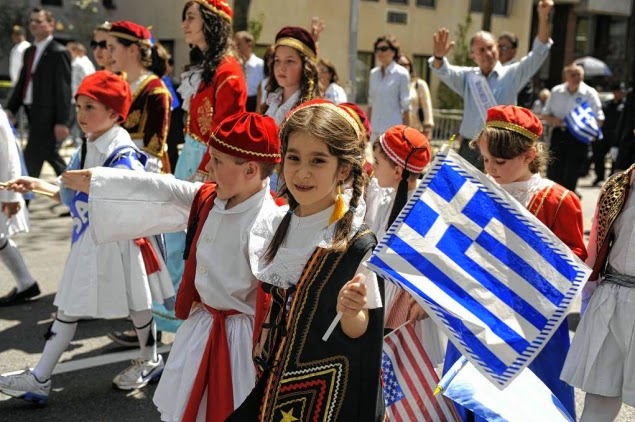
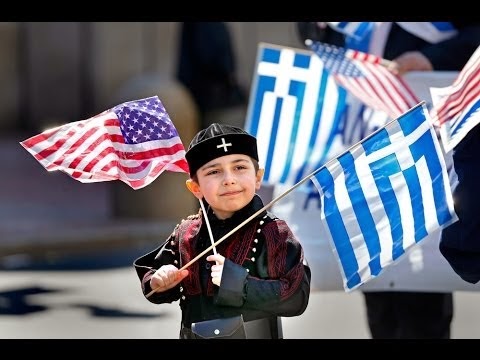
In towns and villages across Greece, school children proudly parade the country’s blue and white flag.  Aflutter, the flag is reminiscent of Greek seas but it holds a deeper meaning.  The white cross honors the contribution of the church to the country’s enduring battle for freedom and its nine blue and white bars honor the nine syllable rallying call shouted across the land during Greece’s struggle for Independence: Eleftheria i Thanatos—Freedom or Death.  (Though some say they represent the nine letters of ελευθερια in the Greek word for freedom, the idea is the same.). 

Petros Mavromichalis
Greece’s larger cities also hold military parades, and Greek communities around the world join in celebration with parades of their own.  But this is not about any of those events, or for that matter whether the Revolution actually began a week earlier in another part of the Peloponnese when the ruler of its Mani region, Petros Mavromichalis, raised his war flag in Mani’s capital city of Areopoli and marched his troops off against the Turks.

No, this is about a small Cycladic island’s personal War of Independence heroine, Manto Mavrogenous (1796-1848).  Her statue stands at the foot of the main square on Mykonos’ harbor,  and soon it will be surrounded by palm frondsan ancient symbol of triumph, victory, and the sacred sign of Apolloin honor of a life truly worthy of an epic film.  Or a tragic opera.

Manto Mavrogenous Square, Mykonos

Born in Trieste to a wealthy, aristocratic Greek merchant family, Manto Mavrogenous studied philosophy and history, was fluent in several languages, and drew her fire for Greek independence from her father, a member of Filiki Eteria, the secret society dedicated to freeing Greece from Ottoman rule. 

She was thirteen when her family returned to its roots in the Cycladic islands, first to Paros and after her father’s death to Tinos.  War broke out when she was twenty-five and she left for Mykonos, the place of her family’s origins, to convince its leaders to join in the Revolution.  But what she offered Mykonos and indeed all of Greece was far more than words.  When Ottomans attempted to land on Mykonos, she commanded the forces that repelled them.  She used her fortune to outfit ships and crews that battled pirates and the Ottoman fleet, and to send soldiers to fight for freedom on mainland Greece, as well as to support the families of those who fought.

Manto even sold her jewelry to support the fight and pressed the world to allow Greece to be free.  This is from her letter to The Women of Paris: “The Greeks, born to be liberal, will owe their independence only to themselves.  So I don’t ask your intervention to force your compatriots to help us. But only to change the idea of sending help to our enemies.” 

Demetrius Ypsilantis
In the early years of the war she met Demetrius Ypsilantis, a well-educated son of a prominent family, brother of the leader of Filiki Eteria, and a politically connected war hero.  (Yes, that city in Michigan was named after him, a town perhaps better known today for “the world’s most phallic building,” the Ypsilanti Water Tower.)  They became engaged and Mavrogenous’ beauty, bravery, and selfless commitment to Greek independence brought her fame across Europe. 

Bust of Demetrius erected in foreground of "The Brick Dick" of Ypsilanti.

It seemed a fairy tale, but that was not to be.

During their engagement Mavrogenous’ home was totally destroyed by fire and her fortune stolen.  She moved in with Ypsilanti but in time he broke off the engagement.  Deeply depressed and virtually penniless, she never recovered.

Her memoirs were written on Mykonos but she spent most of the balance of her life amid poverty in Greece’s first modern capital, Nafplio, before finally moving to Paros where she died penurious and in oblivion at fifty-four.

The great debts owed to her for financing so much of Greece’s Revolution were never repaid.  Unless you count the palms, thanks, and honors bestowed each March 25.

The back of a Greek coin worth less than a penny

Freedom or Death.

––Jeff

Saturday, March 22, 2025

Greece's Independence Day is Upon Us ... Come Tuesday


 Jeff--Saturday

March 25th marks the 204th anniversary of Greek Independence Day, when Greek Orthodox Bishop Germanos of Patras raised the Greek flag at the Monastery of Agia Lavra in Greece’s Peloponnese and inspired a more than eight-year struggle (1821-1829) to throw off nearly 400 years of Ottoman rule.


Bishop Germanos


In towns and villages across Greece, school children proudly parade the country’s blue and white flag.  Aflutter, the flag is reminiscent of Greek seas but it holds a deeper meaning.  The white cross honors the contribution of the church to the country’s enduring battle for freedom and its nine blue and white bars honor the nine-syllable rallying call shouted across the land during Greece’s struggle for Independence: Eleftheria i Thanatos—Freedom or Death.  (Though some say they represent the nine letters of ελευθερια in the Greek word for freedom, the idea is the same.)  Greece’s larger cities would also hold military parades, with Greek communities around the world joining in hosting parades of their own. 


But this is not about any of those events, or for that matter whether the Revolution actually began a week earlier in another part of the Peloponnese when the ruler of its Mani region, Petros Mavromichalis, raised his war flag in Mani’s capital city of Areopoli and marched his troops off against the Turks. 


Petros Mavromihalis

No, this is about a small Cycladic island’s personal War of Independence heroine, Manto Mavrogenous (1796-1848).  Her statue stands at the foot of the main square on Mykonos’ harbor, and on each March 25th surrounded by palm fronds—an ancient symbol of triumph, victory, and the sacred sign of Apollo—in honor of a life truly worthy of an epic film.  Or a tragic opera.


Born in Trieste to a wealthy, aristocratic Greek merchant family, Manto Mavrogenous studied philosophy and history, was fluent in several languages, and drew her fire for Greek independence from her father, a member of Filiki Eteria, the secret society dedicated to freeing Greece from Ottoman rule.


She was thirteen when her family returned to its roots in the Cycladic islands, first to Paros and after her father’s death to Tinos.  War broke out when she was twenty-five and she left for Mykonos, the place of her family’s origins, to convince its leaders to join in the Revolution.  But what she offered Mykonos and indeed all of Greece was far more than words.  When Ottomans attempted to land on Mykonos, she commanded the forces that repelled them.  She used her fortune to outfit ships and crews that battled pirates and the Ottoman fleet, and to send soldiers to fight for freedom on mainland Greece, as well as to support the families of those who fought. 


Manto Mavrogenous

Manto even sold her jewelry to support the fight and pressed the world to allow Greece to be free.  This is from her letter to The Women of Paris: “The Greeks, born to be liberal, will owe their independence only to themselves.  So I don’t ask your intervention to force your compatriots to help us. But only to change the idea of sending help to our enemies.”


Demetrius Ypsilantis

In the early years of the war she met Demetrius Ypsilantis, a well-educated son of a prominent family, brother of the leader of Filiki Eteria, and a politically connected war hero.  (Yes, that city in Michigan was named after him, a town perhaps better known today for “the world’s most phallic building,” the Ypsilanti Water Tower.)  They became engaged and Mavrogenous’ beauty, bravery, and selfless commitment to Greek independence brought her fame across Europe.


The "Brick Dick" of Ypsilanti with bust of Demetrius in front

It seemed a fairy tale, but that was not to be.


During their engagement Mavrogenous’ home was totally destroyed by fire and her fortune stolen.  She moved in with Ypsilanti but in time he broke off the engagement.  Deeply depressed and virtually penniless, she never recovered.


Her memoirs were written on Mykonos but she spent most of the balance of her life amid poverty in Greece’s first modern capital, Nafplio, before finally moving to Paros where she died penurious and in oblivion at fifty-four.


The great debts owed to her for financing so much of Greece’s Revolution were never repaid.  Unless you count the palms, thanks, and honors bestowed each March 25.


The back of a Greek coin worth less than a penny

Freedom or Death.


––Jeff


Events

2025

All Live Events

Wednesday, April 2, 6:00 p.m. ET
Mysterious Bookshop
Author Speaking and Signing
New York, NY

Sunday, April 6, 2:00 p.m. PT
Book Carnival
Author Speaking and Signing
Orange, CA

Sunday, April 13, 2:00 p.m. MT
The Poisoned Pen Bookstore
Author Speaking and Signing
Scottsdale, AZ

Friday, April 25, 7:00 p.m.
Mystery Lovers Bookshop
Author Speaking and Signing
Pittsburgh, PA

Sunday, May 4, 2:00 p.m. ET
Sparta Public Library
Author Speaking and Signing
Sparta, NJ

Thursday, May 15 – Sunday, May 18
CrimeFest
Author Panels yet to be assigned
Bristol, UK

Wednesday, September 3 – Sunday, September 7
Bouchercon
Author Panels yet to be assigned
New Orleans, LA

Saturday, March 21, 2015

A Different Sort of Greek Independence Day


Wednesday is Greece’s Independence Day.  I’ve written pieces on this subject before, and of course, the origins and traditions remain much the same…but this year the spirit of the Greek people is different.  

A few years back I wrote the following:

“It is an important day, one of inspiration born out of a beleaguered people overcoming impossible odds.  The 25th of March marks the day in 1821 when Greek Orthodox Bishop Germanos of Patras raised the Greek flag at the Monastery of Agia Lavra in Greece’s Peloponnese and inspired a more than eight-year struggle (1821-1829) to throw off nearly 400 years of Ottoman rule.  Some say the Revolution actually began a week earlier in another part of the Peloponnese when the ruler of its Mani region, Petros Mavromichalis, raised his war flag in Mani’s capital city of Areopoli and marched his troops off against the Turks."

Bishop Germanos

Petros Mavromichalis

“But no matter which version you prefer, one thing is for sure: What Greece confronts today is child’s play compared to what its ancestors faced in taking on a dominant empire of its time.

I don’t think I can say that bold face language any longer with conviction.


On Wednesday, in towns and villages across Greece, school children will proudly parade the country’s blue and white flag.  Aflutter, the flag is reminiscent of Greek seas but it holds a deeper meaning.  The white cross honors the contribution of the church to the country’s enduring battle for freedom and its nine blue and white bars honor the nine syllable rallying call shouted across the land during Greece’s struggle for Independence: Eleftheria i Thanatos—Freedom or Death.

It is a celebration joined in by Greek communities around the world with parades of their own, all taking time to honor Filiki Eteria, the Society of Friends, the secret society that instigated Greece’s War of Independence through an underground struggle as well organized as any found in a best-seller’s tale. New members were recruited without knowledge of its true revolutionary purposes.  They were attracted by glamorous rumors and an avowed but vaguely stated general purpose of “doing good” for the nation. 


Importantly, from the very beginning of their quest for independence, Greeks recognized the need for assistance from outside their country’s borders, from Europe (both East and West) and Russia.  Many answered the call, and had they not the outcome may have been quite different.


It should not be taken as a coincidence that what is celebrated Wednesday in honor of the country’s heroic past offers a lesson for what Greece faces today:  This is not a time for Greece trying to go it alone, but rather for all to work together in “doing good” for the nation.


Just a thought.


Jeff—Saturday

Saturday, March 24, 2012

Another Greek Independence Day


Tomorrow is Greece Independence Day.  I wrote something similar to this last year at this time; similar I say because it’s the same holiday and its origins and traditions haven’t changed.  The photographs are different from last year though…and the Greek people are definitely different in spirit.  

Bishop Germanos of Patras
It is an important day, one of inspiration born out of a beleaguered people overcoming impossible odds.  The 25th of March marks the day in 1821 when Greek Orthodox Bishop Germanos of Patras raised the Greek flag at the Monastery of Agia Lavra in Greece’s Peloponnese and inspired a more than eight-year struggle (1821-1829) to throw off nearly 400 years of Ottoman rule.  Some say the Revolution actually began a week earlier in another part of the Peloponnese when the ruler of its Mani region, Petros Mavromichalis, raised his war flag in Mani’s capital city of Areopoli and marched his troops off against the Turks. 

Petros Mavromichalis
But no matter which version you prefer, one thing is for sure: What Greece confronts today is child’s play compared to what its ancestors faced in taking on a dominant empire of its time.

Sunday, in towns and villages across Greece, school children proudly parade the country’s blue and white flag.  Aflutter, the flag is reminiscent of Greek seas but it holds a deeper meaning.  The white cross honors the contribution of the church to the country’s enduring battle for freedom and its nine blue and white bars honor the nine syllable rallying call shouted across the land during Greece’s struggle for Independence: Eleftheria i Thanatos—Freedom or Death.  (Though some say they represent the nine letters of ελευθερια in the Greek word for freedom, the idea is the same.).

Greece’s larger cities also hold military parades, and Greek communities around the world join in celebration with parades of their own and take time to honor Filiki Eteria, the Society of Friends, the secret society that instigated Greece’s War of Independence.

It was as clandestine and well organized an underground movement as found in any best-seller’s tale.  No one was allowed to ask who founded the Society, question a command, or make an independent decision.  New members were recruited without knowledge of its true revolutionary purposes.  They were attracted by glamorous rumors of a celebrity membership and an avowed but vaguely stated general purpose of “doing good” for the nation. 

Symbol of Filiki Eteria
Three native Greeks founded the Society, Athanasios Tsakolov, Nikolaos Skoufas, and Emmanuil Xanthos.  But what many Greeks do not know is that the Society recruited large numbers of Greeks and non-Greeks from what today we call Eastern Europe and Russia.  Even the Russian Tsar was believed to be a member and by the time the War began the Society’s secret membership numbered in the thousands.

From the very beginning of their quest for independence Greeks recognized the need for assistance from outside their country’s borders.  Many answered the call, and had they not the outcome may have been quite different…the same as one could say about the United States in its own birthing battle.
Russian Tsar Alexander I

The bottom line lesson to be learned from the events celebrated Sunday is that this is not a time for Greece to be trying to go it alone.  The country must aggressively seek support beyond its borders for what it faces and work hard at inspiring Greeks of the diaspora and non-Greek supporters everywhere with the same sort of desire for “doing good for the nation” as drove the followers of Filiki Eteria nearly two hundred years ago.

It will be difficult and take time.  But since when has preserving their way of life been easy for the Greeks?

Freedom or Death.

Jeff—Saturday

Saturday, March 26, 2011

Freedom or Death

MANTO MAVROGENOUS
March 25th was a two-for-one holiday in Greece: Annunciation and Greek Independence Day.  The former celebrates Mary learning from Archangel Gabriel that she was with child, and the later marks the day in 1821 when Greek Orthodox Bishop Germanos of Patras raised the Greek flag at the Monastery of Agia Lavra in Greece’s Peloponnese and inspired a more than eight-year struggle (1821-1829) to throw off nearly 400 years of Ottoman rule.

Bishop Germanos raising the flag (Theordore Vryzakis)

In towns and villages across Greece, school children proudly paraded the country’s blue and white flag.  Aflutter, the flag is reminiscent of Greek seas but it holds a deeper meaning.  The white cross honors the contribution of the church to the country’s enduring battle for freedom and its nine blue and white bars honor the nine syllable rallying call shouted across the land during Greece’s struggle for Independence: Eleftheria i Thanatos—Freedom or Death.  (Though some say they represent the nine letters of ελευθερια in the Greek word for freedom, the idea is the same.). 

Petros Mavromichalis
Greece’s larger cities also held military parades, and Greek communities around the world joined in celebration with parades of their own.  But this is not about any of those events, or for that matter whether the Revolution actually began a week earlier in another part of the Peloponnese when the ruler of its Mani region, Petros Mavromichalis, raised his war flag in Mani’s capital city of Areopoli and marched his troops off against the Turks.

No, this is about a small Cycladic island’s personal War of Independence heroine, Manto Mavrogenous (1796-1848).  Her statue stands at the foot of the main square on Mykonos’ harbor,  and yesterday it was surrounded by palm frondsan ancient symbol of triumph, victory, and the sacred sign of Apolloin honor of a life truly worthy of an epic film.  Or a tragic opera.

Manto Mavrogenous Square, Mykonos

Born in Trieste to a wealthy, aristocratic Greek merchant family, Manto Mavrogenous studied philosophy and history, was fluent in several languages, and drew her fire for Greek independence from her father, a member of Filiki Eteria, the secret society dedicated to freeing Greece from Ottoman rule. 

She was thirteen when her family returned to its roots in the Cycladic islands, first to Paros and after her father’s death to Tinos.  War broke out when she was twenty-five and she left for Mykonos, the place of her family’s origins, to convince its leaders to join in the Revolution.  But what she offered Mykonos and indeed all of Greece was far more than words.  When Ottomans attempted to land on Mykonos, she commanded the forces that repelled them.  She used her fortune to outfit ships and crews that battled pirates and the Ottoman fleet, and to send soldiers to fight for freedom on mainland Greece, as well as to support the families of those who fought.

Manto even sold her jewelry to support the fight and pressed the world to allow Greece to be free.  This is from her letter to The Women of Paris: “The Greeks, born to be liberal, will owe their independence only to themselves.  So I don’t ask your intervention to force your compatriots to help us. But only to change the idea of sending help to our enemies.” 

Demetrius Ypsilantis
In the early years of the war she met Demetrius Ypsilantis, a well-educated son of a prominent family, brother of the leader of Filiki Eteria, and a politically connected war hero.  (Yes, that city in Michigan was named after him, a town perhaps better known today for “the world’s most phallic building,” the Ypsilanti Water Tower.)  They became engaged and Mavrogenous’ beauty, bravery, and selfless commitment to Greek independence brought her fame across Europe. 

Bust of Demetrius erected in foreground of "The Brick Dick" of Ypsilanti.

It seemed a fairy tale, but that was not to be.

During their engagement Mavrogenous’ home was totally destroyed by fire and her fortune stolen.  She moved in with Ypsilanti but in time he broke off the engagement.  Deeply depressed and virtually penniless, she never recovered.

Her memoirs were written on Mykonos but she spent most of the balance of her life amid poverty in Greece’s first modern capital, Nafplio, before finally moving to Paros where she died penurious and in oblivion at fifty-four.

The great debts owed to her for financing so much of Greece’s Revolution were never repaid.  Unless you count the palms, thanks, and honors bestowed each March 25.

The back of a Greek coin worth less than a penny

Freedom or Death.

Jeff—Saturday