Friday, April 23, 2021

Is the Moby the biggest threat to crime fiction?


I remember a pal of mine, an award winning smart person, who said that the discovery of DNA would be the death of crime fiction. This of course is nonsense and was probably said by somebody with no imagination.  And no urgent desire to kill somebody.

 And I remembered a book called ‘200 ways not to write a novel’. Or something.

It’s  actually a very funny book and incredibly well observed for any of us who have taken a writers’ group or waded through a first attempt at a typescript.

 There is a whole chapter in this book about dealing with the mobile phone – the moby as it’s called in Scotland. I do believe some other countries refer to it as the ‘cell’.

 It brought to mind me reading a book (unpublished at the time but now available at all good bookshops )  that had been  written by a friend. The hero in question  gets nibbled by alligators, locked in a tower, hides at the back of the wardrobe, gets floored by swamp fever and generally  has to  get himself out of more corners than an Aston Villa striker.

And then…. on page 427…. The hero pulled out his mobile phone and called the FBI for help. His moby had been in his pocket all along.

Being a cruel and vindictive person, I sent back one line of edit note;  “get him to pull the phone out on page 5 and then you don’t have to bother writing the rest of the book”.

We are still pals.


So here’s a list to help deal with the tricksy mobile phone scenario:

1 Lose it ; the hero loses the phone. But if he’s a good enough hero he wouldn’t lose it would he?  But I guess it could fall out his pocket while wrestling with afore mentioned alligator. However having observed the creature that is ‘the teenager’ , I think the moby is often glued to the hand.   

2 Not have it with you. See above, what hero worth his salt would be without his phone, and if he’s a proper hero type, he’ll have a burner in his sock.

3 The baddie steals the phone; ah this is better, baddie takes phone and scrunchies it underfoot.  Female baddie grinds it under stiletto heel.   Best done just as hero pulls phone from pocket to call FBI.

4 No signal; Very useful in Scotland. The book suggested the lack of signal  was a cheapsey cop out but half our house has no signal. There’s a phone mast at the top of the hill that bounces the signal around with the accuracy of a drunk pool player. All you need to do is hide behind a mountain if you want to lose the signal.

5 No charge; again, a rookie mistake for a natural born hero but maybe after a long car chase following google maps on the phone, it might just work.

6 No data;  Does it matter? Nope. Unless you need the moby to google how to turn off a nuclear bomb,  how to charm a crocodile or how to effectively hide in a wardrobe.

7 Phone falls from pocket.  Is this a man thing? Women would have the moby somewhere  more secure ( at the bottom of her handbag and therefore well out of reach in any heroine type emergency). My pal’s moby has more dangleoriums than a Christmas tree, the noise effectively  announces her presence  better than an irritated rattle snake.

8 Writer ignores presence of mobile phone. Yip. I’ve read a book that did just that!

9 Write in the 1960s. As long as the hero doesn’t go to the puggy for cash, or  use google. Or many other things.

10 Drops it in panic and damages screen, ahh chance of tension here. In the struggle, the hero  has phone knocked from hand. He’s on the ground, his fingers reach out and just manage to grasp the phone… only to find the screen smashed to smithereens .

11 Dog has eaten phone in previous chapter. The author obviously used  this excuse when he was due to hand in his homework at school.

12 Picked up the wrong phone.  Obs somebody without a distinctive phone cover but I have seen this used twice, once in Jonathon Creek, once in something forgettable. Can you  still emergency dial  on  another phone? I presume so.

13 Hero has to swim to get to baddies lair…. Or get away from shark, or alligator…. Hero has had no chance to clingfilm phone.

14 New mobile phone and the hero can’t work it. This would work if the hero was my mother.

oops, need to go now , my moby's ringing. There's another one- just can't find the thing!


C

Thursday, April 22, 2021

Job Maseko

 Michael - Thursday

The Second World War had many heroes, and we’ve heard about some of them. They were spies, soldiers, prisoners of war, members of the resistance. South African had its own, and almost all those celebrated in the past were white. Now a man who “hates injustice,” Billie Gillespie, in Somerset in England has taken up the case of Job Maseko.

Portrait of Job Maseko

Maseko’s story is an amazing one. Before the war he worked in Johannesburg as what was called a “delivery boy.” When South Africa joined the war, he volunteered, and after basic training was sent to North Africa to join the Second South African Division. He would have been in a support role, because blacks were only allowed that role until much later in the war when manpower shortages forced the authorities to allow them to fight. The only weapons they were allowed were spears when they were on guard duty. Spears. I kid you not.


Present arms?


On the 21st of June 1942, the commander of the second division surrendered the Tobruk Garrison with 32,000 men to Field Marshal Rommel. The garrison included a big chunk of the second division including about 1,200 so-called “Native” Military Corps members, including Job Maseko. The Nazis – never slouches themselves when it came to racial issues – continued the segregation, sending the white prisoners to Europe and keeping the black ones in North Africa as a slave-labor force. They were fed weevil infested biscuits and given a minimal amount of water despite the heat.

Rommel inspects the prisoners at Tobruk

The story goes that on one occasion Rommel inspected the prisoners and asked Maseko if they were being treated fairly. Instead of looking after his skin and lying, Maseko told him the truth. Afterwards he was severely punished.

One of the prisoners' tasks was loading and unloading German freighters at Tobruk harbor. Then one day, a large freighter laden with, among other things, gasoline and ammunition, spectacularly exploded and burnt in the harbor before sinking. As the prisoners had been unloading the ship that day, the Germans were suspicious and roughly questioned them, accusing them of smoking on board. All the prisoners pretended amazement, humbly pointing out that no cigarettes were included in the rations provided. In never occurred to their captors that the black prisoners could be capable of the sophistication required to deliberately destroy a ship, and that was just as well or Maseko’s story would have ended right there and probably never been told.

Maseko had learnt something about explosives towards the fall of Tobruk. Three other prisoners distracted the guards while in the hold he used some ammunition to construct a homemade bomb packed in an empty condensed milk can. He lit a long fuse as the unloading finished, and the ship exploded as the men were being returned to their camp.

El-Alamein

But that wasn’t the end of the story. Somehow, he managed to escape from the camp and trek across the desert to join Montgomery’s forces at El-Alamein. (Apparently, he repaired a broken German radio to get the news of the victories there.) He continued to fight the Germans until the end of the war, and was promoted to lance corporal. 

Apparently, the British officers for whom he fought after Tobruk, recommended him for the Victoria Cross for his bravery at Tobruk, which would certainly have cost him his life if he’d been caught. However, the idea of a black man receiving the Victoria Cross didn’t sit well with the South African senior officers and the recommendation was downgraded to a military medal. He returned to South Africa with a much smaller pension than his white counterparts and returned to menial work. In 1952, he was killed when hit by a train at a crossing. By that time, he had hardly any money. Donations paid for his funeral.

A documentary was made about him, and you can view a short trailer HERE.

The new South Africa has named a school after him, and a frigate. But now an Englishman who “hates injustice” has started a petition to reverse the original injustice with the award of a posthumous Victoria Cross. I certainly hope he has success.

Bill Gillespie with Maseko


Tuesday, April 20, 2021

Hurtling along the blacktop...

Craig every second Tuesday. 

Kia ora and gidday everyone.

Confession time: I've made a last-minute decision to switch today's topic. After my previous pieces on childhood introductions to mystery and thriller writing and the importance and impact of literary translators, I was going to bring those topics together a bit today with a celebration of some now harder-to-find translated mysteries that I really, really loved as an adolescent. I'll still write about those books and that author soon (care to hazard a guess who?), but recent events have spurred me to switch lanes.

As the northern hemisphere countries warm through Spring towards Summer, it's starting to be awards season, where various organisations celebrate great crime writing from the past year (usually it was also festival season here in the UK, but alas we're still largely online only at this stage, for a while yet).

"He felt it then. Felt it for the first time tonight ... The engine spoke to him in the language of horsepower and RPMs. It told him it yearned to run."

Last time, I noted that our fellow Murder is Everywhere correspondent Cara Black's book THREE HOURS IN PARIS had been shortlisted for the prestigious Hammett Prize, which celebrates 'literary excellence in crime writing'. Fantastic. The day after that post the shortlists for the 2021 CRIMEFEST Awards were announced, ranging across debuts, audiobooks, humorous mysteries, e-books, crime novels for kids and young adults, and biographical or critical books related to the genre. 

Lots of great reads. Authors honoured spanned giants of the genre like James Lee Burke, Michael Connelly, Lynda LaPlante, Ian Rankin, and Lee Child etc to exciting newer voices like Gabriel Bergmoser, Richard Osman, Khurrum Rahman, and Eva Bjorg Aegisdottir. 

I was stoked and humbled to receive an email that my own first book that shines a light on modern antipodean writing, SOUTHERN CROSS CRIME, was shortlisted for the HRF Keating Award alongside some tremendous reads such as Dr Heather Martin's biography of Lee Child (THE REACHER GUY), an Edgar-nominated work on the craft of crime writing from 90 members of the legendary Detection Club, edited by the redoubtable Martin Edwards (HOWDUNNIT), and a posthumous collection from brilliant and incisive Aussie storyteller Peter Temple (THE RED HAND).

The Gold Dagger was first awarded in 1960; many categories have been added since

Then late last week, the longlists for the CWA Daggers were announced (including the Gold Dagger which is a prize for the best crime novel of the year in the English language, awarded annually by the Crime Writers Association in the UK, for the past sixty years), and the winners of the LA Times Book Prizes were revealed. Two prestigious sets of book prizes from either side of the Atlantic. 

And that, dear reader, brings us to the inspiration for today's post. 

As someone who has gone from a veracious reader of crime fiction to being involved in the genre as a reviewer, features writer, event chair, festival founder, and awards judge involved with more than 20 different book prizes given out in the last decade, across several organisations and countries, I find myself keenly curious about various longlists, shortlists, and awards winners each year. 

How many of the listed books have I read already? Which of my favourite reads of the past year were honoured, and which were overlooked? What new-to-me authors sound really intriguing? 

Three outstanding crime novels, all listed for the CWA Daggers

With the Daggers, I was stoked to see two of my absolute favourite books of the past 18 months longlisted for the CWA Gold Dagger: PEACE by Garry Disher, and BLACKTOP WASTELAND by SA Cosby, along with another big fave, John Vercher's THREE-FIFTHS, listed for the John Creasey (New Blood) Dagger that honours first novels. (Another of my very top 2020 reads, OUR LITTLE CRUELTIES by Liz Nugent was absent, perhaps because it was belatedly released in the UK.) 

All are superb reads. All from superb crime writers. 

Then on Saturday morning I awoke in London to the news that SA Cosby had won the Mystery/Thriller category of the LA Times Book Prizes for BLACKTOP WASTELAND. Frankly, I was elated.

I was out wandering a few miles, looping our local park, and just couldn't stop grinning like a fool. 

It's hard to put into words how much I loved that novel when I read it last June, a few weeks before it came out. Sometimes I feel like I may have become tiresome in terms of how often I'm recommending it to people - from reviews in magazines in three countries, to including it in 'best of the year' roundups for print and podcasts, to suggesting it to readers looking for a great new crime read on social media. 

Success as a novelist didn't come easy, or fast, for Virginia author SA Cosby (pictured with the US hardcover version of his breakout book)
 
I even included BLACKTOP WASTELAND as an example when I discussed different ways to grab readers' attention with a great opening in a guest lecture I did for a Faber Writing Academy course in crime fiction in Australia last year (alongside passages from Jane Harper, Laura Lippman, and Vanda Symon). Because even though Cosby was a new-to-me author when I began reading the first pages of BLACKTOP WASTELAND, I quickly knew I was in the hands of a masterful storyteller.

Then on the weekend, a funny thing happened - I went to (re)share my blog review of the book in celebration of the LA Times Book Prize, and I realised I'd never written one. I'd raved about BLACKTOP WASTELAND in reviews for print magazines in three countries last year, plus on several podcasts, and talked about it lots on social media the past ten months or so, but I hadn't actually written a longer blog review or online piece about what for me personally was the best novel of 2020.

Crime or otherwise. 

So today I thought I'd share with Murder is Everywhere readers just what turned me into such a fan of this particular crime novel, and its author (spoiler alert: they're both remarkable), as thinking about that has also had me mulling on why we love storytelling in general. 

The journeys, the connections, the insights and learning alongside the entertainment ... 

Award-winning Southern storyteller SA Cosby, author BLACKTOP WASTELAND and the upcoming RAZORBLADE TEARS (Sam Santos Sauter Photography)

For those who haven't yet had the reading pleasure, BLACKTOP WASTELAND centres on hard-working auto mechanic and family man Beauregard "Bug" Montage, who's curbed his criminal ways from when he used to be the best getaway driver in the South. Struggling financially as a blue-collar black man in Virginia, a few calamities put Bug under the pump, and he's lured back - against his better judgement - for 'one last score'. A diamond heist. Of course, things go terribly wrong.

It's a good set-up that's elevated by the quality of the storytelling: prose that snarls, rich characterisation, and a wonderful sense of place. Along with the fresh perspective on racial issues, family, and masculinity in the rural South. Or as I said in one print magazine review: 

"Reading Blacktop Wasteland is a thrill not only for the page-whirring story but the sense of discovering a brilliant, fresh voice in crime writing ... 
 
Blending superb heist storytelling with Southern noir, Blacktop Wasteland is a knuckle-whitening tale that hurtles along while providing plenty of character depth and an immersive sense of place. It’s a thrilling concoction. Shades of Elmore Leonard with its crisp and vivid voice and everyday folk in back-country USA caught up in terrible deeds, dosed with literary flair and vital issues ala Attica Locke and Walter Mosley, while being its own original thing. Snarling, and sumptuous, Blacktop Wasteland is a treat of a read: energetic with a distinct voice, a page-whirrer with depth and heart. 
 
This is a powerful piece of crime writing from a writer with something to say."

It was the writing that really got me. I love rural noir when it's done well - I adore writers Southern writers like James Lee Burke, John Hart, Brian Panowich, and Wiley Cash, and Southwestern scribes like Attica Locke and Joe R Lansdale - and this is done exceptionally well. It's further seasoned with issues of race and masculinity and more. There's action aplenty, plus thoughtfulness too. 

But on top of all that, it's Cosby's writing. His prose gets under your skin. 

Here's someone who knows a lot more about quality writing and literature than I do - Professor Liam McIlvanney of the University of Otago, who teaches literature, culture, and crime writing as well as being a multi-award-winning literary crime writer himself. His recently shared his thoughts after cracking the cover on an SA Cosby novel for the first time: 

Like Professor McIlvanney, it was the quality of SA Cosby's prose even more than the thrilling events that deeply hooked me into his heist-cum-Southern noir tale


It's a great, great book. Potentially a modern classic. But that doesn't always spell success. 

Loitering as I do around the fringes of crime writing the past 13 years, wearing a variety of hats, I've seen all too many good and great storytellers get overlooked in the byzantine world of publishing and trying to get books into the hands of readers. Getting scores of great reviews but being hard to find in bookshops. Winning awards but getting little to no promotional push. Being raved about by the best in the biz - peers who know great writing - yet not getting traction for reasons nothing to do with merit. 

So to witness SA Cosby racking up the great reviews, acclaim from peers, movie deals, a growing list of accolades from Amazon #1 thriller of the year and New York Times Notable Book to the LA Times Book Prize - and even a cocktail inspired by his next novel - has been rather wonderful.

Crime writer and North Carolina bar owner Eryk Pruitt created the rum-based 'Razorblade Tears' cocktail in honour of SA Cosby's upcoming novel

'Transcends the genre' is a phrase that's misused by reviewers, so I'll steer clear of that, but for me personally, I certainly feel SA Cosby's voice and perspective enriches and elevates this genre we love. So it's great his book is connecting with so many readers, organically and via word-of-mouth. 

I was fortunate enough to chair Shawn as part of a panel with Lou Berney, Denise Mina, and Sheena Kamal at the online Bloody Scotland festival last September. Recently I got to interview him twice about his upcoming novel RAZORBLADE TEARS and his journey in crime writing (features based on those interviews will be out in magazines in Australasia and North America in July). He's a writer who's honed his talents and skills to a remarkable edge, through decades of hard work.

While many of us may have first heard of SA Cosby in the past year or so, his 'overnight success' didn't come easy, or quickly. He grew up in poverty in rural Virginia, forgoed college to help his disabled mother, and worked a variety of gigs from bouncer to construction worker while working on his writing craft. As he said to me last month, when we had a long video chat while we were both in varying degrees of lockdown, the accolades are "all gravy" to him. 

"I've been writing seriously since I was 20, and I’m 47. And so, you know, people think like BLACKTOP WASTELAND, oh it’s got a movie deal, and RAZORBLADE TEARS, which comes out in July, and that’s got a movie deal – oh man you’re just this overnight success. But man, it’s a lot of no’s to get that one yes."

Candidly, when a crime writer has a huge breakthrough book like BLACKTOP WASTELAND has deservedly become for SA Cosby, sometimes you wonder how they'll follow it up. Especially when it's a standalone rather than an ongoing series. I was curious about Cosby's next, RAZORBLADE TEARS, ever since he gave us a snippet of its storyline at online Bloody Scotland. 

Shawn Cosby with Sheena Kamal, Lou Berney, and Denise Mina for the "Keep Them Safe" panel I had the pleasure of chairing for Bloody Scotland last September 

Here's Shawn in his own words, describing his upcoming new novel to me a few weeks ago: 

"RAZORBLADE TEARS is a Southern revenge noir novel about two fathers - one black, one white, both ex-cons - who are seeking vengeance for the murders of their gay sons who were married and killed a few weeks after their nuptials. These two men decide to investigate the crime because they don’t feel like the police are doing their job. Even as they’re seeking revenge they’re also seeking redemption because neither one of them were a very good father, and neither one was very accepting of their son’s sexuality. So these two men are trying to redeem themselves and grow as individuals while at the same time bringing down bloody vengeance on the people who killed their boys."


I had the good fortune to read an advance copy recently. What can I say? BLACKTOP WASTELAND was arguably my 'best book of 2020', crime or otherwise. Remarkably, I think RAZORBLADE TEARS is even better. SA Cosby may have taken a long road to get here, but boy is he here to stay.

Or as the great Michael Connelly has just said (as shared by Shawn on Twitter yesterday): 

Michael Connelly thinks SA Cosby is the future of crime writing. I agree. 


Have you read BLACKTOP WASTELAND? Are you a fan of rural noir? What were some of your favourite crime novels of the past couple of years? I'd love for you to share in the comments. 

Until next time. Ka kite anō.


Whakataukī of the fortnight: 

Inspired by Zoe and her 'word of the week', I'll be ending my fortnightly posts by sharing a whakataukī (Māori proverb), a pithy and poetic thought to mull on as we go through life.

Inā kei te mohio koe ko wai koe, I anga mai koe i hea, kei te mohio koe. Kei te anga atu ki hea

(If you know who you are and where you are from, then you will know where you are going)


Whitianga Beach, Aotearoa/New Zealand


Monday, April 19, 2021

Beauty is Everywhere

Annamaria on Monday

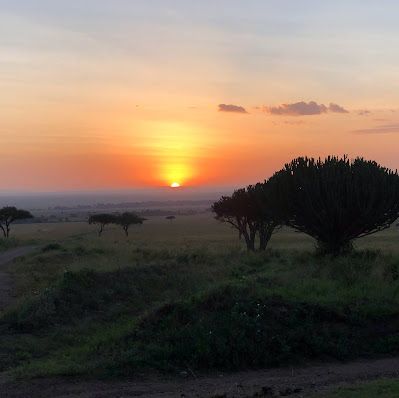
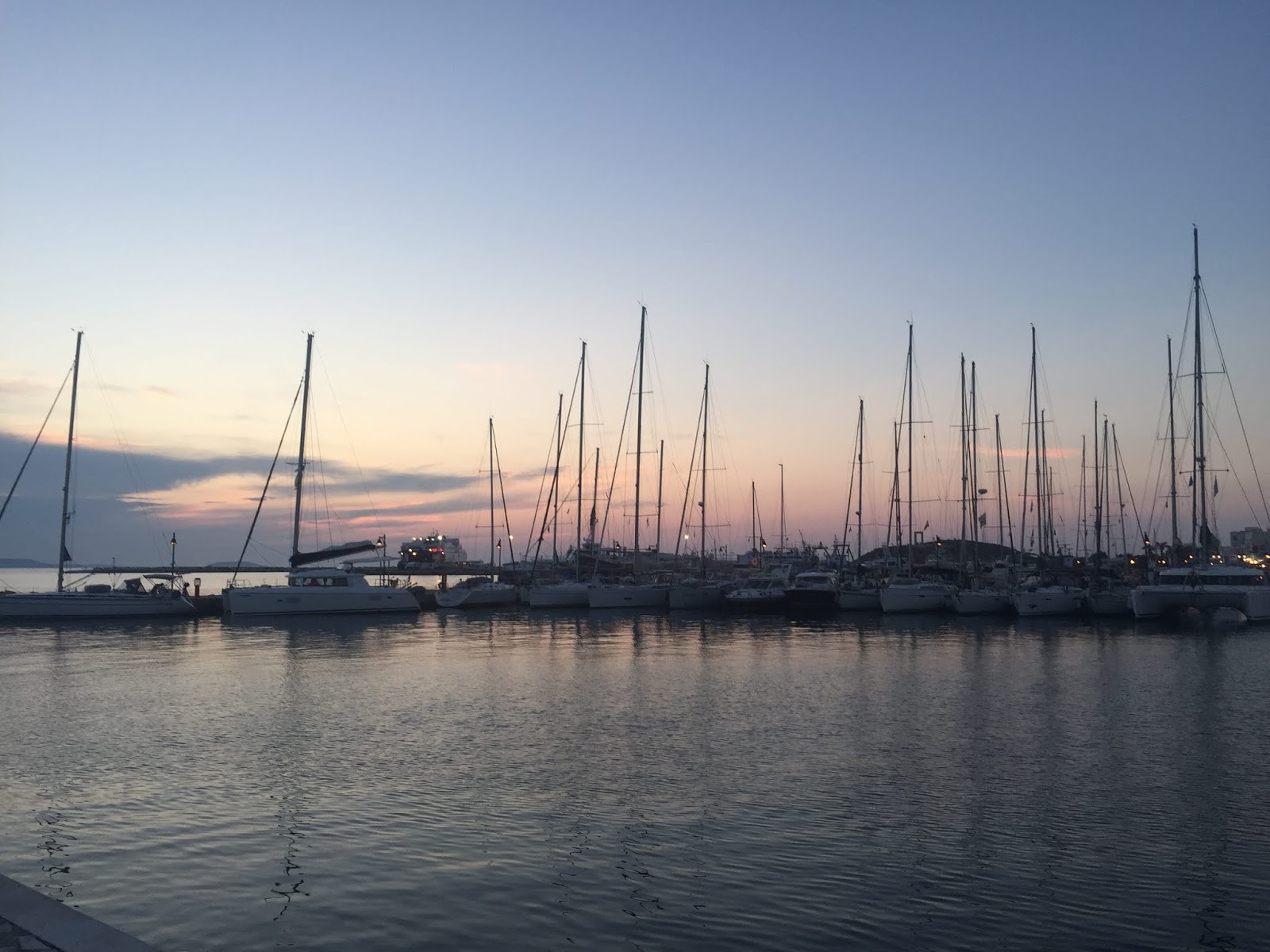
My body, which has put up with housing my spirit for many decades, has over the past three weeks been staging a rebellion.  It does not want me to sit at the computer at all.  So this is the best I can do today. Photos from four continents:  


And one of the best jokes I ever made up to prove I have not lost my sense of humor.


Sunday, April 18, 2021

CULPRITS – the Heist Was Just the Beginning


Zoë Sharp

Four years ago, an email arrived from Richard J Brewer and Gary Phillips, asking me if I would be interested in contributing a short story – of sorts – to a rather unusual anthology they were putting together, entitled CULPRITS: The Heist Was Only The Beginning.


Richard and Gary had come up with the set-up and the opening chapter for a heist story. A crew is brought together to rob a rich Texas cattleman, he told me. They do the job, get the money, and then – as the subtitle suggests – things start to get interesting.


And this is where the contributors came in.


We were to choose one of the characters and let our imaginations run riot with what happens to them after the heist. Do they get away? Do they get caught? Do they keep the money? Or lose it along with their lives?


It was a fascinating idea with a great cast and opening – and an even better line-up of contributors.


How could I resist?


In fact, the exact words I used in response to Richard’s invitation were, ‘I don't need to think over your proposition. It's a terrific idea and I'm in. Hell yes.’


The jacket copy for CULPRITS runs:


Some stories are all about the crime. These stories are about the maelstrom of what happens after


A hard-bitten crew of professional thieves pull off the score of their lives, coming away with seven million in cash. Like any heist there are some unforeseen complications, and unfortunately they don’t get away without a few bodies dropping. But despite this, they get away with the swag. Seven million. Enough to change their lives, make new identities, start fresh. But that’s when the real trouble begins


In this unique, riveting, linked anthology, we follow each member of the crew of culprits as they go their separate ways after the heist, and watch as this perfect score ends up a perfect nightmare. Featuring stories penned by acclaimed writers Brett BattlesGar Anthony HaywoodZoë SharpManuel RamosJessica KayeJoe Clifford, and David Corbett, CULPRITS examines what happens next to these criminals once they take their cut and go their separate ways, only to find that the end of the heist was the beginning of their troubles.


The anthology came out from Polis Books in February of 2018 and picked up some great reviews.


As it turns out, that wasn’t all it picked up.


Yesterday, I got another of those out-of-the-blue emails that put a different perspective on your whole day. Richard wrote to us all to point us in the direction of an announcement in Variety, and The Hollywood Reporter that CULPRITS is on its way to the small screen as a series for Disney+UK.


“BAFTA-winning writer Sally Wainwright (‘Happy Valley’, ‘Gentleman Jack’), ‘Killing Eve’ producer Sally Woodward Gentle and producers Faith Penhale (‘Les Miserables’) and Stephen Garrett (‘The Night Manager’) are among the creatives behind Disney Plus’ first scripted slate out of the U.K.”


Culprits

“Star Original ‘Culprits’ is a dark comedy heist series from filmmaker J Blakeson (‘I Care A Lot’, ‘The Disappearance of Alice Creed’). The show follows what happens after a heist, when the crew have gone their separate ways, but are being targeted by a killer one-by-one. Created and directed by Blakeson, the series is executive produced by Garrett and produced by Morenike Williams (‘Killing Eve’). Culprits is a Character 7 production.


Noting that work began on ‘Culprits’ a couple of years ago, Garrett said, “We are immensely proud that Disney Plus have decided to make it one of their platform-defining shows. The additional thrill for me is that I’m working with a writer-director at the very top of his game.”


The Heist, it seems, really was only the beginning. I’ll be watching with interest to see what they make of our efforts.


This week’s Word of the Week is scurryfunge, meaning to hastily rush round tidying the house because company is on the way over.


OK, back to the edits...


Saturday, April 17, 2021

Naxos Island's Enchanting Little Secrets Exposed


Jeff—Saturday

This past week I launched into the Zoom phase of my book tour. Sadly, I think it's safe to say that virtual touring will be the only phase this year--at least until Bouchercon in New Orleans in August.  I love in person touring, and miss the "press the flesh" moments that come with personal appearances, but I must admit to finding an unexpected camaraderie among us high school yearbook-size images grouped together on an intimate small screen. 
 
I'm here today to make good on a promise I made to the wonderful folks in Orange, California who came together at Anne Saller's Book Carnival to fight together through technical glitches to a grand good time
 
My promise arose out of a conversation we had about Naxos, the Aegean Greek island where my new book is set.  I mentioned that a few years back I'd published a post on MIE describing surprises I'd found all over the island, some that guide books did not mention, but which fit nicely into my new book. That's when my California colleagues in Greek Crime "beseeched" me to run that post again. How could I refuse?
 
So here it is, a photo essay of the sorts of surprises this fabulous island has to offer, as photographed by Photobomber, leaving me to come up with the color commentary.

Imagine yourself following this road


You find this deserted undeveloped beach

You see this structure off in the distance

Curiosity sends you off exploring
It becomes more and more interesting


What can it possibly be?

Better still, what was it?

Not Stonehenge...perhaps ConcreteHedge?

Stepping inside and looking back at the spectacular view,
You wonder what harm can befall you exploring.
Perhaps it's time to rethink that conclusion.
And who's this?
Aha, uplifting thoughts.

A bit of a different perspective

I'm beginning to think getting out there's not such a bad idea.
Definitely not a bad idea.

Though this means of escaped does cause one to pause.
Ahh, free at last!
But what's this?

And this.
At last, a friendly face.

Can't say the same thing about these birds.
What happened to friendly face?
An interesting lady
Alfred E. Neuman's sister?
An editorial?
What is this place. I better go find out.

But first a stop at the beach.
And then a bite to eat.
The path up to our hotel....the other path looked more welcoming
A killer view back toward town....so to speak.
On a journey to the Naxos Archaeological Museum at the top of the Old Town Kastro or castle.
Self Portrait by Photobomber.
On her way to the top.
Through the streets.
More streets.
The old castle walls (Venetian)
The Catholic Cathedral and Duchy Palace
The rear of the Museum
One of its treasures, some as old as 5th Millennium BCE
Just a cool shot of the Museum
Naxos harbor at sunset.

It's still setting.
A mountain vista

A broader mountain vista

A mountain vista with sea on the side.

A valley village.
Example of the fertile land in action.
Access to the islet housing the symbol of Naxos.

Here it is, The Portara.
  
The Portara panorama

Hard not to miss this place.
—Jeff
 
Jeff's in formation "A DEADLY TWIST" tour schedule
 

Thursday, April 22, 7:00 p.m. ET
Mystery Lovers Bookshop—Oakmont, PA
In partnership with The Greater Pittsburgh Festival of Books
Learn more or view on Facebook

Friday, April 23, 4:00 p.m. ET
Poisoned Pen Bookstore—Scottsdale, AZ
With David Wagner
Learn more

Thursday, May 6, 7 :30–9:00 p.m. ET
Riverstone Bookstore—Pittsburgh, PA
Learn more