Friday, July 6, 2018

A ten year stretch in Room 101


So, as you may know, we are suffering a heat wave in Europe. It hasn't really rained here for over two weeks. Last week Motherwell was hotter than Spain....at a sweltering 33 degrees.
As we are not used to it, there have been a few  fatalities - mostly canine. Our pets are also not used to it, running around as normal then getting heatstroke.

And it's not easy being an osteopath when all the patients have sunburn!

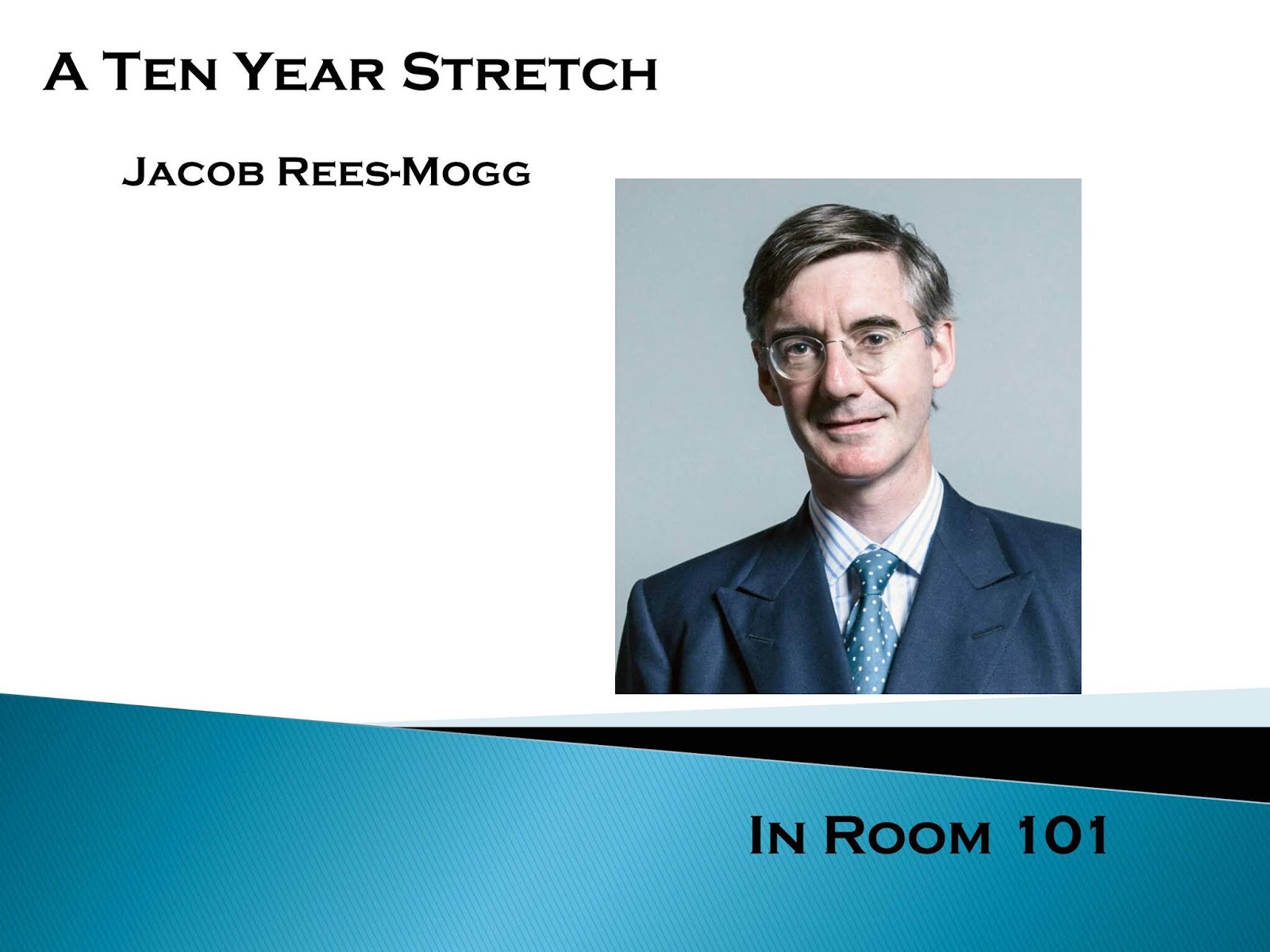
But last night was our Room 101 charity night. We raised a lot of money for audio books for the blind.
Here is the panel of victims in a very hot Waterstones.


Frank Muir, Mason Cross, Lesley Kelly, (me holding the mic) Neil Broadfoot, Michael J Malone, Douglas Skelton.


Here's Douglas arguing that a politician saying 'Let Me Make Myself Clear' ( with the punchy hand gesture,) should go into Room 101.


I am arguing that Christie Bashing ( the tearing apart of the plots and wonderment of Dame Agatha) should go into Room 101.


Heros never catching a bullet? I think he was talking Mr Reacher,  Mr Bourne and Mr Bond.


There you go, a Scotsman in shorts.
Who would have thought it.

We had a competition to guess the number of words in the seven novels by our panellists. Did I say words? Sorry I meant F words. 541 of them, mostly donated by Mr Broadfoot, the F word king.

Here's the highlights of the slide show....


It was a great night and we made a lot of money for the charity!!
I think there's one selection above that we all agree on..

Caro Ramsay 06 07 18

Thursday, July 5, 2018

I need your help!

Stanley - Thursday

About a year ago, while wandering around the Web, I bumped into an amazing man, whose name is Ntokozo Ndlovu. His mission is to encourage young Black kids in South Africa to read and write. In any country, this would be a huge task, but it is even more daunting in South Africa because so many schools, mainly rural, don't have libraries. And families don't have the money to buy books for their children. You can read about Ntokozo here.


Ntokozo Ndlovu
So Ntokozo founded an organisation to address the issue - and Siyafunda Donate a Book came into being. He and his colleagues spend their time encouraging people to donate books and funds and, more importantly, they go into schools, working with both teachers and children to promote a love of reading. You can read about Siyafunda here.


Books for Africa, based in the twin cities of Minneapolis and St. Paul, is an organisation close to my heart. Its mission is to send books and, more recently, computers as well, to schools and universities in Africa. 

Over the past thirty years, it has sent over 41 million books to Africa! FORTY ONE MILLION BOOKS! And every African country has been the beneficiary.

You can read about Books for Africa here.


Getting Siyafunda and Books for Africa to talk to each other seemed an obvious thing to do, which I arranged to happen in January this year in Cape Town.

And this is where I need your help.

Books for Africa has agreed to send a container of books (approximately 22,000) to the port of Durban. Siyafunda has agreed to distribute the books in South Africa. The problem lies in the port! It will take about US$4500 to pay for clearing the container into South Africa and for transporting it to a Siyafunda facility. 

Please make a donation to help us accomplish this - $1 or $5 or $10 or $100. Or more. Every dollar will make a difference.

I will match each two dollars donated with a dollar. 

Donations can be made with a credit card from anywhere in the world at a dedicated Books for Africa website: 

Donate here.

Alternatively you can send a US dollar contribution to:

Books for Africa
370 Selby Ave.Ste. 305Saint Paul, MN 55102
USA

Please note that it should be credited to the Siyafunda project.

These are the sort of people who will benefit from your generosity.


Thanks,

Stan

_______________________________

Our stand-alone thriller, DEAD OF NIGHT, will be released outside North America on July 15 by Orenda Books. Join investigative journalist, Crystal Nguyen, as she tries to find a friend who has disappeared while writing a National Geographic story about the poaching of rhinos in South Africa.


Wednesday, July 4, 2018

Death in the Newsroom


Sujata Massey
Last week's mass shooting of the five employees at the Capital Gazette in Annapolis made headlines around the world, but especially here in Maryland. These premeditated, cold-blooded murders are a tragedy for the families and friends of Gerald Fischman, Rebecca Smith, Wendi Winters, Rob Hiaasen, and John McNamara. But the murders are alsoan attack on the culture of journalism.  Reporters walk alone into neighborhoods full of guns to investigate the suffering of people there; editors authorize the publication of stories that sometimes point out wrongdoing in  the community. This work is done as a service to the community; but there are those who disagree with it. Usually, they send a letter to the editor about it. But not always.

Such was the situation with suspected shooter Jarrod W. Ramos, who was convicted of harassing a woman he knew in high school. He then tried to sue the Capital Gazette because of a published story about the harassment. Ramos's case was dismissed as too groundless to be tried in a court of law, but the man wouldn't give up.  During the last presidential campaign, Ramos threatened the newspaper on Twitter for an opinion piece that referred to Trump as 'unqualified.' He also used Twitter to violently threaten  the reporter who wrote about him, as well as Rob Hiaasen, who was the deputy editor.


The Capital Gazette is a very old newspaper that became part of the Baltimore Sun Media Group in recent years. The CG's deputy editor,  Rob Hiaasen, was the first employee killed by Ramos. Before he became an editor in Annapolis, Rob was a general assignment features reporter at the Baltimore Sun when I was a features reporter for the afternoon paper, The Evening Sun.

I remember Rob as full of laughs: a funny, gregarious, and skilled writer. This New York Times opinion piece by Laura Lippman, who was Rob's close friend, describes him much better than I can. I recall smiling at Rob's stories and his status as the newsroom's bon vivant.

I left the Sun in 1991, but I had the gift of an out-of-the-blue email from Rob about ten years ago.  He had read through all the mystery short stories in Baltimore Noir, an Akashic anthology published in 2006, and he wanted to congratulate me on mine. I was surprised and flattered, especially since I regarded that particular story, "Goodwood Gardens", as being all about women. But Rob didn't believe in stories being for ladies or gents. He read what he wanted, and he was known to praise and encourage writers whether they were in his newsroom or not.

During my years at the newspaper, I recall receiving a few nasty unsigned letters, typically filled with racist complaints about the newspaper's coverage. Also, a local man picketed the newspaper for years holding a sign that said "Sun Lies." I don't know whether there was a story that bothered him, or he just didn't like the paper.  In my five years as a reporter, I understood there would always be readers who felt wronged by the paper, but I really thought the biggest danger for me was going into deserted neighborhoods alone.

I am shocked that threats against these journalists that appeared on Twitter were not addressed by the police. I believe these threats multiply and gain traction because President Trump tweets frequently against the press, often by name, and has called the entire news media "the enemy of the American people." With a climate like this, I don't like imagining what will come next.


Monday, July 2, 2018

Longing for Africa, Redux

Annamaria on the Road Again

I am reposting this, not only because I am off on a brief trip, but also because next week I will have big news about the mystery of the inscribed rock described below.  So I want to refresh your memory (or clue you in for the first time) on how I became preoccupied with the identity of an obscure Italian born in the province of Brescia in 1912.  Here is a post from a couple of years ago recounting - among other things - how I found out about a carving on a rock wall in a remote part of Tanzania.  Come back next week, and I'll tell you the answer to the mystery.

The following was originally published in August of 2016:


Without a planned trip in my future, I am bereft.  Bear with me while I reminisce.  

Two years ago today, I had just arrived in Nairobi, on my own in Africa for the first time, and so looking forward to all that I would see.

That trip started with a Google search more than a year before.  I was doing some general research for my African series.  I have no recollection what terms I had typed in, but there on the first page of results was the entry for Old Africa Magazine.  Be still my heart.  One click, and there it was: the website of my dreams.


“Subscribe now,” it said.  Faster than you can say “Jack Robinson.”  Back issues?  “Please send all you have.”

Once they arrived.  I began to read them in date order.  (You do remember that I went to Catholic school?)  They gave me exactly the kind of thing that moves my imagination most—stories of people who had lived there and then, photos of life at the time of my novels.  There was also, in each issue, a contest to identify some past event.  Nothing I could ever hope to do.

But then I came to Issue No. 12, which was by then seven years old.  And I found this:


The words carved on the rock were given in the magazine as: “Benvenuta, ELIA, NATO, 7.2.1912. PARATICO, BRESCIA, WL ITALIA, WRE.”  The page went on to say that though the contest was over, answers were still welcome.

The thing was, I could read that rock.

So I emailed the editor—Shel Arensen—and asked if they had ever gotten an answer.  He responded that they had only a partial translation.  So I sent him mine:

Dear Shel, the magazine copy says that the carving says “Benvenuta"— which would be “Welcome" in the feminine as if to a girl.  But from the photo, it could be “Benvenuto,” which would make more sense considering what the rest says.  
"Elia (usually a masculine name), “Nato” born in the masculine.  It goes on "7 February 1912 Paratico, Brescia,” which is town in Lombardy. The W in "WL Italia" could stand for VV, which would mean  “Viva L’ Italia” (Long live Italy.)  WRE would really be VV RE, “Long live the King.”

So my take: It says.  "Welcome, Elia.  Born on 7 February 1912 in Paratico, Brescia.  Long live Italy.  Long live the King.”

Paratico a hundred years after Elia's birth,
In his first email, Shel had also asked what sparked my interest in his magazine.  An understandable question since he could see no connection between a woman of Italian descent living in New York and a nostalgia magazine about Kenya and Tanzania.  I told him about my forthcoming Strange Gods.  And he offered to review it.


I sweated that review.  After all, Shel and his readers were the descendants of the people I was writing about.   Every mistake I made would glare at them.  I am gratified to say that he liked the book.  He even found convincing my characterization of Vera McIntosh, born in East Africa, the child of a missionary, which Shel himself is.

And then came the magic invitation.  Old Africa was about to sponsor a hundredth anniversary tour of the World War I battlefields of Kenya.  With ten books planned in my series and three of them to deal those very places and times, how could not go.


And so I did.

Some if you have read here about my visit during that stay to the wonderful nuns and the splendid Maasai girls at Emusoi, and about my overwhelmingly thrilling safari in the Masai Mara.  I am saving the details of the battlefield tour for when those books come to the fore, numbers five, six, and seven of the series.  In the meanwhile, on the two-year anniversary of that trip, hungry as my heart is to be in Africa right now, I can’t think of anything else to share with you today but these thoughts and the photos that take me back.

My hotel in Nairobi

First destination: Karen Blixen's House

James Wilson's book: the definitive history of WWI in Kenya

Jim recounting the story of the war.  He went and sought out the places
where he took us.  I want him to sit next to me when I write those stories.
Jim found this building.  The first shot of the war came from this window,
as German troops attacked what was then a police boma in the Tsavo.

Our headquarters during the week-long tour was a lovely safari camp.
BIG bonus for me, there were game drives every evening.

The view from my bedroom window.

The tracks of the narrow gauge railway the Brits built to supply their troops.

My fellow travelers--with their LONG lenses, made fun of my little camera, but I love it.

They had trouble capturing Kilimanjaro at sunset.  My camera got the best shot.
We knew there was a lion under that tree and waited and waited for him to stand
up.  The others were packing their cameras away, but I stayed zoomed in and I
whispered, "Come on, honey.  Just raise your head." Just then, he did!  CLICK

They made me prove I had gotten the shot by showing it dinner that night.

Sunday, July 1, 2018

Where the Story Began: the Washington Sniper Incident

Zoƫ Sharp

I make no secret of the fact that it was the Washington Sniper incident from 2002 that gave me the original idea behind my new standalone crime thriller, DANCING ON THE GRAVE. But, although I was aware of the story, I didn’t research it in detail because I knew from the start that my take on it was going to be very different.

It’s only recently, therefore, that I’ve gone back over the events. They make horrifying reading. The basic facts are that between February and October 2002, the partnership of John Allen Muhammad and Lee Boyd Malvo killed a total of seventeen people across the States, injuring a further ten. Events culminated in the incidents that became known as the Washington Sniper or the Beltway or D.C. Sniper in October of that year.
  
Lee Boyd Malvo (l) and John Allen Muhammad
Malvo was born in Kingston, Jamaica in 1985. His mother, Una Sceon James, met Muhammad in Antigua and Barbuda around 1999, and he and the young Malvo formed a strong bond. James left her son with Muhammad when she came to the States, and the two followed in 2001. 

Both mother and son detained by Border Patrol in December of that year, and in fact Malvo had just been released on a bond in January of the following year, just before the killings began. It’s hard to define the exact relationship between Muhammad and Malvo. The certainly stayed together for over a year. At one point Muhammad enrolled the boy in school claiming to be his father. Malvo later claimed that he’d been brainwashed and sexually abused.

Lee Boyd Malvo at the time of his arrest
Muhammad was born John Allen Williams in Baton Rouge, Louisiana. His mother died when he was three and his father left him in the care of his grandfather and an aunt. He served in the National Guard and the US Army, serving in the Gulf War, and was a noted expert shot. He mustered out in 1991 with the rank of sergeant, after seventeen years’ service, during which, in 1987, he converted to Islam. He changed his last name in 2001.

It was initially claimed that Muhammad’s motive for the killings was that he wanted to kill his ex-wife and regain custody of his three children, but there was insufficient evidence to prove this. He had indeed kidnapped his children in 1999 and taken them to Antigua, which was when he met Malvo.
 
John Allen Muhammad at his trial
Events unfolding
In February, 21-year-old Keenya Cook was shot and killed at her aunt’s house by Boyd Lee Malvo. Keenya’s aunt was a friend of Muhammad’s ex-wife, and had encouraged her to seek a divorce.

Following this, a further five apparently random people were killed in various states, including a liquor store clerk in Mongomery, Alabama who was shot to death during a robbery—where the two men left behind fingerprint evidence that would eventually convict them. Another seven people were injured, such as a man in Louisana who was shot in the neck and played dead while Malvo stole his wallet, and the owner of a pizzeria in Maryland who was shot six times at close range but also survived.
map showing the locations of the sniper shootings in order
Washington area
On the afternoon of October 2nd 2002, a shot was fired through the window of a store in Aspen Hill, missing the cashier. As nobody was injured, the incident was not thought to be serious, until an hour later when a man was killed in the parking lot of a grocery store in Wheaton.

The following morning, a landscaper was killed while mowing grass; a taxi driver while he was filling up his car; a housekeeper while sitting on a bench reading a book, and a woman while vacuuming her car at a gas station. These killings all happened within the space of two hours.

Later that evening, a retired carpenter was shot while out walking. He died an hour later.
 
the Bushmaster rifle used in the sniper shootings
Initially, the police had little to go on, and received conflicting reports about what type of vehicle the shooter(s) might be using, although one of those reported was the blue Chevy Caprice that did indeed belong to Muhammad.

The next day, October 4th, a woman was shot and wounded while loading groceries into her vehicle in Spotsylvania. The police soon had a forensic link between the killings.

On October 7th, a 13-year-old boy, Iran Brown, was critically wounded as he arrived at school in Bowie, Maryland. After this shooting, police recovered a shell casing and a tarot card with the code ‘Call me God’ written on it.

drawing by Malvo, showing the interior of the Chevy Caprice
Two days later, a civil engineer was shot dead while filling his car just outside Manassas, Virginia. On October 11th, a businessman was killed also while pumping gas, this time just outside Fredericksburg, Virginia.

A few days later, on October 14th, an FBI intelligence analyst was shot in the covered parking lot of a Home Depot just outside Falls Church, Virginia.

As soon as the first connection between the killings was made, schools went on to lockdown. Later, gas stations started putting up tarpaulins to shield people filling their cars from view, and the White House and other federal buildings had their security beefed up. Specific threats were made against schoolchildren, and many schools cancelled outside trips or physical education that involved being out of the school buildings.

tarps were strung from the awnings of fuel stations to shield customers
Eventually, Muhammad and Malvo tripped themselves up. They began to contact the authorities, boasting. During one such phone call, they mentioned an unsolved murder in Montgomery, where Malvo had dropped a magazine with his fingerprints on it. Once he was identified, his close ties to Muhammad soon came to light.

And with the identification of Muhammad came the licence number of his blue Chevy Caprice, which had already been stopped and checked near to several of the crime scenes. Eventually, after a public alert, the men were spotted sleeping in the car in a rest area off the Jones Falls Expressway in Baltimore and were arrested. A slot was found in the rear panel of the car which allowed a rifle to be sighted and fired from inside the vehicle.

Muhammad's blue Chevy Caprice, with firing point slot in rear panel 
Both were convicted of the homicides. Muhammad was given the death sentence, which was carried out by lethal injection in 2009. Malvo, only seventeen when the crimes were committed, was given six life sentences without the possibility of parole. Although he originally confessed to pulling the trigger in most of the sniper attacks, he later changed his story and claimed that he was attempting to protect Muhammad from the death penalty. 

Last week, a federal appeals court threw out four of the life sentences Malvo received for his part in the killings, on the grounds that it was unconstitutional to sentence a juvenile to such a term. However, life with parole sentences still stand for murders committed in other states, so despite his apparent remorse and changed attitude as a result of his imprisonment to date, it is highly unlikely Malvo will ever be released.

Lee Boyd Malvo now
I didn’t know, when I was writing DANCING ON THE GRAVE, that Malvo—who acted as Muhammad’s spotter and lookout—had tried to take credit or blame for the crimes. But that does have spooky similarities with my story.

Sometimes I’m not sure if it’s art imitating life, or life imitating art.

This week’s Word of the Week is commination, meaning a threat of punishment or vengeance, a denunciation, or in the Church of England it is read on Ash Wednesday to proclaim God’s judgement and anger against sinners. It dates back to the 16thcentury, from the Latin comminatorius, from comminat- threatened.

DANCING ON THE GRAVE, out today!