Saturday, November 12, 2011

It's a Great Place to Live, But I Wouldn't Want to Visit There.


National Geographic Traveler Magazine Photo

Cara, Leighton, Michael and Stanley, I have bad news.  National Geographic Traveler Magazine (NGT) has officially declared its twenty “Best of the World Trips for 2012,” and your spots didn’t make it.  London and Greece did, and Thailand’s Koh Lipe came in at number two, second only to—drum roll please—the land of the scourged sheep’s head, Yrsa’s Iceland.  So, to half my MIE mates, congratulations, and to the rest better luck next year.
Iceland's Snaefellsnes Peninsula (NGT photo)

Thailand (NGT photo)
London's Tower Bridge and City Hall (NGT photo)
Hmmm.   I’m not sure if I should share the balance of the news, because I don’t know if it will make my slighted brethren feel better or worse, but here goes.  Paris, Rio, and Cape Town weren’t just overlooked, they were stomped in the ratings by the home of Monongahela River water, pickle pins, and French fries served inside your crusty Italian bread sandwich and on top of your salad.

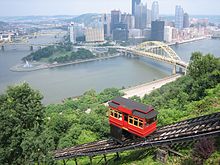
Pittsburgh's Duquesne incline
The list of the twenty best included three from North America: Muskoka, Ontario; Sonoma, California; and—triangle tinkle please—Pittsburgh, Pennsylvania.  Yes, “da ‘burgh” as it is known to locals is now considered one of the Best Places in the World to Visit, and the photo from NGT at the top of this piece is of its convention center. 

Muskoka (NGT hoto)
Sonoma (NGT photo)
Yes, I hear the punch line coming, “but I wouldn’t want to live there.”  Funny thing about that is Pittsburgh was ranked in 2011 as the US’s most livable city, a ranking it’s achieved a half-dozen times, along with placing near the top of those rankings for most of the last three decades.  So, the line most often heard in self-deprecating Pittsburgh is the title to this piece.  At least until this month’s NGT came out.

On a personal level, the article has made me rethink several things.  For example, living as I do half the year on a Greek island, but being born and raised in Pittsburgh, you’d be surprised how often I get an interview question along the lines of, “So, how do you compare Mykonos to Pittsburgh?”

When the question is asked live, it’s invariably followed by “ha-ha,” and if in writing by a smiley face.

My stock answer had been, “In Pittsburgh the gyro is made out of ground, pressed lamb but on Mykonos it’s made with shaved lamb.  Otherwise the places are identical,” followed by the obligatory “ha-ha” or :-).   

What had I been missing?  I had to learn what led NGT’s editorial board to propel Pittsburgh from the town I’d known in my youth to the ranks of its top twenty—other than perhaps a few too many sips of its river water.

Vathia, in Southwest Mani
I figured I’d start as if evaluating a new guidebook: read what it said about a place I knew well and see if I agreed.  On Greece, NGT wrote that to discover the true “fierce beauty where traditions run deep” you must abandon “the instant gratification of its seaside resorts” and explore Greece’s mainland.  Then it went on to single out as special the rugged Mani peninsula in the southern Peloponnese.  I couldn’t have agreed more, except in the sense of more south, into the deep Mani part of the peninsula closer to where the Ionian Sea meets the Aegean.  I love that area (to visit) and wrote about it a year ago.

But I digress. 

Now that I knew NGT and I were on the same page, it was on to Pittsburgh.
           
Old Pittsburgh Steel Mill
I left right after college and though I return several times a year, I admit to having lost a bit of my native feel for the place.  Still, the opening lines of NGT’s description did not surprise me.  Pittsburgh’s transition from its heavy industrial history into a modern medical and high tech metropolis is a well-known international success story, so it wasn’t unexpected for NGT to describe Pittsburgh as “a reinvented city…with a transformation…[that] qualifies as revolutionary.”

But then came the line that should be the cover blurb for Pittsburgh’s City Charter: “A natural setting that rivals Lisbon and San Francisco, a wealth of fine art and architecture, and a quirky sense of humor.”
A Pittsburgh City Councilman

Wow.  And to think I left all that to live on an island of instant gratification.

I can’t wait to be back in da ‘burgh for Thanksgiving—after a quick panel appearance next Saturday (November 19th at 3PM) at Miami Book Fair International (along with my MIE tee shirt and authors Sharon Potts, Neil Plakcy, and Ian Vasquez).  I need to get back to my quirky roots…no matter how famous the t(h)ree rivers may have become :-).

Happy Thanksgiving, everyone!

Jeff—Saturday

Friday, November 11, 2011

Poppycock


In Flanders fields the poppies blow
      Between the crosses, row on row,
   That mark our place; and in the sky
   The larks, still bravely singing, fly
Scarce heard amid the guns below.


We are the Dead. Short days ago
We lived, felt dawn, saw sunset glow,
   Loved and were loved, and now we lie,
         In Flanders fields.


Take up our quarrel with the foe:
To you from falling hands we throw
   The torch; be yours to hold it high.
   If ye break faith with us who die
We shall not sleep, though poppies grow
         In Flanders fields.


It is a beautiful piece of poetry, entirely suited to honouring and remembering those who died in the mad, futile slaughter of World War 1. However, I do wonder what its author, John McRae, would think if he knew how the symbol of his poem, the poppy, has been appropriated since.


Today is Remembrance Day, when the Commonwealth remembers those who died in First World War, and in other conflicts beside. Even the most ardent pacifist can see that a day when people remember those who have fallen in battle, regardless of how you viewed those conflicts, is necessary and right. It has become custom to wear a poppy as a sign of that remembrance and for many years it was an innocent, selfless thing to do, a decision left entirely up to an individual.


But then something changed. You would think that as the years passed to the compulsion to wear a poppy would fade. You would be wrong. It has grown. And as the clamour for the poppy to be worn has grown, so has the backlash from those who don't wish to. To the point where there two sides have formed, both as intractable as the other, and both as boring.


Every year the right wing press in the UK watch TV with a gimlet eye. Heaven forfend that a BBC presenter should appear without a poppy in their buttonhole for this be proof that the national broadcaster is indeed the hotbed of pinko liberal sentiment its swivel-eyed detractors believe it to be. Unfortunately, the ludicrousness of this argument compels those who feel wearing a poppy is in some way glorifying war to equally hysterical heights, and hurl back insults about 'poppy fascists.'


This week the whole charade reached its nadir. The England football team, that brave bunch of stout hearts who are never fearful of lying down and dying in some foreign field, and arguing with the ref while they're doing it, wanted to wear a poppy emblem on their strip in a friendly match versus Spain tomorrow night. No big deal, you might think, if slightly ostentatious and unnecessary. After all, I don't remember them asking to wear it during previous matches arranged around the time of Remembrance Day. However, the Germans, who, let's face it, might be the most offended by the gesture, said they didn't mind.


In stepped Fifa, the sports' governing body and never knowingly reasonable, who said a a minute's silence was fine, as was the wearing of black armbands, but that the poppy was a political symbol, and that to allow the England team to wear it would set a precedent for other teams. I suppose they feared other national teams wearing symbols to honour the dead in slightly more controversial wars and battles. 


Cue an intense and very silly debate, in which it was variously recommended that the English players should a) wear the poppy anyway or b) cancel the match. Given the hype, hoopla and dullness that surrounds the national side these days, I was well in favour of b) though not for any reasons to do with a poppy. In the end, a compromise was found and the England team will wear a kit with a poppy emblem on their armbands. If only a similar level of negotiation and diplomacy was possible back in 1914...


But at least it shone a light on how preposterous the poppy debate has become. Hopefully, moving forward, we can drop the daft arguments about why people will or won't wear it, and remember what the idea of remembrance is all about. The quiet, civil consideration given to the deaths of millions of men and women in battle, and a reminder why such conflicts, particularly pertinent in these days of spurious politician and oil men's wars, should only ever be a last resort.


cheers


Dan - Friday.


Thursday, November 10, 2011

Gagudju Dreaming

The Escarpment - Kakadu National Park
Lightning Man
It’s Build Up in the Top End.  Days start clear but soon the heat and humidity increase to oppressive levels.  People feel the air pressing down on them, feel irritable, sometimes a little ill.  Then clouds build up into dark grey thunder heads.  Flashes light up the sky over the escarpment where Lightning Man has made his home.  Things become a little cooler but still tense.  And then…nothing.

I’m talking about Gunumeleng, the pre-monsoon season that separates hot, dry Gurrung from torrential Gudjewg in the Top End, the coast of the Northern Territory of Australia.  These are the names the Aboriginal people of the area – the Bininj – give to three of the six seasons they recognize.  The local non-indigenous Australians call it Build Up.  The salt-water crocodiles don’t call it anything.  They’re happy that the pools shrink, the Billabongs empty, and the fish are concentrated and are easier to catch.
Salt water crocodile
This is where I’ve been for the last ten days, travelling in the 7,500 square mile Kakadu national park, being stunned by the thousands of waterfowl packed on the drying Billabongs, the profusion and rainbow colors of the parrots, and being moved by the Aboriginal rock art (so reminiscent of that of the Bushman peoples and yet so different).  And learning just a touch about the ancient culture and traditions.

I was travelling with friends, one of whom - Jill Wilson - is a bird photographer. All the pictures (except the aerial photo above and portrait of  Jacob Nayinggul) are hers.

Unlike the slender-nosed fresh water crocodiles, the salties are a serious matter. This is made clear by posted warnings everywhere and the rather droll symbol at the bottom of the poster

Jacob Nayinggul
“Our land has a big story.  Sometimes we tell a little bit at a time.  Come and hear our stories, see our land.  A little bit might stay in your hearts.  If you want more, you can come back…” Jacob Nayinggul, (Manilakarr Clan).


The iconic Jabiru Stork with lotus flowers
Indeed the land has a big story, and its history is depressingly familiar.  The indigenous peoples have lived there for up to 40,000 years.  Their first contact with foreigners was with peoples from the north who came to harvest sea cucumbers and other marine life.  But then when Europeans started to spread to the north of the continent in the nineteenth century, unfamiliar diseases ravaged the locals reducing their population.  But there was not much pressure on the huge Top End until the discovery of a variety of minerals including gold at Pine Creek and uranium near Jabiru.  Soon the land belonged to someone else.  But in 1973 the Woodward Commission returned much of the land to its traditional owners in tandem with the development of a national park and eventually the declaration of a UNESCO World Heritage Site.  The final pieces of the development took until the 1990s to get in place, and now many of the traditional owners live in the area in parallel with the national park based on a 99 year lease to the Commonwealth Government.  Some of the aboriginal people work at the various tourists centers, and they have representation on a joint management committee with the other stake holders.  While I can’t say I met any of the local people other than in their tourist guide capacity and hasten to say that my understanding is completely superficial, it does seem a fair and workable model which could, perhaps, be a talking point for the government of Botswana and the Bushman groups of the Kalahari.

Hard to appreciate from a small image. Think of 180 degrees like this..
The rock art is spectacular.  The belief is that the Mimi spirits were the first of the Creation Ancestors to produce rock paintings.  Some of the spirits became rock paintings themselves and became djang – dreaming places.  Some of these paintings are andjamun, which only senior men or women are allowed to see.  Others are open to everyone.  Sites can be andjamun too.  The cliffs where Lighting Man now lives is such a place.  Sacred and dangerous.  Should it be disturbed, bad things will happen in the land and in the world.  The Bininj would call The Place in DEATH OF THE MANTIS andjamun.  So close and yet so far apart are these two worlds.
Mimi spirit
Barramundi
Turtle
Group of spirits including Lightning Man and his wife
As the Bininj would say in farewell:

Boh Boh
Michael - Thursday

Wednesday, November 9, 2011

The Icelandic Horse


When I was younger my parents enrolled me and my sister in a riding school. I hated it, my sister loved it. Needless to say we instigated the whole business, me probably even more so than my sister, being the older of the two. This went on for two summers, me hating it even more the second time around, my sister making up for this by upping up the love to the same degree.

The Icelandic horse is a very sturdy breed, although small. It is sometimes referred to by foreigners as the Icelandic pony, something that makes Icelandic horsemen bristle with indignation. This is however not well founded anger as the only reason we do not call it a pony is because Icelandic does not have a word for pony. If you may recall from earlier posts our dictionary is about a half of the thickness of an English dictionary, English has 250 000 words, Icelandic according to the University of Iceland’s webpage has 610 000, which makes no sense and causes me to think the count was conducted by someone from the soft faculties. Or a banker. But anyway, we lack a word for pony and so a maximum we should have 249 999 words.

The Icelandic horse is not native to Iceland any more than other mammals inhabiting the country, aside from the fox that was here before man arrives with his select farm animals in tow. The horse has been here isolated since, the gene pool having received some additions for the first hundred or so years after which the country became passé for those travelling with horses as part of their entourage. So the breed has not had access to any fresh blood for about a thousand years. Legislation now prohibits the import of horses to keep the breed pure, but for some reason this ban also applies to our own horses. This means that if you take an Icelandic horse abroad for competition or simply sell it, it will never come back home. Which is a bit dramatic and sad. You are also not allowed to bring used riding equipment to Iceland. Both relate to the rather immature immune system isolation has fostered, as a result the Icelandic horse is susceptible to serious illness if it comes in contact with horse germs from abroad.

Óðinn (Odin) had an Icelandic horse called Sleipnir. Unlike most he had eight feet. He ran twice as fast as other horses as a result. Now, I don’t know if I should go into his conception in too much detail as it is a bit odd. However, keeping in mind that in Iceland we have a rule of “no telling half stories” I guess I have to; sometimes it would be a lot easier to be from Guernsey or Belgium. But Sleipnir is the love-foal of Loki and Svaðilfari a stallion belonging to a giant (or a hrímþurs) that Loki had tricked. Now Loki was not a mare, which makes the conception odd, but a god – a male one at that. He was always getting into trouble and to wiggle his way out of a horrible mess involving the giant, the stallion Svaðilfari, a bunch of very angry gods and even the sun and the moon, Loki had to lure the stallion away. Being pressed for time all he could come up with was to shape-shift into a mare in heat, which worked the trick but knocked him up as he could not outrun Svaðilfari. So he later gave birth to Sleipnir, the best horse in the world of gods and men.

If you ever meet an Icelandic horseman, you should know that if the topic strays to the Icelandic horse this person will mention that this breed is the only horse breed in the world that has five gaits. If he does not mention this then you are speaking to an imposter and should leave right away, you could be in danger. But the five gaits are a point of immense pride and not being a horseperson myself I am really not sure why. But one thing I can say is that to ride an Icelandic horse is a lot easier on the backside than the big horses you have in America and Europe and you don’t look like a bobbing cork in a storm at sea while sitting them. They somehow glide along, keeping their back at the same constant elevation. And they are not nervous or scaredy-cats, something that is accredited to them having had no enemies for all of these isolated years. The selection of farm animals that arrived with them, as well as the fox, pretty much leave them alone.

English does not have words for the 2 additional gaits. Icelandic does: tölt and skeið. This upsets my assumption that English has 250 000 words and Icelandic at maximum 249 999. I must thus recant this and the tally is now: English 250 000 and Icelandic at maximum 250 001.

But I have not done the Icelandic horse justice and must revisit the topic, something I must also do regarding Loki. For him I will need more than one post and more than two.

I handed in my book yesterday, all corrections done, everything. This evening it went to the printers. Because I am always so late I send my books to the editor chapter by chapter, as they become available. Therefore this system – hand in today, print tomorrow, in the shelves of the bookshops in about 10 days from now - works. My editor is great, he works really fast and probably has eight brains. This also helps. But I am quite surprised that I managed to put this piece together as I did not think I had any more words left in me. Believed that the word tank needed to be replenished before typing another letter.

So why did I hate the riding school? Because I was terrified I would fall off and break my neck is why. But like many worries of childhood, it was not well founded as had I fallen I would probably just have sprained it. The fall wasn’t all that high.

Yrsa - Wednesday

Monday, November 7, 2011

Boy in the Suitcase

Here's a tip of the chapeau to Lene Kaaberboel and Agnete Friis the co- authors of the amazing Boy in the Suitcase that is published today. Congratulations Lene and Agnete! We met on the SOHO bowling team at Bouchercon. Lene and Agnete hail from Denmark and this, the first of the Nina Borg novels now in English, pulls you and doesn't let gol
They graciously accepted MIE's offer to tell us about Denmark. Enjoy, Cara

There was a celebrity birthday in Copenhagen a few weeks ago. Some call the birthday girl a social experiment, some consider her a tired old junkie who should have been euthanized a long time ago, others are charmed and drawn by her wit, her style, her creativity, and her charm. Countless artists, musicians, actors, and writers have celebrated her. Visitors come from around the globe. To the police she has become a regular training partner, to the politicians, mostly a head-ache. And then there are those who simply call her home.
Christiania has just turned 40. It was in 1971, on September the 26th, that a group of unauthorized civilians broke through the fence of the abandoned military barracks and training grounds spread alongside Copenhagen’s century-old fortifications. Basically, they are still there. The area stretches for miles along both sides of the former city moat, surprisingly rural in places, with muddy gravel paths and lots of unkempt greenery, a village inside a city, and a law onto itself. When you leave Christiania, the sign above the gate says: “You are now entering the EU”. And they mean it. The Christianites call their neighborhood a “free town”, and it is often referred to simply as The Town. They do not consider themselves a regular and regularized part of Danish society; instead, they stubbornly claim the right to be different.


We decided to visit on a windy afternoon a few weeks after the big day. It is the week of the fall break, and there are plenty of tourists strolling through the gates – mostly younger people, but also quite a few families and middle-aged couples. Christiania has become one of the sights. There are cafes, restaurants and craft shops, open workshops like the Women’s Forge (while the smiths are still women, they now employ a few men for the rough work … ) and an art museum. If you want to buy a stylish purse made from old bicycle tires, this is the place …


At Spiseloppen, one of Christiania’s oldest restaurants, the food is good, plentiful, and reasonably priced, which means that the atmosphere is generally lively. It’s run by a coop, and they pay rent, VAT and taxes ”just like everybody else”, as they pointedly remark. NOMA it is not, and restaurant critics sometimes remark unfavorably on a somewhat accidental meeting of ingredients, but it’s a popular place.

However, there is no doubt that the Christiania locality most often in the news and most prominent in most people’s mind, is the alley and square which the Christianites have tried to rename the Green District, but which in the public mind retains its old name: Pusher Street.
The birthday was celebrated with concerts and exhibitions, cake and good food, speeches and songs – and probably quite a few joints. The fairly open cannabis trade attracts its own kind of tourists. The Christianites themselves cracked down on the hard stuff back in the late seventies and evicted both users and dealers, a no-tolerance policy they still maintain. But although the buying and selling of cannabis sativa is illegal in Denmark, the Christianites have not banned it, or applied their own measures of prevention.

There is a large sign stating the Christianite rules for the Green District, posted in English to make sure the fairly cosmopolitan crowd understands: “We have three rules in The Green District. Have fun, don’t take photographs, and don’t run.” The reason for the “don’t run” rule is that running creates panic and disturbance because dealers and customers alike will assume there is a raid in progress. We would have liked to take a picture of the sign for you, but …….


As we walk past the deceptively flea-market like booths the first time, a longish line of tray tables displays a variety of neatly labeled resinous lumps, (if you really want to see it, just google “Christiania” and “hash”) and it’s obvious from the smell that the wares are being liberally sampled. Stand still and breathe deeply for a while, and you could probably get a buzz from the atmosphere alone. When we return an hour later, after a stroll through the more rural parts, not a single dealer is in sight. They seem to have vanished completely, presumably in response to their own particular early warning system.
Would you raise a child here, in an area that holds the unofficial national record for Most Frequent Police Raids in an Urban Area? In a neighborhood where hot running water is a bit optional, and very little is up to code, unless you count the codes used by the tradesmen of the Green District, a.k.a. Pusher Street? Most people would probably answer that question with a horrified “No!” Yet The Town looks after its children – there are four different day care centers, a children’s theater, a small riding school, and a youth club. The children have a say in the running of things, just like everyone else. In many ways, being a child here is like growing up in a village. And if nothing else, it certainly teaches you that people come in a lot of varieties, and that a cell phone is not a requirement for happiness.


Christiania has a number of cottage industries, but the most successful has to be Christiania Bikes. They are everywhere – and not just around The Town. The Christiania Bike is the cyclist’s answer to the pickup truck. They can be used to transport just about everything – from children and daily shopping to IKEA furniture. They, or the various look-alikes from later competitors, have not only become part of the daily commuting traffic in Copenhagen’s busy bicycles lanes, they are also important icons if you want to signal cool green values like sustainability and an active life style. When the recently appointed ministers in the new government went to meet the Queen for the first time, several of them rode in on Christiania-type Bikes. And the guy in the first picture on the website below is the Danish crown prince, Frederik, taking his son, young prince Christian, to kindergarten.
http://christianiacykel12.wordpress.com/2010/12/30/materialer-modeller-og-priser-pa-en-christiania-cykel/

Architecture around here is haphazard and anarchistic. Today, Christiania is owned by a foundation to which all of the inhabitants contribute exactly the same amount every month, whether they inhabit 8 square meters of self-constructed shack with outdoor shower and outhouse, or one of the spacious, newly renovated apartments in the old military headquarters. Once you’ve been approved and issued a citizen’s license (a camel-and-keyhole proposition, as tight as everything else is loose), freedom is just about the only rule. Want to live in a treehouse, a teepee, or a viking cottage? Christiania has seen it all. This, more than almost anything else, is what provokes and intrigues suburbian tourists. Somehow, they can’t help wondering what the place could look like if only someone did it up a little bit. And yes, some Christianites are doing that, too. Insulation, double glazing, and a few tasteful Danish Modern classics. But they do it quietly, because out here, that’s the sort of behaviour that will have the neighbours frowning. Old hippies never die, they just redecorate.


We passed the remains of a memorial on our way out. A ragged collection of soggy flowers, a few cards. Someone who lived and died here, with the ashes presumably now scattered under the calm, green surface below the banks. Living here is a life choice. This is not just a neighbourhood, but most definitely a way of life – and death.

We take our leave of the birthday girl. She’s looking little worn, to be sure. A little scarred. Illusions not quite intact. Happy birthday, all the same – we, at least, are glad to see that she is still here.


Agnete and Lene - Tuesday from Denmark

Guest Author Lisa Brackmann


Lisa Brackmann's first book, Rock Paper Tiger, garnered a star from Publisher's Weekly and was an Amazon top ten Mystery and Thriller Pick for 2010.

Lisa first visited China shortly after the Cultural Revolution, at the beginning of Deng's reform era, and has been going back ever since. The contribution that follows is drawn from one of her experiences there.


Getaway, her second book is scheduled for release in May of 2012.

Leighton - Monday


Strangers on a Train
By
Lisa Brackmann


Two days on a train is a long time.


Maybe if we were talking the Orient Express here, it would be more of a vacation, like a cruise, but most Chinese trains are decidedly not the Orient Express (is the Orient Express even the Orient Express these days?). Even if you take soft sleeper.

I am past the point in life where I need to take hard sleepers to save money and/or prove a point. Not like thirty years ago, when we were students trying to save every kuai we could. More to the point, the Chinese authorities back then didn't want us saving money by taking hard sleepers (and not paying steep "foreign friends' rates" on just about everything else), and they wanted to keep us as segregated from ordinary Chinese as possible, which was all the more reason to fight for them at every opportunity.

Of course, sometimes we were grateful for the privileges granted "foreign friends." Like the time our Chongqing minder had his final act of revenge.

I don't want to smear the guy inaccurately, so I'll have to double-check my old notes and letters home, but I'm pretty sure he was the person responsible for handling our train tickets from Wuhan to Kunming - a long trip, more than thirty hours at that time, as I recall. And he booked us in hard seats. At the height of Spring Festival. And didn't tell us.

Hard seats are the only option for many Chinese, and just because you've purchased a "hard seat" ticket doesn't guarantee you anything like a seat. It means you can get on the train, cram yourself in somewhere, on a table, in the aisle, in the corridor outside the toilet, with everyone's bundles and baskets and TV sets and earthly goods, and make do. For over thirty hours.


We crammed ourselves in two actual seats, amazingly enough, with space on the little table to rest our things, and told ourselves okay, thirty hours plus of this. At least we saved some money. Meanwhile the car continued to fill with passengers and their baggage, to the point I wondered how I would ever get out of this seat to, you know, use the toilet. Which on a ride this long I would certainly need to do.


The train crew saw us. They were horrified. This. Would. Not. Do.

So they took us to their xiuxi car - the rest car for train workers. A lovely, nearly empty hard sleeper.

We shared the car with the train workers when they took their breaks and with another passenger, a pretty young woman who'd been traveling alone and had gotten a top bunk - the train personnel were afraid that she would be "bothered" there, or maybe she already had been, so they brought her to our little sanctuary as well.

Paul at the time wore a baseball cap sent to him by a friend in America - after months of hearing us complain about Chinese bureaucracy, she'd found a cap with "KAFKA" embroidered on it. Baseball caps were a novelty in China at the time, and all of the workers and the young woman, wanted to try it on. I have slides of them, smiling, wearing the Kafka hat.

So. Anyway. Nowadays, soft sleepers are fine by me.


A soft sleeper is a closed compartment with four beds for four passengers (a hard sleeper, by contrast, is an open car with three pallets facing three pallets in an open compartment). Your experience on a soft sleeper, therefore, depends largely on who you share your compartment with. Particularly when the trip is two days long.

My cabin-mates: an older Chinese couple who looked to be from the countryside. Their relatives, presumably, had helped them load their things onto the train. The woman was short and round, heavy, almost appearing swollen, skin brown as a nut in a way that did not look to be from the sun. She had some kind of chronic illness; one hand was partially paralyzed and she had difficulty sitting up and getting to her feet, something serious having to do with her brain, her husband explained to me. "But she can still walk." That was as much as I understood of his explanation. He spoke a heavy dialect, Sichuan, I gathered, as that was their original home, though they'd lived in Turpan for the last twenty years. Her dialect was even thicker; I could hardly understand a word she said. I don't know whether this was due in part to her illness, whatever it was. She seemed a little odd. Her husband spent a lot of time out in aisle, gazing out the window, and sometimes she would become agitated and call for him in a hoarse voice. He either couldn't always hear her or had learned to ignore her when it was convenient. By contrast he was thin, wiry and seemingly fit, except for an intermittent cough, so severe it sent him into near-convulsions. He didn't smoke, so maybe he was sick. His wife had the cough too.

Oh, great, I thought.

The fourth person in our compartment I dubbed, "Slightly Obsessive/Compulsive Guy" - the first thing he did when he entered the compartment was to straighten up the communal table so that the newspaper lined up perfectly with the little aluminum tray. He was my age, and kind of a health nut, one of the rare Chinese men who doesn't smoke and doesn't approve of smoking. He also had a lot of ideas about diet, and about healthy psychological attitudes (he found me admirable for some reason that I've forgotten now). He spoke in Sichuan dialect too but was able to reply to me in Mandarin and translate my Putonghua into dialect so that the old woman understood what I was saying as well. She seemed unable to grasp why it was that I could speak some Chinese but not understand her, so this was helpful.

The first morning I woke up to the loud, cheesy guangbo (broadcast) telling us that it was, in fact, morning. Yeah, I needed to know that. Outside, steep peaks and snow. Gravestones interspersed in the fields with ragged paper flowers and lantern tributes, facing the tracks.

I was restless, that first day. I finished one novel and read another. And realized that I was out of books, and my Treo was nearly out of juice. The Treo had my Chinese dictionary (I do have a paper backup), my ability to connect to the internet on the road and all kinds of things I could potentially read on it. None of the electrical outlets in the soft sleeper car worked, and it was the only soft sleeper on the train. Hard sleeper cars, at least on this train, don't have any outlets. The train worker tried to explain the situation to me, why the plugs didn't work; there seemed to be some larger reason, but I couldn't understand what it was. Later, she took my Treo and the charger to the xiuxi cabin, where there was a working outlet. She seemed happy to be there, doing this job, a woman around thirty with big, striking features accentuated by the makeup she wore, precisely applied; she was always singing, humming along to the guangbo, singing her own songs when the broadcast was silent.

I calmed down after that. The Treo would be charged. This did not solve my problem of running out of books, or being stuck in a cabin with an ill, maybe crazy person, her husband with the consumptive cough, and Slightly Obsessive Compulsive Guy, but I'd managed to slow my mind enough so that I thought I could deal with it all, and anyway, they were nice people, really. And I'd started feeling bad for the woman. Occasionally she would look down at her lap, at her hand that didn't work properly, and sigh, looking as sad and alone as a lost child, and say, "Wo bingle." "I am sick."

Other times, she seemed obsessed with feeding me. Cherry tomatoes. Peanuts. Hunks of smoked duck. "Chi yidian," she would say. "Eat a little." I would politely decline. "Chi," she'd repeat. "Chi," and then, angrily, "Chi!"

She was a little scary. So I ate.

By now the green of the south was far behind us; the land had grown hard and brown. We entered Ningxia province. Little villages of brown brick, old mud walls, eroded battlements. And in most towns, a new mosque: usually white, often constructed of the ubiquitous white tile still found out in the countryside and less sophisticated cities. At first the minarets were usually topped by green Chinese style roofs in miniature; as we headed further west, the Chinese ornamentation fell away. How were these mosques funded, I wondered, in villages that looked too poor to build them?

I spent most of the day gazing out the window, taking occasional notes. The woman stared at me as I wrote, because I'm left-handed, and this is still seen as very much an anomaly in China. I remember on that train ride to Kunming, when we stayed in the train workers' rest cabin, trying to write letters to our friends. Both Paul and I were left-handed, and the workers and the young woman couldn't get over this. At one point we told them that all Americans were left-handed. Hey, how would they know?

Nowadays in China, all I hear is that if you're left-handed, it means you're really smart.

"Look!" the old woman said, pointing at me as I wrote. Her husband and Slightly O.C. Man looked and nodded. "That means she's clever!"

Here's what I don't get: if Chinese people think that left-handed people are so clever, why don't they let Chinese kids be left-handed?

Late in the afternoon, somewhere past Zhongxin, we passed a wall, a fake Great Wall, something built for tourists, and then giant "sand" constructions, steep pyramids with a vaguely Babylonian vibe. I have no idea what it was, why it was there, in the middle of nowhere. The Chinese equivalent of giant dinosaur statues in the middle of the Arizona desert, I guess.

Darkness. Music on the guangbo: super-cheesy Chinese pop, with a female singer whose pitch could break glass. Slightly O.C. Man has retreated to his upper berth with a beer. He keeps slapping himself, mostly on the forearm. Is this some kind of, I don't know, weird wuxia practice? Some form of acupressure? Now he's singing along to the music, off-key. The old man grins, and cranks up the volume. It's so loud the speaker rattles, and every time the singer hits a high note, I'm pretty sure my eardrum is going to burst. I smile rigidly.

"She doesn't understand," the old man says.

Which is true. I really don't.

Around 9 PM, everyone decides they want to shui jiao (go to sleep) early. Fine with me. I read a few more pages in my last available novel and switch off the light. Fall asleep.

A couple hours later, the old woman calls loudly for her husband. She wants...she needs...to do something. I don't know what. Her husband, meanwhile, decides it's time for an 11 PM snack. Then my three cabin-mates have a conversation about where and what time the train stops and the relative merits of train versus long-distance bus. This goes on for quite a while. Finally, the old woman yawns, loudly, theatrically and repeatedly. On the one hand, it's annoying. On the other, maybe it means we get to go back to sleep soon.

Apparently it does. Everyone quiets, and we sleep.

Hours later, I am awakened by a loud, high, “HEH!” A sneeze, of sorts. It repeats, at escalating volume. The old woman pauses in her "HEH!"ing to laugh at my funny sleeping habits, among those, apparently, my blinking confusion at being awakened by this. Then the old man starts coughing, that horrible, wheezing cough choked by phlegm that sounds like he's going to die on the spot. The old woman coughs along. I think uncharitable thoughts about TB and bird flu and urge my immune system to be strong.

Around 4 AM, Slightly O.C. Man gets off the train. But first, he gets his stuff together and makes a phone call. All of this is done at a normal, daytime volume. I'm coming to the conclusion that sleeping in China is meant to be a communal experience, which is to say, everyone sleeps, or no one sleeps.

When he's finally ready to leave, he wishes everyone "Man zou," and in spite of my irritation, I manage a big smile and a wave. Because everyone seems truly kind, beneath it all.

The next day: we know we've entered Xinjiang because the guangbo tells us so, beginning a recitation of the province's qualities, its natural resources, "ethnic minorities," main cities, extremes of temperature, progress in economic development, and mostly, the food. A lot of talk of mutton and Islam. For a while they play some really cool traditional music, and then they switch to this tenor going on and on about how "everyone" (which I'm assuming means Han people) should "lai lai lai!" (come, come, come!) to Xinjiang, the land of opportunity.

So far, Xinjiang is desert, miles and miles of it, open land that stretches on until it meets distant mountains.

The old couple live in Turpan, about an hour from Urumqi, the train's final destination. The woman starts getting agitated about an hour and a half away from Turpan. I try to tell her, you still have a while to go, but she's anxious - "zhaoji." She can't move well, can't carry things, they had help back in Chengdu, who will help them in Turpan? I offer but the husband politely turns me down. Finally, about 20 minutes before we're due in Turpan, she convinces her husband to move their things to the front of the car for a quick exit, and we say our goodbyes.

Alone at last. As we pull into Turpan, I watch for the couple, but I can't see them in the crowds that exit the train.