Showing posts with label garden. Show all posts

Wednesday, February 8, 2023

Pteridomania in the Writer's House

 SUJATA MASSEY


Airy ferns at Evergreen


I grew up in a gray house in Minnesota that didn't get much light. Yet because my mother lined all the windows with plants, it never felt dark. Everywhere, there would be an African violet, or a frilly fern, or leggy begonias. In May, one family chore was shifting the dozens of houseplants out to the screened porch. This was ultimately good news, because I didn't have to worry if I spilled water onto the flagstone floor. I loved the plants, but I was aware of how many things could go wrong  if you overwatered or got an insect infestation.


I thought I was too busy to keep plants when I set up my first apartment after college in Baltimore. My only plant involvement was with the cut branches and blooms used in ikebana, the minimalist Japanese art of flower arranging, and that hobby came about because I lived for some time in Japan. After my husband Tony and I returned to Baltimore, I learned in bits and pieces from kindly neighbors about gardening outdoors; first from an elderly Englishwoman who oversaw volunteer gardeners at The Ambassador, our grand 1920s apartment building, and then at our succeeding houses, all of which were handed over to us by previous residents who had developed their gardens. My hands were getting dirtier; but gardening was limited to spring and summer only.


The dish garden that started it all


In the summer of 2021, I received a gift from my friend, the mystery novelist Susan Elia MacNeal. Susan had placed an order with a Baltimore business named The Modest Florist. The Modest Florist delivered a ceramic bowl planted with three different green plants that I now understand are chamaedorea (parlor palm)  dracaena (lucky bamboo) and philodendron. The green trio survived, no matter how much or little I tended to them. And with this experience, a tiny blade of curiosity grew. I didn't mind watering a dish garden weekly. Caring for an indoor plant felt a lot like my writing process; tending something small, fussing inordinately, and watching it develop. 


I dared to set up some potted plants on the porch, where I wouldn’t have fear of watering mishaps. I was thrilled to find classical looking tall planters that looked like ceramic, but that were actually a lightweight fabricated material that I could move with my own two hands. I filled two of these white urns with potting soil and bird of paradise, which shot up happily. Soon, my porch was a hodge-podge nursery, including geraniums from friends, palms from a big box store, and  a key lime bush that I mail ordered from a Florida nursery. A green-thumb couple who were moving out of state sold their precious ficus, as well as a few other prize plants--a decision they made on the basis of my porches. 


Schefflera and monstera, newly potted in old Japanese ceramics


One day, I heard about a sale of the uber-trendy fiddle-leaf fig. I got the last one left at Aldi.  Although one of the fiddle leaves will always be half-brown, I have concluded that the plant is doing fine. This is the way it is; and the brown is proof that my plants are the real thing. 


As fall arrived, my plants remained valiantly alive on my porch I finally brought them inside during October, after a few freezing nights. As I looked around for winter residency spots, I realized with surprise that my 1897 cottage had plenty of room for plants--space I had never really seen for it was. A sunroom where I do most of my writing had two walls of windows, and an ancient side porch, now closed in and working as a butler's pantry, had excellent southern and western windows. 


Birds of paradise in conversation


Porcelain in the Houseplants Exhibit


I was excited to learn about an exhibition, History of Houseplants  at Evergreen House, an Italianate 1850s mansion near me. The grand residence, now part of Johns Hopkins Museums, was owned first by T. Harrison Garrett, president of B&O Railroad, and later by his eldest son, John Work Garrett, a diplomat who divided his time between Evergreen and his overseas postings, where he and his wife collected art and antiques that augmented his wealthy parents’ collections. Evergreen House is open to the public, and when I visited Evergreen House over the last weekend, I took a deep dive into houseplant stylings of the Victorians through the Edwardians and Deco periods. 


One fascinating aspect was learning about the origins of gardening as a ladies' hobby. Women’s clubs tried to promote plant growing throughout society as a wholesome pastime. In 1911, a group of Baltimore women started a festival called Flower Mart, with plant stands and entertainment set up around the city’s Washington Monument that was intended to inspire the whole city. 


During the Victorian era and the early twentieth century, the formerly natural countryside around Evergreen House was being absorbed into a city of row-houses. Cities like London, New York and Baltimore were becoming black with coal smoke, and agrarian workers' children were coming to these places to work in industry and at service jobs. Plants were a psychological respite; a reaching out to the fading, faraway landscape. Some plants, like ferns, were believed to reproduce through spores rather than cross-plant fertilization, making their propagation an ideally chaste pursuit for young women. In Britain from 1830 up through World War II, fern fever took such a great hold with the public that the Victorian writer Charles Kingsley chose to satirize it as “pteridomania.” 


Kingsley wrote: “Your daughters, perhaps, have been seized with the prevailing pteridomania, and are collecting and buying ferns…yet you cannot deny that they find enjoyment in it, are more active, more cheerful, more self-forgetful over it, than they would have been over novels and gossip, crochet and Berlin-wool.”


Alice the First with her sons


Alice Whitridge Garrett, the house’s first doyenne, oversaw a fern house that took a staff of fifty to operate. 


Alice the Second in costume


In the 1920s, her daughter-in-law, Alice Warder Garrett, who married the eldest son, John Work Garrett, decided to tear down the fern house as a cost-saving measure. 


After strolling through Evergreen House, my imagination was stirred to the point I was becoming ‘self-forgetful.’ I whiled away an hour on the Internet, reading articles describing Victorian plant culture, which partly arose due to a reaction against urbanization, as well as tall window designs modern, piped house heating. I thought about the style of my own 1897 house, which has over 50 windows. Too many windows to find a window cleaner, I've always thought.


The windows were waiting for plants, I realized. I also recalled the still-empty rusty iron plant stand that I’d impulsively bought at an antiques store in Hampden a few weeks ago. This Victorian stand has been waiting for something to bring it back to life. 


Radebaugh Florist, in Towson MD since1924


I conferred with a plantsman who looked at the simple stand, which is about three feet high, and agreed with me that it would best suit nephrolepsis exaltata, which sounds entirely sinister until you realize it’s just the proper name for a Boston Fern. And the odd city name supposedly was born because of one rogue plant discovered in a shipment of ferns from Philadelphia to Boston. 


Gazing out of my smudged Victorian windows into my winter garden, I note the barren brown earth where I will be on my knees in a few months. Most the new bed will probably be filled with shade tolerant native ferns. Garden work lies ahead with its joys and pains. For now, I’m happy to play at cultivation inside four walls. 


Tuesday, January 25, 2022

Planted seeds and pleasing growth


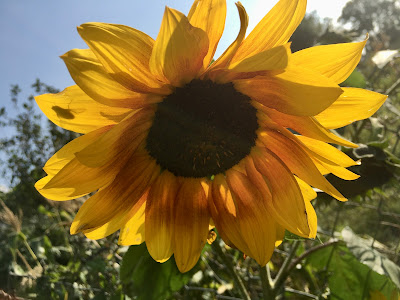
Unexpected sunflowers in our allotment garden last autumn

Craig every second Tuesday

Kia ora and gidday everyone. 

I hope you've had a good start to the year, even as we all continue to live through unprecedented times. It's hard to believe that we're coming up two years now dealing with a once-a-century pandemic that has upturned so much of life that we perhaps took a little for granted, whether it's international travel or being able to hug our friends or attend weddings or book festivals or concerts - or any events really, without stress or anxiety - pre-2020. 

I don't know about you, but I've found myself compartmentalising quite a bit over the past couple of years - trying to be really grateful for all the good things that I do have in my day-to-day life and not dwell too much on the many things that have been curtailed or lost. It can be a little overwhelming at times to think too much about the latter. 

A couple of things I've found really beneficial in the last couple of years is spending time in nature. Living in a big city like London now, I miss the natural surrounds that were easily at hand growing up in small-town New Zealand (beaches, forests, mountains, rivers, orchards and more all 15 mins or so drive from my suburban home). I miss the sea, I miss the mountains. But as my daughter has grown, and especially the past couple of years, we've spent more and more time exploring the nature we do have in London - whether riverside walks along the Thames, spending time in some cool parks, commons, and woodland areas in south London (eg Wimbledon Common), and also thanks to some friends we met, eventually creating our own rustic, rather wild garden area in a local allotment. 

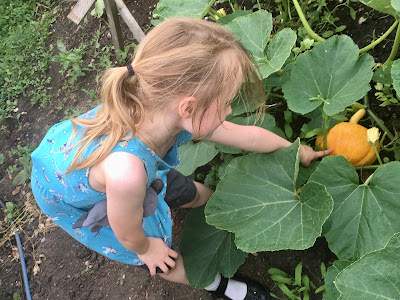
Miss Six is pleased with her 'pumpkin' (actually a Japanese squash)

After visiting our friends there regularly, having play dates and barbeques and helping with their produce in 2020 - allowable outdoors catch-ups during the pandemic - which was a great boon for the soul during tough times, last year we were offered the chance to have our own little patch. It was late in the planting season, but after working hard on the bindweed infested soil during the early summer, we planted a few things to see how they'd go (squash, pumpkins, tomatoes, a few sunflower plants etc), more using it as a test for next season than having any great hopes for lots of vegetables this time.

I remember thinking at the time about a saying I'd often heard or used in years past: 'plant seeds, pull weeds', talking about life in general and trying to take actions that may pay off later, and reduce or stop actions, habits or other things that may hurt later or are getting in the way. There was something therapeutic during the still-going pandemic to get my hands dirty, in the soil, literally pulling weeds and planting seed(ling)s. And it was really heartening when our pumpkin patch boomed beyond all expectations, and then later we got some late sunflowers - completely unexpected and very cheering. 

Physical work, nature, growth, learning. Lots to be grateful for. 

Finding ways to laugh and have fun each day

We've had lots of fun at the allotment, which feels like a wee oasis in our neighbourhood, close by yet somehow separate from the concrete jungle of the big city. Similarly it's been great to spend time nearly every day in local parks, as Miss Now-Seven and I have made 'nature walks' a commonplace thing (scenic detour on walks home from school or various extracurricular activities). Lately we haven't been doing much gardening in the allotment, as we pause over the winter a little before planning out what we're going to do for the coming seasons, but still enjoy hanging out there each week. 

Plant seeds, pull weeds. 

It's something worth doing in lots of areas of our lives. I've been plenty inconsistent on that front, so not trying to preach here, but along with the nature walks and allotment, lots of quality time with Miss Six-then-Seven, and a few other things that helped keep me sane in a very tumultuous year last year (a few personal things that I won't go into in much detail; suffice to say I deeply felt the distance from loved ones on the other side of the world in a way I hadn't previously, and time passing) - I did also plant a few other interesting seeds in 2021 that may flower rather wonderfully in the coming months. 

One that I can finally share publicly, as of last night: one of the coolest and most satisfying things I did in 2021 was play a wee part in terrific Māori screen storyteller Michael Bennett finding a home for his rather special debut crime novel, Better The Blood. You can read The Bookseller announcement here. 


This makes me feel really good on a number of levels - not just in terms of using some of my accumulated experience or connections to help someone else with their storytelling dreams, but in particular helping not just a talented Kiwi author but an indigenous author get notice and opportunities internationally. Over the 13 plus years I've been involved in crime fiction as a reviewer and features writer then events organiser, awards judge, festival chair, and occasional agent etc, I've increasingly become conscious of the need to bring a diverse array of voices into the genre we all love. 

And uplift them. Personally I think it makes crime and thriller fiction even better to have more and more writers of colour, LGBT+ storytellers, working class writers, translated authors, non-US/UK authors, and others involved and supported. So whether it's my reading, my writing, the events I'm involved with, or my advocacy, I'll be looking to support and celebrate a broad, inclusive genre. 

We're blessed with a startling array of crime and thriller writing nowadays. It's a great time to be a reader and fan of the genre. And that's another of the wee things that I've been thankful for the past couple of years, as we've dealt with so much real-life tumult. 

So whether it's gardens or nature walks or reading or time with your loved ones or whatever else it may be that you're using to get through these tough times, I hope that in the weeks and months ahead you can regularly enjoy some of those things. 

And maybe plant a few seeds and pull a few weeds along the way.

Thanks for reading. Until next time. Ka kite anō.

Whakataukī of the fortnight: 
Inspired by Zoe and her 'word of the week', I've been ending my fortnightly posts by sharing a whakataukī (Māori proverb), a pithy and poetic thought to mull on as we go through life.

He iti mokoroa e hinga pūriri

(A small mokoroa (grub) can fell a pūriri tree, ie small thjings can have great impact)

A mokoroa, the caterpillar of the Puriri moth which can chew through trees that grow up to 20m high


Wednesday, December 29, 2021

An Improvisational Year

Sujata Massey


The songs are playing day and night. Some of them are tentative, while others blow the dust off the steep wooden staircase. My son is home from college for the winter holidays and nestled in his third floor bedroom with all his electric guitars--and the amplifiers. The improvisations he makes seem endless. 


I felt as if I'd ridden up to the crescendo of a power rock ballad when the first dose of Moderna went into my arm. After the jab, a sweet slide of relief into feeling saved. Yet after the freedoms of late spring and early summer, the Delta variant, and now Omicron, are showing that I can't expect the world to do what I want for it.  


I could give up and live in a 'what we lost' world. But there is another choice.


According to the Cambridge English Dictionary, the primary meaning of 'improvisation' relates to creations of music, dance and theater. The secondary definition is described as "the act of making or doing something with whatever is available at the time."


I have the privilege of sheltering in a home that I own during this pandemic with the company of family and the support of other good people nearby. Surely that makes it easier to think positive. 


And yet, my mind turns to M.F.K. Fisher.


I count Mary Frances Kennedy Fisher, as she was named at birth, as one of my most important spirit guides. The barrier-breaking food writer (1908-1992), began with essays and memoirs in her 20s, when she left California to live in Europe. Fisher spent most of her life melding her literary talent with her affection for cooking and people. Her books make you want to feast and drink fine wines, but the reality is that her life was often excruciating. When her desperately ill husband died by suicide in the 1940s, she stayed in Europe, a single mother with a young child, and no obvious means of support. During this time she was always dancing on the edge of starvation, yet she found ways to feed herself and others, and wrote a hilarious book called How to Cook a Wolf with recipes for living this way that has been rediscovered and comforted yet another generation. As she writes in introduction, “War is a beastly business, it is true, but one proof that we are human is our ability to learn, even from it, how better to exist.” She goes on to say, “It is all a question of weeding out what you yourself like best to do, so that you can live most agreeably in a world full of an increasing number of disagreeable surprises.” 


I live agreeably, because I am in an old house that has settled around me over like bedsheets slowly warming.  It's an 1897 cedar-shingled summer cottage within a nine-block neighborhood within North Baltimore that was developed in the mid 1890s through the 1920s. This development, Tuxedo Park, adopted the name of an elite community in New York, although my Tuxedo Park always had considerably more plebeian occupants. The plot of land on which the house stands was bought by a woman, most likely because the developers wouldn't sell to her husband because he owned a saloon. Tuxedo Park was just a streetcar ride away from the business life of the city, including the rough-and-tumble harbor and bustling downtown.


It's my suspicion that dreams of outdoor socialization and leisure led to our house's grandest feature, a three-sided wrap-around porch, and two large upstairs porches and several balconies.

I've spent a lot of time writing on the private upstairs porches, but rarely used the wrap-around porch. In fact, I didn't even have furniture for it.


But this spring, I decided to set up the porch like a Victorian lady might have, with plenty of settees, chairs both for dining and lounging and a a variety of tables. Most of the shopping was accomplished from online sources recommended to me by an online designer at Decorist who provided color renderings showing where everything should go--including potted palms. I followed some of her shopping links and went to the crafters at Etsy and my storage room for other pieces--and to the garden for the four old handmade Adirondack chairs.


I wanted plants on the porch, which were part of the design, but I was nervous. I am comfortable with a garden full of native plants. I’ve never kept house plants, which are often exotics, alive for very long. So the first potted plants only arrived because they were gifts from friends. And these plants didn't need much tending; they shot up with new leaves, even with my off-and-on watering.


In midsummer, a neighbor held a moving sale, searching for new owners for the dozens of potted plants that she'd tended lovingly on her building's fire escape. I ambled over to her building with a small wagon and she agreed to sell me everything I wanted--and tossed in a few more plants for free. Gratefully, I wheeled away mature ficus and other friends, large and small, and best of all, already planted in ceramic pots with a soil blend that they liked. 


 Happily, the plants accepted their new home. Feeling more confident than expected, I bought some planters, potting soil, and a variety of big plants like palms and birds of paradise and citrus. Some of the plants I watered too much, and others seemed perennially thirsty. 


Yes--I still had to do actual yard work with plants that lived in the ground. I pulled Virginia creeper and English ivy and set my spouse to battle invasive mulberry and Rose of Sharon. In fall, I divided the proliferating native flowers and shrubs I've planted in fits and starts since 2014. Coincidentally, a friend dropped by with seedlings she had no time to plant. She was also touched by desire a not to let anything be wasted.


Now that I had an outdoor room, friends came over, singly or in pairs. Sharing some pie and a cup of tea felt as special as the multi-course candlelit dinners of the before times. I arranged a weatherproof dining table and chairs on the east side, which is so pleasant in the evening, especially under the fans. The fans and mosquito lamps were shut off in cooler weather, and the guests dwindled, although a last supper with Minnesota visitors bundled up in coats and hats, was fun. As we sipped mugs of soup and ate corn muffins, I thought maybe…this could happen again on a nice February day.  


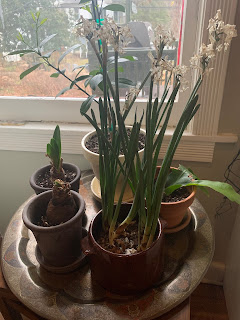
As summer’s warmth slipped away, I moved the plant family, now numbering 27 souls, from the porch into the house. I took an unused desktop computer off a kitchen table and loaded it with plants, which would get happy sun exposure all afternoon. More plants made a colony in the butler’s pantry with its west-facing windows. To make room, I had to re-home the vacuum and remember to take out the recycling bags--but all things considered, I'd rather look at plants than empty cans and crumpled newspaper.


I dove into the writings and photographs of a modern plant guru (Hilton Carter, who lives in the next neighborhood over!) and followed his directions to make cuttings from the most exuberant plants. Roots slowly grew. I also went into the basement and found old forgotten flower bulbs that had survived a few seasons in paper bags. I've planted the ones that I hope are tulips in the garden, and the ones that are clearly dormant amaryllis in pots indoors. 


I also converted a sunroom—which had been a storage room—back into a home for plants. How ironic that the architect's original purpose for the room would finally be restored. I wrote about how this sunny hideaway has nurtured me in a short essay for Femina Magazine. The sunroom is tiny, but it's an utter luxury to have two walls of windows with garden views, and seasonal theater starring birds, squirrels, rabbits, and the occasional fox.  


Most evenings, I hunger for an activity that was relaxing, yet doesn't involve the printed word, or a brightly lit screen. About once a week, I settle in a comfortable chair, bringing the lamp closer, and mend. Any sweater with moth bites is fair game, seized as well as pretty pillows that had been ravaged by the dog. The hardest repair project I undertook was my early 1960s fake-fox winter coat. I’d believed its fragile satin lining was irreparable, but I knew I could never find anything like it again. What else could I do but try?


I stitched together ripped seams and patched a hugely frayed section with a colorful scrap of fabric from my last trip to India. As I sewed, I remembered several friends I knew who were sewing masks at the start of the pandemic. I think of sewing, just like baking and gardening, as being quintessential pandemic activities. And I'm unashamed that my patches don't match the fabric. They stand out as memories of fall 2021.


The more I ponder it, the dictionary definition of improvisation seems rather limiting. I. notice that the word ‘improvise’ shares a linguistic connection to ‘improve.’


When Neel makes repeated changes in his playing, he becomes more skilled. Let him be the star. I'm happy enough to have learned to sew patches and grow a plant from a single leaf. 


On January 4 at 1 p.m. EST, Sujata will chat about the creative process and all manner of things with her good friend Naomi Hirahara, who also writes historical crime fiction with Asian characters, including the highly praised recent novel, Clark and Division. For a link to this free Zoom event sponsored by Penguin Random House, please register ahead of time.