--Susan, every other Sunday
As I prepare to hike the ancient Kumano Kodo Nakahechi pilgrimage for the third time (in November), my thoughts have already headed back toward the ancient trail through the mountains of Wakayama Prefecture, in southern Honshu.
The pilgrimage itself is one of two UNESCO World Heritage pilgrim trails (the other being the Camino Santiago, or Way of Saint James, in Spain), and the Nakahechi (central route) is marked by hundreds of Shinto and Buddhist holy sites and historic monuments. However, one in particular is also registered as a UNESCO World Heritage site in and of itself: the natural volcanic hot spring bath called tsubo-yu at Yunomine Onsen.
 |
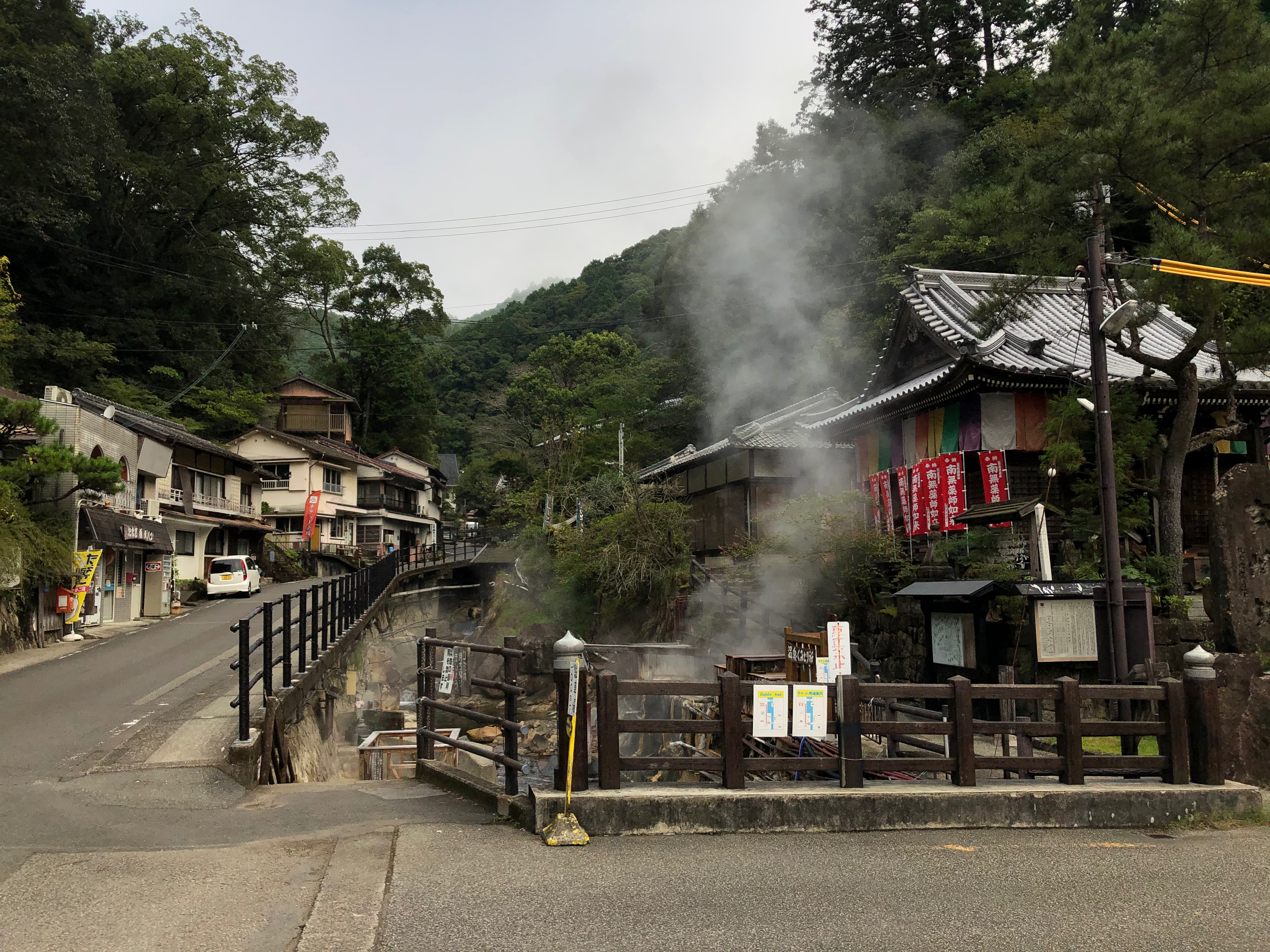
| Entering Yunomine Onsen Village from the Kumano Kodo |
The bath sits near the center of Yunomine Onsen, a little village tucked into the mountains of central Wakayama, about ten minutes by bus--or 90 minutes along the Kumano Kodo trail--from Kumano Hongu Taisha, one of the three grand shrines that were (and remain) the primary worship destinations of pilgrims walking the Kumano Kodo.
 |
| The north end of Yunomine Onsen |
The village center consists of one main street with a steaming river running down its center. The river emerges from the ground nearby, and has its source at the same volcanic spring that feeds Tsubo-yu.
 |
| Tsubo-tu - the UNESCO hot spring bath |
Tsubo-yu is located inside a small wooden hut near the head of the river; the hut itself is a later addition--traditionally, pilgrims took their turns inside the sulfurous, healing waters of the spring
au naturel. However, given that people always enter Japanese
onsen entirely nude, and that people in the modern era might be a bit more . . . concerned . . . about disrobing in the middle of town, with strangers walking by, the hut was built (many years ago) to offer a modicum of privacy.
.jpeg) |
| Yunomine Onsen |
.jpeg) |
| A temple near Tsubo-yu |
The same water that feeds the bath and the river is piped into the town's
onsen ryokan--traditional Japanese inns featuring onsen baths--so people don't have to bathe at Tsubo-yu to experience the sacred waters. In fact, the first time I visited, I didn't hike fast enough to visit the World Heritage bath before closing time, so I had to make do with the hotel version.
I didn't mind - and the water was wonderful - but when I hiked the Kumano Kodo for the second time, in 2020, I was determined to experience the
actual Tsubo-yu.
.jpeg) |
| The river is warm to the touch throughout the year - even in the snow! |
The river emerges from the ground at temperatures hot enough to boil eggs. In fact, there's a frame built over the water that people use to do just that. Locals and visitors alike use the river to boil eggs (and sometimes other things, like fish or vegetables). A nearby convenience store even sells raw eggs in mesh bags that people can use to boil them in the river.
 |
| The egg-boiling spot |
.jpeg) |
| Another shot of the place to boil eggs, with the volcanic river running past. |
Tsubo-yu is so small that only a single visitor (or a couple) can use the bath at once. To use it, you buy a ticket from the little shop across the road (which costs only a couple of dollars) and obtain a numbered ticket that indicates your place in line. The ticket (which costs the equivalent of about $6 US) entitles you to thirty minutes in the bathing shed.
When the tickets for the day sell out, the window closes sales--no matter what time it is!
In October 2020, with the Japanese borders closed, there was no wait - when I bought my ticket, late in the afternoon, I was number 1! (In fairness, they reset the numbers when no one is using the bath, so I don't know whether anyone used it earlier in the day.)
I hurried across the street and into the little wooden shed. The air was filled with steam, and the scent of sulfur, from the volcanic spring.
 |
| The entrance to Tsubo-yu |
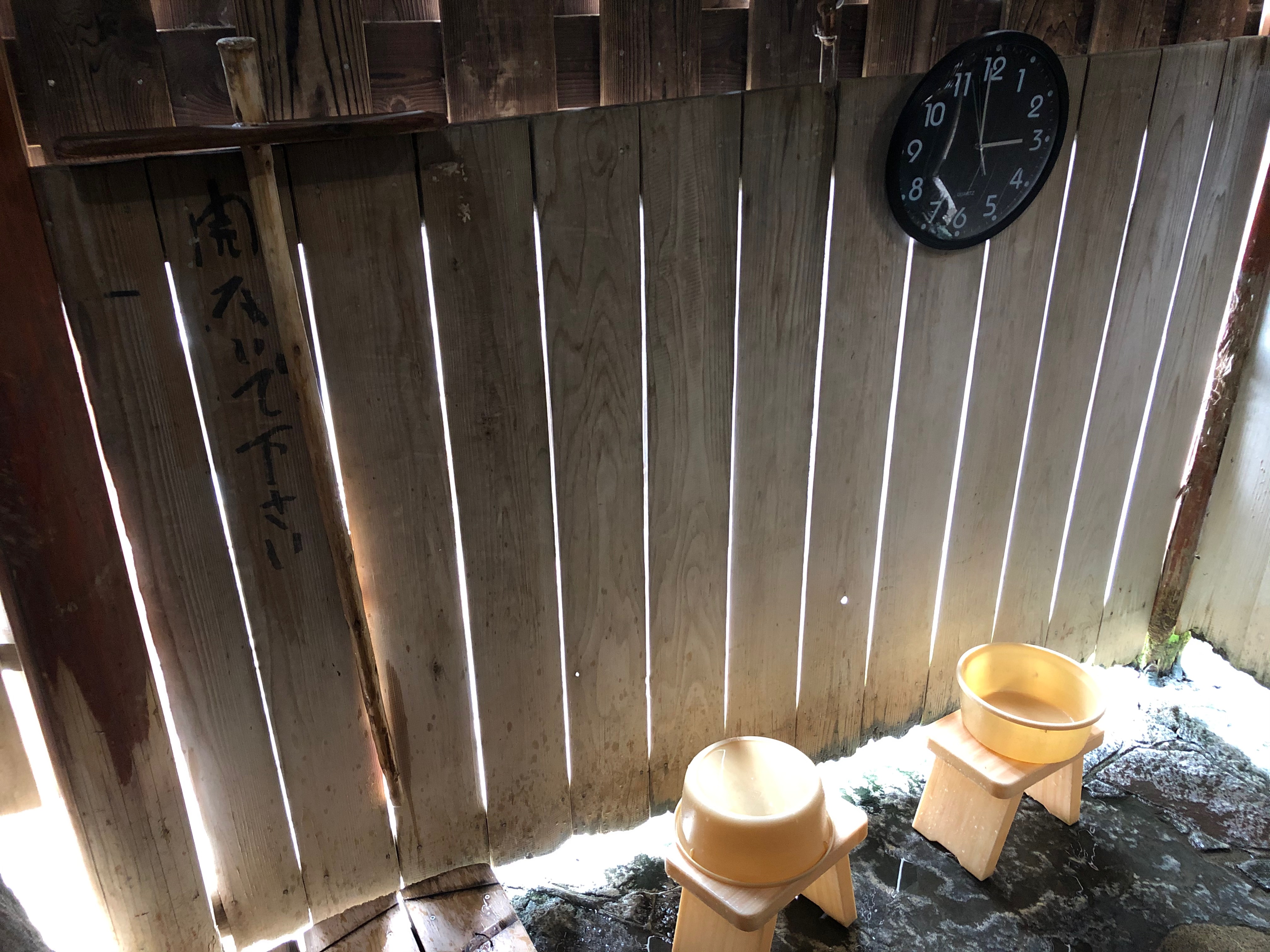
A pair of little stools at the bottom of the stairs provide a place for visitors to sit and wash their bodies and hair before entering the bath. In Japan, baths are for soaking in only
after you're already thoroughly clean.
 |
| The walls don't quite go all the way down... |
The walls of the wooden hut are raised a little above the ground, because the water from the spring is constantly overflowing and running down to join the river.
The bath itself is about the size of a large bathtub. The water - which is scalding hot - is slightly opaque from the minerals it contains. Before bathing, you add cold spring water using the green-handled spigot on the wall (near the center of the frame) and mix it using a wooden paddle until the bath reaches a comfortable temperature. (It overflows enough to heat up again in about ten minutes - long enough for a person to soak until it gets too warm, and then to heat up the rest of the way while one bather is dressing and leaving, so it's fresh and hot for everyone.)
.jpeg) |
| Tsubo-yu |
Local history says the waters of Tsubo-yu have healing properties that border on magical--and while I can't speak to the magical part, I can attest that they did a great job of relaxing my trail-weary muscles and energizing me for the next day's hike.
It's also said the water changes color seven times each day--which I also did not observe, but I'll report back after this year's hike and let you know if it looks different when I visit the bath this time!



.jpeg)
.jpeg)
.jpeg)

.jpeg)

.jpeg)





