
‘Create and Keep a Reader’

Corporate purpose:‘Rather than merely making money, it is to create and keep a customer.’ Theodore Levitt
Some years ago, I came across the work of Harvard Business School professor, Theodore Levitt. He was a German-born American economist and editor of the Harvard Business Review. Among his other achievements
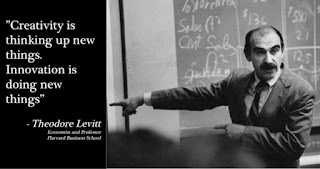
Henry Ford's genius
Henry Ford is credited with inventing the first mass-production line for his cars. In fact, his real genius was looking at what his customers—or potential customers—wanted and

Likewise, the petroleum industry is really in the energy business, whether that incorporated gas, nuclear, solar, or geothermal energy. To cling to the past will ensure that new giants emerge and eventually kick the old giants to the
The long and the short of it is, if you think of yourself as producing a product rather than satisfying a customer, you are eventually doomed to failure.

But the most remarkable thing about all this is that Theodore Levitt wrote Marketing Myopia in 1960. It seems very little has been learned since then.
TV and the Movies
A website called Digital Marketing summarized
Writer of books or teller of tales?
That brings me to authors and books. To me I am not a producer of books, I am a teller of stories. How people absorb those stories is almost immaterial—it could be via hardcover, paperback, car stereo, MP3 download, iPod, Kindle, tablet, PC, smartphone, or cortical implant—and I can see that happening in my lifetime, I can tell you. At the end of the
I think, at the start of the digital revolution—when eBooks first started to take off—there was a bit of a backlash from some traditional publishers who saw themselves as producers of books rather than providers of stories. They argued that eBooks would kill publishing. Ten or eleven years later, the number of authors, and stories published, has increased enormously.
Initially, the advent of indie publishing meant that authors were free to write what they fancied, rather than what the publishers saw as the most profitable genres. Cream tended to rise to the top, and good books—or those that filled a hitherto unplugged gap in the market—did amazingly well.
Too much of a good thing?
The
In bookstores in the States, I was always taken aback by the number of categories and genres into which books were divided up. In the UK it tended to be Crime & Thriller and True Crime. In the USA there were far more to go at, from Cosy (or should that be Cozy?) to Hardboiled to Noir to PI, Police Procedural to Amateur Sleuth, Woman-in-Jeopardy, Serial Killer, Bodyguard, Vigilante, Investigative Reporter, Slasher/Shocker … the list is endless.

And that does not include all the crossover titles, with vampire detectives, werewolf private eyes, ghosts, zombies, witches, wizards
This all leaves me with some interesting questions. Who or what is leading the market now? With such a wealth and breadth of cross-genres and sub-genres out there, are readers finding more of exactly what they want (even if previously it fell between the cracks of established categories) or less?
Do you feel mainstream crime books are tending to crowd into a
What do YOU, as a reader, want to read?
Writer’s purpose:‘Rather than writing books, it is to create and keep a reader.’
This week’s Word of the Week is





