Fix an answer to that question in your mind. You think you know what police officers get paid to do, right? If you ask a police officer anywhere in the United States, the most likely response will be, "To Protect and Serve." That's what they are there for, right? We call them "law enforcement." So they are supposed to enforce the law, right? Think again.

Here is a scene right out of a crime novel:
On his way to work one morning, a guy named Joe gets on to the New York City subway at Penn Station. He is in the first car--right at the front, where there is a motorman's compartment. He takes a seat. Two police officers board the train after him and go into the compartment with the motorman and after a brief delay the train begins to move, but very slowly.
Joe is minding his own business. Eventually, a kinda dirty, dishevelled guy comes and bangs on the compartment door. Someone inside says. "Who's there?"
"The police," he answers. "No, you're not. We're the police," comes the response.

The dishevelled guy pulls a knife--a big one, turns on Joe and says, "You are going to die." And proceeds to start slashing Joe. On his head, his neck, his face, his arms. Joe struggles and somehow manages to topple his attacker and disarm him. Another passenger comes to Joe's aide. Joe is bleeding so profusely he can't see.
At that point, and not until then, the cops come out of the compartment and tell Joe he can stop struggling against his attacker. They have him.
Typical of New York, right? A novel or TV show script that began like this would likely never sell. Trite. Right?

This could be the beginning of a thriller, but unfortunately, it is a true story that took only hours to end. The woman knows her ex has those girls. She calls the police, who tell her that she shouldn't worry. This sort of thing happens. She insists to no avail. She calls them three more times. At around one in the morning, she goes to police station to beg for help. Nada.
Just after 3 AM, Simon--the father--shows up at the police station and starts shooting at the cops, presumably because he wants them to kill him. They do. They have to defend themselves, right?
They then found the corpses of the three girls in their now-dead father's car.
Horrifying. Absolutely horrifying.
What were the cops thinking? Well, as it happens, what they were thinking has a bearing on the outcomes of what came next in both cases. You see Joe Lozito and Jessica Lenahan-Gonzales both brought law suits Against the police for not doing their duty.
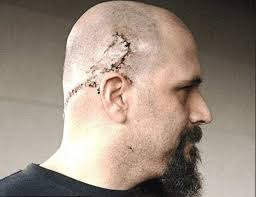
Joe's case was thrown out of court despite the fact that the man who attacked him was known to be somewhere in the subway, had killed four people the day before, was the target of a city-wide manhunt, and another passenger had recognized the killer and had also knocked on the compartment door to report that fact. The judge refused the case because "No direct promises for protection were made to Mr. Lozito...Therefore, a special duty did not exist."


The problem behind all this stems from the fact that, in the US, police officers do not have clear job descriptions. They are never given a clear definition of what their job is. They get marching orders that usually sound like this: Protect the peace. Maintain order. Enforce the law. There are piecemeal laws in some states and a string of court decision that can be used as precedents. But as we all know, a great number of precedents wind up perpetuating bad jugements.
What would Joe and Jessica have to have done to make the police responsible? First, the person wanting protection must ask the police officer directly for that protection. Then, the police officer must agree to provide it. Third, the police officer must acknowledge the fact that if he or she does not protect you, you will come to harm. Then, the person needing the protection must show, in their behavior, that they are relying on police protection.

So, if you are planning on getting mugged or you think your kids might be kidnapped--or whatever trouble you think you might have in which you might need to call on the police to help you, be sure to get all these ducks in a row BEFORE you get into danger. Then if the police are derelict in their duty, you can take them to court.
Even if they had won their cases, Joe would still have scars on his body and on his psyche. And Jessica... I cannot bear to think about her.
Credit: Radio Lab inspired this post. You can find this episode here:
https://www.wnycstudios.org/podcasts/radiolab/articles/no-special-duty
If you want to sound really smart and have lots to contribute to conversations, listen to Radio Lab. I regularly offer information I learn by listening and therefore am able to come across as pretty convincing. Thank you RL!