Showing posts with label Pinocchio. Show all posts

Saturday, August 12, 2023

Pinocchio, Pinocchio, Where Art Thou?


Jeff—Saturday

Who "nose" would be the obvious pun of an answer to the title question, dear reader, but we all know I would never stoop to such low-brow efforts at humor.
 
Can you see my nose growing? 
 
Well, if it is, I'll only be in fashion, because here's a post I wrote six and a half years ago that reads as if I penned it today.  That being the case....and memories being what they are...I decided to run it again. So, here goes.                                                                                                         
For those of you who want to know what’s happening in the world today, just shut your eyes. Your ears too, because what you see and what you hear doesn’t really seem to matter much anymore. What counts these days is whatever turns agendas—political and otherwise—into realities.

All of which brings me around to the subject of this week’s post: Pinocchio.


An epic character, perhaps the most well known character in children’s literature, who stands as a universal symbol of the perils of prevarication to one’s proboscis.

Carlo Collodi
It all began with The Adventures of Pinocchio (1883) a children’s novel by the Italian writer Carlo Collodi, in which a kindly old carpenter, Geppetto, carves a marionette in the image of a little boy who lives a literal wooden existence dreaming that someday he’ll be human.  But between him and his dream stand a series of trials and a singular moral defect: Pinocchio’s penchant for lying and bad behavior.


Though some literary types have equated Pinocchio’s journey with that of epic literary heroes such as Odysseus, I think for purposes of today’s post it’s better described by Jack Zipes in an introduction to a book on Pinocchio, titled Carlo Collodi.  To him, it’s a story about those who venture out into the world naively unprepared for what they find, and get into ridiculous situations.


Enter the “nose knows.”


Alas, if only we had as ready a way of separating truth tellers from charlatans today.

But there’s another lesson to be drawn from Pinocchio.

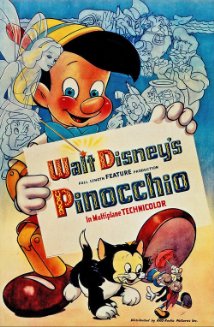
The list of Pinocchio productions and knock-offs is endless, but undoubtedly Walt Disney’s 1940 version, praised as one of the greatest animated films of all time, is the most well known. 


What isn’t as well known is that, as originally written, Pinocchio was an obnoxious boor, whose end was not intended to be pleasant.  Disney though didn’t see that sort of character as appealing to the masses, and so he turned him into a more likeable, innocent mischief-maker, who ultimately achieved his dream of becoming real.


Today’s opinion-shapers still turn the obnoxious into the likeable, and far-fetched cinematic dreams into realities, but they’ve have added something else to the mix.  They’ve turned the common sense adage for truth—“As plain as the nose on your face”—on its ear (so to speak) by libeling any nose other than their own as a Pinocchio protuberance, not to be believed.


In other words, we now live in a world where up is down and down is up.  But that’s from another children’s book, for another time.

Assuming we get there.

—Jeff
 
 Jeff's Upcoming Events


Saturday, February 4, 2023

Pinocchio, Pinocchio, Where Art Thou.


Jeff—Saturday

It's been a long and hectic week.  It began with a letter I received on Monday that my farm would be inspected on Tuesday by the powers that be over New Jersey woodlands.  It's an event that takes place every three years, but this year it landed smack dab in the middle of a frantic effort by my-bride-the-artist to repaint and redecorate our bedrooms in advance of an Icelandic friend arriving for an overnight stay on Thursday.  
 
All of which was preceded by desperate efforts at getting to the bottom of our septic system problems–both figuratively and literally.  After having dug up the mega tank, and replaced two non-functioning floats, it still wasn't working correctly. So, it was on to scoping out the entire system with a camera searching for the source of the problem.  No such luck. 
 
We were left with replacing three toilets.  Which we did on Monday, then came Tuesday, and they still weren't working. Then came Wednesday and all but one was working–the one for the guest room.  So, on to Thursday, and with abject fear (on my part) as the driving motivation for our toileting efforts, all was working just before our guest arrived. 

The visit was wonderful, and included making a new friend from Montreal.  Soon after our guests left on Friday, I settled down to write my post for Saturday.  By then the outside temperature had dropped to 6 Fahrenheit, and the windchill had it down to -6F. but I was cozy in my office.
 

Or so I thought.  That's when I learned our Internet wasn't working.  It took close to three hours to get it up and running (sort of).  And just as I returned to my blog, a wild gust of wind tore a downspout off the second story roof, sending it careening across the roof and along the ground to lodge under our car.  Now I'd have to crawl out onto the roof in F'n (not an abbreviation for Fahrenheit this time) sub-zero weather to tar over any damaged spots to the roof and reattach the downspout. 

That scenario was vetoed by my bride.

So, I sat down once more to write the post, afraid somewhat to touch the keys out of fear for what might befall me next. I thought to pick an uplifting topic...a hard thing to find in the news today. Instead, I reached back to an earlier time, when my feelings about what's going on in the world were about the same as they are now.
 
Here's hoping the Internet gods will allow this to post.   

                                            *****
 
For those of you who want to know what’s happening in the world today, just shut your eyes. Your ears too, because what you see and what you hear doesn’t really seem to matter much anymore. What counts these days is whatever turns agendas—political and otherwise—into realities.

All of which brings me around to the subject of this week’s post: Pinocchio.


An epic character, perhaps the most well known character in children’s literature, who stands as a universal symbol of the perils of prevarication to one’s proboscis.

Carlo Collodi
It all began with The Adventures of Pinocchio (1883) a children’s novel by the Italian writer Carlo Collodi, in which a kindly old carpenter, Geppetto, carves a marionette in the image of a little boy who lives a literal wooden existence dreaming that someday he’ll be human.  But between him and his dream stand a series of trials and a singular moral defect: Pinocchio’s penchant for lying and bad behavior.


Though some literary types have equated Pinocchio’s journey with that of epic literary heroes such as Odysseus, I think for purposes of today’s post it’s better described by Jack Zipes in an introduction to a book on Pinocchio, titled Carlo Collodi.  To him, it’s a story about those who venture out into the world naively unprepared for what they find, and get into ridiculous situations.


Enter the “nose knows.”


Alas, if only we had as ready a way of separating truth tellers from charlatans today.

But there’s another lesson to be drawn from Pinocchio.

The list of Pinocchio productions and knock-offs is endless, but undoubtedly Walt Disney’s 1940 version, praised as one of the greatest animated films of all time, is the most well known. 


What isn’t as well known is that, as originally written, Pinocchio was an obnoxious boor, whose end was not intended to be pleasant.  Disney though didn’t see that sort of character as appealing to the masses, and so he turned him into a more likeable, innocent mischief-maker, who ultimately achieved his dream of becoming real.


Today’s opinion-shapers still turn the obnoxious into the likeable, and far-fetched cinematic dreams into realities, but they’ve have added something else to the mix.  They’ve turned the common sense adage for truth—“As plain as the nose on your face”—on its ear (so to speak) by libeling any nose other than their own as a Pinocchio protuberance, not to be believed.


In other words, we now live in a world where up is down and down is up.  But that’s from another children’s book, for another time.

Assuming we get there.

—Jeff

Saturday, February 25, 2017

What We Can Learn From Pinocchio


Jeff—Saturday

For those of you who want to know what’s happening in the world today, just shut your eyes. Your ears too, because what you see and what you hear doesn’t really seem to matter much anymore. What counts these days is whatever turns agendas—political and otherwise—into realities.

All of which brings me around to the subject of this week’s post: Pinocchio.


An epic character, perhaps the most well known character in children’s literature, who stands as a universal symbol of the perils of prevarication to one’s proboscis.

Carlo Collodi
It all began with The Adventures of Pinocchio (1883) a children’s novel by the Italian writer Carlo Collodi, in which a kindly old carpenter, Geppetto, carves a marionette in the image of a little boy who lives a literal wooden existence dreaming that someday he’ll be human.  But between him and his dream stand a series of trials and a singular moral defect: Pinocchio’s penchant for lying and bad behavior.


Though some literary types have equated Pinocchio’s journey with that of epic literary heroes such as Odysseus, I think for purposes of today’s post it’s better described by Jack Zipes in an introduction to a book on Pinocchio, titled Carlo Collodi.  To him, it’s a story about those who venture out into the world naively unprepared for what they find, and get into ridiculous situations.


Enter the “nose knows.”


Alas, if only we had as ready a way of separating truth tellers from charlatans today.

But there’s another lesson to be drawn from Pinocchio.

The list of Pinocchio productions and knock-offs is endless, but undoubtedly Walt Disney’s 1940 version, praised as one of the greatest animated films of all time, is the most well known. 


What isn’t as well known is that, as originally written, Pinocchio was an obnoxious boor, whose end was not intended to be pleasant.  Disney though didn’t see that sort of character as appealing to the masses, and so he turned him into a more likeable, innocent mischief-maker, who ultimately achieved his dream of becoming real.


Today’s opinion-shapers still turn the obnoxious into the likeable, and far-fetched cinematic dreams into realities, but they’ve have added something else to the mix.  They’ve turned the common sense adage for truth—“As plain as the nose on your face”—on its ear (so to speak) by libeling any nose other than their own as a Pinocchio protuberance, not to be believed.


In other words, we now live in a world where up is down and down is up.  But that’s from another children’s book, for another time.

Assuming we get there.

—Jeff


Saturday, January 17, 2015

Greece's Electorate in Search of Pinocchio


A week from tomorrow the Greeks go to the polls in “snap” parliamentary elections, brought on more than a year early because their current Parliament could not agree on a new, strictly ceremonial President to replace the one whose term expires at the end of this month. 

Greece's Parliament Building

I’ve avoided writing anything more on the subject than a passing observation or two, mainly because I’m not one given to voyeuristic urges that transfix so many onto disasters in the making.  But I write about Greece, and with the world’s media focused on those parliamentary elections, how could I not offer my observations?  
 
To me, the January 25th Greek elections are akin to watching a speck on the horizon, slowly but inevitably turn into a bumper-to-bumper parade of awkward buses, barreling down a racetrack straightaway toward a clearly marked hairpin turn. 


So, let me start out with my bottom line: Based upon what I’ve read and heard first-hand from respected, knowledgeable journalists and political-attuned sources, it appears the election will yield positive results for Greece only if the likely winner has been lying to Greece’s voters for years about his party’s seminal goals when he comes to power.

Ouch.


The decline of the Euro has the US dollar up to $1.15 against the euro, a drop in the euro of approximately 17% from a year ago to a nine-year (at least) low.  Blame for that, and any number of other financial surges and declines is laid at the feet of anxiety generated by the Greek elections, claiming those results portend the future of the European Union. 


Hyperbole?  Probably—though I know hedge funds of the vulture sort are busily planning for ways to profit off what follows Greece’s elections, a vote billed as perhaps the country’s most significant election since the end of World War II.  Hyperbole again?  Only time will tell.

Current party makeup of Parliament

According to Reuters and Bloomberg, polls taken a few days ago (by pollster Alco) show that the two parties now comprising Greece’s coalition government (New Democracy and PASOK) will not garner enough votes to keep their coalition alive. New Democracy is characterized as center-right, PASOK as center-left, but in the minds of most voters, “a plague on both their houses;” because one or the other of those parties has been in power since the mid-1970s.  That makes them easy targets for a highly dissatisfied electorate and those anxious to replace them in power.

All polls predict that the party most likely to draw the most votes is SYRIZA, an amalgam of far-left parties of disparate philosophies.  The voter-attracting cry of SYRIZA and its charismatic leader, Alexis Tsipras, is a promise to renounce the onerous conditions of the EU-ECB-IMF 240-billion Euro bailout of Greece, “force” a major reduction of the owed loan amount, and restore pensions and jobs.  Thus far, the Troika’s reply has been, “no-way,” and sabers are rattling that should SYRIZA follow that course it will lead to Greece’s exit from the Euro-zone–­–as legally complex and seemingly unachievable as that may appear.  “Catastrophe” is the word most heard from clear-thinking Greeks should that scenario come to pass.

Leader of SYRIZA
All of which has triggered stories in the press—and anecdotal reports of informal, private conversations––with SYRIZA party leaders assuring influential, financially skeptical folks that their leader doesn’t really mean what he’s saying, for he realizes exiting the Euro would inflict economic chaos upon the country. 

In other words––wink, wink––don’t worry it’s just a politician saying what he must to get elected.   On the other hand, New Democracy’s pronouncements of financial gains have been substantially undercut by recently released actual figures.  All this, in a country reeling from a chronic unemployment rate greater than that of the US’s Great Depression era.  Anger is endemic, protest votes likely, and at least 10.6 % of the country’s 9.8 million voters are still undecided.

Leader of New Democracy

The common wisdom (?) is that neither of the top two finishers will be able to form a government on its own.  According to that same Alco poll, SYRIZA is predicted to draw 3.5 % more of the vote than New Democracy (32.4% to 28.9%), though there are polls out there showing the lead anywhere from one-half to more than twice that 3.5%––but all show SYRIZA ahead.

The actual percentage of cast votes needed for a party to control Parliament is not 50% of the overall vote, because Greek law (a) awards the winning party 50 of the 300 seats in parliament, and (b) disqualifies parties gaining less than 3% of the vote from holding seats in Parliament, before dividing up the balance of the seats.  All of which means it will likely take between 36 and 38% of the popular vote for the #1 vote-getting party to control parliament.

Parliament in session.
The big parlor-game question around Greek tables is, assuming SYRIZA wins without receiving an outright majority, with whom will it partner to reach that magic 36-38% of the popular vote?   

Retiring Greek President
If you’re really into arcane Catch-22 conundrums, Greek constitutional procedure gives the second and third largest vote-drawing parties a turn at attempting to form a government should the party ranking above it fail to do so.  Once a government is formed it must present itself to the President. Yes, the same president that Parliament failed to elect, thereby precipitating these elections.  So, what happens if a new government is not formed before the current president’s term expires at the end of this month? That question has constitutional lawyers tossing in their sleep.

But the biggest procedural nightmare facing Greece as it struggles to find its economic footing is that no party is able to form a government, thereby requiring that the election process go forward again…and again…until one is formed.

So, who might those coalition partners be?

According to the Alco poll, there’s a real horserace underway for third position, and all sorts of speculation on potential partners to reach that 151-seat magic number.  One scenario you will not see is SYRIZA and New Democracy holding hands together in a coalition government. There’s a better chance of The Tea Party embracing President Obama.

A different, earlier poll.

Here are potential coalition partners and their estimated percent of the vote.  Each one offers an interesting dynamic, whether good, bad, or very, very bad is yet to be seen.

5.1%    To Potami (The River), a recently formed Centrist Party and the most likely party to partner with SYRIZA despite rhetoric by each to the contrary…for it offers SYRIZA a cover story to pitch to its supporters for why it had to change its position on a hard confrontation with the Troika.

5.0%    Chrysi Avgi (Golden Dawn), the far-right Nazi party with its leadership in jail.  Hard to imagine New Democracy or SYRIZA partnering with Golden Dawn, but protest votes, and the splitting of votes among otherwise more moderate parties, gives it a chance of finishing #3.

4.0%    KKE, the communist party, and one openly courted by SYRIZA to be its partner.

3.6%    PASOK, governed during the debt crisis until 2012, but not likely to give SYRIZA the votes it needs even if the two could learn to play nice with one another.

Former PASOK Prime Minister saying, "There is money."
Under 3%        A group of parties, totaling 9.1% of the vote, includes the party of the former head of PASOK who resigned as Prime Minister during the crisis only to surprise the country with the announcement two-weeks ago that he’d formed a new party.  His reasons for doing so are likely known only to himself, but his decision has provided endless fodder for speculation among Greeks notorious for seeing a conspiracy in the number of raisins in a cereal box.

I wish I had an opinion, let alone an answer, to offer on how all this will turn out, but not one objective observer seems to have good news for the passengers onboard those buses roaring into that hairpin turn––that is, assuming their drivers stick to their avowed plans for negotiating their way through it. 


Funny, isn’t it, how so many who care about Greece are now praying for its politicians to be liars?


Jeff—Saturday