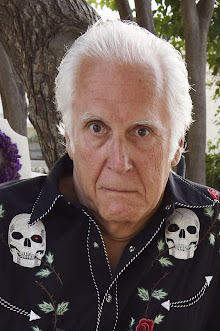
Jeff—Saturday
I was going to do a comedy piece about what people like to read
about and what people don’t like to read about. For instance, people don’t like
to read about the Greek crisis—they’re tired of it. People don’t like to read about other
people’s grandchildren—because they’re other people’s grandchildren. People do
like to read about Donald Trump—because they’re fascinated by impending train
wrecks even though no one knows yet who the inevitable victims will be.
But then I read the following article by Lina Giannarou prominently displayed as an "Editor's Pick" in Ekathimerini, Greece’s equivalent of The New York Times. I emphasize it is a significant Greece-based
paper—albeit not the favorite of the current ruling government coalition—because
it is a story of a 75-year-old German scholar of Greek history being prosecuted
by the Greek government under new “anti-racism legislation” for his differing
take on World War II events from the version celebrated by the Greek people. He
is on trial at this very moment for taking a position on history that the government
does not like.

By the way, Professor Richter has received an Honorary Ph.D from
the University of Crete, and The Gold Cross of the Order of The Greek Phoenix
from the Greek President for “services to Greek history.”

I wonder what they’d do to a fiction writer who writes novels
that seem to come true on less than complimentary issues, burn him at the
stake? Hopefully not, sunburn is painful
enough.
By the way, if they’d simply ignored the book I can’t imagine it
would have attracted the attention it now has.
But that’s an old story. Here’s
the new story:
“I have
been visiting Greece since 1958 and it has become like a second home to me. For
45 years, I have worked as a scholar on Greek history and for over 30 years on
Cypriot history. There is no one in Western Europe who has done more for Greece
than me. And now this.”
Heinz
Richter makes no secret of his bitterness. It’s hard to blame him. He is German
but the country which he has dedicated most of his life to is dragging him to
court. Some have gone as far as to call him a Nazi.
It all started last year when the University of Crete decided to honor the 75-year-old former professor of Greek and Cypriot modern history at the University of Mannheim by awarding him an honorary doctorate. His critics, offended by his 2011 work “Operation Mercury: The Invasion of Crete,” in which he debunked some charming myths about resistance on the island during WWII, were quick to cry foul.
It all started last year when the University of Crete decided to honor the 75-year-old former professor of Greek and Cypriot modern history at the University of Mannheim by awarding him an honorary doctorate. His critics, offended by his 2011 work “Operation Mercury: The Invasion of Crete,” in which he debunked some charming myths about resistance on the island during WWII, were quick to cry foul.
 |
| University of Crete |
Protesters, led by former chief of the National Defense General Staff Manousos
Paragioudakis, ruined the event (Richter actually received the award a few days
later). Furthermore, he was charged by a Rethymno prosecutor with “denial of
defamatory nature of the Nazi crimes committed against the Cretan people.” It
was the first time that an individual had been charged under anti-racism
legislation introduced in Greece the previous year.
One of the charges Richter faces is that he belittled the Cretan resistance, describing it as “dirty.”
“It wasn’t just ancient Greece that was full of myths; modern Greece has its own myths too,” he says. “It is true that at the beginning Cretan irregulars attacked and killed wounded parachutists – after all, early on there was no organized resistance. The Germans reacted by taking reprisals. I wrote that until Operation Mercury, WWII had been a ‘clean’ war in which neither side committed war crimes but respected the international rules of war [Hague Conventions]. But when attacks by noncombatants and reprisals began, the war became ‘dirty,’ i.e. the participants no longer obeyed the rules of war. This is the view of international historiography. Whoever has read my book on the occupation of Greece knows that I sympathize with the resistance movement and I condemn reprisals.”
Debunking the myth
Another popular myth, according to Richter, is that Hitler lost the war because Greeks resisted German forces for six weeks, thus delaying Berlin’s attack on Moscow. In “Greece in World War II” I analyzed and rejected this story. I was even able to trace the myth’s origin: A speech delivered by the British Foreign Secretary Anthony Eden in October 1941. International historical research comes to the same conclusion. Neither [Operation] Marita [the invasion of Greece by Germany in April 1941] nor [Operation] Merkur [the seizure of Crete by German paratroopers in May 1941] had any influence on [Operation] Barbarossa [Germany’s invasion of the Soviet Union in June 1941],” he says.
Richter’s interest in Greece began when he visited the country for the first time in 1958. “I walked from Edessa to Ioannina along muletracks. I came in contact with people who spoke about the occupation and the Civil War. I saw ruins of villages destroyed by the Italians, the Germans, the Nationalists and the Communists,” he says.
After completing his studies (history political science and Anglistics) at Heidelberg, he started a PhD on the history of Greece in WWII. “I lived in Athens for one year during the junta (1967/68). Seeing fascism in action again I learned my lesson and since then I have been a convinced active democrat,” he says. Richter became a philhellene but not an “ellinolatris” – someone who loves Greece unquestioningly.
“For me, Greece became a second homeland,’” he says. “As a historian, I am obliged to speak the truth and I have always tried to stick to this principle. Of course I encountered criticism but this is normal and under normal circumstances it leads to scholarly discussions and perhaps to a scientific controversy. But never in my life had I been dragged to court. The historical truth is not a subject of the judicial system. If courts decided what the historical truth was that would be the end of scientific historiography.”
For what it’s worth, he gave his daughter a Greek name, “Danae.”
The trial is ongoing.
One of the charges Richter faces is that he belittled the Cretan resistance, describing it as “dirty.”
“It wasn’t just ancient Greece that was full of myths; modern Greece has its own myths too,” he says. “It is true that at the beginning Cretan irregulars attacked and killed wounded parachutists – after all, early on there was no organized resistance. The Germans reacted by taking reprisals. I wrote that until Operation Mercury, WWII had been a ‘clean’ war in which neither side committed war crimes but respected the international rules of war [Hague Conventions]. But when attacks by noncombatants and reprisals began, the war became ‘dirty,’ i.e. the participants no longer obeyed the rules of war. This is the view of international historiography. Whoever has read my book on the occupation of Greece knows that I sympathize with the resistance movement and I condemn reprisals.”
Debunking the myth
Another popular myth, according to Richter, is that Hitler lost the war because Greeks resisted German forces for six weeks, thus delaying Berlin’s attack on Moscow. In “Greece in World War II” I analyzed and rejected this story. I was even able to trace the myth’s origin: A speech delivered by the British Foreign Secretary Anthony Eden in October 1941. International historical research comes to the same conclusion. Neither [Operation] Marita [the invasion of Greece by Germany in April 1941] nor [Operation] Merkur [the seizure of Crete by German paratroopers in May 1941] had any influence on [Operation] Barbarossa [Germany’s invasion of the Soviet Union in June 1941],” he says.
Richter’s interest in Greece began when he visited the country for the first time in 1958. “I walked from Edessa to Ioannina along muletracks. I came in contact with people who spoke about the occupation and the Civil War. I saw ruins of villages destroyed by the Italians, the Germans, the Nationalists and the Communists,” he says.
After completing his studies (history political science and Anglistics) at Heidelberg, he started a PhD on the history of Greece in WWII. “I lived in Athens for one year during the junta (1967/68). Seeing fascism in action again I learned my lesson and since then I have been a convinced active democrat,” he says. Richter became a philhellene but not an “ellinolatris” – someone who loves Greece unquestioningly.
“For me, Greece became a second homeland,’” he says. “As a historian, I am obliged to speak the truth and I have always tried to stick to this principle. Of course I encountered criticism but this is normal and under normal circumstances it leads to scholarly discussions and perhaps to a scientific controversy. But never in my life had I been dragged to court. The historical truth is not a subject of the judicial system. If courts decided what the historical truth was that would be the end of scientific historiography.”
For what it’s worth, he gave his daughter a Greek name, “Danae.”
The trial is ongoing.
I wonder how the prosecutor will react to the ending I’m
working on for the next Andreas Kaldis book. Perhaps I should send him an ARC? Nah, I’ve seen enough courtrooms for a
lifetime.
—Jeff