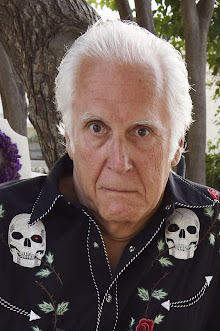
No. Not that Patterson. This Patterson is Lt. Col. John Henry Patterson, who was commissioned, in 1898, to build a railroad bridge over the Tsavo river in the Protectorate of British East Africa, now Kenya. This project was part of the building of the Lunatic Line, the subject of a couple of my previous posts.

Patterson was not an engineer. He had joined the British Army at the age of
seventeen, having only whatever education was available in County Westmeath,
Ireland for a lad like him—the son of a Protestant father and a Roman Catholic
mother. That heritage may account for
the sang-froid and fearless determination he exhibited in the trackless African
wilderness of the time.

Patterson’s work on the bridge had barely begun when a
couple of the area’s maneless male lions began attacking his Indian workers,
dragging them from their tents as they slept. Building thorn-bush enclosures and bonfires
in the night did not stay the beasts.
After a few deaths, the building crew began to think that the lions were
a manifestation of evil spirits who put a curse on their work. Pretty soon the project came to standstill
because workers decamped en masse.
Without his large crew, Patterson himself became more exposed to the
danger.
To save his job and his own life, he had to find and kill
the marauders—who in the end turned out to be a pair of rogue males with a
taste for human flesh. Multiple theories
have been posited to explain why the cats preferred human flesh—everything from
a paucity of other game in the area to the fact that captured slaves often died
nearby while being dragged to the coast, and their corpses made for easy meals.
Accompanied by a brave gun bearer and often by other
shooting companions, Patterson went on the attack. It took him months to find and do away with
the lions, who continued to kill in the meanwhile.

He recounted one attack while he and two other men were
asleep and thought themselves safe in a railway carriage.
Patterson took the top bunk (an excellent choice), another British
officer was on the bottom bunk, and an Italian hunter slept on the floor. The downstairs Brit could not stand the heat
and opened a window. In the middle of
the night, a lion entered through it, landing on the back of the Italian. In the melee of shouting, reaching for
rifles, and trying to run out of the locked door, the man-eater managed to drag
the man on the bottom bunk through the window and made away with him. Patterson buried what was left of his remains
the following day. The Italian decided
that, much as he loved hunting, he would be better off trying his luck in
another locale. He left for Mombasa on
the next train.

Eventually, Patterson killed both lions—huge males, nine
feet from the tips of their noses to the ends of their tails. It took eight men to carry each one back to
camp. In all, the monsters had killed twenty-eight
railway workers.
The bridge was completed two months after the second lion
bit the dust.
Patterson had them made into rugs, which he kept in his home
until 1924, when he sold them to the Field Museum in Chicago. Their skulls are still on display there, as
is a diorama of what they looked like in life.

Patterson went on to write his account these and his other
adventures durings the building of the railroad in his 1907 book, The Man-Eaters of Tsavo. His story (Hollywoodized) was made into
two films: Bwana Devil in 1953 with
Robert Stack and Nigel Bruce and The
Ghost and the Darkness in 1996 with Val Kilmer and Michael Douglas. I have not seen either one. I will watch the first one this evening, so
by the time you read this, I will be able to tell you if it is worth
watching. If you want to know about the
Val Kilmer/Michael Douglas film, you have to take your chances on your own, as
it is against my religion to watch a film with either one of them. Both in the same film will, I am sure, be more
than I bear.

 |
| As close as I will ever get to seeing a movie with Val Kilmer |
Annamaria - Monday