Showing posts with label James McCrone. Show all posts

Monday, June 5, 2023

Writing the Voices in My Head


James McCrone Subbing for Annamaria

My MWA-NY buddy James McCrone is back to talk about the experience of writing his latest book -Bastard Verdict. I am reading it now and loving it, as I did the previous books in his Imogen Trager series, which started with Faithless Elector--the book that hooked me.  Reading it, I had to keep going back to check on the year it was published - 2016.  Who knew that four years afterwards, a president's party would try to change the results of the election by tampering with the electors.  Jamie did!

I wonder what prescient details I will find in this one.

Take it away, Jamie!


Bastard Verdict is about a conspiracy to hide officials’ past misconduct during the first referendum on Scottish independence in 2014, as a second IndyRef looms (in the fictional present day). I have longed to write a story set in Scotland, and I've abandoned a number of ill-advised assays until this latest. The problem for me writing a novel set in Scotland is that I’m not Scottish. The use of Scottish vernacular by me might come off as patronizing or false. There are many examples where writers have gotten it very wrong in ways harmful to the story and insulting to those depicted. I didn’t want to be in their number. 


As the story took shape in my notes, I saw that having an American as the protagonist might mitigate that tension. I consulted with professors at University of Glasgow and University of Edinburgh on local things, law, politics and constitutional questions. I worked with a Scottish editor, who not only helped with my tortured prose, but who made sure that what I wrote rang true. I was relieved to find that as far as the dialogue went, there was very little to change. Still, I worried about my outsider status. Readers in the UK would be rightly suspicious.
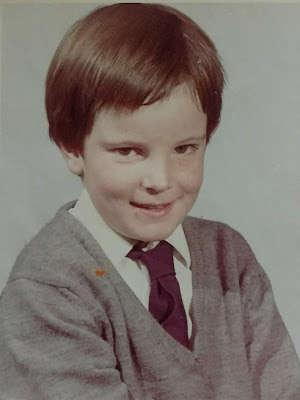


I lived in Scotland as a boy—attended school there, played (proper) football, learned golf at the local course, and I ran with a group of boys who weren't bad, but we were definitely up to no good. Coming back to the States, my brother and I found we were still outsiders. It was strange to be “back home” in Iowa, among old friends, but still neither fish nor fowl–our Scottish friends had heard only our American accents, and our Iowa friends couldn’t penetrate the Scottish accent. We called the summer we returned the “Summer of ‘What?’”
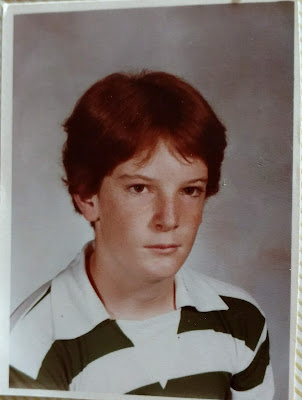


Out there on the plains, our cadence gradually (re)flattened and words like “skint” and phrases like “didja aye?” faded. But not my memories of how the place felt, the smells, the weather, the people. And I carried the cadences of spoken Scottish with me. When, as a teenager in the US, I got hold of William McIlvanney's Docherty, those voices from my boyhood, long dormant, came flooding back. I tore through my father's bookshelf, Lewis Grassic Gibbon's Scots Quair trilogy, Neil Gunn's Highland River, James Kelman's How Late It Was, How Late--before turning back to Tartan Noir, and McIlvanney again--Laidlaw, Strange Loyalties, The Papers of Tony Veitch. And much more.


Writers “hear” the voices in their heads, and we’re driven to get them down on the page, to bring those voices to vivid life. I needed to write this book, if only to diminish the clamor in my mind. 


Imogen Trager (my recurring protagonist) is on leave from the Justice Department when she’s asked to investigate the ’14 referendum—precisely because she’s an outsider. Her status, and measuring her observations through the prism of an outsider—like me—offered a way in. To keep that point clear, the editor and I decided that the prose should be set in North American English—“color” rather than “colour,” “curb” instead of “kerb,” commas and full stops inside quotation marks. And, in the Scottish dialogue portions, he urged me not to use the apostrophes I was used to seeing in, say, Docherty (written in 1975). The “apologetic apostrophe,” he called it. The apostrophes functioned a bit like “[sic]” in a manuscript, a way of denoting that the language is non-standard, the writer knows this isn’t correct, but isn’t it quaint? Which was definitely not what I wanted. Where there were obvious word contractions, I left the apostrophes in—Ah’m for I’m, for example. (As a side-note, I can’t think of the phrase “for example” without hearing a student teacher’s Edinburgh in lilt as she explained what “e.g.” meant. Mebbe Ah do live too much in ma heid!)


I’m sure there will be things readers notice that neither I, the editor nor the proof-reader caught, just as there will always be the person who notes that a street depicted in a story runs north-south and not east-west—and it ruined the book for them! I put a great deal of love into this book, and I’d hate to diminish it by representing myself as something I’m not.


Bastard Verdict debuted on May 18 – available everywhere.


#   #   #


You can learn more about the book at http://bastardverdict.com . It’s available on Bookshop.org, Amazon, Barnes & Noble and at your local bookstore. Kindle, Kobo and Nook eBooks are available too!


James McCrone is the author of the Faithless Elector series—Faithless Elector, Dark Network, and Emergency Powers—“taut” and “gripping” political thrillers about a stolen presidency. Bastard Verdict is his fourth novel. His recent short stories have appeared in Rock and a Hard Place; Retreats from Oblivion: The Journal of NoirCon, and in the short-story anthology Low Down Dirty Vote, vols.2 and 3.


He’s a member of Mystery Writers of America, Int’l Assoc. of Crime Writers, Philadelphia Dramatists’ Center and he’s the vice-president of the Delaware Valley Sisters in Crime chapter.  A Pacific Northwest native (mostly), he lives in South Philadelphia

Monday, May 30, 2022

Voting and Other Criminal Acts

 Annamaria on Monday


What could be more topical in the USA right now than mystery stories about dirty tricks and voting!  Regular visitors to MIE have already met my friend James McCrone, who writes the Imogen Trager series of political thrillers. Today, he is joining in to tell us about a new anthology where all the stories involve party-politic shenanigans.  And about his entry into the mix.  Take it away, Jamie!

Nostalgia

Elections matter. Certainly, they count. It seems almost quaint to suppose that the job of a political party is to make its case to the electorate and win the most votes. Particularly if you could somehow shrink the pool of voters, skew them in a way that might ensure a particular outcome, you could at least hold out the “election” result as a fig leaf of legitimacy. The anthology, Low Down Dirty Vote, vol. 3, “The color of my vote,” explores the terrifying reality of life at a global turning point: 22 tales of oppression and voter suppression—about the many ways anti-democratic forces try to shrink and skew the voter pool. It launched on May 15, and it will donate $10,000 to Democracy Docket, which is “dedicated to providing information, opinion and analysis about voting rights and more.” 

And it couldn’t be more timely. Links to where you can buy the book are below. 

My contribution to LDDV-3 was the story, “Nostalgia,” which shines a light on our national dysfunction—well, one of them—the strange, lingering belief that things were somehow better, fairer, more just in some bygone era. I began by wanting to write about the pervasive, creeping dissatisfaction I saw around me, borne of a societal amnesia, abetted by false narratives. A malaise that far too often erupts into anger and violence. I turned to a story about the mob that was giving me trouble.

In the story that became “Nostalgia,” a young, petty criminal can’t believe his good luck when he falls in with a paramilitary group he mistakes at first for the (re)nascent mob. In this world, each character lies to himself about the way things once were: “like they were all living together in some movie where the world still made sense,” the narrator says of the wannabes and dirty cops. And the narrator lies to himself. Until he doesn’t.

As I worked on rewrites of the story, I found that false nostalgia was the catalyst. It was interesting to consider that something more or less benign could be sinister, addictive, could distort and corrupt those who trafficked in it. I found myself pulling Docherty, by William McIlvanney, down from my shelf, chasing a quote I dimly remembered. Early in the book, the character Miss Gilfillan, unable to sleep, takes “a dose of nostalgia like a drug…” Nostalgia as drug was more apt than I knew as the story began to coalesce. 

Because they’re not the mob, they’re a reactionary group that’s taking over the drug trade to finance its attack on the government, an American Taliban. 

Low Down Dirty Vote, vol. 3 drew award-winning writers, and writers who are being published for the first time, from a variety of backgrounds and life experiences from around the globe. It features: Anshritha, Eric Beetner, Stephen Buehler, Patricia E Canterbury, Sarah M Chen; David Corbett, Jackie Ross Flaum, Katharina Gerlach, Barb Goffman, David Hagerty; myself, Camille Minichino, Ann Parker, Thomas Pluck, Miguel Alfonso Ramos; Ember Randall, Travis Richardson, Faye Snowden, Misty Sol; DJ Tyrer, Gabriel Valjan, and Bev Vincent.


Links: 

LDDV-3: [https://www.amazon.com/Low-Down-Dirty-Vote-Color/dp/1732225869/]

Democracy Docket: [https://www.democracydocket.com/about-us/]


James McCrone is the author of the Faithless Elector series novels—Faithless Elector, Dark Network, and Emergency Powers—“taut” and “gripping” political thrillers about a stolen presidency. His work has appeared in Rock and a Hard Place; Retreats from Oblivion: The Journal of NoirCon. His next novel, currently under review, is Bastard Verdict, a political thriller set in Scotland. He’s currently at work on a thriller set in Oregon’s wine country, a (pinot) Noir tale of corruption and murder, w/t Witness Tree.


He’s a member of MWA, Int’l Assoc. of Crime Writers, ITW, Philadelphia Dramatists’ Center and he’s the vice-president of the Delaware Valley Sisters in Crime chapter. James has an MFA from the University of Washington in Seattle. A Pacific Northwest native (mostly), he lives in South Philadelphia with his wife and three children.


You can learn more at http://jamesmccrone.com  


Monday, October 19, 2020

Guest Blogger James McCrone: Democracy by Appliqué


 I am delighted today to host James McCrone, my friend and delightful fellow member  of the New York Chapter of Mystery Writers of America. Jamie is the author of the Imogen Trager novels—Faithless Elector, Dark Network, and the new Emergency Powers—“taut” and “gripping” political thrillers about a stolen presidency. His work also recently appeared in the short-story anthology Low Down Dirty Vote, vol. 2 (July, 2020).  Jamie has an MFA from the University of Washington. A Pacific Northwest native, he lives in South Philadelphia with his wife and three children.

Jamie's topic today could not be more relevant - a discussion of how Americans conduct presidential elections and why our system is so arcane and complex. - Annamaria


I’m struck by the patchwork uncertainty of it all.


July’s Supreme Court ruling concerning Faithless Electors has done little to quell the potential for chaos in this November’s election. I can’t shake the image of 2020 America as some shambling Akakii Akakievich, from Nicolai Gogol’s fine story The Overcoat (1842), as he pleads with the tailor Petrovich to patch his winter coat.


“Yes,” says Petrovich dubiously, “patches could be found…but there’s nothing to sew them to. The thing is completely rotten…”


Patches are meant to be temporary. The application of a first patch to something heralds the beginning of the end of the garment. But like the hapless Akakii we’re still insisting on trying to patch over something that won’t hold, namely the United States Electoral College system.


This is, of course, the peculiar institution whereby US citizens vote indirectly for president. Indeed, there’s nothing in the US Constitution that says everyday voters have any voice in electing the president. It is only Electors meeting in their respective state capitols on “the first Monday after the second Wednesday in December” who decide who shall be president. (This year, that date is Dec. 14.) When Americans vote for the presidential and vice presidential candidate of their choice, either by mail or in-person, this November, they will actually be casting a vote for a slate of electors, equal to the number of a state's electoral votes, who will cast a vote on their behalf in their respective state capitals on December 14.


The founding fathers’ generation found it necessary to apply the first electoral patch by combining the vote for president and vice president, a response to the first truly contested election, which had resulted in a tie (the 12th Amendment in 1804). Of course, their very invention of Electors was itself a patch, meant to disguise an easily ripped seam. 


In the 19th century, states seeking to augment their power turned the Electoral College into the winner-take-all affairs we’re familiar with, where a plurality of votes for one candidate (not necessarily even a majority) in a given state means that all that state's Electoral votes go to the candidate who won the plurality. A second patch was applied right over the first. In response to that patch, two states, Nebraska and Maine, fashioned their own patch to make the Electoral result in their states more democratic by splitting their Electoral votes among the plurality winners. 


Later, states began making laws requiring Electors to vote for the plurality winner. Because Electors were originally envisioned as free actors, it was unclear whether those state laws would stand Constitutional scrutiny. This past July, however, the Supreme Court, seeking to avoid “chaos” in the 2020 election, applied the most recent patch, stating that the state laws were Constitutional. 


All of this on a garment so ill-fitting and ineptly made that it needed fundamental retailoring after only three uses (1804)! 


So, yet another patch. For now. 


And this most recent patch isn’t even a very good one. The Supreme Court ruling merely allows states to make laws restricting the freedom of Electors. 32 states (with a total of 325 electoral votes) have no such laws, thereby still leaving open the possibility of Faithless Electors, those who vote contrary to their pledge. No one is suggesting all 32 states would throw their votes one direction or another, but what if the contest was close and only 3 or 4 Electoral votes separated the candidates? (Bush v. Gore anyone?) 


There have been documented bribery attempts and even violent threats to coerce Electors to switch their votes in past contests. Even without those problems, there is the uncertainty of the Electoral College process itself, and the fact that it has five times returned a “winner,” who lost the popular vote (1824, 1876, 1888, 2000 and 2016). There remains ample potential for chaos. The National Popular Vote initiative is another potential patch, if well-meaning. 


Sadly, it’s deeper than my admittedly drawn out metaphor.


In The Overcoat, when, after forgoing meals in order to pay for it, Akakievich’s coat is stolen, he appeals not to the police, but to “a very important personage.” In Czarist Russia who you know is what’s most important. And it’s common knowledge that without some intervention by some patron the corrupt police will not only not help Akakii, if they were to find the coat, they’d keep it themselves!


Status determines the level of justice in Akakii’s world, as it does in ours. And like in ours, those who have gained high status have little or no accountability, and perhaps even less care or concern for those below them on the ladder. “Without law, there’s only power,” is a tag-line from my earlier work, Dark Network, and I can’t help wondering what Gogol would make of our times. Gogol might note that often law is what protects the powerful.


Here is  how Scott Fitzgerald felt about it all almost a hundred years ago (from The Great Gatsby): “They were careless people…they smashed up things and creatures and then retreated back into their money or their vast carelessness or whatever it was that kept them together, and let other people clean up the mess they had made.” 


Fortunately for us, unlike the serfs and aggrieved clerks of Czarist Russia, we can do more than just clean up the mess, even if the upcoming election - our tool for doing so - is careworn and a patchwork. We can vote. It’s how we let those in power know to whom they’re accountable.


You can learn more at http://jamesmccrone.com/
