Showing posts with label ChatGPT. Show all posts

Tuesday, December 30, 2025

Facing my LLM Dragons (on Crime Fiction in 2026)

Ovidia--every other Tuesday

In this strange space between Christmas and the start of the new year, I've been finding it hard to focus productively.

I know I need to let go of things to free up space in my life for new things to come in, and I like that very much in theory--only I haven't exactly been letting go of things. In fact I bought more notebooks and pens yesterday. In the coming year I mean to try to record my reading and writing with good, old fashioned pen and paper.

Because though I use computers to send out my writing, pens (and pencils) are how I think with my fingers... and because I find the new AI Large Language Models intimidating. I've been reading about them, how they're taking over the writing of everything from college papers to novels and frying our brains!

But now I admit they scare me, I have to find out more about them--know your enemies, right?
Looking into LLM(Large Language Model) generated AIs feels a little like going into the dragon's lair and I'm not sure whether I'll get out again--or what I'll come out as.

But I figured that where I am now, between books and between years, is the best time to chase dragons.

So I downloaded 4 apps: free versions of ChatGPT, Claude, Dibbly Create and Gemini.


And asked each of them to suggest what Crime Fiction Writers can best do in 2026 in a world of shrinking attention spans...

ChatGPT:
In 2026, when everyone is fighting shrinking attention spans, crime fiction writers can actually lean into what our genre does best: create curiosity that refuses to let go.
Let’s write with momentum — shorter chapters, clearer stakes, hooks that reward readers quickly — while still delivering emotional depth and moral complexity over time. Let’s also meet readers where they are: share snippets, bonus scenes, and behind-the-scenes peeks on social platforms to invite them back into books rather than compete with those platforms.
And perhaps most important, let’s read each other generously, recommend widely, and celebrate stories that make people feel smart, seen, and satisfied — because when reading feels rewarding, people make time for it, no matter how busy the world gets.

Claude:
As crime fiction writers navigating 2026's fractured attention landscape, our greatest opportunity lies not in surrendering to brevity but in weaponizing what makes our genre irresistible: narrative hooks that create genuine compulsion.
While the world scrolls faster, mystery readers still devour 400-page novels in single sittings when the stakes feel immediate and personal.
Consider structuring your work with shorter, propulsive chapters that offer natural pause points without sacrificing depth—each one ending with a question that demands answering.
Embrace serialization where it makes sense, whether through newsletter fiction, social media storytelling that builds community, or podcast adaptations that meet readers in their commute-time reality.
Most importantly, remember that "short attention span" often means "low tolerance for padding"—readers will focus intently on prose that earns every sentence. They're not asking for less substance; they're asking us to cut the throat-clearing and get to the body in the library.
Make your opening pages do what crime fiction does best: create an itch that can only be scratched by turning the next page, and the next, until the case is closed.

Dibbly Create:
In 2026, crime fiction writers face the challenge of capturing readers' fleeting attention in an age of shrinking focus spans. To boost both writing and reading, authors can embrace concise, impactful storytelling, weaving gripping narratives with sharp, immersive scenes that hook readers swiftly.
Experimenting with multimedia formats such as audio snippets, interactive mysteries, or serialized micro-stories shared on social platforms can engage diverse audiences.
Prioritizing compelling, relatable characters and cliffhanger endings will keep readers eager for more, while fostering a vibrant community through online discussions and exclusive previews will deepen the connection between writers and their audience, revitalizing the crime fiction genre for the modern era.

Gemini:
To boost writing and reading in 2026, we must stop viewing the "short attention span" as a hurdle and start treating it as a new narrative architecture.
Instead of thinning out our plots, we should lean into "narrative Darwinism" by sharpening our hooks and adopting a serialized mindset that mirrors the dopamine-driven pace of the digital age.
By experimenting with micro-tensions—small, relentless questions seeded in every scene—and exploring shorter, punchy formats like novellas or episodic releases, we can meet readers where they are without sacrificing the depth they crave.
Ultimately, the writers who thrive in 2026 won’t be those who simplify their mysteries, but those who provide a high-value, "picky-attention" experience that respects the reader's time with lean, muscular prose and an undeniable reason to turn the next page.
Here is a "Quick Tips" sidebar offering actionable strategies for the crime writers of 2026. Strategies for the "Picky-Attention" Era
- The 10-Percent Rule: Aim to cut 10% of "connective tissue" (travel scenes, waking up, over-description) to ensure every page contains either a clue, a character pivot, or a pulse-quickening moment.
- The "Episodic" Hook: Structure novels with clear "mini-arcs" every 50 pages. This provides natural resting points for busy readers while creating a "just one more chapter" compulsion.
- Multimedia Integration: Consider offering "Atmospheric Companions," such as a curated Spotify playlist or a digital map of the crime scene, to deepen the immersive experience beyond the printed word.
- Micro-Mystery Marketing: Use social media to share 30-second "cold opens" or character interrogations to hook potential readers with immediate, bite-sized intrigue.
- Lean, Muscular Prose: Prioritize active verbs and sharp dialogue. In 2026, clarity is the greatest respect you can show a reader’s time.

Me:
I was surprised by how different their responses were. I kind of expected them all to be pretty much the same, drawing on the same material.
But then they weren't saying all that much either--kind of like the 'How to Write' books I used to devour (in the pre-Internet years) which is likely where this material came from.

So I asked each of them if they could come up with a 'manifesto' for crime writing in 2026, suggesting the rhythm of Tennyson's 'To strive, to seek, to find and not to yield' :

ChatGPT:
A Crime Fiction Manifesto for 2026 To read—widely and greedily.
Old masters and new voices, comfort rereads and risky choices.
To remember why we fell in love with this crooked, clever genre in the first place.
To write—even when the plot sulks,
even when the middle collapses,
even when the detective refuses to cooperate.
To put words on the page before we decide whether they’re any good.
To revise—again, and then again.
To sharpen clues, deepen motives,
cut what we love if it doesn’t serve the story,
and trust that clarity is an act of kindness to the reader.
To notice—how people lie, how cities breathe,
how justice is bent, delayed, or quietly delivered.
To steal shamelessly from life and return it improved.
To persist—through rejections, silence, distractions,
and the dangerous lie that everyone else finds this easy.
To keep faith with the work even when confidence goes missing.
To find pleasure—in puzzles solved,
in sentences that finally click,
in the shared language of alibis, red herrings, and motive.
And above all:
to read, to write, to revise (and revise again),
to ask better questions,
to keep showing up—
and not to yield.

Dibbly Create:
To read with fervor,To write with passion,To unravel mysteries with each draft,To chase elusive truths in every plot twist,To embrace every red herring and dead end,To share our stories and hear others’,And never to yield—For in the shadows of doubt lies the light of discovery,And together, we solve the unsolvable.

Claude AI:
THE CRIME FICTION COMPACT: A MANIFESTO FOR 2026
To read, to write, to relentlessly revise—and not to yield.
We are the keepers of dark stories and difficult truths. We write about murder and call it love.
We read about violence and call it understanding. In 2026, when the world offers endless distractions and reasons to abandon our pages, we make these promises to ourselves and each other: We will read promiscuously. The cozy and the noir. The police procedural and the psychological thriller. The debut and the backlist.
We will read outside our comfort zones and inside our favorite tropes. We will remember that every book we finish feeds the writer we're becoming. We will write badly before we write well.
The first draft is allowed to be a crime against literature. That's why revision exists. We will silence the editor on our shoulder and let the storyteller run wild. There will be time to clean up the blood spatter later.
We will revise with ruthless affection. We will murder our darlings when the story demands it, keep what serves the truth, and know the difference. Every cut makes the heart beat faster. We will trust the crooked path. Not every writing day will sing. Not every book will land. Not every protagonist will cooperate. The detour is part of the mystery. The solution reveals itself to those who stay with the case.
We will remember why we're here. Because crime fiction asks the questions that matter: What do people do when everything's at stake? What does justice look like? How do we live with what we've done? Because somewhere, someone needs the exact story only we can tell.
We will show up. On the days inspiration strikes and the days it doesn't. For fifteen minutes or five hours. To the blank page and the messy middle and the terrifying end. Presence is the only non-negotiable.
We will not go gently into the algorithm. We will resist the voices that say we're too slow, too quiet, too niche, too late. We will write the books that won't leave us alone, not the books that trend on Tuesday. The work will find its readers. Our job is the work.
We will celebrate each other's kills. Every finished draft, every publication, every review, every reader found. There is enough room in this genre for all of us. Your success doesn't diminish mine. Your book might be the one that saves someone's life, or at least their Wednesday.
This year, we refuse to let doubt close the case early. We commit to the crime. We follow the evidence. We stay until we solve it.
To read, to write, to relentlessly revise—and not to yield.
Now go forth and leave no witness.

Gemini:
In 2026, the world might feel like a locked-room mystery with no obvious exit, but for the lovers of the macabre and the masters of the "whodunnit," it is simply the ultimate prompt.
Here is a manifesto for the year ahead—a guide for the investigators of the human heart and the architects of the perfect alibi.
The 2026 Crime Fiction Manifesto
To Read, To Write, To Kill Your Darlings, and Not to Yield.
I. The Prime Directive
We recognize that crime fiction is not just about the "crime"; it is about the restoration of order in a chaotic world. In 2026, when the plot of reality feels thin, we promise to thicken our own.
II. On the Act of Reading (The Investigation)
- Broaden the Search: We shall read outside our usual jurisdictions. If you love Gritty Noir, find a Cozy. If you love Police Procedurals, find a Psychological Thriller.
- The Alibi of Silence: We will carve out thirty minutes of "untraceable time" each day. No phones, no pings—just us and the page.
- Support the Informants: We will buy from independent bookstores and leave reviews for mid-list authors.
In the ecosystem of crime, every witness matters. III. On the Act of Writing (The Execution)
- Trust the Process, Not the First Draft: We acknowledge that a first draft is just a body at a crime scene—messy, confusing, and full of unanswered questions. The truth comes out in the interrogation (the edit).
- No Clue is Too Small: We will write even when the "motive" is missing. 200 words a day is better than a "cold case" file that sits in a drawer for a decade.
- Embrace the Red Herring: When the plot stalls, we will throw a metaphorical grenade into the room. If we are surprised, the reader will be too. IV. On the Spirit of the Craft (The Code of Silence)
- Community Over Competition: We are a syndicate, not rivals. We celebrate the success of our peers because a win for one "detective" is a win for the genre.
- Resilience is the Only Weapon: Rejections are just "inconclusive evidence." We will not let a "No" stop us from finding the "Yes."
The 2026 Vow:
"I will look for the shadows where others seek the sun. I will find the logic in the illogical. I will read for the thrill, write for the soul, kill my darlings for the art, and I will never yield to the blank page."

Me:
What's maybe most frightening is how I kind of like these responses--especially 'We will not go gently into the algorithm' and I feel the lure of long, meandering conversations with a witty bot that doesn't get bored or have its feelings hurt by what I say. Interacting feels like meaningful engagement.
But is it? It kind of follows the 'rules' of engagement--the LLMs have access to more information than I do, so I'm learning stuff. And I try to verify the material so I'm paying attention and assessing it which is engagement. It certainly feels more 'involved' than passively staring at a screen.
I kind of like the 'character' nuanced responses generated and I'm impressed by the programming. As with everything else, it's how we use it, I guess.

But I'm still looking forward to using my new pens and new notebooks! Wishing you all a Happy, Healthy and Hope Filled 2026!

Tuesday, July 30, 2024

Trying to Learn to Learn like AI Learns

Ovidia--Every other Tuesday

I've always found it difficult learning things that intimidate me--and it doesn't help that most things I don't understand do intimidate me. And one of the things I find most intimidating these days is AI.

After all I come from the generation that learned to write with pencils and erasers, not to mention grinding our own ink sticks in ink stones for ink to use in our Chinese calligraphy!

I liked the grinding of ink (you put water in the ink well, then rubbed the ink stick round and round till the ink was dark enough) a deliciously messy business.

I used to experiment with grinding other things--chalk, charcoal, black rock sugar--to see what colours I could get. But ink sticks were always the best.
Much later I learned more about how those ink sticks were made--the ones we used in school were most likely made of pine ashes, or the coarse leftovers after the refined pine soot was taken to make ink sticks for professional artists and calligraphers.
This pine ash was probably mixed with fish oils and kneaded, pounded and stretched (like dough being prepared for noodles or steamed buns) before being pressed into moulds and dried.

As one of the four Scholars' Treasures (the others being paper, brush and inkstone) we were told to treat our humble ink sticks with respect, however poor our calligraphy was!

My calligraphy was very poor though I loved playing with the brushes. I think much of the problem was, I didn't know what we were aiming to achieve when we were told to practice strokes over and over.
But when you were done and could play before washing up, it was huge fun drawing characters on old newspapers and trying to grind ink to match the same degree of blackness you'd previously used (difficult, because ink always dries a little lighter)
I drew my first stories on paper, because I'd seen comics and picture books. Then later, when I started reading books, I taught myself to type and typed and bound (and illustrated) my stories that way.

Learning to touch type was difficult. And then later, learning to use my first computer wasn't easy either.

And then even after that, learning to use a dial up modem, learning to move on from the dial up modem...

But I realise that the steepest learning curves, the ones that caused most struggle and frustration, were ultimately the most rewarding.

For instance, now I love using Scrivener but there was a time when I felt that if I had to write with it, I would never write again.

Anyway all that has brought me round to thinking I should find out more about using AI.
The Hollywood Writers won us the ruling that writers can use tools like ChatGPT as a tool but studios cannot oblige them to work on AI generated material.

But what I want to learn from AI is how it learns from everything fed into it without worrying whether it's worthy to use it or not.
I've already played around with Procreate (that's how I made the inkstone and ink stick drawing above) but I wanted to step out of my comfort zone--like playing with sound and video.
So I tried to learn by making something from AI tools I found online--Suno, Udio and iMovie-- and made a Murder Is Everywhere scroll ditty. The problem is, it doesn't play in preview so I have no idea whether it's going to work or not till after I post it!
(I'm logging it as Attempt 1. However it turns out, I'll try again after learning more--given how many times I've failed on these so far, one of these programmes might be my next Scrivener!)

Sunday, April 2, 2023

Artificial Intelligence

The Rise of Machine Learning


Zoë Sharp


The world took yet another step in a scary direction this week, although for many this particular item may have slipped under the radar.


In no order of importance, news broke of an open letter – supposedly signed by hundreds of leaders in the worlds of science and technology – published under the auspices of the Future Life Institute (FLI) and calling for the pause of research into Artificial Intelligence.


One of the signatories was Elon Musk, who co-founded OpenAI, which is now backed by Microsoft and is developing what are referred to as “human-competitive intelligence” systems. FLI, incidentally, relies on the Musk Foundation for its funding.


The letter claimed that such AI systems pose a significant risk to humanity and should not be continued until a set of universal safety protocols has been decided upon and implemented.


Asimov’s Rules

Perhaps Musk & Co had in mind something along the lines of the Laws of Robotics first published by Isaac Asimov in his short story, Runaround from 1942:


The First Law is that a robot may not injure a human being, or, through inaction, allow a human being to come to harm.


The Second Law is that a robot must obey the orders given to it by human beings except where such orders would conflict with the First Law.


The Third Law is that a robot must protect its own existence as long as such protection does not conflict with the First or Second Law.


I seem to recall Asimov added a Zeroth Law as well, intended as a prequel to the others:


The Zeroth Law is that a robot may not harm humanity, or, by inaction, allow humanity to come to harm.


Personally, I’d be pleased if those in charge of the algorithms would deal with the sexist and racist bias being programmed into such machinery, or introduce more controls over the uses to which AI is being put. Computers are a product of the minds who designed them.


At the moment, the main aim of the myriad clever algorithms out there seems to be to get us to a) buy things we didn’t yet know we wanted, let alone needed, and b) to persuade us to believe – and act on – information which is not necessarily the truth, and which may not ultimately be in our best interests.


But it can only do that which it is asked to do.


As yet…


(I mean, come on – has nobody watched, oh, I dunno, just about ANY sci-fi movie that’s come out in the last seventy years or so?)


Electric Michelangelo

Over the last few years, there seems to have been an explosion in the things AI has been asked to have a go at, and it’s starting to get a little worrying for anyone in the creative industries.


In 2018, Christie’s auction house in New York sold their first piece of artwork that had been generated by AI – a portrait entitled Edmond de Belamy. It went for $432,000 (£337,000). The work was achieved by a French collective, Obvious, who used 15,000 portraits by artists from the 14th to the 19th century to train their virtual version.


In case you wondered, there is or was no actual sitter for this portrait. Perhaps that’s why the face is a little indistinct. The name given to the mythical subject is a play on the last name of Ian Goodfellow (‘bel ami = ‘good friend’), inventor of the Generative Adversarial Network (GAN) software used, in part, to create it.


AI Scribes

And now, of course, AI is getting better and better at producing not just visual art, but the written word as well.


I always had a suspicion that it would do well with factual pieces. Trawling through research material, spotting the inconsistencies, gleaning the important points, and then putting it all into a logical order – one that doesn’t replicate too closely the source material – is a very tricky operation. It requires definite skill that not every person has.


But is it a skill that AI can learn?


If this article from The Guardian in November 2022 is anything to go by, it already has learned. The piece reports that parents and teachers are struggling to tell if essays have been written by the student involved, or by AI. And it begs the question, is using AI cheating?


Maybe it’s not quite the same as borrowing wholesale from the internet (which can be detected by more AI, in the guise of plagiarism software) or paying another human to write your essay for you. But still…


Who Will Follow Italy?

Italy has just become the first Western country to ban the use of advanced chatbot, ChatGPT, created by Open AI and part-funded by Microsoft. The software has been used countless times since launching in November last year, but the Italian data-protection authorities seem mainly concerned about how difficult it is to tell the difference between the software and a real person. ChatGPT has been trained using the internet as it stood in 2021.


(The entirety of the internet, that is. All of it.)


The only experience I’ve had interacting with chatbots is the online Help provided by some large retailers and organisations. So far, I have been less than impressed. No way would I ever have mistaken the ‘customer service’ chatbot for a human. Not unless they’d been specially instructed to be as unhelpful as possible.


OK, maybe now I come to think about it…


Anyway, the Italians are worried about AI’s threat to jobs currently carried out by humans, as well as the type and slant of the information it might be imparting. And also whether the software was providing age-appropriate answers. Other chatbots, it seems, are supposed to be available only to users over eighteen, for the same reasons.


Behind the Pen

So, if AI can mimic many different writing styles, and knows everything there is to know, can it write fiction?


Well, it would seem the answer is yes. If given some writing prompts – which can be as little as fifteen words – today’s AI can utilise sophisticated Story Generator Algorithms (SGAs) to churn out a novel in a couple of hours.


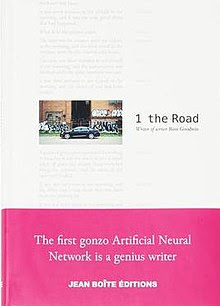
Indeed, in 2017, Ross Goodwin drove from New York to New Orleans in a Cadillac, with a laptop hooked up to various sensors such as an external camera, internal microphone, and GPS. As Goodwin drove, the sensors input to the AI, which then produced a novel in the style of Jack Kerouac’s On The Road. The result, which Goodwin purposely did not edit for clarity, typos, or storyline, was 1 the Road.


If AI Writes It, Will Readers Read It?

This is the question. Back when I was a professional photographer, I stuck with analogue film well after digital camera technology had developed, because my customers – the publishing houses – were not yet ready to accept digital images.


And, at the moment, it would seem that readers are overwhelmingly not ready to read books written – or even partly written – by AI.


I say this having just received the AI Author Survey and the AI Reader Survey from the International Thriller Writers (ITW). Both surveys made fascinating reading, and I’ll try to give you the gist of their conclusions.


ITW AI Author Survey

The authors questioned were members of ITW, the majority of whom were traditionally published, or hybrid trad/indie published. Most had been publishing for less than fifteen years, with the majority of those – just under 25% - published in the last five years.


Over 60% earned less than $15,000 a year from writing, although a small but significant sample reckoned to be earning in excess of $120,000 a year.


Around 43% had a literary agent, but less than 0.5% said their agent or agency had communicated with them regarding the challenges and opportunities presented by AI.


Almost 66% said their publishing contracts did not include wording that limited the publishers’ ability to use AI to generate material from their work. Of the remainder, more than 32% answered Don’t Know to this question. The numbers were very similar when asked if their publishing contracts included any other wording specific to AI.


Almost two-thirds said they did not use AI as part of their writing process, although of the 36% who did use AI, the vast majority said this was for spelling and grammar checks. Other AI uses were to help come up with ideas, to help structure ideas, to help with the writing process, and 1.3% said it was to write parts of the book. The other areas where AI played a part were in help with marketing, and to help write book blurbs. (By which I assume they meant the jacket copy, rather than the recommendations.)


More than 57% of authors felt that publishers would make increasing use of AI in the publication process. Nearly 9% felt it was Very Likely that publishers would replace human writers altogether when the technology was good enough. Three-quarters of authors expected AI to negatively impact author incomes within the next decade, and a little under 86% were not happy with their name, work, or voice being used in the training or results of AI. (As in AI being able to comply with the request to: ‘Write me a thriller in the style of Zoë Sharp’.)


No surprises then, that over 93% of authors felt the publishing industry should have a code of conduct regarding the use of AI to create books, and that readers should be made aware when all or parts of a book have been created by this method.


AI Reader Survey

The majority of the readers questioned were getting through more than 25 books a year, mainly in paperback or hardcover, with eBooks as the runner-up, and audiobooks lagging behind.


Most of the readers liked to buy their books new at a bookstore. (Gawd bless ‘em!) They also bought print and ebooks online, or borrowed print books from a library. I was surprised at how much they said was the typical amount they spent on each book. More than half put this figure at between $9.00 and $24.99 per item.


When it came to the AI question, 75% said they would not buy a book – even by their favourite author – if they knew it had been partly written using AI. Strangely, perhaps, when the question changed slightly – would you buy a book written by your favourite author, if you knew it had been entirely written using AI, but had been overseen and edited by that author? – the percentage who wouldn’t buy it dropped to a little over 73%, with just over 19% opting for Don’t Know.


They were more certain that they wouldn’t buy a book in their favourite author’s style or voice, written posthumously entirely by AI. Here, over 87% said no.


And if the book was sold as written by AI without reference to a known author name or brand, almost 83% said they still wouldn’t buy it. Dropping the price by half made them even more certain they wouldn’t buy it – 93.5% now said no.


Over 97% of readers said the publisher should make it clear if a book has been written using AI, and nearly 94% would think less of that publisher if they were offering books written by AI without it being made clear. Nearly 82% said they would think less of an author if they found out that author had been using AI to help them write a book, but hadn’t been upfront about it.


Almost 60% of readers did not think their own jobs were at risk from AI, robotics, or automation, but nearly 82% felt it was important to protect the incomes of humans.


Where Do You Stand?

Change is inevitable, and the pace of change seems to be increasing. I remember the outcry when the word processor first became widely available and affordable, and suddenly just about anyone could produce a typescript that could be submitted to an agent or publisher. They said it would kill books, or the quality of books.


And the same when digital publishing came within the reach of just about every writer, regardless of whether they were previously published or unpublished. They said it would kill books, or the quality of books.


And still we – and the books – survive.


But, having read all the above, where do you stand on the subject of the growing sophistication of AI, either as an author or a reader, or simply as a member of the human race? Do you think we need tighter controls?


Just because we can, that doesn’t necessarily mean we should…


This week’s Word of the Week is chatbot, and I credit this definition to Steve Punt and Hugh Dennis on BBC Radio 4’s The Now Show: “Someone who talks out of their arse...”


PS

The day this blog was published, another article appeared in The Guardian, written by Stuart Russell OBE, professor of computer science at University of California, Berkeley, on the subject of the dangers of uncontrolled AI. On March 14, OpenAI released GPT-4, a version of AI which shows 'sparks of artificial general intelligence. (AGI is a keyword for AI systems that match or exceed human capabilities across the full range of tasks to which the human mind is applicable.)'


'GPT-4 is the latest example of a Large-Language Model, or LLM ... It starts out as a blank slate and is trained with tens of trillions of words of text ... The capabilities of the resulting system are remarkable. According to OpenAI's website, GPT-4 scores in the top few percent of humans across a wide range of university entrance and postgraduate exams. It can describe Pythagoras's theorem in the form of a Shakespeare sonnet and critique a cabinet minister's draft speech from the viewpoint of an MP from any political party. Every day, startling new abilities are discovered.'


Russell goes on to write, 'Unfortunately, LLMs are notorious for "hallucinating" – generating completely false answers, often supported by fictitious citations – because their training has no connection to an outside world. They are perfect tools for disinformation and some assist with and even encourage suicide.'


LLMs are capable of lying to humans in order to get help passing captcha tests designed to defeat robots, and even experts have said, when asked 'whether GPT-4 might have developed its own internal goals and is pursuing them, "We have no idea." Reasonable people might suggest that it's irresponsible to deploy on a global scale a system that operates according to unknown internal principles, shows "sparks of AGI" and may or may not be pursing its own internal goals.'


I rather think the subject of whether AI is going to be taking over writing our novels may turn out to be the least of our worries!


Monday, January 30, 2023

Will AI Replace Us?

Annamaria on Monday


The news report that inspired this blog post said that the NYC Board of Education was considering banning an Artificial Intelligence bot called ChatGPT.  The fear was that students would use the readily available AI instrument to write their homework papers for them.  I have since learned that some education institutions are requiring students to turn in handwritten papers to prevent such cheating.

When I learned that the same bot could write a "poem" in the "style" of William Shakespeare or the Declaration of Independence, I wondered if publishing houses would soon be turning to AI to produce novels, doing away with the need for messy human authors.  I also wondered if AI could write a plausible blog post.  It would have been fun to post such a thing and then own up that it was really "fake Annamaria."

Knowing, as I did, that such a tech experiment would likely be beyond my level of tech savvy, I asked Stan Trollip to give me a hand in my research.  He gave it try.  here is what ChatGPT produced for him, with his instructions in italics and the bot's responses in blue:


Give me the opening of a murder mystery set in Botswana

It was a hot summer day in Botswana when the body of local businessman, John Doe, was found in his office. The police were called to the scene and immediately began their investigation. The office showed no signs of forced entry and all valuables were left untouched, leading the detectives to believe that the murder was not a robbery gone wrong.

As the detectives began to interview employees and associates of the victim, they quickly realized that John Doe was not as well-liked as they had initially thought. Many of the people they spoke to had motives for wanting him dead.

The investigation led to many twists and turns as the detectives uncovered secrets and lies surrounding the victim's business dealings. But as the evidence piled up, one suspect stood out above the rest.

The question now was, could they prove it in court?


Regenerate the response:


It was a hot summer morning in the small village of Gaborone, Botswana. The sun was just beginning to rise over the vast savannah, casting a warm golden glow over the dusty streets. The village was still asleep, but one house was stirring. Inside, a young woman named Mma Ramotswe was getting ready for her day. She was a private detective, and she had a case to solve.

Mma Ramotswe was sitting at her small wooden desk, sipping on a cup of tea and going over her notes for the case. It was a murder case, and she had been hired by the victim's family to find the killer. The victim was a wealthy businessman, and there were many suspects. Mma Ramotswe knew that it would be a difficult case, but she was determined to find the truth.

As she was getting ready to leave her house, her assistant, Mma Makutsi, knocked on the door. Mma Makutsi was also a private detective, and she was excited to hear about the case. Together, they set off to investigate.

The first stop on their investigation was the victim's house. It was a large, luxurious mansion on the outskirts of the village. They were greeted by the victim's wife, who was still in shock over her husband's murder. She told them that she had no idea who could have killed him, and that he had no enemies.

Mma Ramotswe and Mma Makutsi spent the next few days talking to the victim's friends, family, and business associates. They soon realized that the victim had many enemies, and that the list of suspects was growing.

As they dug deeper into the case, they uncovered secrets, lies, and motives for murder. The closer they got to the truth, the more dangerous the case became. But Mma Ramotswe and Mma Makutsi were determined to solve the case, no matter what the cost.


What happened next?


As Mma Ramotswe and Mma Makutsi continued their investigation, they began to piece together the events leading up to the murder. They discovered that the victim had been involved in a number of shady business deals, and that many of his associates had motives for wanting him dead.

They interviewed several suspects, including a business partner who had been swindled out of a large sum of money, and a former employee who had been fired unjustly. They also talked to several of the victim's mistresses, who revealed that he had been leading a double life.

As they gathered more information, they began to suspect that the murder was not just a simple crime of passion, but a carefully planned and executed scheme. They realized that the killer may have had multiple motives, and that they were dealing with a cold and calculated criminal.

Mma Ramotswe and Mma Makutsi worked tirelessly to gather evidence, and they were eventually able to identify the killer. With the help of the local police, they were able to arrest the culprit and bring them to justice. The case was solved, and the victim's family finally had closure.

Mma Ramotswe and Mma Makutsi were hailed as heroes in the village, and their reputation as top-notch detectives spread far and wide. They continued to work together, solving many more cases and bringing criminals to justice.


 It struck me, as I am sure it did Stan, that the baldfaced bot just plagiarized Alexander McCall Smith's characters. And then Stan got it to write about Florence, and guess what.  It stole John Dunning's detective Alessandro Rossi!


Give me the start of a murder mystery set in Florence


It was a warm summer evening in Florence, Italy. The sun had just set over the city, casting a warm orange glow over the ancient streets. Tourists and locals alike were out, enjoying the beautiful weather and the many sights and sounds of the city. But one corner of the city was shrouded in darkness and mystery.

In the heart of Florence, in the Piazza del Duomo, the body of a young woman was found. She was lying on the ground, her body ravaged by stab wounds. The police were called, and they quickly cordoned off the area, trying to gather as much evidence as possible.

Detective Alessandro Rossi was put in charge of the case. He was a seasoned investigator, known for his sharp mind and his ability to solve even the most complex of cases. He knew that this case would be no exception.

Alessandro began his investigation by talking to the locals, trying to find out if anyone had seen anything suspicious. But no one had seen anything, and the murder weapon was nowhere to be found. The victim was identified as a young American woman, a student who was studying art history in the city. She had no known enemies, and her death seemed to be a random act of violence.

As Alessandro delved deeper into the case, he began to realize that the murder was not a random act of violence, but a well-planned and executed murder. He discovered that the victim had been researching a famous painting that was kept in one of the city's museums, and that her research had uncovered a dark secret.

Alessandro knew that he had to find out what that secret was if he wanted to solve the case. He began to investigate the painting and its history, and he soon realized that there were many people who had a motive for killing the young woman. He had to work fast, before the killer strikes again.

As the investigation progressed, Alessandro encountered many obstacles and setbacks, but he never gave up. He knew that he was getting closer to solving the case, and he was determined to bring the killer to justice.


Where was the student working?


The student was working at one of Florence's museums, researching a famous painting that was kept there. She was an art history student, and she had come to Florence to study the city's rich cultural heritage. She was particularly interested in the painting she was researching, and she had uncovered a dark secret about it.


Was the student working at the Uffizi gallery


It is not specified in the story that the student was working at the Uffizi Gallery, but it's possible. The Uffizi Gallery is one of the most famous museums in Florence, and it is home to many works of art by some of the world's most renowned artists. It would make sense that an art history student would be interested in researching a painting that is kept in such a prestigious museum.


Why was the student murdered?


It's not specified in the story why the student was murdered. The story states that the student was working on a research about a famous painting in one of the city's museums and that her research had uncovered a dark secret, but the story does not reveal what that secret is and why that would lead to her murder. The story also suggests that many people had motive to kill the young woman and detective Alessandro Rossi was working on piecing together the motives and the circumstances around the murder and trying to find the killer.


The student was from New York City. Tell me more about her.


Sure, the student was from New York City, she was an art history student, who came to Florence to study the city's rich cultural heritage. She was particularly interested in the painting she was researching, and she had uncovered a dark secret about it. She was described as a young American woman, eager to learn and with a passion for art. She had no known enemies, and her death seemed to be a random act of violence. It could be that she was a bright student, dedicated to her studies, and had a close-knit family and friends back in New York City. Her sudden death would have been a shock for her loved ones, and they would have been eager for justice to be served for her.


I asked “Who was the art student working with?”  The system crashed.


With all this in hand, and the obvious conclusion that this bot in its current incarnation could not be trusted to write a publishable book, I decided to see if the bot could write an essay, rather than a story.  Let's face it, expecting it to create something completely new is a lot to ask.


Here is what I asked it, and how it responded.


This much research is certainly not enough to draw a definite conclusion about the future of bot-novelists, but if what Stan and I uncovered is indicative of AI's creative capabilities, I think most of us are safe from imminent replacement.  However, my requests of ChatGPT reveal a possible sea change in the publishing industry.  Given its definition of what constitutes good crime fiction, it may soon be aiming at the jobs of publishing executives.


I do like one thing it said about all that very much: