You may think I am going to sing again praises to my city
about its cultural diversity—that 150 languages are spoken in the borough of
Queens alone, that sort of wonder. Not
this time. It’s a holiday weekend here
in the US—Memorial Day, the one that officially kicks of the summer
season. So I think it’s time to focus on
the great outdoors and wildlife. In
Manhattan, where I am confined today, that means Central Park.

Don’t laugh.

First of all, the park’s very existence of makes a huge
difference. Even if we do not live near
it, even if we seldom go there, we inhabitants of the concrete are always, on some
level, aware of its openness. Somehow
that knowledge gives the city a more benign feel. Evidently, Central Park also does more for us
than that lovely psychological favor.
Experts say it would cost more than $3 trillion to purify our air and
water by any other means than the natural ones the city’s parks provide.
Then there are the marvelous facts about the park’s living
organisms. Central Park, as you may
know, is not a gorgeous preservation of a natural part of Manhattan
Island. What was originally there was
bulldozed and replaced with a designed pleasure-land for people to enjoy. In addition to the residents of the zoo, it
harbors 896 species: 393 plants, 102 invertebrates, 78 varieties of moths, ten
of spiders, nine of dragonflies, three of turtles, two species of frogs, and seven
of mammals (not counting picnickers, ice cream vendors, softball players, opera
singers, or actors of Shakespeare)!
 |
| American elms alive and well! |
The gorgeous American elm tree is just about extinct
elsewhere, killed off by Dutch elm disease.
Yet, a lovely large stand survives in Central Park.
Years ago, the Scott Seed Company, looking for the strongest
variety of lawn grass, found a unique species in Central Park. Where else?

My favorite study of
diversity in the park is the one of the microbes in the soil. Those tiny critters determine the chemistry
and health of dirt. Studies throughout
the world over the past couple of decades counted the number of different
microbes in soil in different places.
For a long time, no one thought research that question in Central Park. When they did—last year—guess what they
found. 170,000 different kinds—as much
diversity as there is anywhere else. And apparently, about 2000 of them are unique
to our gorgeous green rectangle.
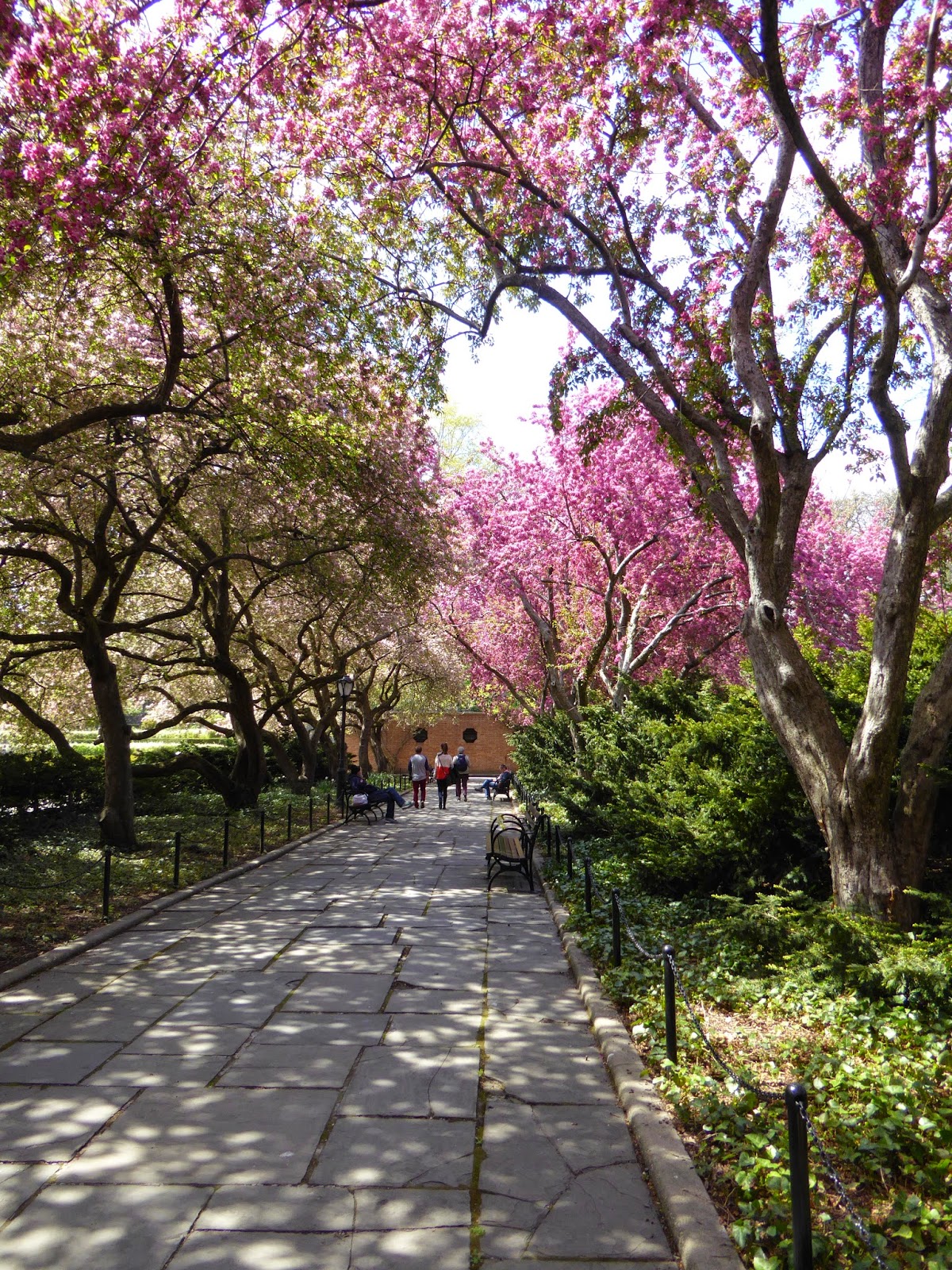


Living in and around the 174 species of Central Park’s trees
are hundreds of varieties of birds. Depending
on the time of year, you might see starlings, mourning doves, mallards, robins,
waxwings—I could go on and on. One
group found 46 species in a single day.
 |
| Night heron in Central Park |

Of the birds of the park and the city in general, my absolute
favorite is the red-tail hawk. Raptors
need high places for nesting and a supply of prey free from agricultural
chemicals. There are several mating pairs that come to
Manhattan to hatch and raise their babies.
It’s a thrill for me to see them circling in the skies overhead. If you want to learn more about them you can read
at the Audubon website and see the babies here:
Too cute, huh?
Annamaria – Memorial Day 2015