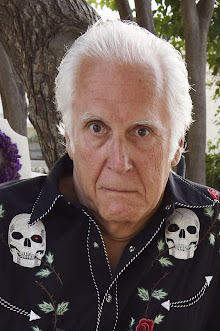
Charles Todd is the best-selling mother-son writing team of Caroline and Charles Todd. Their latest Bess Crawford mystery, A BITTER TRUTH, came out at the end of August. They also write the renowned Inspector Ian Rutledge series. In total they have written 17 novels (if I count correctly!).
 Caroline had an unexpected opportunity to visit Libya several years ago and to visit the remarkable ruins of Leptis Magna. With the old order changed, she reminisces about that trip, and how she found the people. We all join her in hoping for a better future for them in the new order.
Here is her guest blog:
Michael - Thursday
____________________________________________
One of the places I’d always wanted to visit was the Libyan ruin called Leptis Magna. A Roman Emperor born in Africa decided to make his relatively simple birthplace into a magnificent city, second only to Rome. And he succeeded. The marble metropolis on the heights overlooking the Mediterranean Sea was large, elegant, and a splendid memorial to Septimius Severus. It’s worth noting that he had a varied and interesting career before and after becoming emperor, and he traveled widely in the empire. Indeed, he died in York, England.

Like many African cities of the time Leptis Magna eventually disappeared beneath the sand, and that preserved the city. Some of it still hasn’t been fully excavated. It had had a checkered career before and after Septimius Severus, and the wonder is that so much of it survived on that sun-swept bluff above the blue sea. Possibly its inadequate harbor saved it, offering little commercial value.

Some years ago I’d known an archeologist who had studied the statues from Leptis Magna, but she’d never been there for the simple reason that the city was out of reach for most of us. She’d had to work from photographs taken at various times by others.
Considering it unlikely that I’d ever get there, it was far down on my bucket list when an unexpected opportunity came our way in 2004. Robin MacNeil of MacNeil-Lehrer Report had interviewed Khadafy shortly after the bombing of the Pan Am flight over Lockerbie Scotland, but he’d had to do it without going to Libya or meeting Khadafy face to face. Years later, Sven Lindblad had asked MacNeil where in the world he might like to go on one of the Lindblad Expeditions ships. He chose Libya, a trip was then built around that choice, and it happened that one of the brochures advertising it landed in our mail box. We signed up.

By this time we’d been to a good many Muslim countries and had a general idea what to expect when we got to Libya, although ours was the first American ship to dock there. The country and its people were remarkably welcoming, considering they’d been told for decades that the US was Libya’s enemy. Almost as if whatever our countries thought, they were open minded. And we not only got to those ruins, but to the museum in Tripoli and the other fascinating Roman site, Sabratha.
Roads were fairly good, sandy on the verges of villas and village, and wide boulevards in places. The bazaar was open, more like Casablanca than Fez. There were very modern buildings in the business area, and the people we saw appeared to have enough to eat and a reasonable roof over their heads. The poverty we’d witnessed in some countries wasn’t evident, but then we never went into the hinterland. Still, we never saw anyone begging or in rags. Most of our journey followed the coast, as you’ll see looking at a map. We never met any of the ruling family. They were not of course amongst those welcoming us.
 One early morning excursion took us to the fish market, where we got a good look at the unusual fish caught in the southern Mediterranean. Even there the fishermen and those shopping for their dinners joked and spoke to us in the friendliest way. All in all, we were left with a very pleasant view of the country and its people.
Roads were fairly good, sandy on the verges of villas and village, and wide boulevards in places. The bazaar was open, more like Casablanca than Fez. There were very modern buildings in the business area, and the people we saw appeared to have enough to eat and a reasonable roof over their heads. The poverty we’d witnessed in some countries wasn’t evident, but then we never went into the hinterland. Still, we never saw anyone begging or in rags. Most of our journey followed the coast, as you’ll see looking at a map. We never met any of the ruling family. They were not of course amongst those welcoming us.

So when civil war broke out, vicious and bloody, we listened to any news out of Libya. Would the ruins of those two cities survive? Or would they be a battleground? We’d spent hours tramping through the scruffy grass in the African heat to see the harbor, the handsome gate, the forum, the magnificent double-ended Basilica, the temples, the baths, the marketplaces, the mosaics, all in gleaming white marble, a spectacle under a sky so clear that it invited photography. As the current news got worse, we thought of the men who had whitewashed the ladies’ room at the entrance to Leptis Magna, to be sure we felt comfortable using it. There were the guards who walked the site so that we could safely explore—but there was no need for them, everyone seemed to be glad to see us. Even in the bazaar in Tripoli, the merchants joked and laughed with us, coaxing us into shops, and in restaurants the staff was always polite and very helpful.
Back then we didn’t know which tribe a person belonged to or which political viewpoint he or she held. We just knew that one of Khadafy’s sons had convinced him to open the country to us and those who would follow. The people were just Libyans, not rebels and loyalists, and a surprisingly welcoming people even though when we were docking we’d passed through a graveyard of submarines, more than a reminder that this country until recently had been our enemy.
Back then we didn’t know which tribe a person belonged to or which political viewpoint he or she held. We just knew that one of Khadafy’s sons had convinced him to open the country to us and those who would follow. The people were just Libyans, not rebels and loyalists, and a surprisingly welcoming people even though when we were docking we’d passed through a graveyard of submarines, more than a reminder that this country until recently had been our enemy.

Will any leader rise out of the turmoil of this particular Arab Spring and be able to heal this country and make it a viable democracy? Who knows? The human cost to reach this stage must have been unimaginable—as it has been for much of the Arab world. There’s surely a great deal of animosity on both sides, but the hope is, Libya will look far down the road to the many tourists who will eventually want to come and see those treasures in the desert, and will take steps to protect them for at least a few more centuries. Certainly for John and for me, it was a marvelous and rewarding journey.
Caroline Todd - Guest Blog, Thursday