Jeff--Saturday
I arrived on Mykonos late Sunday, after an awe-inspiring, wonderful week in Bristol at CrimeFest--and immediately found myself confronting bureaucratic challenges and sharing in friends' personal tragedies. It's been a rough week. But it's ended on a high note, because out of the blue came a request from my long-time friend, Dr. Brian Stoddart, offering to post this primer on what's actually going on in the mysterious venues of Hong Kong and Malaysia. Believe me, it's well worth your while to read this post, for Brian knows of what he speaks.
Professor Stoddart is now a full time writer, after a storied university career culminating in service as Vice-Chancellor/President at La
Trobe University in Melbourne, Australia. He's subsequently served as a consultant
on higher education reform for the World Bank, the Asian Development Bank and the
European Union in the Middle East and Southeast Asia.
Now based in Queenstown,
New Zealand, Brian
writes the Superintendent Chris Le Fanu historical
crime series set in 1920s Madras,
British India. The most recent, "A Straits
Settlement," was long-listed for New Zealand’s 2017 Ngaio Marsh Award and the
first, "A Madras Miasma," was among
CrimeFictionLover’s 2014 Top Ten debut books, a list that included Sarah
Hilary, Clare Donoghue and Eva Dolan. His "A
House in Damascus" won a gold medal award for best creative non-fiction and
was a No 1 on Amazon Middle East travel.
He is also a serious photographer and delivers history and culture
lectures on board cruise ships--an avocation of which I'm intensely jealous.:)
Welcome, Brian Stoddart!

ASIAN POSTCOLONIAL ECHOES
Serendipitously, I recently found myself
back in the Asian present but reflecting on its past.
I was in Hong Kong for a very modern
reason, the stock exchange launch of an Australian private college for which I
chair the council and sit on the board. Like most of Asia (used here as a shorthand
only), Hong Kong is much changed two decades after its return to China by the
United Kingdom which had run the place since the Opium Wars.

It has is increasingly hard now to find the
quirky, the unusual or even the genuine Hong Kong. The Hollywood Road antique
shops have been raided by wealthy Chinese now scouring the world in search of
treasures to take home to where they belong, and for whom money is no object.
This new Hong Kong is epitomised by its efficient airport that replaces the old
Kai Tak one where flights in past laundry fluttering on apartment balconies was
always an adventure. The main view on the way into this new one is of the about
to be opened Hong Kong-Zhuhai-Macau bridge that is really an elevated road and
a tribute to engineering and vision.

But in the streets of Mong Kok and
elsewhere, it is still possible to find all the elements that made the Shaw
Brothers action films and Bruce Lee so famous, and that were captured so
brilliantly by photographers like Fan Ho.

And some of those elements are found in the
novels of Chan Ho-kei who deserves a wide reading in the West. http://asianreviewofbooks.com/content/the-borrowed-by-chan-ho-kei/
Kwan Chun-dok, his Hong Kong police force protagonist, experiences the city
both before and after 1997 and charts the behavioural, political and social
shifts that have occurred there.
At the heart of all that, of course, lies
Hong Kong’s transition from the veneer of a British order to one that many
still regard as a veneer of a Chinese one. That included the rise of the triads
that had connections into China via groups like the Green Gang that aided Chiang
Kai-shek’s struggle against the rise of Mao. Those gangs dominated the rampant
drugs and sex industries and, like Shanghai, Hong Kong became a global centre.
Throughout that colonial period Hong Kong experienced a strong British
commercial, financial, legal, police and military fraternity that floated above
the real Hong Kong.
Inevitably, cross-cultural clashes arose, like
the 1952 murder case that saw British soldiers convicted for killing a Chinese
woman. http://www.scmp.com/magazines/post-magazine/long-reads/article/2124276/hong-kong-murder-files-british-soldiers-sentenced
Towards the end of that colonial period the
crime range widened. In the 1970s, for example, Chief Superintendent Peter
Godber of the Royal Hong Kong Police Force was returned to the colony from
Britain to face corruption charges on which he was convicted. East had definitely
met West.

The triads continued in the form of
characters like “Broken Tooth” Koi who ran Macau and once made a film to
memorialise his life. And more recently Carson Yeung, once owner of Birmingham
City Football Club, was imprisoned for money laundering over $700 million.

The coincidence was that while I was contemplating
all this in Hong Kong, in came news that Malaysia’s dominant political party
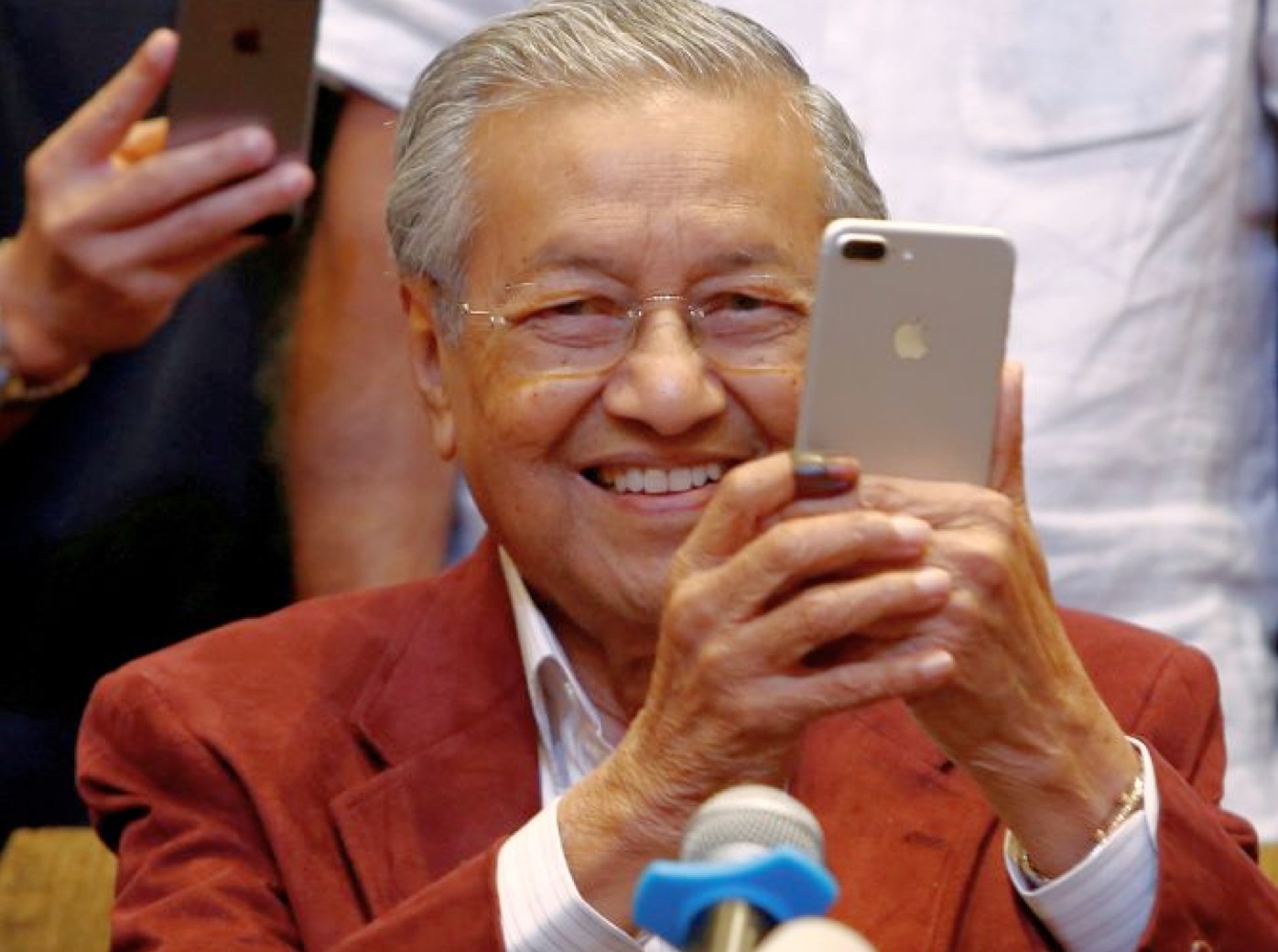
for over sixty years had been defeated by a coalition led by 92 years old Dr
Mahathir Mohamad and assisted by Anwar Ibrahim.
Britain took over the region during the
late eighteenth and early nineteenth centuries, and ruled through three
agencies: the Federated Malay States, the Unfederated Malay States, and the
Straits Settlements. The last of those became the best known, perhaps,
involving Singapore, Malacca and Penang.
My most recent novel, A Straits Settlement, has Superintendent Chris Le Fanu of the
Indian Police Service come to Penang, ostensibly pursuing a case but really
escaping a tyrant boss back in India. While there, he encounters the
distinctive cultural patterns of the Malayan peninsula, mainly in the form of
Jenlin Koh, a Straits Chinese woman.

Like the rest of the British Empire, Malaya
(the Malayan Union was formed in 1946) had specific cultural forms that led
directly to this most recent political upheaval. From the beginning, the
British ruled over a mixture of autochthonous Malays, immigrant Indians (mainly
Tamils and Punjabis) and immigrant Chinese. The latter came mainly from
southern China with a myriad of languages and cultures. Some married into the
Malay community, producing the distinctive Straits Chinese or Peranakan community of Jenlin Koh.

Given that heady brew, writers like
Somerset Maugham, Anthony Burgess, Joseph Conrad, Noel Barber and Lesley Thomas
understandably all set novels there. Maugham was notorious for enjoying the
hospitality provided by his many hosts then casting them unattractively in his
books. Those writers traced the British presence through early colonial times into
the World War II Japanese occupation and subsequent Communist “emergency” then,
eventually, independence in 1957 before the 1963 separation from Singapore that
formed Malaysia.
Among Malaya’s colonial sensations, few rivalled
the 1951 assassination of Sir Henry Lovell Goldsworthy Gurney, the High
Commissioner, by Communist insurgents led by Chin Peng. Gurney was born in
north Devon, went to Winchester then served during World War I before going to
Kenya and the colonial service in 1921. Then came Jamaica in 1934, back to East
Africa. and Colonial Secretary in the Gold Coast. In 1948 he was became
Colonial Secretary in Palestine, overseeing the creation of Israel. From there
he was appointed to Malaya.

Chin Peng was born Perak, Malaya. A Chinese,
he believed that Malays received undue consideration. Through World War II,
however, he was active against the Japanese, working closely with British
forces that moved back in during 1943. He received an OBE for his services.
After the war, Chin Peng climbed through the Communist Party of Malaya ranks,
resenting what he thought was Britain’s undemocratic creation of the Malayan
Union. That led to the armed rebellion remembered as the Malayan Emergency.

Field Marshal Sir Gerald Templer led the
British military campaign and was appointed High Commissioner following Gurney’s
death. Templer later became a key British government adviser during the Suez
crisis.
Today, Gurney Drive in Penang and Gurney
Road in Singapore remember Templer’s assassinated predecessor.
Chin Peng struggled on until the final days
of the Communist Party was finished, holed up in the jungle on the Malaysian
side of the Thai border. The University Utara Malaysia is carved into that
jungle, and I visited it many times while running one of Australia’s first
offshore campuses in Penang. It was strange to be there then because Chin Peng
was still alive – he died in exile in Bangkok during 2013.

Like Chan Ho-kei’s cop, Mahathir Mohamad
traversed this colonial and post-colonial journey. He became a medical doctor
then joined the United Malays National Organisation (UMNO) in 1946. It was 1964
before he entered Parliament but he was already a leading advocate of special
treatment for Malays as outlined in his influential book, The Malay Dilemma. He fell out with Lee Kuan Yew and Singapore, suggesting
too much Chinese influence was at play there. Mahathir fell out with his own
leader, Tunku Abdul Rahman, too, and left parliament but returned later to
become Prime Minister from 1981 until 2003.
His re-emergence is remarkable, if only for
the rapprochement with Anwar Ibrahim.
The pair were Prime Minister and Deputy Prime Minister for much of Mahathir’s ascendancy
and up until the Asian financial crisis of 1997 when they began to disagree.
While working there through that period, an Indian friend told me a story. It
had Mahathir suggesting he was the better politician because he bribed
everybody whereas Anwar bribed only Malays. True or not, it captured the
political order where Malays held power, Chinese provided capital while Indians
dominated business and labour. What is known in the West as “corruption”
certainly existed then, as a cost of doing business.
Anwar suffered after the rift. He was jailed
for corruption and then for sodomy. Freed, he was later tried again and served
more time for sodomy right up until this new election. In all that period he
was heralded in the West as a friend of democracy and a martyr to Mahathir. It
is forgotten that he was central to the Mahathir regime for a long time and part
of all the deals. His story is testament to how Asian complexity is often
overlooked or even ignored.

So why is Mahathir back, allegedly to hand power
over to Anwar within a couple of years? The short answer involves the decline of
UMNO under Najib Razak who became Prime Minister in 2009. He comes from
political royalty. His father, Abdul Razak, was the second Prime Minister, his
uncle Hussein Onn the third. Najib himself was educated in the United Kingdom then
entered parliament at twenty three to begin a storied career in senior
positions.
But his Prime Ministership has been marked
by scandal and corruption. One problem involved continuing rumours about the
2006 murder of a Mongolian woman being associated with people close to Najib.
In 2009 two policemen were convicted then later acquitted of the murder, but in
2015 another court again found them guilty. One fled to Australia which would
not extradite him back to a country carrying the death penalty. Now with the
change of government, Mongolian officials want the case reopened.
Meanwhile, up popped the 1MDB story. This
was a Malaysian government development company fund created in 2009 to enhance foreign
direct investment projects. Its total holdings are effectively unknown, but a
United States Department of Justice indictment suggests at least $US3.5 billion
have disappeared into private hands. Anwar has long been a critic, identifying
Najib as a key figure suggested as a major beneficiary. Some accounts have
Najib him receiving $US800 million.

Much of the story line swings around
characters like Jho Low. A classic “flash Harry” who attended Harrow then the
Wharton School and later befriended Najib’s stepson, Jho Low runs a Hong
Kong-based finance company behind or associated with major global purchases.
Those include the Park Lane Hotel in New York, EMI’s music publishing arm, and Reebok.
He and Najib’s stepson also ran Red Granite pictures that financed The Wolf of Wall Street.
That movie connection has him associated
with women like Paris Hilton and recently, Australian Miranda Kerr who has returned
a substantial amount of jewellery following indications it was purchased with
pilfered 1MDB funds,

Now the new Finance Minister, Lim Guan Eng
who was a successful Chief Minister in Penang, has ordered a full 1MDB audit.
Mahathir had already placed a travel ban on Najib and his family. Now, police
raided Najib’s home and offices to confiscate seventy-two bags of jewellery,
two hundred and eighty four boxes of luxury handbags, several luxury watches
and substantial amounts of cash.
The war of words continues.
We can only imagine what Somerset Maugham
might have made of it all, but one thing is clear – crime writers have plenty
of material in all these colonial into postcolonial conditions even if, as the
old saying has it, “you couldn’t make up this stuff.” Reality continues to be
stranger than fiction.
Perhaps it will be a new case for Shamini
Flint’s Inspector Singh.

--Brian in for Jeff