
Annamaria on Monday
It's been a busy week of guests going and coming, something that is making me happy. And with the holidays occurring on Thursdays, it has also meant the whole weeks have seemed like one long holiday. What's not to like?
Hence, I share again, a past blog about Florence's Renaissance artists' infatuation with wildlife.


I returned from South Africa and, the very next day welcomed my friends Jean-Claude and Francoise visiting from Nice. We launched into a marvellous week of art exhibitions, a studio visit, museums, and churches around this, the greatest art treasury in the world. Our first stop was the Gozzoli chapel in the Palazzo Medici-Ricardi to view the splendid frescoes.

A strange compulsion overcame me there. In all the richness of the images before me, my eyes began to do what they had been doing for the previous week when I was sitting behind Stan in the Land Rover, rolling and bumping our way through the South African bush: Without intending to, I found myself scanning the terrain for birds and animals. And so began my next great adventure--a safari in Florence. Hence:






I returned from South Africa and, the very next day welcomed my friends Jean-Claude and Francoise visiting from Nice. We launched into a marvellous week of art exhibitions, a studio visit, museums, and churches around this, the greatest art treasury in the world. Our first stop was the Gozzoli chapel in the Palazzo Medici-Ricardi to view the splendid frescoes.

A strange compulsion overcame me there. In all the richness of the images before me, my eyes began to do what they had been doing for the previous week when I was sitting behind Stan in the Land Rover, rolling and bumping our way through the South African bush: Without intending to, I found myself scanning the terrain for birds and animals. And so began my next great adventure--a safari in Florence. Hence:
A Field Guide to Wildlife in Florence

Introduction
Travellers accustomed to African safaris will find some expected similarities, but also some marked differences between the African bush and game spotting in Florence.
- Birds will, obviously, most likely be found by looking up. Not all, however. Birds of prey, especially, can quite often be found at eye level.
- Animals elusive and difficult to find in the sub-Saharan wilderness are often quite plentiful in the chapels and piazzas, as this guide will demonstrate.
- Though their African cousins often flee when approached, all but two or three of the creatures you encounter in Florence will remain stationary and pose to show themselves to their best advantage. You will find this positively delightful.
- For convenience, this manual is organised in similar fashion to other Florentine guidebooks, by location, rather than by species.
My Terrace
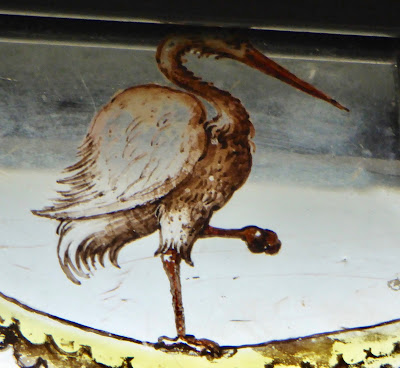
Swallows and pigeons are quite common in Florentine outdoor spaces. Only a bit rarer is the European goldfinch or cardellino. (True to the arcane nomenclature of birds worldwide, this bird shows very little of the colour of its given name, but never mind.) See also Galleria degli Uffizi.

Palazzo Medici-Ricardi
Go first to the Chapel where Benozzo Gozzoli's The Journey of the Magi (1459) offers a wide array of birds and animals.


 |
| Stan will recognise this as a typical safari scene of a waterhole at which one can spot several different varieties of bird life. |
Although the chapel is the most interesting to wildlife seekers in this palazzo's fortress-like structure, the determined visitor will not want to miss the state apartments, the ceilings of which offer wildlife difficult to spot elsewhere.
 |
| Extremely rare elephant. Those on safari in Italy determined to see elephants are better served in Rome. |

 |
| Rare indeed, a lioness. The macho Medici world, it seems, much preferred the male of the species. |
The Duomo, the Baptistry of San Giovanni, Museo dell'Opera del Duomo
Bird-lovers will want to concentrate on the Baptistry. The Museo, on the other hand, offers thrilling sightings of felines.


Galleria degli Uffizi
The Uffizi is a paradise for birdwatchers.


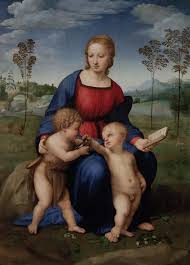 |
| Rafaello's Madonna del Cardellino |
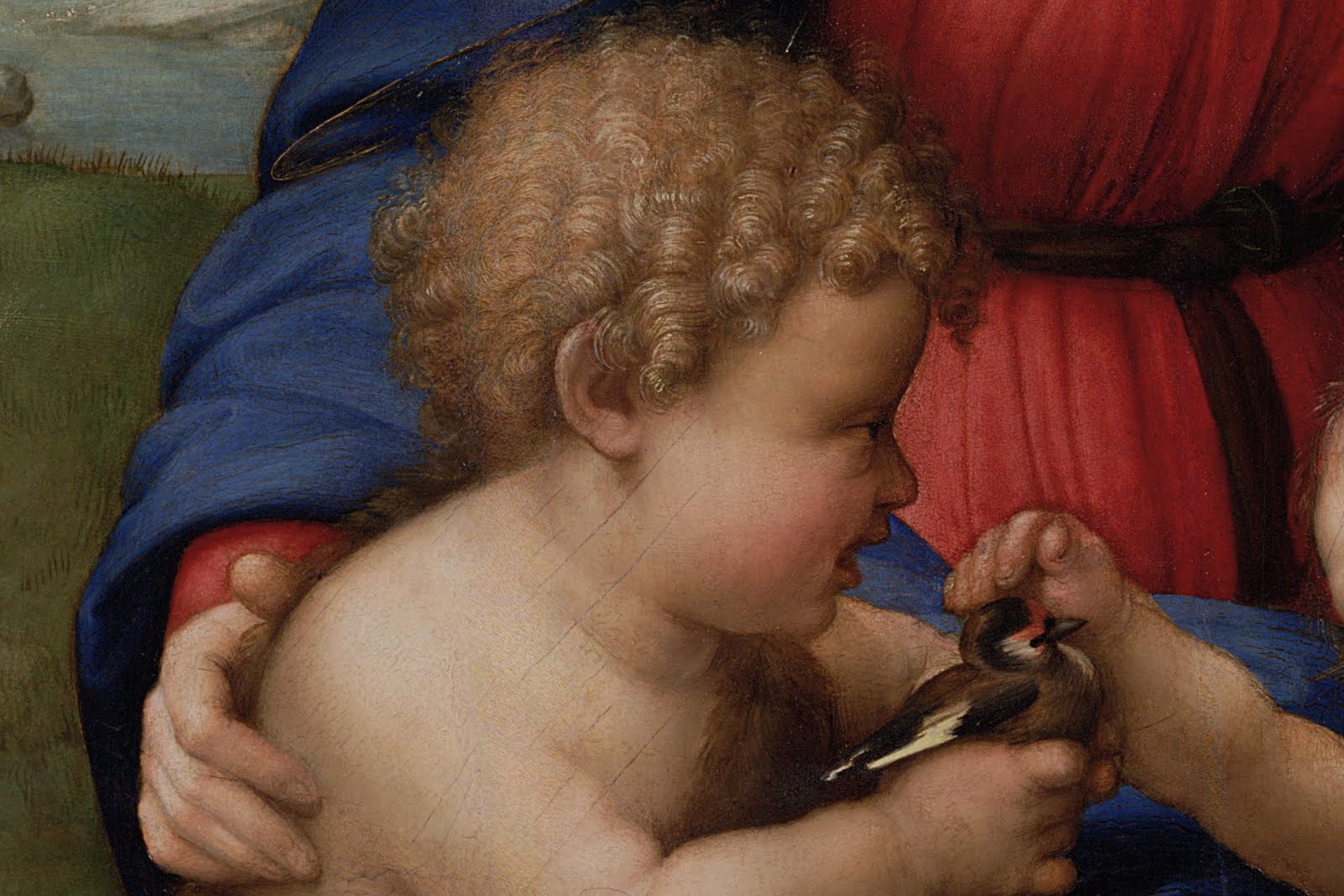 |
| Detail of the above |
The Church of San Lorenzo, The Laurentian Library, The Medici Chapels
All three of these locations abound with rare and exciting sightings.


 |
| Although, in the author's opinion, this image does not compare with the African firmament, it has the added advantage of pleasing animal lovers as well as stargazers. |


 |
| Michelangelo's owl, unique in this genus. Habitat: Medici Chapels |
Piazza Signoria
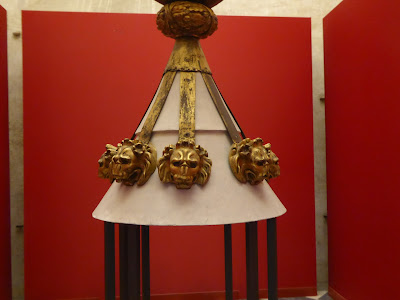
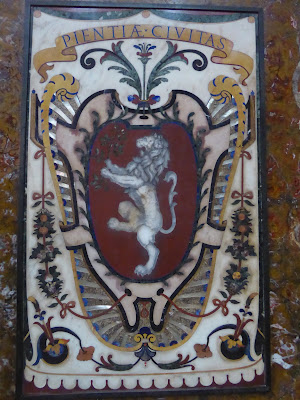
Visitors with a sense of the dramatic will want to save this locale for last. Lions abound. Here, along with the above golden cover art of this manual, is but a small sampling of the scores if kingly creatures on which to feast one's eyes.


The Signoria is also the precinct of the wild boar.

 |
| Florentines have a special affection (and taste for) the wild boar or cinghiale. Myth says that if visitors rub the nose of this porcellino, they will return to visit Florence again. The richness of wildlife viewing here requires several visits, of considerable length. |





May the holiday continue!
ReplyDeleteThank you so much, Michael. Tomorrow it ends. It’s the feast of the Epiphany on the Christian calendar. These days most people call it La Befana, After the Italian version of Santa Claus, but a woman! She rides in on a broom, and like Santa Claus himself, might deliver gifts or coal. I think I’ve been a good girl. I don’t know what I would do with the coalI get some! Burning it is not an option, considering the impact that might have on climate change.
ReplyDelete'Animals elusive and difficult to find in the sub-Saharan wilderness are often quite plentiful in the chapels and piazzas, as this guide will demonstrate.' This made me laugh! Also - I loved this safari. Thanks.
ReplyDeleteThank you, Sara. I am so pleased that you enjoyed it.
ReplyDeleteI adore these pictures. They take me straight back. Thank you for sharing, and happy new year!
DeleteFrom AA: So happy you enjoyed them. Lucky me. I will have new visions of Tuscany to share next Monday.
Delete