
 |
| Frederick Leighton's Flaming June |
Napping after lunch is a tradition with adherents worldwide, especially in warm seasons and places. We had 87-degree weather yesterday in Baltimore—the second hot day in a row. Cherry trees are bursting into pink heaven outside my bedroom window. As I lie down over rather than underneath the sheet because of my street clothes, guilt snuggles alongside me, an unwelcome companion whispering that I didn’t make my morning writing quota.
My sigh back at her turns into a yawn. There’s a curtain of fog inside my head, perhaps induced by the budding trees themselves. Brain fog prevents me from getting into flow whenever I want. I know from experience that sentences are most sprightly in the morning, but unfortunately this morning I dashed out for an appointment. And so, at 1:15 pm—right after lunch—I throw myself onto my bed with relief.
I know I’m not the only person who indulges; and I imagine how many people are napping in my neighborhood. Thirty-five miles away, the White House lies, and I have a brief image of Donald Trump napping that I quickly shove away.
Better to think about people in my lane: writers. The authors Vladimir Nabakov and Thomas Mann were habitual nappers who managed to also write classic novels. Patricia Highsmith napped, but usually at 6 p.m., setting herself up after a day of writing to soldier on into the night.
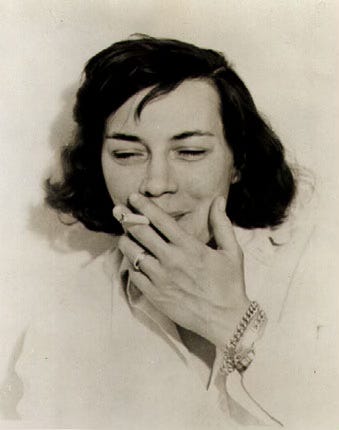
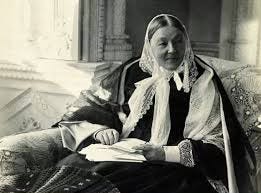
The Internet search calls up many more male writers as self-avowed nappers than it does female. I suppose women writers have often felt that stealing time to be able to write was a great privilege not to be squandered. As the mother of a one-year-old, when my baby napped, I wrote frantically—it was my only chance. I play out this idea to realize that in the 19thand much of the 20th century, women worked hard in the house, caring for children, and if someone got a moment to herself, and was working on a book—there was the focus. I bet that daytime sleeping was a privilege reserved for the elders among them—and was a sign of necessity for their health. Apparently, the legendary nurse Florence Nightingale made the discovery that rest was needed for recovery—though she typically spent less than five hours on sleep herself!
Things are slowly changing. Tricia Hersey is a poet, nonfiction writer and activist famous for her books Rest is Resistance and We Will Rest in which she explains her practice of resting as an act of self-care and protest against the unrelenting, capitalistic grind. I’ve read about scientists proving that a fatigued brain has more trouble finding answers and creative solutions than a rested one. Though it’s not just sleep that does it—walking in nature works, say if you’re in a workplace or at school and don’t have a cozy bed in which to retreat.
Brain power also increases after taking a walk in nature.
My pattern used to be to regularly stroll with my dog after my own lunch. I did it because I know that if I move vigorously after lunch, my blood sugar curve doesn’t look like Mount Olympus. Blood sugar that’s too high is itself a reason for sudden fatigue.
There are plenty of ways to spend one’s time when not writing. I will continue to practice both walking and napping. I may have dreamed up a way to combine both. And this looks like sinking into a chair on my upstairs porch, or on a bench in the park, and letting my eyes ever-so-gently fall closed.
Setting my alarm now for 25 minutes.
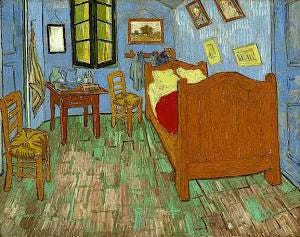
Vincent Van Gogh’s Bedroom in Arles


 Posts
Posts





No comments:
Post a Comment