Saturday, August 29, 2015

You Don't Want a Bully in a China Shop.


I just love that title. Barbara suggested it to me during the Chinese stock market's meltdown when I asked what I should write about this week.  We’d just finished watching an American Presidential candidate give an encore performance of his coping mechanism when faced with journalistic criticism, and her line had me laughing right up until I looked at the Greek news. 

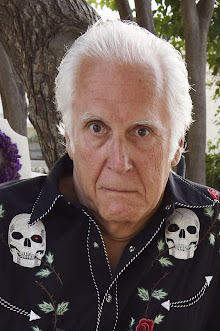
The same sort of guy, sans money or the hair, actually got elected in Greece and had the Prime Minister’s ear…until he got the PM’s boot.

As I mentioned last week, it’s election time again in Greece, the third this year. There’s also a new Prime Minister, the first woman in Greece’s history and the sixth since the financial crisis began—but she’ll only serve for thirty days. There’s also a new finance minister, the eighth since 2010.

New Greek Prime Minister Vassiliki Thanou

It’s anyone’s guess how this is going to turn out, because no Greek seems to believe a single word any politician says. In fact, the polls make it seem certain that no party will gain an absolute majority, and the environment for a viable coalition government looks even less hospitable now than it did for the government that just collapsed.  All of which means a possible new round of elections before the end of 2015—just what a disheartened people trying to cope with an economy on the edge of perdition needs: more uncertainty.

That was a long way around to an explanation for what I decided to write about this week. Or rather borrow from an email full of chuckles sent to me by a friend. It’s a list of paraprosdokians––figures of speech in which the latter part of a sentence or phrase is surprising or unexpected, frequently humorous. Of course, it’s a word derived from the Greek, meaning “against expectation.”

And since I didn’t write them, there’s a very good chance you, too, will enjoy them. I’m told Winston Churchill did. :)


1. Where there's a will, I want to be in it.

2. The last thing I want to do is hurt you, but it's still on my list.

3. Since light travels faster than sound, some people appear bright until you hear them speak.

4. If I agreed with you, we'd both be wrong.

5. We never really grow up, we only learn how to act in public.

6. War does not determine who is right - only who is left.

7. Knowledge is knowing a tomato is a fruit. Wisdom is not putting it in a fruit salad.

8. To steal ideas from one person is plagiarism. To steal from many is research.

9. I didn't say it was your fault, I said I was blaming you.

10. In filling out an application, where it says, 'In case of emergency, Notify:' I put 'DOCTOR'.

11. Women will never be equal to men until they can walk down the street with a bald head and a beer gut, and still think they are sexy.

12. You do not need a parachute to skydive. You only need a parachute to skydive twice.

13. I used to be indecisive. Now I'm not so sure.

14. To be sure of hitting the target, shoot first and call whatever you hit the target.

15. Going to church doesn't make you a Christian any more than standing in a garage makes you a car.

16. You're never too old to learn something stupid.

17. I'm supposed to respect my elders, but it's getting harder and harder for me to find one now.


Not all of the above reflected my attitudes, but they did make me smile, something very little else in the world seems to be capable of doing these days…except for this current visitor to my farm. She always makes me smile.

Jeff—Saturday

Friday, August 28, 2015

The Myth Of The Day Job.


I was scanning through a feature in Myslexia called “Don’t Give up the Day Job” and I have to confess that it always rankles me a little when people infer that you are in some way a second class writer because you have another job. 

                                          
Writing is something that I do, am fortunate enough to make money at it, but it’s not what I spent ten years in full time education to achieve.  I am lucky (there’s that word again, as it was not actually luck, it was sheer hard graft for the first ten years!!) to have a big and successful business and a job I really enjoy.
The article pointed out something that I think is very true; giving up the day job can hurt your writing in more ways than one.
One of the reasons I’m glad I didn’t become a dentist is that I’m constantly fascinated by peoples’ chit chat. My patients might have my elbow in their buttock but I leave them gag free to scream.  People are an endless source of fascination. 
And they are very helpful.
                                               

The following story is one hundred per cent true.  A patient came in yesterday with a copy of their aunt’s death certificate (which was from Colorado weirdly?).  The deceased’s name was wrong. The dates were wrong. The death certificate was produced before she died. The cause of death was medically nonsense.  She died from a sudden aortic bleed although that took weeks. Okay so that is pedantry at its best but if there is a place to be precise and pedantic then it is on a death certificate.

                             
Then there was the story a patient told me about her friend who has an idiot for a husband.  The idiot husband, (good suit, nice car,) thought it would be lovely to take downtrodden, mousey little wife and the two ankle biters out for a meal to a posh restaurant.  When they got there the restaurant informed him that they do not allow children in. So he sent wifey and children back to the car to eat chips while he dined in the restaurant.  You couldn’t really make this stuff up.
                                    

Also had a native Gaelic speaker in for treatment yesterday and she was delighted to have her brains picked. It’s an important part of the next novel that the Altmore of Altmore Road, is an anglicized version of Allt Mhor, which roughly translated is ‘Big Stream’. It is pronounced ‘elt vor’. Scots Gaelic has a lot of words for rain, showers, river, wet, damp, soaking.  The language has a big vocab for wet!  
Having a day job means 60 hour weeks are norm, deadlines are very tight, research is not a never ending feast of merriment- it’s tight and focused.
But I have no desire to sit penniless in a coffee shop waiting for inspiration for the next best seller. It’s not that the writing doesn’t matter to me it’s just that my other career matters just as much.  Do we still have a romantic notion of the starving writer in the garret somewhere?
                                     

Some people say as a point of pride that they went on the dole, social assistant/ brew while they honed their writing skill. Good job I was working, writing away until midnight and paying tax to keep them.  Another famous writer blew her PhD year money on writing her novel.  My two full time writing pals both have very nice early retirement packages that will never be in the grasp of a self-employed person like myself. What I am saying is, it’s not really their writing that funds their lifestyle now or gave them that initial headspace to achieve their first publication.
Would I change that situation? Not a jot. The day job gets me out and about. Meeting all kinds of people from all walks of life and engaging them in conversations that have a very precise starting point (‘where does it hurt?’)… but can end up anywhere (‘I do recall the night I saw my dad murdering my mother’).  I think my characterisation would suffer if I didn’t ‘work’.  I’m sure my dialogue writing skill comes from listening to all types of people talk.
                                  

 Full time writers very often have to pencil in other activities to get them away from the desk. Dog walking, exercise, meeting with friends. I think I would go mad spending my writing time with the evil in my head sitting in an office five days a week, and then going out to an event and meeting lots of crime writers with all the evil in their heads.
I love my day job, I never crawl out of bed and think ‘I hate my life. I hate my work’. Even if that patient is difficult, there will be a nicer one along in thirty minutes, and at some point in the day I will get a cake and a coffee brought in for me (yes they are that scared of me - they do bring me bribes).
Recently three good friends have become redundant from the day job and are now trying to write full time- and it is tough. I had coffee with one today, he was asking me for a job, anything, answering the phone, cleaning up… and he is a good writer and sells well… but not enough to keep the wife and kids.
                                       
 I couldn’t write well under that sort of pressure. Doubt if I could write at all. Not knowing how I am going to pay the mortgage might seriously impede my creativity.
Or am I selling out for an easy life?
 And, (is this my second blog ending in a Val McD quote?), she said that when she gave up the day job, her creative writing output dropped by 50%.
So may as well get back to the buttocks then!


Thursday, August 27, 2015

Through Other Eyes


I sometimes wonder what it would be like to have senses that behave differently from those we actually have.  Not that I'm complaining; our senses are totally amazing as they are.  But, for example, how does a dog see the world when out for a walk?  As she goes down the path, all her interest is in the smells.  She's "reading the newspaper." She hardly bothers to look where she's going! Visually her world is in black and white because a dog’s eyes lack the cones that allow us to split the light up into wavelength regions that our brains can interpret as colors.  Probably that’s so that she can see better in lower light than we can—an advantage for predators that may be hunting at night. 
But at the same time, the dog is getting scent information much richer than ours.  How does her brain integrate this information?  As a ghostly shadow of the previous occupant of that space?  Or is it kept separate—rich information about the past, but in no way confused with the present?  I would guess the latter, yet I’ve seen dogs shy from the smell of something dangerous as though the threat was still there.
For that matter, how do we know that we all perceive colors the same way or even in a similar way?  Yes, we will all agree that the wavelengths around 550 nm are green (unless one of us suffers from some form of color blindness), but how can we tell if our perceptions of green are the same.  Maybe my green is your red?

Then, of course, there are lots of 'colors' out there that we can’t see at all simply because our eyes are not sensitive outside the very narrow wavelength range that we call “visible” light.  Probably that's because the range we can see is where the highest amount of energy reaches the Earth through its atmosphere.  It starts around 400 nm with the blue and finishes around 650 nm in the red.  The shorter wavelengths start with the ultraviolet (much of which is filtered out by the atmosphere fortunately) and the longer wavelengths are the infrared running into the thermal.
There’s lots of useful information in what’s sometimes called the near infrared - the wavelength range starting just after red.  For one thing, vegetation reflects strongly in that region, pushing away the heat energy. This sudden jump in reflectance is called the “red edge” and its strength and position can be used to obtain indicators of plant health.  For this reason, the satellites that supply information for GoogleEarth, for example, actually measure the near infrared as well.  They take four simultaneous images – one in the blue, one in the green, one in the red, and one in the infrared.  This is no problem for most digital sensors because they aren't as restricted in sensitivity as our eyes are.  In fact, often digital cameras have filters to block out the infrared because it can cloud or haze the image.
Here is  a gray scale image of the infrared. White in these images will be vegetation, not snow.


Many photographers and artists have tried to show us the world with other eyes by representing the infrared as one of the colors we usually see.  The results can be quite amazing.


The image below was created by Irish photographer and artist Richard Mosse.  It’s of Lac Vert in the Congo.  Take a look at his powerfully dramatic images here

Lac Vert in the Congo by Richard Mosse

And sometimes we can see a lot more interesting detail if we look with other eyes, such as this galaxy example.


Once you get to the longer wavelengths, you get into the thermal range and now it's not the reflection of the light that is interesting, but rather the emission of the light from the item. Really what is happening is that we are translating the different temperatures to different colors with red usually representing the hottest and blue the coolest.


Of course, all of these images are, in the end, just representations of these other light ranges as the colors we're used to seeing every day.  We can’t really see them as part of our world with our eyes any more than we can visualize the history of a path with our noses.


Michael - Thursday

Tuesday, August 25, 2015

Guest Blogger: James R. Benn


I’m thrilled to welcome Jim Benn, a fellow partner in crime from Soho Press, whose acclaimed Billy Boyle series gets another outing with The White Ghost this September. 


Billy goes to the South Pacific and it’s not like the Musical. This one has Jack Kennedy as a central character, with Jim sharing with us today what really went on behind the scenes of JFK’s naval career…. Welcome, Jim, and thanks for coming back to MIE.
--  Cara 

Miss Denmark of 1931

PT 109 and President John F. Kennedy
You may wonder what these two have to do with each other. As it turns out, quite a bit. Without Miss Denmark of 1931, John F. Kennedy may never have become a war hero, and then president.

Jack Kennedy received a lot of good press about his heroics in the aftermath of the tragic sinking of PT 109 in the South Pacific. Two men were killed and one severely burned when a Japanese destroyer ran over Kennedy’s boat in the dark of night. But it was a long and tortured road that led him to reap the benefits of that public relations bonanza. The players include Adolf Hitler, J. Edgar Hoover, Joe Kennedy Senior, and Inga Arvad, the aforementioned Miss Denmark.

First, let’s go back to 1940. Young Jack Kennedy’s Harvard thesis, titled Why England Slept, was about England’s failure to rearm to meet the growing threat of Nazi Germany. He knew a war was coming, and tried to enlist in the U.S. Army Officer’s Candidate School, even though he’d suffered all his life from poor health, ravaged by chronic colitis, scarlet fever, and hepatitis. He took the army physical, and was promptly classified as 4-F, due to asthma, ulcers, and venereal disease. Yep, VD. But that’s a story for another day.

Fast forward to 1941. Jack now tries for the navy, with a big assist from his father, Joe Kennedy, former ambassador to Great Britain. The head of the Office of Naval Intelligence, Captain Alan Kirk, had been the naval attaché in London during Joe’s time there. Strings were pulled, and Kirk allowed a private Boston physician to provide the U.S. Navy with a certification of Jack’s fitness.

Ensign JFK
\

Not surprisingly, Joe Kennedy’s hand-picked doctor passed Jack with flying colors. He was made an instant ensign, no basic training required. Jack was given a desk job at the Office of Naval Intelligence in Washington D.C., courtesy of the obliging Captain Kirk.

Enter Miss Denmark. Inga Arvad; twice married, four years older than Jack, and currently separated from her second husband. A former film star and journalist in Denmark, she’d moved to the U.S., graduated from Columbia School of Journalism, and landed a job as a columnist at the Washington Times-Herald. Her roommate was Kathleen “Kick” Kennedy, who also worked at the paper. Kick introduced brother Jack to Inga at a DC nightclub, and the two began a torrid affair. Some biographers have said Inga was the one true love of Jack’s life. If it was indeed true love, the course of the affair did not run smooth.

Inga

While working as a journalist in Denmark, Inga had covered events in Germany. She’d met with Adolf Hitler, famously sitting with him in his box at the 1936 Berlin Olympics. Rumors abounded about her dealings with Hitler, who supposedly praised her as an ideal Aryan beauty, and meetings with Hermann Goering and other top Nazis. Someone at the newspaper, perhaps a jealous rival for Jack’s affections, denounced her to the FBI as a Nazi spy.


J. Edgar Hoover ordered her phones tapped and her apartment bugged. Agents followed her and Jack as they carry on in nightclubs and hotel rooms. Joe Kennedy is not pleased with Jack’s lover. A possible spy, a married woman, and not a Catholic. Three strikes and Jack is out of Washington DC, transferred to a naval base in South Carolina. But they continued to see each other, Inga flying down for weekends at the Fort Sumter Hotel where she registered under a false name. It didn’t matter; the room was bugged. Under pressure from the FBI and Joe Kennedy, Jack finally broke off the relationship, emotionally unable to act as his own man. Inga quit the newspaper and moved to New York City, divorcing her second husband. She tried to get work with the Office of War Information, but her application was blocked by the FBI, even though there was no proof of her being a Nazi spy. Having given up the love of his life, Jack spiraled into depression, telling a friend he felt “more scrawny and weak than usual.” His chronic back pain flared up, and Kennedy was given medical leave for treatments at the Mayo Clinic.

In a couple of months he was back on duty, determined to see action and to put the Inga Arvad affair behind him. Once again, strings were pulled. Undersecretary of the Navy James V. Forrestal, an old friend of his father, got him assigned to Midshipman’s School at Northwestern University, where he studied navigation, gunnery, and strategy. While there, Jack signed up for PT boats. No one questioned why a man in such poor health was to be given such an arduous and dangerous command.

If not for Miss Denmark of 1931, Jack Kennedy may well have commanded nothing more than a desk in DC.

To this day, there is much controversy about Kennedy’s culpability in the sinking of PT 109. At the time, many in the navy were critical of Kennedy’s handling of the boat up to the actual sinking. Opinions are fairly unanimous about his actions after the destroyer split his boat in two. He was certainly courageous in how he held the survivors together and led them to the relative safety of a small deserted island. But for all his actions over the next days and nights, swimming out into the channel in hopes of signaling a friendly craft, it was ultimately native coastwatchers who rescued the men. Much of that story has been carefully airbrushed to show Kennedy in the best possible light. For instance, it was one of the natives who came up with the idea of carving a message into a coconut, which they then carried through Japanese-infested waters to an American base, not Kennedy.

JFK in the Pacific

The navy was ambivalent about Kennedy’s role and responsibility for the disaster. As he recovered from the ordeal, he was recommended for the Navy and Marine Corps Medal, a non-combat award, reflecting his staunch work keeping the survivors together, while side-stepping his choices during the actual combat mission. But even this award languished on the desk of Secretary of the Navy Frank Knox, who refused to sign it. When Knox died of a heart attack in April 1944, he was succeeded by Undersecretary Forrestal, Joe Kennedy’s old pal. Forrestal approved the granting of the medal on the very day he was sworn into office.

The entire PT 109 incident was reported widely in the press, but it was only when Jack was back in the States, and he met up with John Hersey that the PR machine went into full swing. Hersey, whose novel A Bell for Adano would win a Pulitzer, suggested that he’d liked to write an article about PT 109, a suggestion which Joe Kennedy heartily endorsed. Jack cooperated, and soon a lengthy piece was published in the New Yorker, a highbrow magazine with low circulation. Joe was not happy. The long piece focused on each man in the crew, detailing their reactions to the events. Jack was not center stage. The strings were pulled again, and Joe arranged for a condensation, focusing on Jack’s heroics, to be published by the widely-circulated Reader’s Digest.  Two years later, when Jack ran for Congress, Joe arranged for 100,000 copies to be mailed to voters.


The rest is history.

Jack made a half-hearted attempt to get back together with Inga after the war, but she was no longer interested in a romantic relationship. She married the cowboy actor Tom Mix, and died in 1973.

Jim for Cara—Tuesday

James R. Benn is the author of the Billy Boyle World War II Mysteries, published by Soho Press, Inc.  The debut title, Billy Boyle, was named one of the top five mysteries of 2006 by Book Sense and was a Dilys Award nominee. The sixth, A Mortal Terror, was named a “Killer Book” by the Independent Mystery Booksellers Association, and received a starred review in Library Journal.  Several books have been Indie Next Picks and well-reviewed in the New York Times. The 8th in the series, A Blind Goddess, was long-listed for the Dublin Literary Prize. The next book, The Rest Is Silence, is a Barry Award nominee for 2015. The 10th novel, The White Ghost (9/1/15), has garnered a starred review in Booklist. Benn worked in the library field for over thirty years before retiring to write full time.