Friday, May 21, 2010

The Past is Never Dead. It's Not Even Past


 Please welcome this week's guest blogger, James R. Benn.


Jim is the author of the Billy Boyle World War II Mystery Series, published by Soho Press. The New York Times has called his work a “lively (and surprisingly thoughtful) adventure series.”  Today, James will discuss the long reach of history in fact, fiction and speculation.


The past is never dead. It's not even past."
William Faulkner.

In November of 2008, the body of Wladyslaw Sikorski, the Prime Minister of the Polish government in exile in London during the Second World War, was exhumed from his tomb in Krakow cathedral. 
General Sikorski died in 1943 when his aircraft, taking off from British Gibraltar, crashed into the sea, killed all aboard with the exception of the pilot.

The exhumation was ordered by the Polish government, in order to test the remains of a national hero for signs he was murdered.  At the time of his death, he was calling for an investigation into the deaths of thousands of Polish officers at the hands of the Soviets, based on the discovery of mass graves in the Katyn Forest. The British were intent on maintaining good relations with their Soviet allies, no matter what inconvenient truths were uncovered at Katyn.  Various conspiracy theories called the Soviets or the British to account for this too-convenient accident.  A computer simulation program developed by Polish scientists in the 1990s showed that technically, at the speed the aircraft was traveling upon take-off, it could not have accidentally crashed.  But the results of the autopsy did not give credence to these theories.  Sikorski’s body showed only signs of blunt force trauma associated with airplane crashes.

With Sikorski’s death in 1943, the voices calling out for Soviet accountability were stilled.  The war went on, with the Russians contributing much of the manpower that led to the defeat of Nazi Germany.   

Poland, which was the first nation to fight against aggression when it was attacked by both the Nazis and the Soviets, was ultimately abandoned to decades of totalitarian rule.

Fast forward to April 2011.  The Soviet Union is gone, but the legacy of Stalin and his rule continues to wreck havoc. After years of denial, Russia did finally acknowledge the crime of Katyn and the other execution sites.  Notably, the admission was always couched in general terms, to avoid legal proceedings against any surviving killers.  But still, it was an important admission.  So important, that Poland’s political leadership once again boarded an ill-fated aircraft.  Ninety-six died this time, with the Russian-built plane crashing en route to a ceremony commemorating the anniversary of the killings at Katyn in 1940. Sixty years later, Katyn still claims lives.

The revelations of the Katyn Forest Massacre were indeed hushed up during the war. The possibility that we were allied with one monster to fight another was not one that the British or American leadership wanted debated.  It’s easy to sit in judgment sixty years later, but men like General Eisenhower were preparing for the invasion of Europe.  Every Soviet division in the fight drew off German forces that might be faced on the beaches of Normandy. 

For those curious at how these issues were viewed at the time, make a note of my next Billy Boyle World War II mystery, due out September 1st, 2010. 
 In RAG AND BONE, Billy’s good friend, and Polish patriot, Kaz, is accused of the murder of a Soviet official in London.  Against the backdrop of the news of Katyn, Billy must navigate a diplomatic crisis as well as the London underworld, to find the truth behind the murder.  How far will be go to protect his friend?  How far will his government go to protect their ally?  To answer these questions, Billy must question everything, until all is stripped away and he finds himself down where all the ladders start…
Now that my ladder's gone,
I must lie down where all the ladders start
In the foul rag and bone shop of the heart.
The Circus Animals' Desertion
William Butler Yeats

Posted by Leighton, for Jim - Saturday


Crimefest

I am writing this live from Crimefest, in the lobby of the Royal Marriott Hotel in Bristol - or at least trying to, as my laptop decided to fall out with Blogger, and refused to put up the contents of my original post, which then appear to have got lost in the ether. I'm now in the 'business centre' ( aka a computer, a fax and a photocopier in a cubbyhole) This continues a rather traumatic 24 hours for me. Yesterday I arrived at the hotel to discover that I wasn't booked in for last night, a result of my incompetence rather than the hotel's I must add. I had left three children at home, one a wakeful infant. To say I was looking forward to an undisturbed night sleep in a plush hotel bed would be an understatement. This was not welcome news.

Thanfully I have friends in the city, who were willing to put me up...in the house they share with three children, one a wakeful infant. The plush bed became a sofa. I can't say my sleep was undisturbed becasue I'm not actually sure I fell asleep. Let no one say I don't suffer for my art.

The upside was that I didn't end up haunting the hotel bar until the wee small hours, so as a result I was, sleep-deprivation aside, fresher than I might have anticipated for my 9am panel this morning, with none of the dry mouth, sweats and vague sense of unease that accompanies a public hangover. I chewed  the fat with Frances Brody, Alison Bruce, Diane Janes and Martin Edwards in front of an audience that was far better attended than a 9am panel deserved to be. The subject was ostensibly about the differences between writing fact and fiction, but as always it took on a life of its own and we covered a heap of ground, in hopefully an entertaining way and without too many lame gags.

Crimefest is smaller than some conventions but particularly enjoyable. Like Bouchercon, though nothing like it in terms of size, there are no hierarchies or cliques, just lots of writers and readers mingling, chatting and drinking. Writing is a solitary existence, so the chance to have a whinge and a moan with other writers about agents and publishers, and meet face to face the most important people in the business, the readers, is a genuine pleasure. No one is trying to relentlessy promote themselves or their books, and if they do they are given pretty short shrift. I come because I enjoy it and to meet people. To be honest, I can think of ten better ways to flog copies of my book than this, but I don't see that as the point.

Before I endure another technological catastrophe, I'm going to sign off and do some of that chatting and mingling. The drinking I will save for this evening when I have dinner with my fellow MiE-ers Yrsa, Michael and Stanley, Cara and guests. Then I hope to sleep in a bed.

Five quid says the fire alarms goes off at 3am...

cheers

Dan-Friday


p.s no pics due to the techie problems, but I hope to snap some and upload when I get back to  familiar PC.

Thursday, May 20, 2010

Good News - Bad News

If you ask people what is the major problem facing their country, you will probably get a variety of answers. Some will talk about the middle-east wars, terrorism, most will mention the world economy and the recession. If you ask a South African the same question, you may well hear about the economy but it’s not the right answer. The right answer is HIV-AIDS.

A few years ago South Africa edged out Botswana as having the highest infection rate in the world. Of course, many countries don’t have meaningful statistics but they’ll need to have rates of over 20% to be in the running. So how did the situation get so horribly out of control?


Obviously there have to be a variety of reasons which range from cultural behaviours to poverty and lack of education. But I think that the previous president of South Africa must carry considerable blame. An AIDS denialist, he assembled a “think tank” of alternative medicine practitioners to consider the issue. They blamed poverty and poor nutrition for the symptoms and made scathing remarks about the drug industry and its desire to sell useless chemicals to the poor of Africa. Worse, the minister of health, Manto Tshabalala-Msimang, prescribed beetroot and African potatoes as the way to attack the disease. Embarrassingly, she displayed these vegetables at the South African booth at an international AIDS conference. This lady could be a character in one of our stories. She was expelled from Botswana after being accused of pilfering from her patients at a hospital in Gaborone. She rose through the ranks of the ANC to minister of health, but eventually ruined her liver and, despite a controversial jump-the-queue transplant, moved on to higher things. Angry AIDS activists appealed to the Constitutional Court to force the government to supply retroviral drugs at hospitals and won, but the management wheels turned very slowly.

Prima facie one could hardly expect much better from the current president. Falling for a honey trap that led him to court on a rape charge, he famously told the judge that he was not too concerned about the positive HIV status of the lady since he took a shower afterwards! South African cartoonist Zapiro now depicts him in all situations with a shower head halo. But, in fact, President Zuma’s actions belie his behaviour to some extent. He has spoken out firmly, taken public (negative) HIV tests, given his support to safe sex initiatives. The latter includes a campaign to promote male circumcision – a Zulu tradition but previously discouraged due to sanitary issues. The King of the Zulus has added his weight to this campaign. And retrovirals are now free and widely available. There is evidence that the tide has turned at least as far as public opinion and drug availability is concerned. Late, but better than never.

So what’s the bad news? It’s the size of the problem. Third world governments are making retrovirals available to HIV positive people on the basis of cheaper generics supported by huge grants from charitable foundations such as the Bill and Melinda Gates Foundation. But even if the rate of new infection falls significantly – and that is mere optimism at the moment – the total number of people infected is growing at a staggering rate. How many circumcisions can realistically take place in the next few years? Anyway, it reduces the chance of infection but certainly doesn’t eliminate it. 

And the current sufferers are not cured but remain a drain on medication for the rest of their lives. Thus the demand for the drugs increases daily. In the current economic environment, the cost becomes out of reach for third world countries even with international support. Already there are countries where the drugs are available for free, but you have to join a waiting list – essentially having to wait until someone else no longer "needs" the medication. That is, you have to wait until someone else dies. As the list grows, it seems likely that the people at the bottom, like investors in a pyramid scheme, won’t live long enough to get their turns. It’s a grim scenario.

Michael - Thursday.

Wednesday, May 19, 2010

THE FIRE OUTSIDE MY WINDOW THE FIRE INSIDE MY HEART

Christopher Moore is a novelist who has lived in Thailand for more than two decades and who has been following, and posting about, the violence in Bangkok since it began.  He wrote the following piece at Tim Hallinan's request.  Moore’s latest Vincent Calvino Crime Novel is The Corruptionist and can be ordered from is website: www.cgmoore.com Also check out his blog for photos and videos of the events in Bangkok.  http://www.cgmoore.com/blog/index.asp


I am writing this 15 minutes before the curfew starts on Wednesday 19 May 2010. This morning I awoke to gunfire. The crack of an M16, and if you know that sound, then you understand this isn’t the way to start your day. This is the fourth day I have gone to sleep with the sound of gunfire in the background and woken up to the same sound. 

It has been a long day. The phone never stopped; neither did emails from readers around the world. For their support and thoughts I am grateful. I appreciate your concern for my safety. 
Around 2.00 p.m. I had call that something was burning at Asoke and Sukhumvit Roads—this is a major intersection in Bangkok—and I raced out, got on the back of a motorcycle taxi and arrived to find tires ablaze on Asoke.


Bangkok Central World Shopping Mall burning Early evening Wednesday 19 May 2010 Christopher G. Moore © 2010 


Thirty meters ahead and at the intersection, one BMA bus blocked one lane. Another bus, empty, arrived a few minutes later and parked to block the other lanes. That part of the road was totally blocked.


By now, up the road and beside Queen Sirikit Convention Centre, is the Stock Exchange of Thailand (SET) and it had been set on fire. I raced over to that location. A large mob had gathered on the pavement, spilling into the street. Flames shot out of the front lobby of the SET at three different sections. Within twenty minutes, three fire trucks arrived but were chased away by the stone throwing mob. Behind the SET, the Electricity Board of Thailand had a building that was also on fire.


More protesters were shot in Bangkok during the day. It is difficult to know how this will end, and when it ends, or what will come next. The events over the last month have left a wound in the heart of many. It is five minutes to curfew. Then it is shoot on sight. This is the difference between a crime novel and a war zone. In a crime zone, the criminals operate inside their own community, trying to outsmart each other and the cops. 


In a war zone, the police no longer functions and the whole community divides into bitter enemies, forgetting their common humanity, and seeking revenge. Hatred and violence have become the Siamese twins of destruction. These forces have been set free of the constraints that normally contain them. I have seen their faces on the streets. Now it is time go. It is 8.00 p.m. Curfew has started.


When you read this, it will be another day for you. Stop for one second, look in the mirror and let yourself know exactly lucky you are to be alive, away from the gunfire, burning buildings and the constant fear. You are the lucky ones. 

L'affaire Twitter

I'm posting about L'affaire Twitter but with the volcano re-eruption, the ash about to paralyze world air traffic the 'scandal' has paled and vanished from the French headlines. For now.

But to re-cap this story - When Nicolas Sarkozy, the French leader, and his wife, Carla Bruni-Sarkozy, hosted a state banquet for Dmitry Medvedev, the Russian president, at the Elysée Palace recently it was not only Carla’s figure-hugging dress that caught people’s attention.


After dinner, in an unusual departure from custom, the Sarkozys failed to show up for coffee in the drawing room with their guests. Something must have been wrong, one of those present later told a foreign diplomat: they must be having a row.


Spare a thought for “Sarko” and his première dame, a singer and former top model. Ever since they met at a dinner party, and married just over two years ago, the country has been wondering how long it will last. A president known for a roving eye, a willowy beauty renowned as a “man-eater” — to many it seemed destined to end in tears.
The lane with one of Carla's houses.


In the grand old days of Versailles, it would take weeks for gossip to filter through the ramparts to the hungry masses outside. Today the internet is being used like a battering ram against the high palace walls. Blame Twitter.


Rumours flashed around. Carla, according to tweets, was having an affair with Benjamin Biolay, a 37-year-old singer, and had been on holiday with him to Thailand. A jealous Sarkozy had sent a jet to bring her home.

That was not all. Twitterers went on to say that the president was consoling himself in the arms of Chantal Jouanno, his junior ecology minister, a karate champion. By the time the British press got hold of the story last Wednesday, the French first couple were reported to be on the verge of rupture.

Sarkozy was asked about the rumours. He glowered at the offending journalist: “I certainly don’t have time to deal with these wild imaginings, not even half a fraction of a second. I don’t even know why you use your speaking time to put such an idiotic question.”
So how did a few bits of internet gossip make global headlines? And what, if anything other than pure fantasy, is behind all the tweets?

NOBODY in France has reacted with any surprise to the rumours. For one thing, the French expect their leaders to chase women — remember François Mitterrand with his illegitimate daughter? Or Jacques Chirac, known as the “three-minute man” by female staffers in his office?

For another, Carla is famous for having once said: “Monogamy bores me.” Before she met Sarkozy, she accumulated lovers as busily as others collect stamps. Eric Clapton and Mick Jagger, the musicians, and Donald Trump, the billionaire businessman — she had a reputation for gravitating to fame, money and power.

She also likes brains: she has a son with Raphaël Enthoven, a philosopher whom she met while going out with his father.

Then she met Sarkozy. They have both described it as a coup de foudre, or love at first sight. It has certainly seemed that way in the photographs of them, sometimes through a long lens at the beach, holding hands and canoodling.

In an interview last week, Carla, 42, called her relationship with the president a “fairy tale”, marvelling at how lucky she had been to find love, and marry, in her forties.

Did she trust her husband?

“He would never have affairs,” she said, adding, somewhat oddly: “Have you ever seen a picture of him having an affair?”

It is hard to imagine when he would get the time. He micro-manages everything and has spent days criss-crossing the country recently to help candidates from his centre-right party, including Jouanno, win seats in today’s regional elections.

On the other hand, it is all too easy to imagine him dispatching a jet to pick up an errant wife. He did, after all, go to extraordinary lengths to win back Cécilia, his second wife, when she went off with another man before he was president.

He bombarded her with text messages and took a political journalist as his mistress, apparently in the hope of making Cécilia jealous. When she was leaving Paris to return to her lover he followed her to the airport, sirens blaring, in a convoy of interior ministry vehicles.

She did finally come back to him, but her heart was not in it: she did not even bother to vote for him. Three months after the divorce, “Speedy Sarko” was married to Carla. “But for how long?” the country has asked ever since.

THE first discord in their love duet appeared to come earlier this year when Carla was asked what she thought of her husband running for a second term as president in 2012.

“As a wife, one term would be enough for me,” she replied. Inevitably it prompted chatter, accurate or not, about how she had tired of life in the Elysée.

Then Sarkozy surprised everyone by choosing not to inaugurate the annual agricultural fair, an important event on the French political calendar: instead, he flew off to see Carla, who was resting at her family’s villa on the Riviera.

Was Sarkozy losing his taste for politics? Or was it a case of trouble on the domestic front? Or more likely - was he avoiding the farmers who he'd dissed last year and created a furor in the cow booth? He alienated a huge chunk

Several weeks ago reports suggested that the story of the “affairs” had been made up by a young journalist intent on seeing how long it would take to get them into the mainstream press.

However, tweets on the subject began to appear again. One of the earliest said: "Heard in front of the coffee machine: Sarko+Carla=Over! From now on Carla+Biolay=Big Love!"

Some Twitterers treated it all as a joke.

Nevertheless, the tweeting intensified, even if the French mainstream media, which has always recoiled from spelling out anything to do with the private lives of leaders, contented itself with alluding only glancingly to the rumours.

Last Saturday, when Biolay, who writes most of Carla’s songs, won two awards at the French equivalent of the Grammys, a television commentator reported in a “nudge nudge” way for those in the know that the first lady had been the first to congratulate him.

On the same day, Jouanno, 40, won a French karate championship: again, the television commentator tipped a wink to the initiated, saying it was not known if Sarkozy had had the time to congratulate her.

The newspapers ignored it, with the exception of Le Journal du Dimanche, which referred, in a chatty blog on its website, to “rumours”.

The silence of the other newspapers was not surprising. “It’s a cultural thing,” said Gilles Delafon, a political commentator. “We inherited it from the monarchy. The kings were always having affairs, and their mistresses participated in political life. But people did not comment on it because of deference to the monarchy. It’s still a lot like that today.”

Stories that previously might never have appeared in the press, out of reverence for power, are now emerging into the mainstream after turning up first on the internet, as happened when Cécilia failed to turn up to vote for her husband.

Yet there still has to be some political dimension to stories about the private sphere, said Delafon, for a French editor to go into print. “If Sarkozy is seen crying, then it is a matter of legitimate interest, because if he is upset it could affect his performance in office,” he said. “If Carla is having an affair, though, the response is still: so what?”

This reflects the fact adultery is as much a national pastime in France as boules, and nobody would begrudge the first lady her cinq à sept, the euphemism for a romantic liaison on the way home from work.

Another reason for the French media silence, however, is that the rumours are simply not true, says Guy Birenbaum, another prominent political commentator.

Cara - Tuesday (in Peterborough UK and looking forward to meeting fellow blogmates this Crimefest weekend at Bristol)

Monday, May 17, 2010

Brazil's Wetlands


Four times the size of England, one-third the size of France, almost forty times the size of the Everglades, it is, by far, the largest wetland region on the face of the earth.
It's called the Pantanal.
Mostly it's in Brazil, but it also stretches into Paraguay and Bolivia.
And covers a total area of more than 75,000 square miles.
The name comes from the Portuguese pântano, meaning swamp or marsh, an apt description, because eighty percent of the region is submerged during the rainy season
More than 400 kinds of fish swim in the rivers and and clearwater lakes of the Pantanal.
More than 480 kinds of reptiles slither in its mud,

some of them are anacondas that like to feed upon crocodiles.
Tapirs can be found there...

...and anteaters;

Capybaras...

and coatis;

great otters,

many varieties of monkeys,

rare maned wolves,

jaguars, and a lovely little creature we call...

the Jaguatirica, a pixie bobcat that looks like a cat...but is most definitely not. Cute aren't they? So cute that some people have tried to domesticate them - without success and with lots of bites and scratches to show for their trouble.  
In all, there are more than 300 species of mammals in the Pantanal...


and more than 1,000 species of birds...


including 15 different kinds of parrots.


The fauna, too is impressive. There are more than 1,700 varieties of flowering plants.

How many more varieties of animals?  How many more varieties of plants?
Nobody knows.
The Pantanal is a mother lode of unrecorded wildlife.

And it isn't only the variety that's impressive. The numbers are, too. Current estimates are that the region contains more than ten million caimans.

Readers from Europe and the United States sometimes question my reasons for living in a country that has more than its fair share of criminality and violence.
One, of many, is the Pantanal.

Leighton – Monday

Saturday, May 15, 2010

How Many Luigis?

How do you put a value on great art?


There's a predictable frisson of disapproval every time some thick-fingered billionaire pays a gazillion dollars to put in his or her private collection an artistic treasure that we should all, in Utopian theory, be allowed to experience.  Behind the conviction that great art can't be evaluated in purely financial terms are (I think) two assumptions: first that art is somehow beyond valuation; and second, that we all benefit from having such works accessible to us.  The latter idea is, of course, the impulse behind the creation of museums.

If we accept the concepts that great art is literally priceless and that our lives are ennobled and illuminated by exposure to it, some uneasy questions arise (for me, anyway) about a very substantial percentage of the world's most treasured artworks.

For most of recorded history, the world was ruled directly by a largely static class of rich and powerful families -- tyrants, kings, queens, princes, popes, emperors, dukes, merchants, Medicis, whatever you want to call them.  By and large, they devoted their energies to a small number of tasks: ensuring the family's future, acquiring more power, getting richer, and keeping the poor folk down.  Oh, and achieving immortality.  For that, they turned to the great artists of their time, the Michelangelos and daVincis and Mozarts and Bachs and Goyas and Faberges and on and on and on. Throughout most of the past twelve hundred years (to pick a number), art was supported by a rich upper class that preserved its stature by grinding down the poor, by extorting from them every pfennig or florin or ducat of tribute that could be squeezed from their labors and stolen from their fields.

Let's get specific.  My admiration for the Catholic Church, whether now or in the past, is sharply limited.  The Church has encouraged ignorance and prodded the poor to procreate; it demands donations from the destitute.  It has build its cathedrals and palaces upon the backs of the poor, using their blood and bones as mortar.  And God knows (or should know) that Pope Julius II was a piece of work.  But if not for Julius and the money extorted  by the Church from the peasantry, the ceiling of the Sistine Chapel would be blank.  The Chapel was built, and the ceiling painted, with money wrung from the poor -- a system that doomed countless little Luigis and Donatallas to be born in, live in, and die in hopeless poverty.

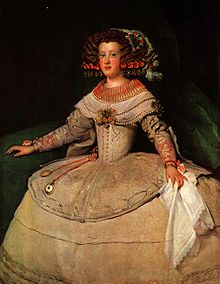
Shakespeare's troupe had noble patronage.  Bach and Mozart may have dined below the salt, but they fed on the bounty of the powerful, who commissioned their work.  Little Trevors and Susannahs, living in squalor, contributed involuntarily to the writing of "Hamlet" and "The Tempest;" and the continued poverty of little Gerhardts and Gretels made possible the St. Matthew's Passion and the "Dissonant" Quartet.  Velazquez's great paintings of Infantas, or princesses, glorified and were paid for by the reign of Philip II, whose immense wealth came from the deaths of hundreds of thousands of South American Amerindians who were slaughtered wholesale and enslaved in the King's gold, silver, and emerald mines.

Let's say, for the sake of argument, that even if they'd had greater opportunities. the vast majority of these oppressed children would, like tens of billions of others, have lived, matured, and disappeared without leaving a scratch on the surface of the world.  Very few of earth's inhabitants have ever created anything that can properly be called sublime.  Most of them live and die unknown and, presumably, disappointed.

But we all get glimpses of the sublime in the works their lives made possible.  If all the little Luigis and Gerhardts and Susannahs and Gretels had lived and flourished, we would probably be completely ignorant of the fact, and our lives wouldn't be an iota better.  But I know I'm better for "The Tempest" and Rembrandt's self-portraits and Beethoven's Seventh Symphony.

So . . . how many Luigis would you pay for Botticelli's "The Birth of Venus?"  How many Susannahs for "Hamlet"?  If your answer is, "None," I applaud your humanity but I'm glad you weren't in charge of the world during the Italian Renaissance or the reign of Elizabeth I.

I know, of course, that human lives and works of art are currencies so dissimilar that it's nonsense to try to determine a rate of exchange.  But the fact remains that the great works of past times were paid for by the poor, and I don't think it should be forgotten.  And the next time some baron of industry or some Japanese insurance company tries to make off with one of the world's treasures, the protest should at least invoke the human cost of those works, which was extorted exclusively from the poor and powerless.  If great art belongs to anyone, it belongs to them.

Tim -- Mondays