Thursday, December 8, 2022

Reading Africa Week

 Michael - Thursday


As the book by Astrid Madimba and Chinny Ukata says, it's a continent (not a country). There are a lot of stories to be told from Africa.

We are midway through Reading Africa Week (an initiative of Catalyst Press in the US now in its sixth year). To quote them, “The goals of the campaign are to get people around the world talking about African literature, to help readers discover new African and African diaspora writers and explore new genres, to elevate the profiles of African writers, and to celebrate the work put in by professionals industry-wide to bring African stories to new readers…”

Catalyst Press knows what this is about. Its founder and publisher, Jessica Powers, has established connections to South Africa and Catalyst has developed an African Crime Reads series mostly set in South Africa. Some of the novels are first publications and some are South African writers being published for the first time in the US. All of them are excellent African crime fiction.

Reading Africa Week certainly isn't restricted to mysteries and thrillers, however. On the contrary, the program is wide ranging with this year’s e-panels covering diverse topics:

Who is African: Place, identity, and belonging in literature;

Behind the Scenes: African filmmakers & writers on interplay and adaptation;

Writing the sounds of Africa: African music in literature;

Queer Africa: LGBTQIA+ writers define and defy genres;

The young reader: African children's literature.

Nadine Gordimer (South Africa)

Wole Soyinka (Nigeria)

Abulrazak Gurnah (Tanzania)

JMG le Clézio (Mauritius)

Necip Mahfuz (Egypt)

JM Coetzee (South Africa)


There’s a fortune of wonderful fiction from Africa ranging from the Nobel Prize Winners above to debut authors with fascinating new voices. Many of the new writers seem to be trying their hands at crime fiction. They are not all dark, but some are very dark indeed. In all the good ones, the setting itself is a character. Africa is, of course, a diverse continent, and that leads to many characters and stories that couldn’t happen anywhere else. To give just one example, I asked Oyinkan Braithwaite if her breakout novel My Sister the Serial Killer could be set anywhere other than Nigeria.  She replied, “I don’t think it would have worked as well had I set it in the UK, for example. Nigeria very quickly became central to the story. I suppose my low opinion of the police here in Lagos meant that I could allow my characters to continue to get away with things that ordinarily they shouldn’t have been able to get away with.” Indeed, these are crimes that don’t require a superstar detective, but require a certain lax environment in which to succeed.

So I decided that my contribution to Reading Africa Week would be to take a little tour to a different African country each day featuring an African mystery author or two. You can catch up with the link below if you’d like to.

 #ReadingAfricaWeek

And speaking of Reading Africa, today is the UK launch of A Deadly Covenant in paperback. We’ve been delighted with all the reviews – especially the starred review in Publishers Weekly. Readers really seem to enjoy the Young Kubu and his adventures. Today also saw the launch of Orenda Books’ trailer for the book. It's rather fun and I’ll finish on that note!


Wednesday, December 7, 2022

AN ILL WIND--LGBTQ+ RIGHTS IN GHANA

Wed--Kwei

LGBTQ+ Rights in Ghana

Just as in the US, a wave of vitriol is being directed at LGBTQ+ persons in Ghana. The sources of the castigations are the National House of Chiefs (NHC), the National Chief Imam, the Christian Council, the Catholic Bishops’ Conference, and various politicians. The NHC issued a statement that said in part, “...nowhere does the Ghanaian culture subscribe to LGBTQI which is a taboo, inhuman and alien to our society...” This claim is based on the false concept that homosexuality in Africa is strictly an import from the West. We know this isn’t true because of condemnatory writings of early Portuguese explorers who described a range of African sexual relations including homosexuality. Wide variations in sexual preference are seen all over the world. Africa is no exception. The Nzima of Ghana had a tradition of adult men marrying each other, usually with a difference of about ten years. Thousands of years ago, the San people of Zimbabwe depicted sex or amorous exchange between men.

Cave paintings of the San people near Guruve in Zimbabwe

                                        (Mehra, Bharat & Lemieux, Paul & Stophel, Keri. (2019)


The British colonizers codified homosexuality into law as “unnatural carnal knowledge,” a ridiculous phrase that remains on Ghana’s law books till this day. However, in 2021, a small group of ministers of parliament (MPs) in Ghana introduced a similarly ludicrously worded anti-LGBTQ bill called the Promotion of Proper Human Sexual Rights and Family Values. This would introduce jail terms up to up to ten years for “promotion” of LGBTQ activities, five years for same-sex intercourse, and up to one year for a same-sex “public show of amorous relations,” whatever the that means.

One of the main proponents for the anti-gay bill is a fine specimen of humanity called Moses Foh-Amoaning, the executive secretary of the National Coalition of Proper Human Sexual Rights and Family Values. The irony is that Moses is among one of Ghana's most marginalized groups: albinos, who are the target of persecution and ritual killings at the hands of people who believe that body parts of an albino have magical powers.

Moses Foh-Amoaning (Image: modernghana.com)

So, rather than putting his energy into advocating for the stigmatized group to which he belongs, he spends time demonizing another stigmatized population. Go figure. He was sacked from the Association of African Albinos for his hate speech against gay people. At the behest of Moses, a bunch of hoodlums tore down two “Love, Tolerance, and Acceptance” Accra billboards sponsored by LGBT+ Rights, an organization founded by gay activist Alex Donkor.

Even though the bill hasn’t been signed into law, Ghana’s queer communities have been suffering increased attacks including gang rapes, forced evictions, and attempts at “conversion,” a long-debunked concept. Homophobic vigilantes use social media and sex sites to lure gay people into perilous circumstances. LGBTQ+ parties, meetings, and other get-togethers are sometimes raided either by the police or hostile gangs who, in addition to physically assaulting the gay attendees, rob them of items like phones and jewelry, and blackmailing them with the threat of photos of them stripped naked or in other compromising situations. Bizarrely, there have been occasions in which the police arrest the gay victims and let the attackers go.


The greatest irony is that while homosexuality in Ghana isn’t a western import, homophobia is. The American organization World Congress of Families (WCF) has been instrumental in pushing draconian anti-gay penalties in Russia (where billionaire oligarchs provide funding), Uganda, Kenya, and Nigeria. WCF has strong ties to American religious and conservative groups such as Focus On The Family and the Knights of Columbus. The First Ladies of Nigeria and Uganda attended WCF events shortly before their respective governments implemented anti-LGBTQ+ measures. The Southern Poverty Law Center has labeled the WCF a hate group. Among the conspiracy lies peddled by the WCF are that LGBTQ+ people are responsible for the Holocaust and the Rwandan Genocide.


I am always amazed that anyone would be proud to go to their grave with the legacy of having persecuted other human beings. 


You can be sure that in 2024, Emma Djan will be tackling homophobia in Ghana.


                                                                            ~~~


Tuesday, December 6, 2022

Lunching the Past and Future

 Ovidia--every other Tuesday

A lovely Amoy Street walk around and lunch today. I haven't been here in so long I felt like a tourist--so please excuse the touristsy pictures here and join me for a tour of this part of our 'Chinatown'.

It was a good location for a rainy day because most of the 'outdoors' street shopfronts and street dining are actually under shelter,


shelter from sun and rain for people and preservation buildings 

Though on a day like this, the actual 'outdoors' was pretty comfortable too.


And I was glad to see some old favourites still here--


 like these children playing chatek. 


and the old style hawkers. I like that these statues are here on Amoy Street surrounded by eateries that are in a way the 'descendants' of those old hawkers.


But there are some things--like rickshaws--I'm not sorry we've moved on from. It must have been such a bloody (literally bloody hands and feet) way to earn a pittance. Well, the future might judge us as harshly for how we treat our food deliverers and construction labourers and domestic helpers and we'll deserve it!


There are good memories too though. This is the entrance to a museum that once housed one of Singapore's oldest Chinese temples, Fuk Tak Chi. It was unusual in catering to both Hakka and Cantonese immigrant workers, providing social meeting point for the two communities as well serving as a place of worship. 


This is how it looked in the old days--


What I really like is that the stone lions guarding the entrance are still there--this one seems to be wearing a replica of himself around his neck.


Of course, not all the murals here are 'traditional'!

But best of all was sitting and talking and talking and talking and hearing about all the projects that everyone has been doing. About all the 'safe' paths we started on but deviated off of to live as 'artists'-- something we're learning to define between learning craft, honing skills, managing finances, supplying demand, searching, diverging, relocating, coping through covid, and about how we wouldn't choose to do anything other than what we're doing now. And always learning, always growing, always starting over because our paths are always changing and we're laying them down as we go.

And it felt like the right place to be talking in, surrounded by reminders of people who have gone before, making it possible for us to be here. 

Stefen Chow, temporarily back from Beijing, looks no different from the nineteen year old I still think of him as--he's got so many things going on I can't possibly cover them all. But take a look at The Poverty Line which he worked on with his wife HuiYi. Click on a country to see its daily food 'allowance' for those struggling. I also love the work he did with senior models--you don't see 'old' but rather elegance, grace, wisdom, beauty and love. 

Sandra Lee, temporarily back from Madrid and London, has her Conversations with an Octopus as her latest work here. But I think she's best known for her Enchanted Forest playscapes at the National Gallery. Her ability to touch the child in the oldest of us feels like magic.

All in all, it was a good day to be alive and connecting with great people.

I hope you're all having a wonderful Tuesday too!


Monday, December 5, 2022

Defining Beauty...and Normal

Annamaria on Monday


 The ancients started it.  They sought to define beauty.  Famously, these two:

Polykleitos

This sculptor from the fifth century BC was one of the pantheon of such artists. None of his works, sad to say, survives. What we know of him comes down to us in Roman copies in marble of his works, which were originally cast in bronze. (I guess this should be a lesson to us. If an artist wants his works to survive, he should not make them from something that could be remade into weapons of war.)

These days, Polykleitos is most famous as the author of a Kanon, a written work  that defined the perfect male body on a mathematical basis.  He was, therefore, one of the sculptors instrumental in defining classical beauty. Sadly, we have no original of his writings either, only references to it and quotes from others - such as Plutarch, Pliny the Elder, and Cicero.

Polykleitos concentrated on nudes of athletes, especially in the controposto pose - in the act of shifting weight from one leg to the other.  The position of Michelangelo's David leaps immediately to mind.  It would be hard to disagree with his criteria.  Even the copies of his work (one shown above) are beautiful.


Vitruvius 

The definition of human physical beauty as a matter of proportion and symmetry was taken up around four hundred years later by this Roman architect and engineer.  He wrote "the navel is naturally placed in the center of the human body, and, if any man lying with his face upward, and his hands and feet extended from his navel, as the center, a circle be described, it will touch his fingers and toes. It is not alone by a circle that the human body is thus circumscribed, as may be seen by placing it within a square. For measuring from the feet to the crown of the head, and then, across the arms, fully extended, we find the latter measure equal to the former; so that lines at right angles to each other, enclosing the figure, will form a square."

Thank goodness we don't have to try to imagine this for ourselves.  Leonardo gave us this drawing of Vitruvian Man:


In the ensuing two thousand years or so, the human race hasn't had much to add to  these ancient men's definition of what constitutes human beauty. We've had far less noble pressing questions to answer.  Fast forward to the 1930s, in the good old USA, where the clothing industry was looking for a way to standardize sizes to fit "the average man" or "the average woman."  Until that time, off-the-rack clothing pretty much didn't exist. But then the Sears Roebuck catalog (the Amazon of its day) wanted to sell clothing to people in standard sizes.  Of course, they were not looking for a definition of beauty, just a definition of normal.  To do this, they needed data. For men, there was plenty available. The United States military collected measurements of all the men in the service. So, coming up with standard sizes for men turned out to be a whole lot easier than standard sizes for women.

These are "normal" people!

Interestingly, enough, at the same time, a group of eugenicists set out to draw a distinction between "normal" and "abnormal."  Retailers were looking to standardize sizes to fit their customers. The eugenicists, on the other hand, were looking to "perfect" human beings by eliminating from the populace anyone who didn't fit their standards. These bad guys had been collecting data on what was and what was not "normal." They did a lot of measuring and crated their own database and description of normality when it came to size and shape of human females.  The clothing manufacturers glammed onto the statistics - the military for the men; the eugenicists' for the women.

When I first learned about this, it piqued my interested because of my personal experience of the difference between men's clothing and women's clothing when it comes to the fit.  You see, I always went along with David and helped him pick out his clothes. Typically, if we were looking for a new suit for him for instance, we would go to one of the nice department stores, and in the men's department, there would be racks of suits sorted by size.  In most stores on the floor where the men's suits (ahem) hung out, someone would ask if he preferred British style or Italian style. David preferred Italian. We found the racks with his size, and let's say he was looking for a blue suit. We would choose two or three for him to try on. When he came out of the dressing room wearing one of the choices, there would invariably be a tailor on hand, with a tape measure around his neck, and a pin cushion on his wrist, waiting to see what needed to be done to fit the suit to David.


If I, on the other hand, needed a blue suit, I would have to travel from floor to floor and look among the offerings from this designer and that designer to find a blue suit.  When I found one that sort of fit, that I wanted to buy, I would ask the sales clerk for the tailor, because-invariably – the jacket sleeves were too long, as were the trousers or the skirt. The sales clerk would sigh deeply, and say "A tailor?"  Another sigh.  "I'll call for one; it will probably be at least 20 minutes."

The moral of the story, of course, is that if the suit does not fit the man, there is something wrong with the suit. But if the suit does not fit, the woman, there is something wrong with the woman. This is why I became enthralled with this new information, which I just acquired in the past few weeks about how sizes were standardized in the 1930s.

Okay.  Let's get back to the eugenicists' role in standardizing "the normal woman."   Their data was collected all over the country, and all kinds of women volunteered to be measured. But being racist at heart, the eugenicists included only measurements of white women in their database. They automatically excised data from blacks, Italians, and Jews.

For this and other reasons, the effort to scientifically standardize women's clothing sizes to be offered to all women was a failure.  The clothing manufacturers eventually gave up trying to make universal sizing work.  They took an expedient.  They chose to use a particular woman as their model, usually a slender one. She  would be their basis for the sizing of, say jeans.  The smallest size fits her perfectly.  The larger sizes are increased proportionately from her dimensions.  this is still the way women's apparel production works.


And now, my female readers, you know why - unless your proportions mimic hers, you will gnash your teeth and stifle curses every time you try to find a pair of jeans that fit you.

Saturday, December 3, 2022

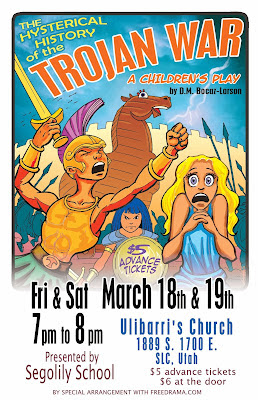
The Truth Behind the Trojan War


Jeff—Saturday

This post originally  went up nine years ago to the day.  It's one of my favorites and took so long to write originally I feel it deserving of occasional re-runs on its merits.  Besides, considering how intense my week has been, it'll be better than what I could do afresh, for late this afternoon I finished what I like to think is a polished re-draft of Andreas Kaldis #13, set on the Grande Dame of the Cyclades islands, SYROS!   So, with that introduction, here's Helen and crew.... 

How many of you have heard of the Trojan War?  I bet there’s not one of you who hasn’t. It’s the world’s best known epic tale of romance, action, and intrigue, and thanks to Homer’s telling in the Illiad and the Odyssey, a source for countless storylines down through the ages…including the Coen Brothers’ 2000 film, O Brother, Where Art Thou.


But how many of you know the actual story of the War? Other than of course the bit about the (possibly) kidnapped Helen’s face launching a thousand ships and The Horse.  Aha, the ranks are thinning quickly.

Well, here’s my adapted telling of the tale based upon a version I came across while reading The Everything Classical Mythology Book, by Lesley Bolton.

The most well-known character in the myth is, of course, Helen of Troy, though she really wasn’t from Troy.  That’s just where she ended up spending ten years waiting to be “rescued.”  Helen was the most beautiful woman in the world and the daughter of the union of Zeus and Leda (not Leto, whose children with couldn’t-keep-it-in-his-pants-Zeus were the twins Apollo and Artemis).

Helen by Evelyn De Morgan

However the aggravation of raising such a beautiful daughter (something I know first hand) didn’t fall to her natural mother and father (assuming there’s anything natural about a Greek god turning himself into a swan to seduce a mortal), but to her foster father, King Tyndareus of Sparta.  

King Ty, as I like to call him, worked out a way of keeping all the suitors for his daughter’s hand (and a lot more) at bay by making all swear that in order to participate in the competition, they had to agree to abide by Helen’s choice of husband and defend her against anyone who might try to kidnap her.  The winner was Menelaus of Sparta and they were wed.

Menelaus by Giacomo Brogi

Then along came Paris of Troy, who stopped in to say “Hi” to the groom and, when the opportunity presented itself in the form of a quick trip out of town for Menelaus, to repay his host’s hospitality by stealing away his bride. 

Paris and Helen by Jacques Louis-David

But the kidnapping wasn’t a spontaneous whim.  Paris felt he had a right to claim Helen.  You see, Paris had been the judge in a beauty contest among the gods Athena, Aphrodite, and Hera to settle a dispute as to which of the three was the fairest.  In keeping with the sort of judging still seen in many parts of the world today, Paris made a side deal with Aphrodite that he’d choose her in return for her promising him the most beautiful woman in the world, Helen. But before he could claim her, she’d married. 

No matter, to Paris a deal was a deal and he’d come to Sparta to collect his prize. He spirited Helen away and, after spending their first night together on Kranae, a tiny island just off the port city of Gytheio on Greece’s Southern Peloponnese, it was off to Troy.  

Abduction of Helen, Francesco Primaticcio

Church on Kranae
[As a side note, that one-night diversion has created a thriving cottage industry on modern day Kranae, for today couples exchange marriage vows at a church on that spot, no doubt hoping for better luck than came to Paris and Helen.]

Not surprisingly, Menelaus didn’t take kindly to Paris’ thank you, and when Menelaus’ trip to Troy with Odysseus (aka Ulysses) to demand of King Priam of Troy her immediate return proved futile, Menelaus returned home to Sparta, massed Helen’s former suitors who’d pledged to defend her against kidnappers, and with his brother Agamemnon in command, dispatched an army of a thousand ships to reclaim her. 

But the Olympian biggie gods were involved in this mess up to their tiarasses.  Some had aligned with Greece (e.g., Poseidon because he was pissed at the Trojans for not having paid his bill for construction work, and Athena and Hera because of Paris’ involvement in fixing their beauty contest).  Others sided with Troy (e.g., Aphrodite who’d created the mess in the first place, and Apollo joined in it with his twin sister, Artemis.) 

Anytime the gods got involved in something there were problems.  And in this instance, just to get things started, Agamemnon had to sacrifice his daughter to the god Artemis (a backer of Troy) for the winds to blow and launch his thousand ships. 


The Greek plan was simple, conquer the numerous towns surrounding Troy and thereby squeeze it into submission.  A simple plan turned into nine years of war with still no end in sight. Hmm, sound familiar? 


In the tenth year everything went to hell in a hand-basket for the Greeks.
First, the Greeks’ greatest warrior, Achilles (slayer of the Trojans’ greatest, Hector) died when pierced in the heel (surely you knew that) by an arrow cast into the air by Paris from behind his fortress walls and guided to its mark by Apollo.  

Then a fight broke out between Odysseus and Ajax of Salamis (non-kosher style for sure) over who’d get to wear Achilles armor (starting to sound more and more like that Brad Pitt 2004 version of the tale called Troy, does it not?), an honor ultimately bestowed on Odysseus that led Ajax into madness and ultimately taking his own life.  And then the Amazons weighed in to fight on the side of the Trojans.

But the Greeks did not give up.  Led by Odysseus they captured the King of Troy’s son, and through him learned what they needed to do if there were to be any hope of Troy falling.  The Greeks did as the prince had said, culminating in snatching away the sacred statue of Athena—the Palladium—which stood within Troy to protect the city from destruction.

But still Troy did not fall.  Then Odysseus came up with a plan, perhaps the most famous hustle in history: one requiring a gigantic wooden horse and some mighty gullible Trojans.


It was the blueprint for a classic scam that’s since played out countless times in print and film:  Present the mark with a fascinating unexpected gift.  Get a shill to tell a believable story compete with a hook that gets the mark to thinking it’s come up with a way to outsmart the hustler, and toss in a last minute twist that threatens to destroy the plan but fails because of an even greater surprise twist. 

In this case, the Trojan Horse (more aptly the Greek or Spartan Horse, since they built it) appeared one morning outside the walls of Troy with the Greek army nowhere to be seen, leaving the Trojans confused over what to do with it: destroy the horse, or bring it within their city’s walls.   Then appeared a man in rags—the disguised Greek soldier Sinon—who claimed he’d escaped being sacrificed to Athena by the Greeks as an offering to appease her ire at their having stolen the Palladium from Troy. 

Then seemingly by chance he revealed a secret of the Greeks: that the great wooden horse before them was also meant to appease Athena by serving to replace the Palladium, but the sneaky Greeks had intentionally built it far too large to pass inside the walls of Troy out of fear that if brought inside it would bring victory to the besieged city.

Just as the Greeks’ plan seemed to be working, one Trojan stepped forward to challenge Sinon’s story (standard screenwriting fare these days), and hurled his spear at the wooden horse, no doubt hoping to elicit a cry from whomever it struck within. But just as he did, a giant sea monster reared up and devoured the cynic, distracting the crowd from the point of both his logic and spear.

The Trojans took the monster as a sign of Athena’s anger at the spear being tossed at an offering to her—rather than of an effort on her part (remember, she was on the side of the Greeks) to silence one threatening to expose the Greeks’ plan. 

Surprise, surprise the Trojans figured out a way to bring the horse within their walls, and while rejoicing in their good fortune missed Sinon freeing the soldiers inside it and opening Troy’s gates for the rest of the Greek army to enter the city.


We all know what happened next. Or at least we think we do.  Helen was returned to her husband.  But not until after the Greeks had engaged in a bloodlust rage of battle so unsettling and sacrilegious to gods that had once backed the Greeks that they turned on them, bringing Odysseus ten more years of trials and tribulations before reaching home (after all, it was a two-book deal for Homer) and far worse fates for far more.

Homer 850 BCE

Yes, that’s a plot line we’ve seen before and will see again. And though there were no real winners in the Trojan War, there sure have been a lot of modern day literary and box office triumphs. 


Many thanks again to Lesley Bolton for the inspiration I found for this post in her The Everything Classical Mythology Book.


—Jeff

Friday, December 2, 2022

The not so quiet quitter.

                    'Every office has three people who work and ten who stand at the watercooler.'


I’ve been looking back on a career (a very long time!) and thinking what was all that about. And thinking of those I have employed along the way… some now have PhDs, some who have gone onto become neurosurgeons, some who still struggle to know what day of the week it is.

This mulling of those and such as those came about when I was reading about quiet quitting.

Is that a thing? Or is that being a lazy monkey? Or just not having engagement with the workplace?

And with regard to those who have worked for me, there were a few who really couldn’t be bothered to do anything properly. And I mean anything.

We had one who excelled in being late. They really were Olympic standard. And precisely late. Always ten minutes. How can anybody always be ten minutes late? Surely all you have to do is leave the house ten minutes earlier. But that might entail the additional hardship of getting out of bed ten minutes early. Having a very precise amount of tardiness is a specific skill set. It’s a bit like scoring zero on a multiple choice. Even a monkey, scoring by pure chance, would get the odd question right.  And there was always an excuse. In the end we would number the excuses 1,2,3, 1a, 2b etc. I recall, ‘couldn’t find the car keys,’ ‘road works,’ ‘loose haggis on the motorway.’ etc

But the serious upshot of the keyholder being late, was that somebody else has to go in early to make sure the heating in the treatment rooms gets put on in time. That person was usually me.

We had one co worker who could move slightly slower with than a sloth with an underactive thyroid and a heavy bag of shopping.  There was no point in asking him to go from the front desk to the store cupboard at the back, about 13 metres. As by the time he got there, the entire clinic would be running late.  I once said to him, sarcastically. ‘Do you think you could do that any slower?’ He took it as a challenge and did!

Most of them have been fine. Many have been superb. But it’s the bad ones that stick in the memory. Some of them are far too cringeworthy to mention here. Like one who asked a patient for a painkiller as they had a sore back, and they were a receptionist in an osteopath practice.

There was one with a body odour issue who we used to burn candles and aromatherapy oils round her desk, she still didn’t get it. With the flames and the scents around the PC, I’m sure some patients thought she was a sacrifice to the god of Microsoft.

And now there’s quiet quitting. Is this a new thing? Is it working to rule i.e., fulfilling your contractual duties and nothing more. I suspect it’s a bit more of an attitude than that.

My contract says that the receptionist must do anything that I ask them to do (?) but that’s also anything that I would do myself.  Seeing a patient out to a taxi, calling them the taxi, making them a cup of tea, crawling along on the floor of a taxi because they have lost their purse, cleaned up their dog pooh, cleaned up baby pooh. You name it, we have done it.

I think the key word there is ‘we’.

Laws here very much protect the employee. They get 6 weeks holiday paid, and public holidays on top of that. Much more than the boss or the self employed in the business can afford to take. With covid and lockdown, we had to give 9 weeks paid holiday to somebody.

I’m not sure quiet quitting is a new thing. Is it a state of mind? The polar opposite to ‘do your job to the best of your ability.’  If you don’t, what do you do with your life? And it is boring?

Quiet quitting seems to have come to the notice of social media, and employers, after the pandemic and those working from home for the time of lockdown.  As essential workers, we were back in ASAP and all the staff seemed keen to get back to work as they were bored and fed up with kids/spouses/ furlough pay.

But to be fair, I’ve never worked for a big company, never been bullied at work, never felt unrewarded for what I do. I hope, I try to ensure my staff have the same experience. We’ve always had very well defined, but unwritten, rules about contacting our employees out of work hours. We have a group chat on WhatsApp that they can look at as and when they wish. It’s more like ‘The heater in room three is coming off the wall, so don’t walk into it.’  Or ‘My Mum’s just gone into hospital, can somebody cover for me until 5 pm.’ It’s never, ‘get that report done now!’


What makes a good boss? The knowledge that the business needs everybody to make it work. Support and care to the workforce…. And that includes giving the quiet quitter a wee kick up the whatsit as nothing annoys an employee more than watching somebody else get paid for doing half the job, and some other poor person, with a better attitude, getting 150% of the workload to do.

Equally, it’s my world. I’m paying for your time. I encourage chit chat, telling jokes, talking to the oldies, dealing with those who are lonely. I don’t encourage looking at  phones, scrolling through Facebook, taking selfies, booking holidays on our computer. You know the taloned fingernails that pull the receipt from the credit card machine with no eye contact whatsoever….

They tend to end up in a book. You can guess what happens to them…..

C

Thursday, December 1, 2022

The beautiful game? Or the boring game?

 Stanley - Thursday

Fans all around the world are watching what is called the beautiful game at the Football World Cup currently being held in Qatar.  Frankly, I think it would be more accurate to call it the boring game. 


First, here are a few trivia associated with the game.

In most of the world the game is called football. In the USA and Australasia, it usually known as soccer. The etymology. of the word football is obvious. However, the origin of the word soccer is quite old, dating back about 200 years to Britain when the game and its rules were becoming organised. It is short for association football - a specific form of the game at that time. Until mid-Twentieth Century, football and soccer were used interchangeably in the UK. The story goes that when the Brits realised that Americans were using the word soccer, they decided they couldn't possibly use the same word and opted for football.

Football (soccer) is the world's most popular game, with hundreds of millions playing it. Part of its popularity is due to its simplicity. All you need is a ball and two goals. The latter can be defined by goal posts, or two rocks on the ground, or marks in the sand. Although there are rules about the official size of the playing field, it can be played on a field of any size.

The game at international level has two halves, each of 45 minutes, plus additional time for injuries. In most important games, if the game is tied at full time, the winner is decided by a penalty shootout. I think the game would graduate from boring to bearable if each half was only five minutes.

The game itself is simple. One player passes the ball to another, who passes it back. Sometimes the ball goes to a third player, who passes it back. The ball goes sideways more than forward, often going way back to the side's own goal keeper. After this continues for a while, someone falls asleep and the other side gets the ball.  They then pass the ball to one another, sideways more than forward, often going way back to the side's own goal keeper.

The game is the embodiment of a well-known psychological phenomenon called intermittent reinforcement. Specifically people are attracted to things (games, for example) where success occurs occasionally and unpredictably. Good examples of this are golf, gambling and, of course football. If a golfer hit good shots every time, or if a gambler hit the jackpot with each pull of the lever, or if scoring a goal was simple in football, no one would play and no one would watch.

In football, excitement and success are so uncommon that millions of people participate or watch in the hope that they'll witness a goal. And on the rare occasion a goal is scored, the excitement is so intense that people come back hoping for another intense moment.

In reality, the game is so boring that even the players have devised ways to inject excitement into the proceedings while waiting for the moment of intensity. Specifically, the mildest of bumps between two players has turned a nothing-moment into an opportunity to show off great acting ability. 

Brazilian star Neymar is a star amongst stars.

Neymar again.

Christiano Renaldo

Not to be content with histrionics during play, players (and even sometimes managers) have found other ways to show their talents as this short video shows. 

Not be be left out of the action, fans on and off the pitch have also found ways to enliven the tedium of the game. Football hooliganism has become widespread as a way to inject excitement into the sport. Last week, for examples, Belgian football fans got their thrills by trashing parts of Brussels.


In fact, the incidence of fans creating some excitement is so great that Wikipedia devotes a huge amount of space to it. If you're suffering from insomnia and watching a football game doesn't help, I suggest start reading the Wikipedia article.

To be fair, as Michael would say, occasionally something happens that is worth watching. For example, Brazilian player Richarlison's second goal against Serbia startled me out of my reverie. What talent; what beauty. Watch it here. Talk about intermittent reinforcement! One moment of excitement from the 42 games played so far!

The game is so boring, even the referees get excited when the game is over. This must have been a particular soporific game!

So, thank you for the Football World Cup 2022, but no thank you. I'm off to watch some cricket.