Here's a few photos of deserted Paris. I've just finished the next Aimée Leduc book and it's left me relating well to these photos. When I've finished a book, apart from the editorial process which will come next from my editor, there's a post-partum feeling. Emptiness.
Like the parade has come and gone. Left me on the curb (where I should be in the time Covid!)
Wondering what will come next. How I can get back in the parade...and then, as a writer told me, you just put your fingers on the keys and march ahead.
Happy quarantining and stay safe,
Cara - Tuesday
Tuesday, April 28, 2020
Monday, April 27, 2020
Aftermath: 2 - Spanish Flu 1918 -1920
Annamaria on Monday
There is a big difficulty in assessing how the Spanish Flu changed the world, because it came toward the end of a long, drawn-out and devastating war. Ensuing changes can be traced to war the and to the pandemic, but which is which is somewhat tricky to parse out. Before we give that question a go, a little background.
One of the results of both wars and pandemics is that, when they hit, they often speed or slow the pace of changes already in process. In the hundred and fifty years before the 1914-20 two-fisted attack, the life expectancy of humans had doubled in all regions the world. The war-plus-epidemic knocked that progress back sixty years. A Finn who could have expected to live until forty-five in 1916, suddenly could expect to live till only thirty. Part of this result stemmed from the war, but most of it came from the pandemic.
The Spanish flu wasn’t really Spanish at all. The latest research proved it was an avian virus, type H1-N1 that first produced an epidemic in New York City. Best guess at this point, however, is that it entered the human population in Kentucky where the first Americans to go to World War I had been in training. The troops came to New York to embark for France, brought the bug with them, and spread it around before they left. They also took it with them. At least this is the conclusion of the latest and best research.
The combatants in the war—both the Allies and those fighting with Germany did not want to admit that their troops were infected, because that would have adversely affected their hopes of victory. So on both sides they forbade the press to report on flu deaths. Spain was neutral, so their newspapers carried the story, and their nationality also became the flu’s.
Trying to conclude how many people died in the Spanish Flu Pandemic has been challenging. Statistics like the ones we learn every day now, were not accurately kept. Many studies have tried to pinpoint the number. As of now, the most respected of them says almost certainly 50 million died, but it very well could have been double that. Compare this to the war’s toll: Military and civilian casualties of the war were great—somewhere be fifteen and nineteen million were killed. Horrifying, to be sure, but still only a fraction of what the flu took—which was between 2.7% and 5.4% of the world population.
Because the average age of humans was much lower than today’s, the pandemic took may more young people, who also seemed to be particularly vulnerable. Perhaps because they had not developed immunities from previous bouts with similar bugs, e.g. the Russian flu pandemic of 1889-90. Twenty to forty-year-olds accounted for almost half of the dead. One theory is that their strong immune systems over-reacted and, in trying to attack the virus, attacked their lungs.
Because the countries fighting in WWI were hiding the facts, they lagged in declaring war on the virus. We have all heard enough I am sure about the aftermath of giving a pandemic virus the least bit of leeway. As far as we now know, Albert Gitchel, the cook at Camp Fuston in Kansas came down with coughing, fever, and headaches on the 4th of March 1918. The Americans who left for the front via NYC were the folks he helped to feed. By later that spring three-quarters of the French soldiers and half the British combatants fell ill. By May the bug was in North Africa and Bombay. In June it reached China, and by July Australia.
No preventative measures were taken until August 1918. Until then, with thousands on both sides of the war sick and dying, the existence of the disease among the troops was a military secret. Once the cat was out of the bag, it became de rigueur to do many of the things now familiar to all of us. That first wave of disease seems to have been mild by comparison to what came later. There is evidence that the virus mutated into an even more deadly form and then went with the troops from Plymouth, England and reached the ends of the earth in a second wave. There was also a third wave that hit twelve thousand Australians, and among many others King Alphonso XIII of Spain and Woodrow Wilson while he was attending the peace talks in Versailles. Both heads of countries survived. The virus itself petered out in 1920 in Japan.
When it was all over, somewhere around 500 million people worldwide had become infected. One-tenth of them had died.
The first change brought on by the Spanish Flu Pandemic was the end of World War I. The battles had pretty much reached a stalemate, but the combatant sides couldn’t find a way to end the war to end all wars. By August 1918, when the death toll from the virus could no longer be hidden and the troops could no longer be expected to fight, they finally found a way to broker a cease fire.
Unfortunately, the very next thing made the flu pandemic worse: on 11 November 1918 celebrations and parades brought together gatherings of thousand all over the world. I don’t have to tell you that the virus turned out the big winner at those events.
The following winter millions were infected, thousands died, hospitals were overwhelmed and the shortage of doctors and nurses became acute. I can’t bring myself to describe it all in detail. You know what’s happening today say in New York City, what has happened in Milan…. Multiply that several fold and you will get an idea of what the world was like.
The Spanish Flu Pandemic led to enormous improvements in public health, health education, development of techniques to prevent the spread of disease. More research was funded.
Then as now, more of the poor died than the rich. In those days, the upper classes believed that the poor were more likely to fall ill because they were inferior types of human beings. But when the King of Spain and the President of the United States got sick, that theory went out the window. Good riddance!
In the wake of the devastation, healthcare for all, free of charge became the rule in many countries. Many nations also created more coordinated government health care efforts, and countries learned to cooperate by sharing information, especially on epidemics. By 1919 the League of Nations had a health branch than eventually became the World Health Organization.
Governments learned to be on their guard.
But then…
Last week, my research told me that before the Black Death, things had gotten so good that people were more healthy and stronger and then—boom, along came the plague.
Then half a millennium later, the life expectancy of humans had relatively recently doubled. There was everything to feel good about and then—boom, along came the Spanish Flu.
Then a hundred years later, the best-off people in my country decided it was time to forget what we learned from 50 million deaths that plagued our great grandparents. We didn’t need to be prepared for pandemic disease. And then—BOOM!
We have a lot to learn from what’s happening now. That’s my topic for next week.
In the meanwhile, let’s not forget this:
Thank you, Nurses
Thank you, Doctors
Thank you, Technicians
Thank you, Orderlies.
We pray you will be safe!
Sunday, April 26, 2020
Something to Crow About During Quarantine
--Susan, Every Other Sunday
Let's talk about crows.
Japan has two native species of crows, with the most common being the large-billed crow (Corvus macrorhynchos japonensis). They can easily reach 60 cm (23 inches) long -- and, as a result, are often mistaken for ravens.
They're also fairly aggressive--so much so that some places even have warning signs posted in Japanese and English warning people to "beware of crows." (A note: the warning is primarily designed to ensure people don't get mugged--an experience you won't quickly forget, and one I've shared in a previous MIE post.)
In Japan, the crow is revered as a harbinger and messenger of Amaterasu Omikami, the chief deity in the Shintō pantheon. Her primary messenger, the divine three-legged crow called Yatagarasu, is reported to have led Jimmu, the first emperor of Japan, to the place where he assumed the Chrysanthemum Throne.
The crows of Japan certainly seem to remember their place in the divine order; they are brash, self-confident, and loud enough to be heard several blocks away when arguing with their brethren--and believe me, they argue constantly.
My apartment sits approximately a block from a park with a bamboo grove and a block and a half from a Shintō shrine. We have resident murders (of crows) in both locations, and I hear them at almost any and every hour of the day and night. (Fortunately, I like their calls.)
During this time of coronavirus isolation, I've resumed a practice I began about a year ago--attempting to win the trust of one of the larger local crows. He likes to sit on the TV antenna and roof of the house next door, and I'd noticed him watching both Oobie and me through the window.
On a whim, I placed a cookie on the balcony ledge. After I closed the door, he swooped in to take it. He's a clever fellow, and it only took him about two days to realize I'd resumed the cookie offerings. We've been at it for almost a month now, and he knows that the cookie goes out between 9 and 10 am. He hasn't quite decided whether he's stealing it or not (a critical first step in winning his trust) but he's happy to come and take it either way.
For my part, I'm happy to have a visitor who understands the idea of social distancing.
The crow (who I've named "Hachi"--which means "eight," and is a Japanese play on "Yatagarasu"--the "eight span crow") has brightened someone else's days as well: my cat, Oobie, loves to watch Hachi get his cookie, and waits for him by the window every morning.
It gives all of us (including Hachi) something to look forward to - and although I hope the social distancing measures will be lifted sooner rather than later (hey, a girl can dream) my "visits" with Hachi are making the days a little brighter in the meantime.
So tell me . . . what are you doing to amuse yourself during quarantine?
Let's talk about crows.
Japan has two native species of crows, with the most common being the large-billed crow (Corvus macrorhynchos japonensis). They can easily reach 60 cm (23 inches) long -- and, as a result, are often mistaken for ravens.
![]() |
| A corvid emperor surveying his domain. |
They're also fairly aggressive--so much so that some places even have warning signs posted in Japanese and English warning people to "beware of crows." (A note: the warning is primarily designed to ensure people don't get mugged--an experience you won't quickly forget, and one I've shared in a previous MIE post.)
![]() |
| A mug(ger) shot from my past. |
In Japan, the crow is revered as a harbinger and messenger of Amaterasu Omikami, the chief deity in the Shintō pantheon. Her primary messenger, the divine three-legged crow called Yatagarasu, is reported to have led Jimmu, the first emperor of Japan, to the place where he assumed the Chrysanthemum Throne.
![]() |
| Jimmu and Yatagarasu - the crow as messenger of the divine. |
The crows of Japan certainly seem to remember their place in the divine order; they are brash, self-confident, and loud enough to be heard several blocks away when arguing with their brethren--and believe me, they argue constantly.
My apartment sits approximately a block from a park with a bamboo grove and a block and a half from a Shintō shrine. We have resident murders (of crows) in both locations, and I hear them at almost any and every hour of the day and night. (Fortunately, I like their calls.)
![]() |
| Attempted murder, anyone? |
During this time of coronavirus isolation, I've resumed a practice I began about a year ago--attempting to win the trust of one of the larger local crows. He likes to sit on the TV antenna and roof of the house next door, and I'd noticed him watching both Oobie and me through the window.
On a whim, I placed a cookie on the balcony ledge. After I closed the door, he swooped in to take it. He's a clever fellow, and it only took him about two days to realize I'd resumed the cookie offerings. We've been at it for almost a month now, and he knows that the cookie goes out between 9 and 10 am. He hasn't quite decided whether he's stealing it or not (a critical first step in winning his trust) but he's happy to come and take it either way.
![]() |
| Hachi coming in for his treat. |
For my part, I'm happy to have a visitor who understands the idea of social distancing.
The crow (who I've named "Hachi"--which means "eight," and is a Japanese play on "Yatagarasu"--the "eight span crow") has brightened someone else's days as well: my cat, Oobie, loves to watch Hachi get his cookie, and waits for him by the window every morning.
![]() |
| The cookie grab. |
It gives all of us (including Hachi) something to look forward to - and although I hope the social distancing measures will be lifted sooner rather than later (hey, a girl can dream) my "visits" with Hachi are making the days a little brighter in the meantime.
So tell me . . . what are you doing to amuse yourself during quarantine?
Saturday, April 25, 2020
My New Gig: The Corona Chronicles
Jeff—Saturday
Over the past twenty years ATHENS INSIDER Magazine has firmly established itself as Greece's premier English-language Lifestyle Magazine of record. It’s sold at 500 kiosks around the country, distributed in 22,000 luxury rooms in 75 hotels across Greece, and in the business lounges of all leading airlines, embassies, and private clubs. Over the years, including the darkest days of Greece’s financial crisis, Athens Insider has consistently demonstrated the business acumen and cultural good judgment to succeed when so many other publications faltered.
Hopefully the magazine’s most recent decision shall not blemish that distinguished record.
I'm honored to announce that I’ve been asked to contribute a monthly column on living through pandemic times from the perspective of an American mystery writer who has called Greece home for 35 years.
Here’s my first column, which appeared online on Wednesday—sans the biographical bit about me and my latest novel.
The last century had its “Roaring 20s,” and I suppose someone will label this century’s third decade with a similarly catchy moniker tied to Covid-19. But it’s still too early to say for sure. We’re only four months into the first year of that decade, three months beyond the nascent worldwide acknowledgment of the pandemic, two months into a generally underplayed game of catch-up, and a month into watching infections and deaths skyrocket.
Televised daily public health briefings draw more attention than religious services, athletic events, restaurants, concerts, and festivals combined—though most but the briefings are prohibited. They’ve also drawn us to new heroes: low-key health care professionals calmly speaking truth to the understandably anxious, and genuinely empathetic elected leaders gifted at rallying their people behind tough non-partisan measures.
![]() |
I’m currently hunkered down and isolated with my wife on our farm in rural New Jersey, 100 kilometers from New York City, and it’s been that way since early March. Usually, I’d be back on Mykonos by now, but the virus has changed all that.
We returned to the US for the winter, and by February were used to seeing a spikey golf ball-like graphic in the background whenever Covid-19 featured on the news. But it wasn’t until mid-February that I began paying closer attention to the subject. Serious people now warned of heightened risks to participants in large gatherings, and of particular dangers to folk over sixty. I had commitments in early March to attend a writers convention in San Diego, and deliver a speech in Arizona to 300 seniors.
That’s when I remembered a conversation I’d had fifteen years before with a friend in charge of his state’s pandemic response to the H5N1 Avian Flu threat. He said not to worry, because that virus didn’t spread easily among humans. The time to worry would be when a virus came along that did.
That prompted my asking the obvious question. “What do I do if that happens?”
His response was so simple and straightforward I thought he was joking.
“Get to your farm, lock the gate, don’t leave until it’s passed, and pray.”
Things being what they are today, I wonder whether that last bit of the good doctor’s advice was to pray for the speedy discovery of a vaccine.
I know the pandemic will pass, and I do my best to stay focused on that thought, rather than on some specific date likely to come, go, and disappoint. I also stopped fixating on breaking news and ever-mounting statistics. They’ll only drive you mad. Instead, I imagine how different life will be in post-coronavirus times.
The biggest change is already underway. Almost overnight much of the world has transformed itself into an enormous remote workplace. The word “Zoom” is now a verb, noun, adjective, adverb and exclamation.
The Manhattan office where I once worked as a lawyer is empty. Everyone works from home. Even the courts are working remotely—including the US Supreme Court. How commercial landlords and other businesses dependent on large office-based workforces adapt will be interesting.
Culturally, writers, artists, and creative types everywhere are already approaching their work differently. How could they not?
From a societal perspective, until a vaccine or treatment arrives, how nations differentiate between their immune and not immune populations will be among their greatest challenges. Will one group be permitted to go freely about their lives, while the other shall not, and what of the children quarantined for their own protection? Such dystopian plot lines I pray remain forever fictional.
For those looking for a silver lining amid the crisis, who would have imagined Greece going digital in a matter of weeks; yet it did. And who would have imagined the fiercely independent and fun-loving Greeks obediently adhering to a government directive ordering them to remain isolated in place; yet they did.
I feel a refreshing sense of common purpose emerging in Greece, a determination to show the world it’s ready to come roaring back once these dark days have past. Greece is uniquely positioned to recover faster than virtually all its EU colleagues, for it’s been confronting and battling austerity for more than a decade. Unlike nations spared that experience, Greeks have learned to absorb the blows, maintain their balance, and keep on fighting. Covid-19 is just another punch to take on the road back to kicking ass.
At least that’s how I see it. But what do I know. Here I am at sunrise, sitting in my pick-up truck, alongside a rural two-lane state highway at the end of my driveway, protecting my garbage cans from bears until the trash pickup is made. And that’s my excitement for the week.
I guess that’s what they mean by the new normal. Stay safe.
—Jeff
Friday, April 24, 2020
The Suddenly Gang
It was World Book Night last night,
and like everything else nowadays, it was very different. We made a few videos
and posted them online, we chatted online about books but it wasn’t the same.
It was enough, but it just wasn’t like going out to a bookshop, having an
event, swapping books and having a good argument.
I was talking online, doing my usual
Murder Of Rodger Ackroyd is the best crime novel the world has ever witnessed
and , ‘would crime fiction be where it is now if that book had not been written’
routine. The answer is probably no and yes but it does provoke a good argument.
And then I got to thinking, no idea
why, about a book I read when I was about seven.
We didn’t really have money for books
of our own when I was growing up but we always went to the library once a fortnight
and I got my fix there. It was always a Wednesday night we trotted off, walking
(kids would not walk that for nowadays). Of course, I had already read the
books by the end of the first weekend. …
My parents decided to buy a house, as
opposed to rent one from the council and we moved out of Glasgow to the house
my mum still lives in. There were many advantages to this, including having a
bedroom of my own but there was another prize in the offing. The daughter of
the ‘new house’ vendors was a librarian and there was ‘a stack of old library
books’ up in the attic, and they would leave them there for me when they sold
us the house!
Such excitement, I could hardly wait
to move. All my Christmases were coming at once and I imagined some kind of
chain gang forming as my dad was in the loft, on top of the ladder passing down
box after box of books. These boxes would stack up in my bedroom, I’d up pack
the, blow the dust and dead spiders off and
then I in heaven.
This attic book depository was going
to be my parent’s priority when we flitted in my opinion.
Moving day came, I was all packed up,
ready for a new school, new blazer, new uniform.
Of course, it was a whole eternity ( a few days) before Dad had
unpacked enough to know what was go in the loft … where, I knew the book treasury
would be.
Few things can be pleasanter than
riding a reliable broomstick through a moony autumn night. It is best of all
when home is at the end of the journey.”
― Barbara Willard
There wasn’t a loft ladder, and our
step ladders weren’t tall enough so dad was the only one who could make the leap
through the hatch, and then lower himself back out onto the tiny platform of
the ladder.
He went up with something more important than
a book (bits of a bike in his case probably). I asked him to get me some books,
at least some out the boxes, just the one nearest.
My dad didn’t believe in sugar
coating anything and just said, ‘There aren’t any books.’
I was crushed.
The parents went about their business
and about a week later my dad announced that he had found one book, an ex-library
book with its discard stamp on its thick polythene cover.
It had fallen down between the rafters.
I really resented that book, it was
supposed to be a real treasure trove and I got was this one measly book. It didn’t
even look that exciting, I cannot recall the cover except it was light green and
white, but I can remember the smell of it really clearly.
One day, I read it in one sitting and
I didn’t want it to end. One of the books of my childhood, along with my Enid Blytons.
It was called The Suddenly Gang which
I thought was a bloody stupid title.
It was about a boy whose name I can’t
recall, but he had moved house or new neighbours had moved in. The neighbours
had kids who were quads and they were called something like Una, Deux, Troy and
Quad (or something) and then the lonely boy was no longer lonely. (Good title
for an Andrew Gold song there).
Last night, I googled it for the
first time and The Suddenly Gang came up! Written by Barbara Willard who has
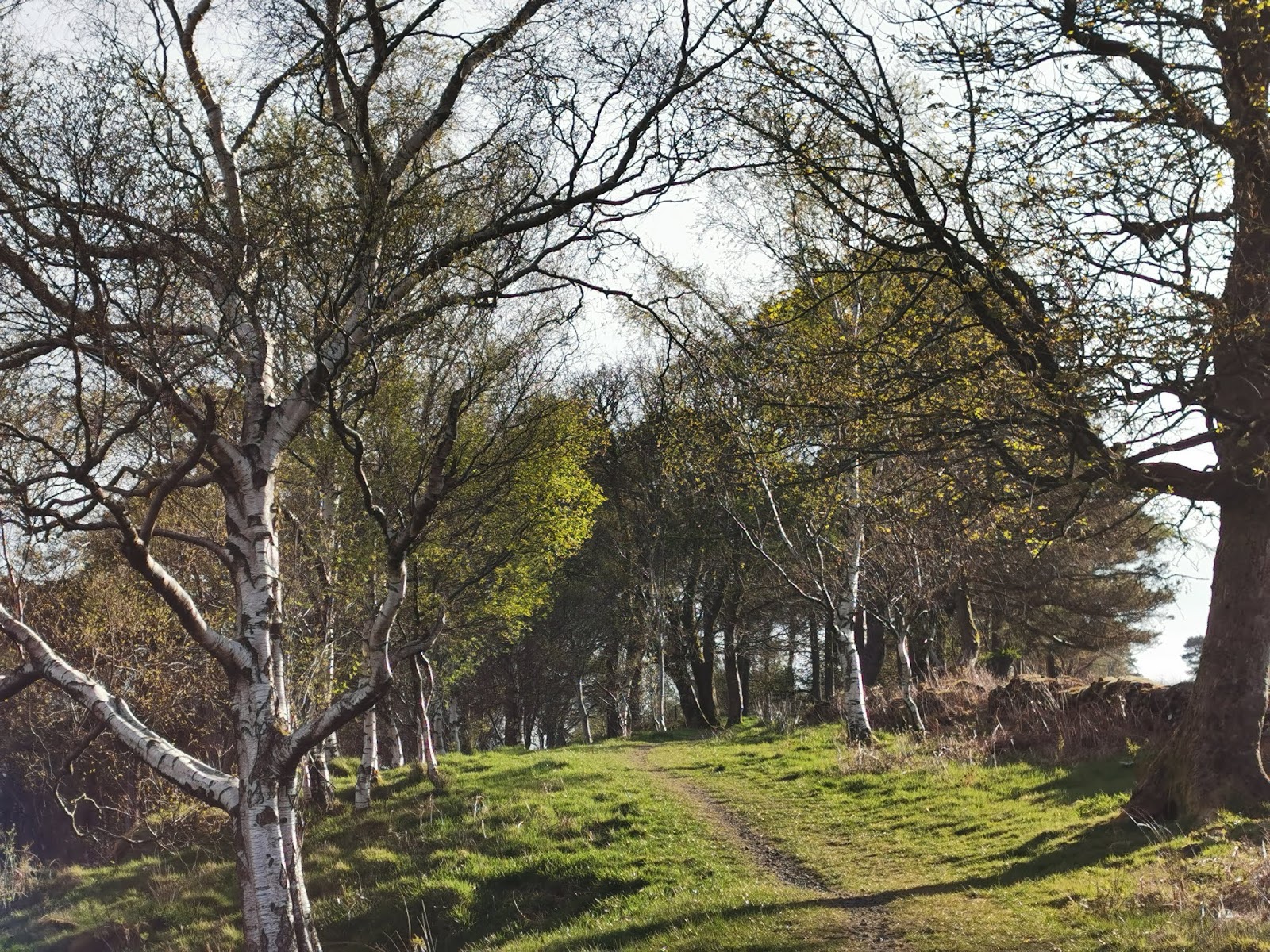
provided the quotes in this blog. The pictures were taken at 6 am Friday 24th April, on the one session of allowed exercise!
I have not set eyes on a book by that
name although it says it was published in 1963, it seems to be absent from her backlist,
maybe published under another title.
“Fathers do as they wish with their
children. They break their hearts if it suits them, as easily as they would
wring a chicken's neck to make a meal!"
According to Wikipedia Barbara Mary Willard (12 March 1909 –
18 February 1994) was a British novelist best known for children's historical
fiction. Her bestselling work was the “Mantlemass Chronicles” which is set in
15th to 17th-century England.
She was the recipient of the Guardian Children's Fiction
Prize.
She was in Brighton, Sussex, the daughter of the
Shakespearean actor Edmund Willard and Mabel Theresa Tebbs. So she was pretty
well connected and she started as an actress before turning to writing books for
adults before she turned to writing for kids.
Not much else is known about her as she was intensely
private but she ‘resurfaced’ when The Forest - Ashdown in East Sussex was published
in 1989.
The intro is by one Christopher Robin Milne, a name that
will be familiar to you. Barbara campaigned to keep the forest public and was involved
in the fundraising campaign to allow the council to buy the area so it could
remain as a place of tranquillity and beauty for common use.
I think I would have liked her. She sounds like she might
have owned a few cats.
Caro Ramsay Lockdown Day 2048
Subscribe to:
Posts (Atom)