

Jeff—Saturday
I’ve just started my month-long intersession semester
teaching “Mystery Writing Unmasked” to a dozen college students at my alma
mater, Washington & Jefferson College, in southwestern Pennsylvania. I loved my last teaching experience here and
am convinced this one will be even better.
It might even inspire me to write a different sort of book,
though whether of “The Shining” or “Shining Through” breed is yet to be
determined. :)
I thought to write a piece on my time here so far, but then
this week I received an email from a writer friend of mine on Mykonos, Stacey
Harris-Papaioannou. Stacey received a commission from a global organization to
write a series of articles on asylum seekers in Greece for its magazine. Her first article focuses on the volunteer
groups that have recently mushroomed in response to the masses of refuges
arriving each day on Greek shores.
Stacey’s article offers web links to each group, and methods
of contributing to their good works.
I thought sharing her article a far more relevant concern
for the world than a regaling of my tales of Washington, Pennsylvania.
Thank you, Stacey, for agreeing to share—so that we all may
share as well.
Generosity
on the Ground in Greece
By Stacey Harris-Papaioannou
staceymykonos@yahoo.com


A sea of separatism
between Europe and not-Europe is present in the 6 mile crossing from the
Turkish coastline to the closest Greek border on the island of Lesvos. The
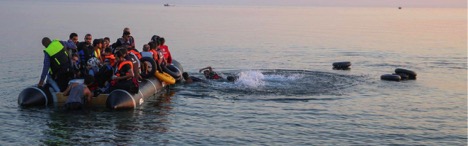
human flood of refugees fills the channel daily. When weary travelers, soaked
by the salty sea, seeking solace and safety, set foot on dry land, they find
generosity on the ground in Greece. In the land that invented the notion of
hospitality to foreigners, “philoxenia,” remains alive and well on the shores
of Greece as more than a million asylum seekers have crossed into Europe in
2015. From the islands in the Aegean to
the port of Piraeus to the northern border town of Idomeni, taking care of
these fragile travelers has been the incentive that has created more than a
hundred groups of volunteers, large and small, to soften the harsh
journey. While European governments
bicker acrimoniously about borders and migration, Greeks, weak from teetering
on the precipice of economic collapse for more than 6 years, have opened arms,
hearts and homes to men, women and children who can no longer live in their own
countries.
Generosity is not
an institution that is mandated. It grows from the hearts of the empathetic and
the compassionate. Ad hoc groups have
sprung up throughout Greece and Europe to assist where governments have
failed. Their kindness and chutzpah have
put them in the center of the human flood on the ground in Greece transforming
their generosity of spirit into dry clothing, good walking shoes, a warm meal,
a back-pack of basic toiletries, warm gloves, on-line and printed guides to
help lead the asylum seekers to being properly registered and vetted. Who are
these extraordinary groups and what are they doing and how can we support them?
Sensitive souls
instinctively feel a call to action. What can be done to help? The majority of
these groups are requesting monetary donations at the present time and able
volunteers. At the present moment gathering used products-clothing, baby
apparatus, etc-to be shipped makes no sense.
There is certainly not the manpower to sort it or facilities to store
it. It is much better to make a financial contribution, giving the volunteer
organizations the ability to purchase supplies locally. They infuse the Greek
economy and they buy what is actually needed as it is needed.

And for those who
are considering giving of themselves on the front line, a qualified volunteer
means several things; having language capabilities, enduring long days of
physically demanding work in all kinds of weather, having a useful skill,
working effectively as a team member and being self financing.
Listed below are a
few of these amazing groups, Non-Governmental Organizations (NGOs) that have
banded together to support refugees.
On The Islands: Lesvos,
Kos


Founded by Melinda McRostie, the owner of
Captain’s Table restaurant in Molyvos, Starfish hands out food and clothing to
refugees and helps refugees with logistics at transit camps. Starfish began in 2014 as a collection of local individuals and international
volunteers working together to support refugees arriving in Molyvos. Starfish
has grown ever since and registered as an NGO in October 2015. Refugees
arriving on the island receive a warm welcome, food, water, dry clothes,
shelter, information and access to medical support. They also support refugees
to access transport to Mytilini where they can access papers for onward travel.
Hellenic Post Office of Kalloni, C/O Starfish Foundation 81107 Kalloni, Lesvos GREECE
Donations: IBAN:
GR4001104070000040700115500 BIC: ETHNGRAA ASTERIAS
National bank of Greece Mythymna Makres, Mythymna 81108 Lesvos
National bank of Greece Mythymna Makres, Mythymna 81108 Lesvos


When the refugees
arrive on Lesvos in unstable, overcrowded boats, they are drenched with sea
water. They are given new clothes and their perfectly good, but wet clothes,
are discarded and have mostly been trashed, therefore adding to the
environmental problems of landfill on Lesvos.
Dirty Girls of Lesvos collect the clothes which are laundered
commercially. They are sorted and distributed so that they can be reused. The project can cost up to €800 per day on
laundering the clothes that refugees have to discard when they arrive wet from
their dangerous boat trip from Turkey.
€100 will mean that 150 warm jackets for children can be collected, washed and redistributed to keep 150 children warm as the weather is cold during the day and very cold at night.
€40 will mean that 100 people will have clean dry socks to exchange for their wet socks.

https://www.facebook.com/ /ΜΚΟ-Αγκαλιά Agalia in Kaloni

On their way to Mytilini port, the refugees can find some help in the town
of Kaloni thanks to the NGO AGALIA : rest, food, clothes, transportation
and so much love from a small and wonderful team. NGO Agalia Koloni, Lesvos GR 81107
+30 698 360 1223 mkoagkalia@hotmail.com


The impetus for O
Allos Anthropos, a community kitchen, was an unemployed middle aged marketer,
seeing all levels of humanity sorting through the discarded seconds at Athens
farmers' markets in an effort to gather food that they could not afford to buy.
Kostas Polichronopoulos could no longer watch children fighting for scraps of
food in the streets of Athens. Initially
food was prepared in homes and distributed for free at the farmers' markets.
Vendors donated products. Eventually the food was prepared and eaten communally
to combat the shame of receiving a free meal. “We eat together and we live together; lunch with our fellow man on the
street.” The volunteer operation
branched out beyond Athens and traveled to Lesvos in August to assist with the
ever increasing numbers of refugees. The number of meals made daily has gone
from 300 to 3000.
Plataion 55 &
Paramythias Metaxourgeio GR10435
Athens
Athens +30 6940 882 355, Mytilini +30 6978 550 168
Donations: EUROBANK
GR 60026 0294 0000 88020 0608548 EUROBANK SWIFT ERBKGRAA, Kostandinos
Chronopoulos


Proactiva Open
Arms, a NGO from Barcelona, is a group of volunteer Spanish lifeguards,
dedicated to saving lives in the sea. They came to Lesvos in September to
assist the refugees that arrive on the Greek coast. They are also on Chios.
They arrived in Lesvos with €15.000 from their own pockets, with no
public funding. They began financing rescues for a month. With that budget
they assisted in disembarking more than 20 boats per day, carrying 50
people each, including babies, kids and elderly people. In total thousands land
on the beaches every day.
Donation: ES53 0182 0262
910201668823 (SWIFT: BBVAESMMXXX)

The Norwegian volunteer group helps refugees as they arrive,
including administering first aid and medical treatment. One of its volunteer
nurses delivered a baby on the beach in mid-October. There are also volunteers on the island of
Chios and in Athens. A Drop in
the Ocean runs its own camp for just-arrived refugees, particularly families
with small children, where it provides food, tents and donated clothing.
Donations: Dråpen i havet Account number: 1503 67 54327
BIC/SWIFT:
DNBANOKKXXX IBAN:
NO3015036754327 DNB Bank ASA


This Dutch NGO assists refugees as they arrive on land with
food, dry clothes and medical care in
Lesvos, Leros, Kos and Athens. They provide emergency aid
and supplies to boat refugees. They focus on the most vulnerable among them:
pregnant women, breastfeeding women and children under age 9. As a foundation
they work with UNHCR, Red Cross and local volunteers.
Donations:
IBAN-account number: NL97 RBRB 0918 9326 37


They met in Skala
Sikamineas on the northeastern coast of Lesvos in September 2015. This area
suffers the highest influx of refugees per day yet lacks both sufficient
infrastructure and financial resources.
None of the larger organizations are based here and help is urgently
needed. These volunteers decided to start their own initiative. At present they
provide hundreds of refugees everyday with emergency aid such as heated
shelter, healthcare, clothes, food and water. The main priority is to protect
the most vulnerable groups such as children, women and the elderly
Donations: Swedish
bankgiro: 377-6507
International payments: IBAN SE2950000000054031040237BIC ESSESESS
International payments: IBAN SE2950000000054031040237BIC ESSESESS

Helping Refugees Lesvos Island Skala Sykamineas

In the
village of Skala Sykaminea there are several thousands of refugees arriving
every day, with a normal population of 300 locals in the summer and 50 in the
winter. The village is working hard to help the refugees day and night and at
the same time trying to maintain a normal life, which can seem impossible in
those conditions. But they do, and still with a smile on their face and love to
give. Without any government organizations, they are alone. Recently
they have had help from private volunteers and smaller organizations who travel
there to offer assistance.
Donations: Skala sykaminea Bank account IBAN : GR5001104150000041563534522 BIC: ETHNGRAA


Lesvos Winter Proof
makes camp Moria in Lesvos ready for winter. Inspired by setting up major
outdoor festivals, Lesvos Winter Proof fills the gap in terms of shelter,
security, logistics, crowd management and production. It is done working in the
event industry and as far as possible in collaboration with other, often small
organizations.
Donations: NL93 RABO 0175271658 t.n.v. Foundation 10.000
HOURS and quoting Lesvos Winter Proof


The “Village of All Together” is a network of citizens, collectives,
groups and other organizations in Lesbos with a common goal to act altogether.
PIKPA is an open, self-organized refugee camp in Lesvos. They distribute food
and clothes to the port, Kara Tepe and Moria This
self-managed space has hosted more than 6.000 refugees, some for few days and
others up to a year. The refugees include asylum and family unification
applicants and/or vulnerable groups of newly arrived refugees e.g. people with
disabilities, sick, pregnant etc. Food, clothing, medication, legal counsel and
medical help as well as are offered.
Donations: ΙΒΑΝ: GR5301107620000076200126290 SWIFT (BIC) ETHNGRAA

https://www.facebook.com/groups/514654685298655/ SINIPARXI
Coexistence and Communication in
the Aegean


It’s the eldest local group for the peaceful
coexistence of Turks and Greeks on both sides of the Aegean. The main aim
of “SINIPARKSI”, as its name denotes, is the coexistence
of different people, with different language, religion, ethnicity, culture,
tradition, ideas. It is basically an antiracist organization, which deals with
refugees and immigrants and with the development of friendly and peaceful
relationships with the neighboring people.


The
need for the Kos initiative was sparked by the arrival of refugees in boatloads
in late spring of 2015. People were arriving from Bodrum in unseaworthy boats
and dinghies in urgent need of food, water, tents, warm clothes and shoes,
backpacks and help in establishing their legal status in order to travel safely
by ferry to Piraeus. Kos Solidarity works in cooperation with other agencies
like UNHCR and MSF etc. All the locals participate on a voluntary basis, daily
and most have day jobs. Kos solidarity needs cash donations and volunteers.
info@kos-solidarity.com
+30 6946 085 065
Donations:
https://www.gofundme.com/mcgcu6rw


Kos has been receiving daily arrivals of people mainly from Syria, Iran,
Iraq, Afghanistan and Pakistan, who are in the process of making their way to
Central Europe, to seek refuge. Generally, upon arrival in Kos, they begin the
registration process (permitting there are no technical delays,) and refugees
stay on the island for 3-4 days. Once they receive their registration papers,
refugees continue their journey by ferry from the island. With the boat ride to
Kos costing thousands of dollars, refugees often arrive with little money, and
what they do have must last their entire journey. KRNYH offers daily
distribution of hot meals (rice, vegetables, lentils) and bread/milk,
provides for rooms for the vulnerable and distributes shoes and backpacks.
Donations: Epitopou e.V. IBAN: DE 11370501981932915240 BIC: COLSDE33XXX Sparkasse KölnBonn Address: Hahnenstrasse 57, 50667 Cologne, Germany
On the Mainland: Piraeus
Port, Central Athens


The group aims at providing
information about what is going on in Athens and volunteering or offering
donations. The volunteers meet at the port of Piraeus to greet refugees
disembarking ships coming in from Samos, Lesvos, Kos and Rhodes to provide them
with additional clothing, a back-pack filled with essentials, toiletries and
guides before they board buses headed for the next border or head on to the
camps at Eleona and Ellinikon hosting refugees while they complete the
documentation process. Sotiris Alexopoulos is the coordinator of Refugees
Welcome to Piraeus.


The Swiss volunteers from Project Soup provide hot tea and soups - prepared and offered on the
spot at the entrance of the refugee welcoming station based in E1 passenger
terminal in the port of Piraeus. A group of Swiss residents in Greece have
organized to bring soup to the port as a part of the meet and greet as
travelers disembark the vessels at the port of Piraeus. The organization is
devoted to the care of the refugees with the supply and preparation of food.
2or 3 small trucks with a mobile kitchen included go to exhausted refugees to
offer a warm meal.
Donation:IBAN: Ch15 0839 0034
0179 1000 6 (note soup-Port)
Bankclearing: 8390 Bic (Swift code): Absoch22
Bankclearing: 8390 Bic (Swift code): Absoch22

The Greek Council
for Refugees (GCR) is a Non- Governmental Organization, which has been active
since 1989 in the field of asylum and human rights in Greece. On a daily basis,
GCR welcomes and offers free legal and social advice and services to refugees
and people coming from countries who are entitled to international protection,
while special emphasis is put on vulnerable cases, such as unaccompanied
minors, victims of trafficking etc. GCR’s Refugee Reception and Interpreters
Unit handles the first contact with our beneficiaries since it is consisted of
a group of multilingual receptionists, interpreters and political scientists.
The interpreters, by conveying the social-historical-cultural features that
characterize each case, contribute significantly to the proper function of the
Service while they also participate in visits to detention centers, courts and
hospitals in order to facilitate GCR beneficiaries’ access to services and
good.
25 Solomou Str.,
10682, Athens +30 210 3800990-1 F: +30 210 3803774
Donations: National Bank of
Greece Account: 116/29606564 IBAN: GR5301101160000011629606564


The
Non-Governmental Organization “METAction” was founded in December 2009, its
primary aim being to promote a
rational system for managing mixed migration flows, while
encouraging respect for human rights, national and international legislation,
through the development of actions for the reception and integration of
immigrants and refugees in Greece, as well as of actions of support for their
voluntary return and reintegration in their countries of origin.
8 Thesprotias, Athens, Greece
+30 210 520 1792, +30 210 5201794
Donations: bank deposit at GR29 0140 1040 1040 0200 2019 320 of Alpha Bank
+30 210 520 1792, +30 210 5201794
Donations: bank deposit at GR29 0140 1040 1040 0200 2019 320 of Alpha Bank

http://www.salvationarmy.gr/ The Salvation Army in Greece
The Salvation Army
is an international Christian movement that operates in 124 countries
worldwide. In Greece, the Salvation Army has been operating as a nonprofit
company from January 2011, standing by the homeless, elderly, young families
with infants and victims of trafficking. They are assisting refugees in central
Athens as well now.
61Kodrigtonos 10434 Athens
emily.carlsson@salvationarmy.gr program coordinator
Donations:
Eurobank IBAN GR0602602520000120200537860 SWIFT CODE: EFGBGRAA


This project stands
for a self-organized solidarity project, wherein locals and refugees-immigrants
decide together. Official “squatting” in an abandon public building in Athens
at 26 Notara, volunteers cover the refugees/immigrants immediate needs:
shelter, food and medical help. The decisive body is the squat’s open assembly
where everyone is welcome to participate with no exclusions.
Notara 26 runs a
collective kitchen. Materials contributions are welcome and/or your help in the
collective cooking.
+30 6947 908 121
+30 6978 873 643
notara26@riseup.net
Thanks again, Stacey.
––Jeff





